Kirjojen hintavertailu – 12 859 828 kirjaa ja 27 kauppaa

Kirjailija

W. Paul Reeve

Kirjat ja teokset yhdessä paikassa: 5 kirjaa, julkaisuja vuosilta 2007–2025, suosituimpiin kuuluu Religion of a Different Color. Vertaile teosten hintoja ja tarkista saatavuus suomalaisista kirjakaupoista.

Nimi esiintyy myös muodoissa: W Paul Reeve

5 kirjaa

Kirjojen julkaisuvuodet: 2007–2025.

This Abominable Slavery

This Abominable Slavery

W. Paul Reeve; Jr. Rich; LaJean Purcell Carruth

OXFORD UNIVERSITY PRESS INC
2025
sidottu
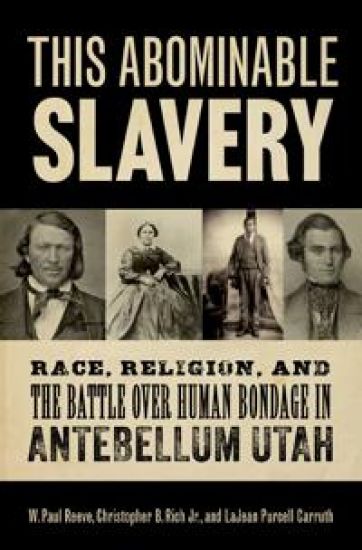
On July 22, 1847, a group of about forty refugees entered the Salt Lake Valley. Among them were three enslaved men, two of whom shared the religion, Mormonism, that had caused them to flee. The valley was also home to members of the Ute tribe, who would sometimes barter captive women and children to Spanish colonizers. Thus, the question of whether the Latter-day Saints would accept or reject slavery in their new Zion confronted them on the day they first arrived. Five years later, after Utah had become an American territory, its legislature was prodded to take up the question then roiling the nation: would they be slave or free? George D. Watt, the official reporter for the 1852 legislative session, reported debates and speeches in Pitman shorthand. They remained in their original format, virtually untouched, for more than one hundred and fifty years, until LaJean Purcell Carruth transcribed them. In this eye-opening volume, Carruth, Christopher Rich, and W. Paul Reeve draw extensively on these new sources to chronicle the session, during which the legislature passed two important statutes: one that legally transformed African American slaves into "servants" but did not pass the condition of servitude on to their children and another that authorized twenty-year indentures for enslaved Native Americans. This Abominable Slavery places these debates within the context of the nation's growing sectional divide and contextualizes the meaning of these laws in the lives of Black enslaved people and Native American indentured servants. In doing so, it sheds new light on race, religion, slavery, and unfree labor in the antebellum period.
Religion of a Different Color

Religion of a Different Color

W. Paul Reeve

Oxford University Press Inc
2017
nidottu

Halvin toimitettuna 39,60 €

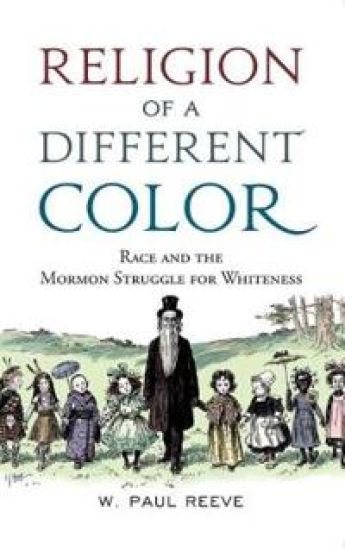
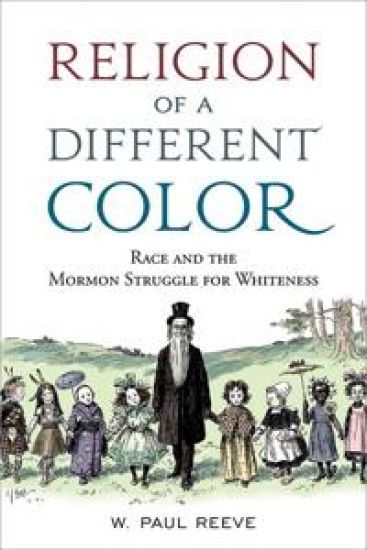
Mormonism is one of the few homegrown religions in the United States, one that emerged out of the religious fervor of the early nineteenth century. Yet, members of the Church of Jesus Christ of Latter-day Saints have struggled for status and recognition. In this book, W. Paul Reeve explores the ways in which nineteenth century Protestant white America made outsiders out of an inside religious group. Much of what has been written on Mormon otherness centers upon economic, cultural, doctrinal, marital, and political differences that set Mormons apart from mainstream America. Reeve instead looks at how Protestants racialized Mormons, using physical differences in order to define Mormons as non-White to help justify their expulsion from Ohio, Missouri, and Illinois. He analyzes and contextualizes the rhetoric on Mormons as a race with period discussions of the Native American, African American, Oriental, Turk/Islam, and European immigrant races. He also examines how Mormon male, female, and child bodies were characterized in these racialized debates. For instance, while Mormons argued that polygamy was ordained by God, and so created angelic, celestial, and elevated offspring, their opponents suggested that the children were degenerate and deformed. The Protestant white majority was convinced that Mormonism represented a racial-not merely religious-departure from the mainstream and spent considerable effort attempting to deny Mormon whiteness. Being white brought access to political, social, and economic power, all aspects of citizenship in which outsiders sought to limit or prevent Mormon participation. At least a part of those efforts came through persistent attacks on the collective Mormon body, ways in which outsiders suggested that Mormons were physically different, racially more similar to marginalized groups than they were white. Medical doctors went so far as to suggest that Mormon polygamy was spawning a new race. Mormons responded with aspirations toward whiteness. It was a back and forth struggle between what outsiders imagined and what Mormons believed. Mormons ultimately emerged triumphant, but not unscathed. Mormon leaders moved away from universalistic ideals toward segregated priesthood and temples, policies firmly in place by the early twentieth century. So successful were Mormons at claiming whiteness for themselves that by the time Mormon Mitt Romney sought the White House in 2012, he was labeled "the whitest white man to run for office in recent memory." Ending with reflections on ongoing views of the Mormon body, this groundbreaking book brings together literatures on religion, whiteness studies, and nineteenth century racial history with the history of politics and migration.
Religion of a Different Color

Religion of a Different Color

W. Paul Reeve

Oxford University Press Inc
2015
sidottu
The Protestant white majority in the nineteenth century was convinced that Mormonism represented a racial-not merely religious-departure from the mainstream and they spent considerable effort attempting to deny Mormon whiteness. Being white equalled access to political, social, and economic power, all aspects of citizenship in which outsiders sought to limit or prevent Mormon participation. At least a part of those efforts came through persistent attacks on the collective Mormon body, ways in which outsiders suggested that Mormons were physically different, racially more similar to marginalized groups than they were white. Medical doctors went so far as to suggest that Mormon polygamy was spawning a new race. Mormons responded with aspirations toward whiteness. It was a back and forth struggle between what outsiders imagined and what Mormons believed. Mormons ultimately emerged triumphant, but not unscathed. At least a portion of the cost of their struggle came at the expense of their own black converts. Mormon leaders moved away from universalistic ideals toward segregated priesthood and temples, policies firmly in place by the early twentieth century. So successful were they at claiming whiteness for themselves, that by the time Mormon Mitt Romney sought the White House in 2012, he was labelled "the whitest white man to run for office in recent memory. " Mormons once again found themselves on the wrong side of white.
Making Space on the Western Frontier:

Making Space on the Western Frontier:

W. Paul Reeve

University of Illinois Press
2007
sidottu
When Mormon ranchers and Anglo-American miners moved into centuries-old Southern Paiute space during the last half of the nineteenth century, a clash of cultures quickly ensued. W. Paul Reeve explores the dynamic nature of that clash as each group attempted to create sacred space on the southern rim of the Great Basin according to three very different world views. With a promising discovery of silver at stake, the United States Congress intervened in an effort to shore up Nevada’s mining frontier, while simultaneously addressing both the "Mormon Question" and the "Indian Problem." Even though federal officials redrew the Utah/Nevada/Arizona borders and created a reservation for the Southern Paiutes, the three groups continued to fashion their own space, independent of the new boundaries that attempted to keep them apart. When the dust on the southern rim of the Great Basin finally settled, a hierarchy of power emerged that disentangled the three groups according to prevailing standards of Americanism. As Reeve sees it, the frontier proved a bewildering mixing ground of peoples, places, and values that forced Mormons, miners, and Southern Paiutes to sort out their own identity and find new meaning in the mess.