Kirjojen hintavertailu – 12 903 725 kirjaa ja 27 kauppaa

Kirjailija

W. Raymond Wood

Kirjat ja teokset yhdessä paikassa: 6 kirjaa, julkaisuja vuosilta 2000–2016, suosituimpiin kuuluu A Stylistic and Historical Analysis of Shoulder Patterns on Plains Indian Pottery: American Antiquity V28, No. 1, July, 1962. Vertaile teosten hintoja ja tarkista saatavuus suomalaisista kirjakaupoista.

Nimi esiintyy myös muodoissa: W.Raymond Wood

6 kirjaa

Kirjojen julkaisuvuodet: 2000–2016.

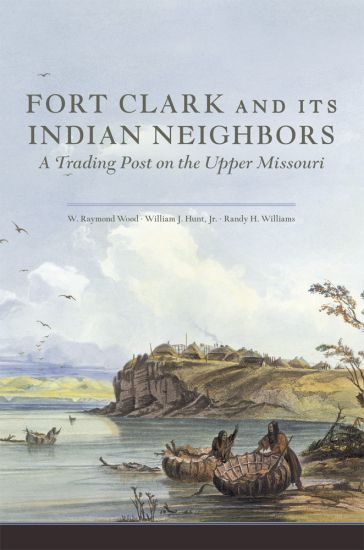
Fort Clark and Its Indian Neighbors

Fort Clark and Its Indian Neighbors

W. Raymond Wood; William J. Hunt; Randy H. Williams

University of Oklahoma Press
2016
nidottu
A thriving fur trade post between 1830 and 1860, Fort Clark, in what is today western North Dakota, also served as a way station for artists, scientists, missionaries, soldiers, and other western chroniclers traveling along the Upper Missouri River. The written and visual legacies of these visitors - among them the German prince-explorer Maximilian of Wied, Swiss artist Karl Bodmer, and American painter-author George Catlin - have long been the primary sources of information on the cultures of the Mandan and Hidatsa Indians, the peoples who met the first fur traders in the area. This book, by a team of anthropologists, is the first thorough account of the fur trade at Fort Clark to integrate new archaeological evidence with the historical record. The Mandans built a village in about 1822 near the site of what would become Fort Clark; after the 1837 smallpox epidemic that decimated them, the village was occupied by Arikaras until they abandoned it in 1862. Because it has never been plowed, the site of Fort Clark and the adjacent Mandan/Arikara village are rich in archaeological information. The authors describe the environmental and cultural setting of the fort (named after William Clark of the Lewis and Clark expedition), including the social profile of the fur traders who lived there. They also chronicle the histories of the Mandans and the Arikaras before and during the occupation of the post and the village. The authors conclude by assessing the results - published here for the first time - of the archaeological program that investigated the fort and adjacent Indian villages at Fort Clark State Historic Site. By vividly depicting the conflict and cooperation in and around the fort, this book reveals the various cultures' interdependence.

Prologue to Lewis and Clark

Prologue to Lewis and Clark

W. Raymond Wood; James P. Ronda

University of Oklahoma Press
2005
nidottu
To follow the journeys made by Mackay and Evans up the Missouri and across the plains in 1795-97 is to begin to appreciate the kind of world Lewis and Clark found when they voyaged up the river in 1804. . . . Of all those waterways, none has captured the American imagination more than the Missouri. . . . It is a river of promise, of dreams, and of dreams denied."" -James P. Ronda, from the ForewordWhen Mackay and Evans returned to Spanish St. Louis in 1797, they were hailed as ""the two most illustrious travelers in the northern parts of this continent."" Ironically, though the findings of Mackay and Evans were responsible for much of the early success of Lewis and Clark in their expedition, the adulation that followed Lewis and Clark's successful return completely eclipsed Mackay and Evans's reputations. In Prologue to Lewis and Clark, W. Raymond Wood narrates the history of this long-forgotten but important expedition up the Missouri River. The Mackay and Evans expedition was more than an exploratory mission. It was the last effort by Spain to gain control over the Missouri River basin in the decade before the United States purchased the Louisiana territory. In that respect, it failed. But the expedition was successful as a journey of exploration. The maps and documents they created later provided the Lewis and Clark expedition with invaluable information for its first full year. Consolidating a collection of eighteen contemporary documents relating to the Mackay and Evans expedition as well as his own research and analysis, Wood provides an in-depth examination of the expedition's background, execution, and final results. Volume 79 in the American Exploration and Travel Series
Plains Earthlodges

Plains Earthlodges

W.Raymond Wood

The University of Alabama Press
2005
sidottu
Anthropologists generally agree that an earthlodge is a dome-shaped, semi-subterranean structure constructed of tree and sapling walls plastered over with clay and supported by one or more large wooden posts. The entire dome is covered with earth, except for a central hole for ventilation and release of smoke from hearth fires. Resembling a mound from the outside, an earthlodge has one or more very low and narrow entranceways. These massive structures - the mid-continent's largest and most complex artifacts - are thought to have been used primarily for ceremonial or political gatherings because of the degree of labor involved in their construction, their size, and the scarcity of domestic goods found when they are excavated. This collection of papers provides a comprehensive gathering of the current research into earthlodges in a variety of Plains Indian cultures - Mandan, Hidatsa, Cheyenne, Oglala Sioux - in the territory of the upper Missouri River and its tributaries. Aspects of earthlodges ranging from their construction, architecture, maintenance, deterioration, and lifespan to the ritual practices performed in them; their associations with craft traditions, medicine lodges, and the Sun Dance; their gender symbolism; and their geophysical signatures are all discussed by acknowledged experts in the field. As technological advances allow an ever greater recognition of archaeological evidence in situ, the study of earthlodges will yield even more information on the peoples who built and used them. This volume provides a much-needed baseline for future earthlodge research as well as comparative data for the occurrence of earthlodges in other sections of North America.
Prologue to Lewis and Clark

Prologue to Lewis and Clark

W. Raymond Wood; James P. Ronda

University of Oklahoma Press
2003
sidottu
To follow the journeys made by Mackay and Evans up the Missouri and across the plains in 1795-97 is to begin to appreciate the kind of world Lewis and Clark found when they voyaged up the river in 1804. . . . Of all those waterways, none has captured the American imagination more than the Missouri. . . . It is a river of promise, of dreams, and of dreams denied."" -James P. Ronda, from the ForewordWhen Mackay and Evans returned to Spanish St. Louis in 1797, they were hailed as ""the two most illustrious travelers in the northern parts of this continent."" Ironically, though the findings of Mackay and Evans were responsible for much of the early success of Lewis and Clark in their expedition, the adulation that followed Lewis and Clark's successful return completely eclipsed Mackay and Evans's reputations. In Prologue to Lewis and Clark, W. Raymond Wood narrates the history of this long-forgotten but important expedition up the Missouri River. The Mackay and Evans expedition was more than an exploratory mission. It was the last effort by Spain to gain control over the Missouri River basin in the decade before the United States purchased the Louisiana territory. In that respect, it failed. But the expedition was successful as a journey of exploration. The maps and documents they created later provided the Lewis and Clark expedition with invaluable information for its first full year. Consolidating a collection of eighteen contemporary documents relating to the Mackay and Evans expedition as well as his own research and analysis, Wood provides an in-depth examination of the expedition's background, execution, and final results. Volume 79 in the American Exploration and Travel Series
Early Fur Trade on the Northern Plains

Early Fur Trade on the Northern Plains

W. Raymond Wood; Thomas D. Thiessen

University of Oklahoma Press
2000
nidottu
Long before their first contact with whites, the Mandan and Hidatsa villagers along the Missouri River in what is now central North Dakota had established a prosperous center for a vast intertribal trade network across the Northern Plains. Early white fur traders, learning of the existence of these villages, were quickly drawn to them. French, British, and Canadian traders were the first to arrive. Representatives of the Montreal-based North West Company were soon followed to the Missouri by employees of the rival Hudson's Bay Company, and for nearly thirty years the two groups competed for the beaver pelts collected by the Mandans and Hidatsas from tribes farther west. Contact with the Canadian traders, and later with others who ascended the Missouri from Saint Louis, had a profound effect on the tribes, for it introduced Euro-American culture and trade goods that led to the extinction of their way of life. There is especially good documentation of the dealings between the Mandans and Hidatsas and the whites for the period 1790 to 1806, when several literate traders visited the Indian villages and recorded their experiences and impressions in lively, colorful narratives. In this book are presented new, dependable, annotated transcriptions of five of the most important of these documents, the narratives of the traders John Macdonell, David Thompson, François-Antoine Larocque (two journals), and Charles McKenzie. Through the narratives and the editors' own thorough historical introduction, W. Raymond Wood and Thomas D. Thiessen reexamine the history of the fur trade in the North and provide fresh insight into that shadowy period. New maps show in detail the routes of the trader-narrators, and the appendix provides useful statistics, inventories, and financial accounts of the fur trade of the era. Early Fur Trade on the Northern Plains will be of use not only to scholars of the fur trade and anthropologists but also to all those interested in the exploration and early history of the vast Northern Plains.