
Kirjailija
W. Scott Poole
Kirjat ja teokset yhdessä paikassa: 12 kirjaa, julkaisuja vuosilta 2004–2023, suosituimpiin kuuluu Wasteland Lib/E: The Great War and the Origins of Modern Horror. Vertaile teosten hintoja ja tarkista saatavuus suomalaisista kirjakaupoista.
12 kirjaa
Kirjojen julkaisuvuodet: 2004–2023.
The panoramic story of how the horror genre transformed into one of the most incisive critiques of unchecked American imperial power The American empire emerged from the shadows of World War II. As the nation's influence swept the globe with near impunity, a host of evil forces followed--from racism, exploitation, and military invasion to killer clowns, flying saucers, and monsters borne of a fear of the other. By viewing American imperial history through the prism of the horror genre, Dark Carnivals lays bare how the genre shaped us, distracted us, and gave form to a violence as American as apple pie. A carnival ride that connects the mushroom clouds of 1945 to the beaches of Amity Island, Charles Manson to the massacre at My Lai, and John Wayne to John Wayne Gacy, the new book by acclaimed historian W. Scott Poole reveals how horror films and fictions have followed the course of America's military and cultural empire and explores how the shadow of our national sins can take on the form of mass entertainment.
Wasteland Lib/E: The Great War and the Origins of Modern Horror
W. Scott Poole
Blackstone Publishing
2018
cd
Historian and Bram Stoker Award nominee W. Scott Poole traces the confluence of history, technology, and art that gave us modern horror films and literature. In the early twentieth century, World War I was the most devastating event humanity had yet experienced. New machines of war left tens of millions killed or wounded in the most grotesque of ways. The Great War remade the world's map, created new global powers, and brought forth some of the biggest problems still facing us today. But it also birthed a new art form: the horror film, made from the fears of a generation ruined by war. From Nosferatu to Frankenstein's monster and the Wolf Man, from Fritz Lang, F. W. Murnau, and Albin Grau to Tod Browning and James Whale, the touchstones of horror can all trace their roots to the bloodshed of the First World War. Historian W. Scott Poole chronicles these major figures and the many movements they influenced. Wasteland reveals how bloody battlefields, the fear of the corpse, and a growing darkness made their way into the deepest corners of our psyche. On the one-hundredth anniversary of the signing of the armistice that brought World War I to a close, W. Scott Poole takes us behind the front lines of battle to a no-man's-land where the legacy of the War to End All Wars lives on.
Wasteland: The Great War and the Origins of Modern Horror
W. Scott Poole
Blackstone Publishing
2018
cd
Historian and Bram Stoker Award nominee W. Scott Poole traces the confluence of history, technology, and art that gave us modern horror films and literature. In the early twentieth century, World War I was the most devastating event humanity had yet experienced. New machines of war left tens of millions killed or wounded in the most grotesque of ways. The Great War remade the world's map, created new global powers, and brought forth some of the biggest problems still facing us today. But it also birthed a new art form: the horror film, made from the fears of a generation ruined by war. From Nosferatu to Frankenstein's monster and the Wolf Man, from Fritz Lang, F. W. Murnau, and Albin Grau to Tod Browning and James Whale, the touchstones of horror can all trace their roots to the bloodshed of the First World War. Historian W. Scott Poole chronicles these major figures and the many movements they influenced. Wasteland reveals how bloody battlefields, the fear of the corpse, and a growing darkness made their way into the deepest corners of our psyche. On the one-hundredth anniversary of the signing of the armistice that brought World War I to a close, W. Scott Poole takes us behind the front lines of battle to a no-man's-land where the legacy of the War to End All Wars lives on.
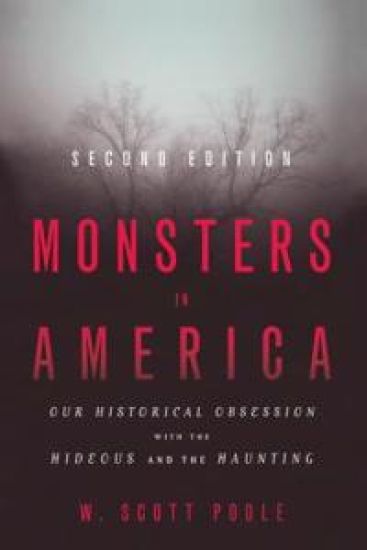
Monsters arrived in 2011 - and now they are back. Not only do they continue to live in our midst, but, as historian Scott Poole shows, these monsters are an important part of our past - a hideous obsession America cannot seem to escape. Poole's central argument in Monsters in America is that monster tales intertwine with America's troubled history of racism, politics, class struggle, and gender inequality. The second edition of Monsters leads readers deeper into America's tangled past to show how monsters continue to haunt contemporary American ideology. By adding new discussions of the American West, Poole focuses intently on the Native American experience. He reveals how monster stories went west to Sand Creek and Wounded Knee, bringing the preoccupation with monsters into the twentieth century through the American Indian Movement. In his new preface and expanded conclusion, Poole's tale connects to the present - illustrating the relationship between current social movements and their historical antecedents. This proven textbook also studies the social location of contemporary horror films, exploring, for example, how Get Out emerged from the context of the Black Lives Matter movement. Finally, in the new section ""American Carnage,"" Poole challenges readers to assess what their own monster tales might be and how our sordid past horrors express themselves in our present cultural anxieties. By the end of the book, Poole cautions that America's monsters aren't going away anytime soon. If specters of the past still haunt our present, they may yet invade our future. Monsters are here to stay.
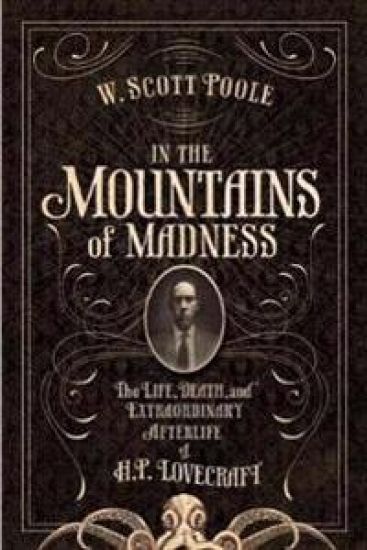
In the Mountains of Madness interweaves the biography of the legendary writer with an exploration of Lovecraft as a phenomenon. It aims to explain this reclusive figure while also challenging some of the general views held by Lovecraft devotees, focusing specifically on the large cross-section of horror and science fiction fans who know Lovecraft through films, Role Playing Games, and video games directly influenced by his work but know little or nothing about him. More than a traditional biography, In The Mountains of Madness will place Lovecraft and his work in a cultural context, as an artist more in tune with our time than his own. Much of the literary work on Lovecraft tries to place him in relation to Poe or M. R. James or Arthur Machen; these ideas have little meaning for most contemporary readers. In his provocative new book, Poole reclaims the true essence of Lovecraft in relation to the comics of Joe Lansdale, the novels of Stephen King, and some of the biggest blockbuster films in contemporary America, proving the undying influence of this rare and significant figure.
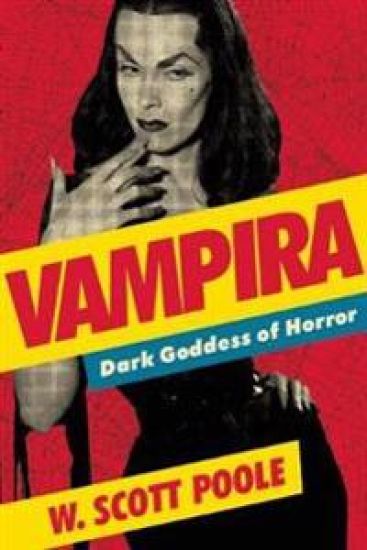
The new book from award-winning historian W. Scott Poole is a whip-smart piece of pop culture detailing the story of cult horror figure Vampira that actually tells the much wider story of 1950s America and its treatment of women and sex, as well as capturing a fascinating swath of Los Angeles history. In Vampire, Poole gives us the eclectic life of the dancer, stripper, actress, and artist Maila Nurmi, who would reinvent herself as Vampira during the backdrop of 1950s America, an era of both chilling conformity and the nascent rumblings of the countercultural response that led from the Beats and free jazz to the stirring of the LGBT movement and the hardcore punk scene in the bohemian enclave along Melrose Avenue. A veteran of the New York stage and late nights at Hollywood's hipster hangouts, Nurmi would eventually be linked to Elvis, Orson Welles, and James Dean, as well as stylist and photographer Rudi Gernreich, founder of the Mattachine Society and designer of the thong. Thanks to rumors of a romance between Vampira and James Dean, his tragic death inspired the circulation of stories that she had cursed him and, better yet, had access to his dead body for use in her dark arts. In Poole's expert hands, Vampira is more than the story of a highly creative artist continually reinventing herself, but a parable of the runaway housewife bursting the bounds of our straight-laced conventions with an exuberant display of camp, sex, and creative individuality that owed something to the morbid New Yorker cartoons of Charles Addams, the evil queen from Disney's Snow White, and the popular, underground bondage magazine Bizarre, and forward to the staged excesses of Madonna and Lady Gaga. Vampira is a wildly compelling tour through a forgotten piece of pop cultural history, one with both cultish and literary merit, sure to capture the imagination of Vampira fans new and old.
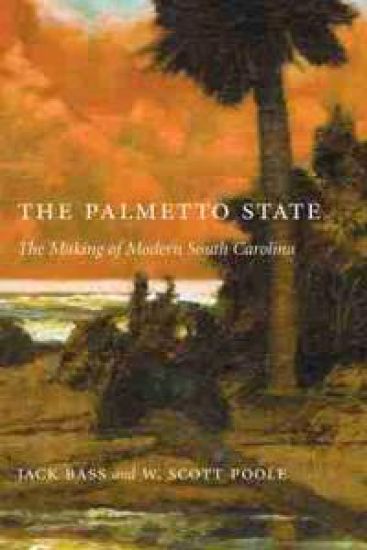
The captivating, colorful, and controversial history of South Carolina continues to warrant fresh explorations. In this sweeping story of defining episodes in the state's history, accomplished historians Jack Bass and W. Scott Poole trace the importance of race relations, historical memory, and cultural life in the progress of the Palmetto State from its colonial inception to the present day. In the discussion of contemporary South Carolina that makes up the majority of this volume, the authors map the ways through which hard-won economic and civil rights advancements, a succession of progressive state leaders, and federal court mandates operated in tandem to bring a largely peaceful end to the Jim Crow era in South Carolina, in stark contrast to the violence wrought elsewhere in the South. This volume speaks directly to the connections between the state's past, present, and future, and it serves as a valuable point of entrance for new inquiries into South Carolina's diverse and complex heritage.

Satan in America tells the story of America's complicated relationship with the devil. "New light" evangelists of the eighteenth century, enslaved African Americans, demagogic politicians, and modern American film-makers have used the devil to damn their enemies, explain the nature of evil and injustice, mount social crusades, construct a national identity, and express anxiety about matters as diverse as the threat of war to the dangers of deviant sexuality. The idea of the monstrous and the bizarre providing cultural metaphors that interact with historical change is not new. Poole takes a new tack by examining this idea in conjunction with the concerns of American religious history. The book shows that both the range and the scope of American religiousness made theological evil an especially potent symbol. Satan appears repeatedly on the political, religious, and cultural landscape of the United States, a shadow self to the sunny image of American progress and idealism.

Satan in America tells the story of America's complicated relationship with the devil. "New light" evangelists of the eighteenth century, enslaved African Americans, demagogic politicians, and modern American film-makers have used the devil to damn their enemies, explain the nature of evil and injustice, mount social crusades, construct a national identity, and express anxiety about matters as diverse as the threat of war to the dangers of deviant sexuality. The idea of the monstrous and the bizarre providing cultural metaphors that interact with historical change is not new. Poole takes a new tack by examining this idea in conjunction with the concerns of American religious history. The book shows that both the range and the scope of American religiousness made theological evil an especially potent symbol. Satan appears repeatedly on the political, religious, and cultural landscape of the United States, a shadow self to the sunny image of American progress and idealism.
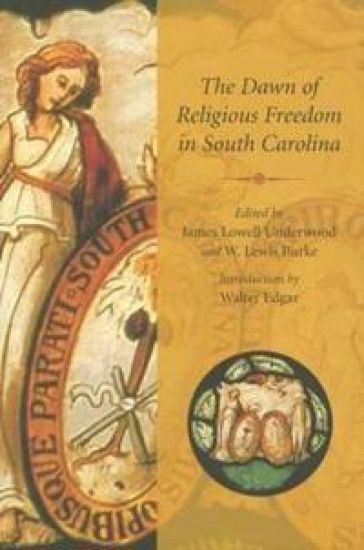
The Dawn of Religious Freedom in South Carolina
Orville Vernon Burton; Peter Clarke; Belinda L. Gergel; Richard J. Gergel; David Herr; Alexander Moore; W. Scott Poole
University of South Carolina Press
2006
sidottu
Although South Carolina's colonial charter promised a safe harbor of religious freedom for those who were oppressed, eighteenth-century religious minorities in the colony found their rights were subjugated to those of the Anglicans. ""The Dawn of Religious Freedom in South Carolina"" contains eight essays by historians and legal scholars that trace the quest for religious equality by Protestant dissenters, Huguenots, Jews, Quakers, Afro-Carolinians, and Roman Catholics. Uncovering the historical roots of the separation of church and state, the contributors use South Carolina's experience to illustrate that religious freedom is more secure when widely shared. South Carolina was a beacon of religious freedom when compared to many other North American colonies. The contributors recount the incremental steps that culminated with the 1790 Constitution's grant of ""free exercise and enjoyment of religious profession and worship, without discrimination or preference."" Separate chapters revisit the experiences of the Huguenots, who found themselves caught in a political crossfire between Anglicans and Protestant dissenters; the Quakers, who ultimately left the state because of their inability to reconcile with the principles of a slaveholding society; the Afro-Carolinians, who created ""psychological living space"" through religion while their masters watched nervously for signs of rebellion; and the evangelicals, whose emphasis on equality before God brought ideas about egalitarianism to South Carolina society. The volume's contributors also enumerate Catholic and Jewish efforts to gain religious equality, and recount the leading roles played by such individuals as Jewish patriot Francis Salvador, Catholic bishop John England, and statesman Charles Pinckney.

Near Appomattox, during a cease-fire in the final hours of the Civil War, Confederate general Martin R. Gary harangued his troops to stand fast and not lay down their arms. Stinging the soldiers' home-state pride, Gary reminded them that "South Carolinians never surrender." By focusing on a reactionary hotbed within a notably conservative state—South Carolina's hilly western "upcountry"—W. Scott Poole chronicles the rise of a post-Civil War southern culture of defiance whose vestiges are still among us. The society of the rustic antebellum upcountry, Poole writes, clung to a set of values that emphasized white supremacy, economic independence, masculine honor, evangelical religion, and a rejection of modernity. In response to the Civil War and its aftermath, this amorphous tradition cohered into the Lost Cause myth, by which southerners claimed moral victory despite military defeat. It was a force that would undermine Reconstruction and, as Poole shows in chapters on religion, gender, and politics, weave its way into nearly every dimension of white southern life. The Lost Cause's shadow still looms over the South, Poole argues, in contemporary controversies such as those over the display of the Confederate flag. Never Surrender brings new clarity to the intellectual history of southern conservatism and the South's collective memory of the Civil War.