

Kirjailija
Wace
Kirjat ja teokset yhdessä paikassa: 13 kirjaa, julkaisuja vuosilta 2004–2026, suosituimpiin kuuluu Arthurian Chronicles. Vertaile teosten hintoja ja tarkista saatavuus suomalaisista kirjakaupoista.
13 kirjaa
Kirjojen julkaisuvuodet: 2004–2026.

Master Wace, His Chronicle of the Norman Conquest From the Roman De Rou
Wace
ALPHA EDITION
2026
pokkari
Wace: Maistre Wace's Roman de Rou et des ducs de Normandie
Wace; Hugo Andresen
Antigonos Verlag
2025
sidottu

Wace: Maistre Wace's Roman de Rou et des ducs de Normandie
Wace; Hugo Andresen
Antigonos Verlag
2025
nidottu

Maistre Wace's Roman de Rou et des ducs de Normandie
Wace; Hugo Andresen
Antigonos Verlag
2025
nidottu
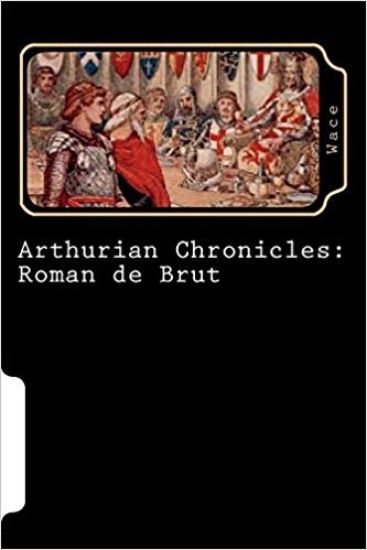
Arthurian Chronicles: Roman De Brut (Wace's Romance And Layamon's Brut) Translated By Eugene Mason This book is a result of an effort made by us towards making a contribution to the preservation and repair of original classic literature. In an attempt to preserve, improve and recreate the original content, we have worked towards: 1. Type-setting & Reformatting: The complete work has been re-designed via professional layout, formatting and type-setting tools to re-create the same edition with rich typography, graphics, high quality images, and table elements, giving our readers the feel of holding a 'fresh and newly' reprinted and/or revised edition, as opposed to other scanned & printed (Optical Character Recognition - OCR) reproductions. 2. Correction of imperfections: As the work was re-created from the scratch, therefore, it was vetted to rectify certain conventional norms with regard to typographical mistakes, hyphenations, punctuations, blurred images, missing content/pages, and/or other related subject matters, upon our consideration. Every attempt was made to rectify the imperfections related to omitted constructs in the original edition via other references. However, a few of such imperfections which could not be rectified due to intentional\unintentional omission of content in the original edition, were inherited and preserved from the original work to maintain the authenticity and construct, relevant to the work. We believe that this work holds historical, cultural and/or intellectual importance in the literary works community, therefore despite the oddities, we accounted the work for print as a part of our continuing effort towards preservation of literary work and our contribution towards the development of the society as a whole, driven by our beliefs. We are grateful to our readers for putting their faith in us and accepting our imperfections with regard to preservation of the historical content. HAPPY READING
The Romance language Wace wrote in is variously regarded as an Old Norman dialect of the Norman language, a dialect of Old French, or specifically the precursor of J rriais. Writers in Jersey have looked on Wace as the founder of Jersey literature, and J rriais is sometimes referred to as the language of Wace although the poet himself predated the development of J rriais as a literary language. Wace is the earliest known Jersey writer. Although the name Robert has been ascribed to Wace, this is a tradition resting on little evidence. It is generally believed nowadays that Wace only had one name. As a clerc lisant, he was proud of his title of Maistre (master) and is consequently sometimes referred to as Maistre Wace. There is a granite memorial stone to Wace built into the side of the States Building in Jersey's Royal Square. This includes a quote from the Roman de Rou that expresses the poet's pride in his place of birth: Jo di e dirai ke jo sui Wace de l'isle de Gersui Modern J rriais: J'dis et dithai qu'j sis Wace d l' le d J rri Modern French: Je dis et dirai que je suis Wace de l' le de Jersey English: I say and will say that I am Wace from the Island of Jersey
Wace is not to be regarded as one of the great contributors to our knowledge of King Arthur legend, but without a familiarity with his work, later French romance can scarcely be appreciated, so important is his place as a delicate transformer of the story, the harsher elements of which he veiled with the courtliness familiar to him, while he diffused throughout it the indefinable spirit of French romance; and this he did with the naive simplicity and grace that were his by birth and temperament. King Arthur is a legendary British leader who, according to medieval histories and romances, led the defence of Britain against Saxon invaders in the late 5th and early 6th centuries AD. The details of Arthur's story are mainly composed of folklore and literary invention, and his historical existence is debated and disputed by modern historians. The sparse historical background of Arthur is gleaned from various sources, including the Annales Cambriae, the Historia Brittonum, and the writings of Gildas. Arthur's name also occurs in early poetic sources such as Y Gododdin. 3] King Arthur is a central figure in the legends making up the Matter of Britain. The legendary King Arthur developed as a figure of international interest largely through the popularity of Geoffrey of Monmouth's fanciful and imaginative 12th-century Historia Regum Britanniae (History of the Kings of Britain). 4] In some Welsh and Breton tales and poems that date from before this work, Arthur appears either as a great warrior defending Britain from human and supernatural enemies or as a magical figure of folklore, sometimes associated with the Welsh Otherworld, Annwn. 5] How much of Geoffrey's Historia (completed in 1138) was adapted from such earlier sources, rather than invented by Geoffrey himself, is unknown. Although the themes, events and characters of the Arthurian legend varied widely from text to text, and there is no one canonical version; Geoffrey's version of events often served as the starting point for later stories. Geoffrey depicted King Arthur as a king of Britain who defeated the Saxons and established an empire over Britain, Ireland, Iceland, Norway and Gaul. Many elements and incidents that are now an integral part of the Arthurian story appear in Geoffrey's Historia, including King Arthur's father Uther Pendragon, the wizard Merlin, Arthur's wife Guinevere, the sword Excalibur, Arthur's conception at Tintagel, his final battle against Mordred at Camlann, and final rest in Avalon. The 12th-century French writer Chr tien de Troyes, who added Lancelot and the Holy Grail to the story, began the genre of Arthurian romance that became a significant strand of medieval literature. In these French stories, the narrative focus often shifts from King Arthur himself to other characters, such as various Knights of the Round Table. Arthurian literature thrived during the Middle Ages but waned in the centuries that followed until it experienced a major resurgence in the 19th century. In the 21st century, the legend lives on, not only in literature but also in adaptations for theatre, film, television, comics and other media.
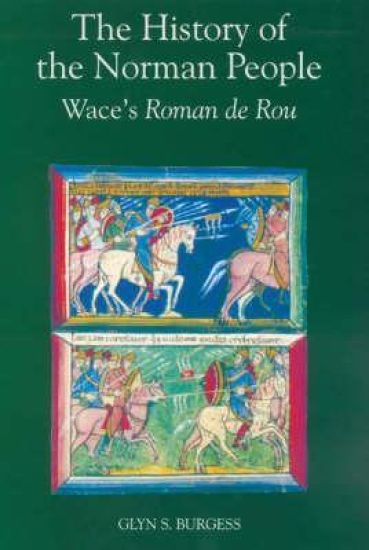
Wace's Roman de Rou relates the history of the Normans from Rollo (Rou) to the battle of Tinchebray, establishing their right to the English throne. Wace's Roman de Rou relates the origins of Normandy from the time of Rollo (Rou) to the battle of Tinchebray. It was commissioned by Henry II as a way of both celebrating the Norman past and justifying the right of Norman rulers to the throne of England: the accounts it gives of the early life of William the Conqueror and of the battle of Hastings, which occupy a substantial portion of the work, make it a valuable historical document as well as an important work of literature. Wace related the events partly in Alexandrines and partly in the octosyllabic rhyming couplets used by the romance writers of the day; indeed, at a time when the boundary between romance and history was blurred, he created a cast of characters and recounted a series of battles and adventures in a style worthy of any of the great masters of romance. He was also exceptionally good, like other contemporary romance writers, at realistic conversations, such as those between King Harold and his brother Gyrth before the battle of Hastings. As a historian, Wace was dedicated to the truth and willing to undertake personal research in order to verify the accuracyof his statements. As a storyteller, he had the ability to render events more dramatic by showing how they arose from the interplay of human beings. The translation, by GLYN S. BURGESS, is accompanied by full editorial notes(in collaboration with Elisabeth van Houts) and an introduction; the volume is completed by a critical essay by Professor van Houts. GLYN S. BURGESS is Emeritus Professor of the University of Liverpool; ELISABETH VAN HOUTS lectures in medieval history, University of Cambridge.