Kirjojen hintavertailu – 12 903 724 kirjaa ja 27 kauppaa

Kirjailija

Wai-yee Li

Kirjat ja teokset yhdessä paikassa: 10 kirjaa, julkaisuja vuosilta 2008–2026, suosituimpiin kuuluu The Letter to Ren an and Sima Qian's Legacy. Vertaile teosten hintoja ja tarkista saatavuus suomalaisista kirjakaupoista.

10 kirjaa

Kirjojen julkaisuvuodet: 2008–2026.

The Letter to Ren an and Sima Qian's Legacy

The Letter to Ren an and Sima Qian's Legacy

Stephen Durrant; Wai-yee Li; Michael Nylan; Hans Ess

University of Washington Press
2018
pokkari
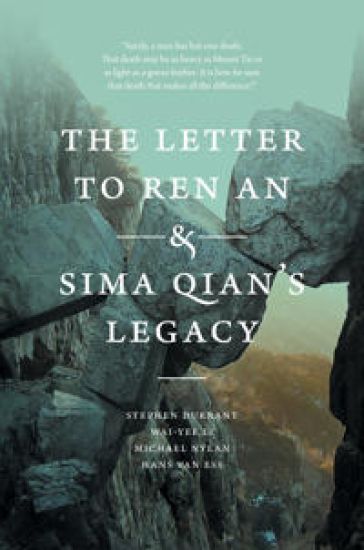
Sima Qian (first century BCE), the author of Record of the Historian (Shiji), is China's earliest and best-known historian, and his "Letter to Ren An" is the most famous letter in Chinese history. In the letter, Sima Qian explains his decision to finish his life's work, the first comprehensive history of China, instead of honorably committing suicide following his castration for "deceiving the emperor." In the twentieth and twenty-first centuries, some scholars have queried the authenticity of the letter. Is it a genuine piece of writing by Sima Qian or an early work of literary impersonation? The Letter to Ren An and Sima Qian's Legacy provides a full translation of the letter and uses different methods to explore issues in textual history. It also shows how ideas about friendship, loyalty, factionalism, and authorship encoded in the letter have far-reaching implications for the study of China.
The Letter to Ren an and Sima Qian's Legacy

The Letter to Ren an and Sima Qian's Legacy

Stephen Durrant; Wai-yee Li; Michael Nylan; Hans Ess

University of Washington Press
2016
sidottu
Sima Qian (first century BCE), the author of Record of the Historian (Shiji), is China's earliest and best-known historian, and his "Letter to Ren An" is the most famous letter in Chinese history. In the letter, Sima Qian explains his decision to finish his life's work, the first comprehensive history of China, instead of honorably committing suicide following his castration for "deceiving the emperor." In the twentieth and twenty-first centuries, some scholars have queried the authenticity of the letter. Is it a genuine piece of writing by Sima Qian or an early work of literary impersonation? The Letter to Ren An and Sima Qian's Legacy provides a full translation of the letter and uses different methods to explore issues in textual history. It also shows how ideas about friendship, loyalty, factionalism, and authorship encoded in the letter have far-reaching implications for the study of China.
The Confucius Chronicles

The Confucius Chronicles

Wai-yee Li

Columbia University Press
2026
pokkari

Halvin toimitettuna 39,70 €

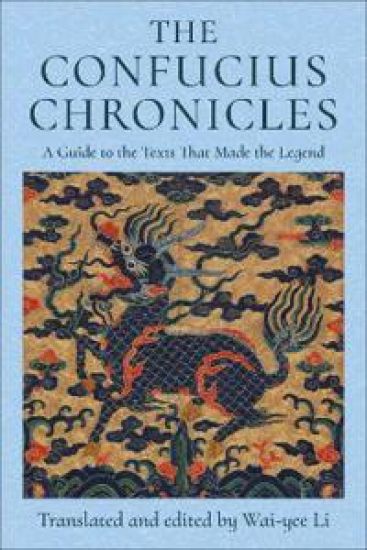
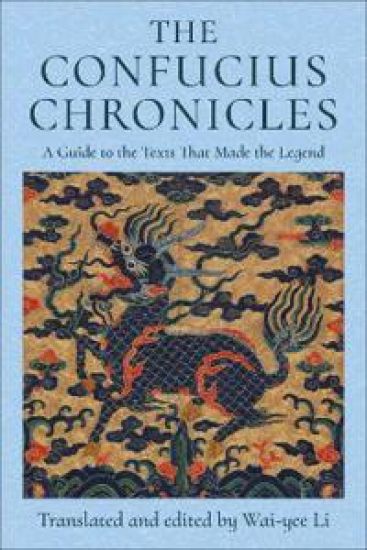
Our ideas about Confucius come from the stories told about him. He often appears as the great sage of ancient China, handing down timeless moral precepts to his disciples and to posterity. Yet over the course of twenty-five centuries, Confucius has meant many different things to different people, representing varied views on political order, ethical behavior, and personal well-being. This book explores enduring narratives about Confucius, shedding light on his role as a symbol of cultural ideals and a fulcrum of ideological debates across eras. Wai-yee Li translates and provides commentary on a wide range of key texts, examining how Confucius’s legacy was interpreted in different historical moments. Beginning with the canonical account by the historian Sima Qian, she canvasses Daoist and Legalist writings from the Warring States, a ballad about a homicidal Confucius from the Tang dynasty, an eighteenth-century anthology of jokes, modern writers such as Lu Xun, and contemporary rap music, among others. Focusing on how these stories are told, Li identifies continuities, ruptures, and unexpected connections in the representations of Confucius and considers the questions they raise. Suitable for a range of courses, this book offers new ways to understand Chinese cultural and intellectual history through Confucius and his transformations.
The Confucius Chronicles

The Confucius Chronicles

Wai-yee Li

Columbia University Press
2026
sidottu
Our ideas about Confucius come from the stories told about him. He often appears as the great sage of ancient China, handing down timeless moral precepts to his disciples and to posterity. Yet over the course of twenty-five centuries, Confucius has meant many different things to different people, representing varied views on political order, ethical behavior, and personal well-being. This book explores enduring narratives about Confucius, shedding light on his role as a symbol of cultural ideals and a fulcrum of ideological debates across eras. Wai-yee Li translates and provides commentary on a wide range of key texts, examining how Confucius’s legacy was interpreted in different historical moments. Beginning with the canonical account by the historian Sima Qian, she canvasses Daoist and Legalist writings from the Warring States, a ballad about a homicidal Confucius from the Tang dynasty, an eighteenth-century anthology of jokes, modern writers such as Lu Xun, and contemporary rap music, among others. Focusing on how these stories are told, Li identifies continuities, ruptures, and unexpected connections in the representations of Confucius and considers the questions they raise. Suitable for a range of courses, this book offers new ways to understand Chinese cultural and intellectual history through Confucius and his transformations.
The Promise and Peril of Things

The Promise and Peril of Things

Wai-yee Li

Columbia University Press
2022
pokkari
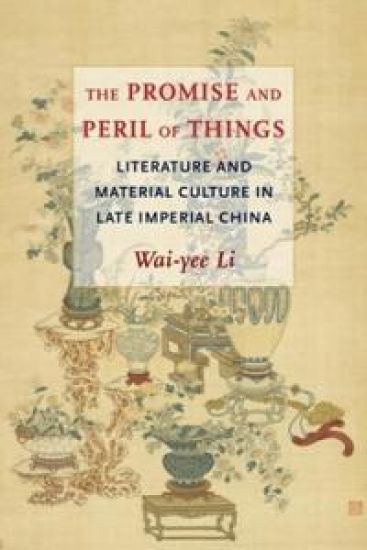
Winner, 2023 Choice Outstanding Academic TitleOur relationship with things abounds with paradoxes. People assign value to objects in ways that are often deeply personal or idiosyncratic yet at the same time rooted in specific cultural and historical contexts. How do things become meaningful? How do our connections with the world of things define us? In Ming and Qing China, inquiry into things and their contradictions flourished, and its depth and complexity belie the notion that material culture simply reflects status anxiety or class conflict. Wai-yee Li traces notions of the pleasures and dangers of things in the literature and thought of late imperial China. She explores how aesthetic claims and political power intersect, probes the objective and subjective dimensions of value, and questions what determines authenticity and aesthetic appeal. Li considers core oppositions—people and things, elegance and vulgarity, real and fake, lost and found—to tease out the ambiguities of material culture. With examples spanning the late sixteenth to the mid-eighteenth centuries, she shows how relations with things can both encode and resist social change, political crisis, and personal loss. The Promise and Peril of Things reconsiders major works such as The Plum in the Golden Vase, The Story of the Stone, Li Yu’s writings, and Wu Weiye’s poetry and drama, as well as a host of less familiar texts. It offers new insights into Ming and Qing literary and aesthetic sensibilities, as well as the intersections of material culture with literature, intellectual history, and art history.
The Promise and Peril of Things

The Promise and Peril of Things

Wai-yee Li

Columbia University Press
2022
sidottu
Winner, 2023 Choice Outstanding Academic TitleOur relationship with things abounds with paradoxes. People assign value to objects in ways that are often deeply personal or idiosyncratic yet at the same time rooted in specific cultural and historical contexts. How do things become meaningful? How do our connections with the world of things define us? In Ming and Qing China, inquiry into things and their contradictions flourished, and its depth and complexity belie the notion that material culture simply reflects status anxiety or class conflict. Wai-yee Li traces notions of the pleasures and dangers of things in the literature and thought of late imperial China. She explores how aesthetic claims and political power intersect, probes the objective and subjective dimensions of value, and questions what determines authenticity and aesthetic appeal. Li considers core oppositions—people and things, elegance and vulgarity, real and fake, lost and found—to tease out the ambiguities of material culture. With examples spanning the late sixteenth to the mid-eighteenth centuries, she shows how relations with things can both encode and resist social change, political crisis, and personal loss. The Promise and Peril of Things reconsiders major works such as The Plum in the Golden Vase, The Story of the Stone, Li Yu’s writings, and Wu Weiye’s poetry and drama, as well as a host of less familiar texts. It offers new insights into Ming and Qing literary and aesthetic sensibilities, as well as the intersections of material culture with literature, intellectual history, and art history.
Enchantment and Disenchantment

Enchantment and Disenchantment

Wai-yee Li

Princeton University Press
2016
sidottu
In a famous episode of the eighteenth-century masterpiece The Dream of the Red Chamber, the goddess Disenchantment introduces the hero, Pao-yu, to the splendors and dangers of the Illusory Realm of Great Void. The goddess, one of the divine women in Chinese literature who inspire contradictory impulses of attachment and detachment, tells Pao-yu that the purpose of his dream visit is "disenchantment through enchantment," or "enlightenment through love." Examining a range of genres from different periods, Wai-yee Li reveals the persistence of the dialectic embodied by the goddess: while illusion originates in love and desire, it is only through love and desire that illusion can be transcended. Li begins by defining the context of these issues through the study of an entire poetic tradition, placing special emphasis on the role of language and of the feminine element. Then, focusing on the "dream plays" by T'ang Hsien-tsu, she turns to the late Ming, an age which discovers radical subjectivity, and goes on to explore a seventeenth-century collection of classical tales, Records of the Strange from the Liao-chai Studio by P'u Sung-ling. The latter half of the book is devoted to a thorough analysis of The Dream of the Red Chamber, the most profound treatment of the dialectic of enchantment and disenchantment, love and enlightenment, illusion and reality. Originally published in 1993. The Princeton Legacy Library uses the latest print-on-demand technology to again make available previously out-of-print books from the distinguished backlist of Princeton University Press. These editions preserve the original texts of these important books while presenting them in durable paperback and hardcover editions. The goal of the Princeton Legacy Library is to vastly increase access to the rich scholarly heritage found in the thousands of books published by Princeton University Press since its founding in 1905.
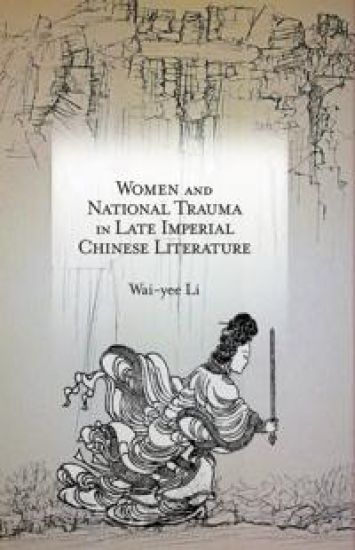
Women and National Trauma in Late Imperial Chinese Literature

Women and National Trauma in Late Imperial Chinese Literature

Wai-yee Li

Harvard University, Asia Center
2014
sidottu
The Ming–Qing dynastic transition in seventeenth-century China was an epochal event that reverberated in Qing writings and beyond; political disorder was bound up with vibrant literary and cultural production. Women and National Trauma in Late Imperial Chinese Literature focuses on the discursive and imaginative space commanded by women. Encompassing writings by women and by men writing in a feminine voice or assuming a female identity, as well as writings that turn women into a signifier through which authors convey their lamentation, nostalgia, or moral questions for the fallen Ming, the book delves into the mentality of those who remembered or reflected on the dynastic transition, as well as those who reinvented its significance in later periods. It shows how history and literature intersect, how conceptions of gender mediate the experience and expression of political disorder. Why and how are variations on themes related to gender boundaries, female virtues, vices, agency, and ethical dilemmas used to allegorize national destiny? In pursuing answers to these questions, Wai-yee Li explores how this multivalent presence of women in different genres provides a window into the emotional and psychological turmoil of the Ming–Qing transition and of subsequent moments of national trauma.
Enchantment and Disenchantment

Enchantment and Disenchantment

Wai-yee Li

Princeton University Press
2014
pokkari
In a famous episode of the eighteenth-century masterpiece The Dream of the Red Chamber, the goddess Disenchantment introduces the hero, Pao-yu, to the splendors and dangers of the Illusory Realm of Great Void. The goddess, one of the divine women in Chinese literature who inspire contradictory impulses of attachment and detachment, tells Pao-yu that the purpose of his dream visit is "disenchantment through enchantment," or "enlightenment through love." Examining a range of genres from different periods, Wai-yee Li reveals the persistence of the dialectic embodied by the goddess: while illusion originates in love and desire, it is only through love and desire that illusion can be transcended. Li begins by defining the context of these issues through the study of an entire poetic tradition, placing special emphasis on the role of language and of the feminine element. Then, focusing on the "dream plays" by T'ang Hsien-tsu, she turns to the late Ming, an age which discovers radical subjectivity, and goes on to explore a seventeenth-century collection of classical tales, Records of the Strange from the Liao-chai Studio by P'u Sung-ling. The latter half of the book is devoted to a thorough analysis of The Dream of the Red Chamber, the most profound treatment of the dialectic of enchantment and disenchantment, love and enlightenment, illusion and reality. Originally published in 1993. The Princeton Legacy Library uses the latest print-on-demand technology to again make available previously out-of-print books from the distinguished backlist of Princeton University Press. These editions preserve the original texts of these important books while presenting them in durable paperback and hardcover editions. The goal of the Princeton Legacy Library is to vastly increase access to the rich scholarly heritage found in the thousands of books published by Princeton University Press since its founding in 1905.
The Readability of the Past in Early Chinese Historiography
The past becomes readable when we can tell stories and make arguments about it. When we can tell more than one story or make divergent arguments, the readability of the past then becomes an issue. Therein lies the beginning of history, the sense of inquiry that heightens our awareness of interpretation. How do interpretive structures develop and disintegrate? What are the possibilities and limits of historical knowledge? This book explores these issues through a study of the Zuozhuan, a foundational text in the Chinese tradition, whose rhetorical and analytical self-consciousness reveals much about the contending ways of thought unfolding during the period of the text's formation (ca. 4th c. BCE). But in what sense is this vast collection of narratives and speeches covering the period from 722 to 468 BCE "historical"? If one can speak of an emergent sense of history in this text, Wai-yee Li argues, it lies precisely at the intersection of varying conceptions of interpretation and rhetoric brought to bear on the past, within a larger context of competing solutions to the instability and disintegration represented through the events of the 255 years covered by the Zuozhuan. Even as its accounts of proliferating disorder and disintegration challenge the boundaries of readability, the deliberations on the rules of reading in the Zuozhuan probe the dimensions of historical self-consciousness.