Kirjojen hintavertailu – 12 903 725 kirjaa ja 27 kauppaa
Kirjailija
Wal Paget
Kirjat ja teokset yhdessä paikassa: 6 kirjaa, julkaisuja vuodelta 2016, suosituimpiin kuuluu With the allies to Pekin; a tale of the relief of the legations. Illus. by: W. Paget (Walter Stanley A. Paget (1863-1935)) and By: G.A. Henty.Beijing. Vertaile teosten hintoja ja tarkista saatavuus suomalaisista kirjakaupoista.
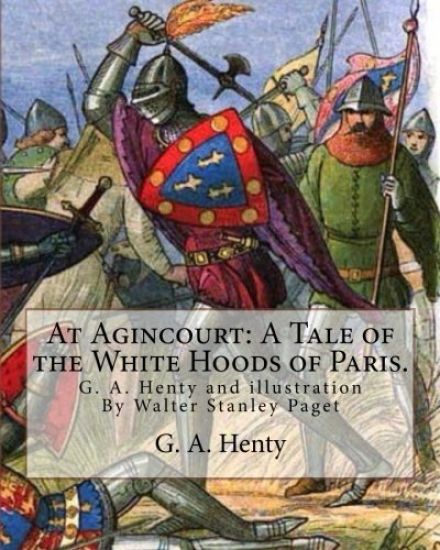
George Alfred Henty (8 December 1832 - 16 November 1902) was a prolific English novelist and war correspondent. He is best known for his historical adventure stories that were popular in the late 19th century. His works include The Dragon & The Raven (1886), For The Temple (1888), Under Drake's Flag (1883) and In Freedom's Cause (1885). Biography--G. A. Henty was born in Trumpington, near Cambridge. He was a sickly child who had to spend long periods in bed. During his frequent illnesses he became an avid reader and developed a wide range of interests which he carried into adulthood. He attended Westminster School, London, and later Gonville and Caius College, Cambridge, where he was a keen sportsman. He left the university early without completing his degree to volunteer for the Army Hospital Commissariat when the Crimean War began. He was sent to the Crimea and while there he witnessed the appalling conditions under which the British soldier had to fight. His letters home were filled with vivid descriptions of what he saw. His father was impressed by his letters and sent them to The Morning Advertiser newspaper which printed them. This initial writing success was a factor in Henty's later decision to accept the offer to become a special correspondent, the early name for journalists now better known as war correspondents. Shortly before resigning from the army as a captain in 1859 he married Elizabeth Finucane. The couple had four children. Elizabeth died in 1865 after a long illness and shortly after her death Henty began writing articles for the Standard newspaper. In 1866 the newspaper sent him as their special correspondent to report on the Austro-Italian War where he met Giuseppe Garibaldi. He went on to cover the 1868 British punitive expedition to Abyssinia, the Franco-Prussian War, the Ashanti War, the Carlist Rebellion in Spain and the Turco-Serbian War. He also witnessed the opening of the Suez Canal and travelled to Palestine, Russia and India. Henty was a strong supporter of the British Empire all his life; according to literary critic Kathryn Castle: "Henty...exemplified the ethos of the new imperialism, and glorified in its successes". Henty's ideas about politics were influenced by writers such as Sir Charles Dilke and Thomas Carlyle. Henty once related in an interview how his storytelling skills grew out of tales told after dinner to his children. He wrote his first children's book, Out on the Pampas in 1868, naming the book's main characters after his children. The book was published by Griffith and Farran in November 1870 with a title page date of 1871. While most of the 122 books he wrote were for children, he also wrote adult novels, non-fiction such as The March to Magdala and Those Other Animals, short stories for the likes of The Boy's Own Paper and edited the Union Jack, a weekly boy's magazine...... Walter Stanley Paget (1863-1935), the youngest and perhaps the least artistically talented of the three Paget brothers, held a gold medal from the Royal Academy of Art, and, like his brothers, illustrated books and magazines in late nineteenth-century and early twentieth-century London, signing himself as "Wal Paget": His eldest brother, Henry, attended the Royal Academy Schools and worked for The Sphere as a "special artist" during the Balkan War of 1912-13. Walter had worked for this magazine, too, in London during the Boer War, turning the rough sketches sent by the paper's "specials" in South Africa into complete illustrations for publication. Walter's second brother, Sidney, also attended the Academy Schools. . . . Walter Paget's art was usually workmanlike but for the most part uninspired. (Arabian Nights Books online source]) Walter Paget "also . . . produc ed] coloured illustrations of pretty girls, rather feeble rustic interiors, and easy-to-view scenes of country life, soldiers and girls, and courting couples. ........
George Alfred Henty (8 December 1832 - 16 November 1902) was a prolific English novelist and war correspondent. He is best known for his historical adventure stories that were popular in the late 19th century. His works include The Dragon & The Raven (1886), For The Temple (1888), Under Drake's Flag (1883) and In Freedom's Cause (1885). Biography--G. A. Henty was born in Trumpington, near Cambridge. He was a sickly child who had to spend long periods in bed. During his frequent illnesses he became an avid reader and developed a wide range of interests which he carried into adulthood. He attended Westminster School, London, and later Gonville and Caius College, Cambridge, where he was a keen sportsman. He left the university early without completing his degree to volunteer for the Army Hospital Commissariat when the Crimean War began. He was sent to the Crimea and while there he witnessed the appalling conditions under which the British soldier had to fight. His letters home were filled with vivid descriptions of what he saw. His father was impressed by his letters and sent them to The Morning Advertiser newspaper which printed them. This initial writing success was a factor in Henty's later decision to accept the offer to become a special correspondent, the early name for journalists now better known as war correspondents. Shortly before resigning from the army as a captain in 1859 he married Elizabeth Finucane. The couple had four children. Elizabeth died in 1865 after a long illness and shortly after her death Henty began writing articles for the Standard newspaper. In 1866 the newspaper sent him as their special correspondent to report on the Austro-Italian War where he met Giuseppe Garibaldi. He went on to cover the 1868 British punitive expedition to Abyssinia, the Franco-Prussian War, the Ashanti War, the Carlist Rebellion in Spain and the Turco-Serbian War. He also witnessed the opening of the Suez Canal and travelled to Palestine, Russia and India. Henty was a strong supporter of the British Empire all his life; according to literary critic Kathryn Castle: "Henty...exemplified the ethos of the new imperialism, and glorified in its successes". Henty's ideas about politics were influenced by writers such as Sir Charles Dilke and Thomas Carlyle. Henty once related in an interview how his storytelling skills grew out of tales told after dinner to his children. He wrote his first children's book, Out on the Pampas in 1868, naming the book's main characters after his children. The book was published by Griffith and Farran in November 1870 with a title page date of 1871. While most of the 122 books he wrote were for children, he also wrote adult novels, non-fiction such as The March to Magdala and Those Other Animals, short stories for the likes of The Boy's Own Paper and edited the Union Jack, a weekly boy's magazine. Walter Stanley Paget (1863-1935), the youngest and perhaps the least artistically talented of the three Paget brothers, held a gold medal from the Royal Academy of Art, and, like his brothers, illustrated books and magazines in late nineteenth-century and early twentieth-century London, signing himself as "Wal Paget"
The Battle of Corunna (or A Coru a, La Corunna, La Coru a, Elvi a or La Corogne) took place on 16 January 1809, when a French corps under Marshal of the Empire Nicolas Jean de Dieu Soult attacked a British army under Lieutenant-General Sir John Moore. The battle took place amidst the Peninsular War, which was a part of the wider Napoleonic Wars. It was a result of a French campaign, led by Napoleon, which had defeated the Spanish armies and caused the British army to withdraw to the coast following an unsuccessful attempt by Moore to attack Soult's corps and divert the French army. Doggedly pursued by the French under Soult, the British made a retreat across northern Spain while their rearguard fought off repeated French attacks. Both armies suffered extremely from the harsh winter conditions. Much of the British army, excluding the elite Light Brigade under Robert Craufurd, suffered from a loss of order and discipline during the retreat. When the British eventually reached the port of Corunna on the northern coast of Galicia in Spain a few days ahead of the French they found their transport ships had not arrived. The fleet arrived after a couple of days and the British were in the midst of embarking when the French forces marched up and forced the British to fight a battle before they could depart for England. In the resulting action, the British repulsed the French assault and completed their embarkation, saving their army from destruction but leaving the port cities of Corunna and Ferrol, as well as northern Spain, to be captured and occupied by the French. During the battle, Sir John Moore, the British commander, was mortally wounded, dying after hearing all the French attacks had been repulsed.... Walter Stanley Paget (1863-1935), the youngest and perhaps the least artistically talented of the three Paget brothers, held a gold medal from the Royal Academy of Art, and, like his brothers, illustrated books and magazines in late nineteenth-century and early twentieth-century London, signing himself as "Wal Paget": ...... George Alfred Henty (8 December 1832 - 16 November 1902) was a prolific English novelist and war correspondent. He is best known for his historical adventure stories that were popular in the late 19th century. His works include The Dragon & The Raven (1886), For The Temple (1888), Under Drake's Flag (1883) and In Freedom's Cause (1885). Biography--G. A. Henty was born in Trumpington, near Cambridge. He was a sickly child who had to spend long periods in bed. During his frequent illnesses he became an avid reader and developed a wide range of interests which he carried into adulthood. He attended Westminster School, London, and later Gonville and Caius College, Cambridge, where he was a keen sportsman. He left the university early without completing his degree to volunteer for the Army Hospital Commissariat when the Crimean War began. He was sent to the Crimea and while there he witnessed the appalling conditions under which the British soldier had to fight. His letters home were filled with vivid descriptions of what he saw. His father was impressed by his letters and sent them to The Morning Advertiser newspaper which printed them. This initial writing success was a factor in Henty's later decision to accept the offer to become a special correspondent, the early name for journalists now better known as war correspondents. Shortly before resigning from the army as a captain in 1859 he married Elizabeth Finucane. The couple had four children. Elizabeth died in 1865 after a long illness and shortly after her death Henty began writing articles for the Standard newspaper. In 1866 the newspaper sent him as their special correspondent to report on the Austro-Italian War where he met Giuseppe Garibaldi.....
George Alfred Henty (8 December 1832 - 16 November 1902) was a prolific English novelist and war correspondent. He is best known for his historical adventure stories that were popular in the late 19th century. His works include The Dragon & The Raven (1886), For The Temple (1888), Under Drake's Flag (1883) and In Freedom's Cause (1885). Biography G. A. Henty was born in Trumpington, near Cambridge. He was a sickly child who had to spend long periods in bed. During his frequent illnesses he became an avid reader and developed a wide range of interests which he carried into adulthood. He attended Westminster School, London, and later Gonville and Caius College, Cambridge, where he was a keen sportsman. He left the university early without completing his degree to volunteer for the Army Hospital Commissariat when the Crimean War began. He was sent to the Crimea and while there he witnessed the appalling conditions under which the British soldier had to fight. His letters home were filled with vivid descriptions of what he saw. His father was impressed by his letters and sent them to The Morning Advertiser newspaper which printed them. This initial writing success was a factor in Henty's later decision to accept the offer to become a special correspondent, the early name for journalists now better known as war correspondents.... Walter Stanley Paget (* 1863; + 1935) war ein britischer Illustrator. F r sein Wirken wurde er mit der Goldmedaille der Royal Academy of Arts geehrt. Walter Paget war der j ngste der drei Br der (Henry Marriott, Sidney und Walter) und wie diese illustrierte er B cher und Zeitschriften im sp ten 19. und anfangs des 20. Jahrhunderts. Er zeichnete gew hnlich "Wal Paget". Er arbeitete unter anderem f r The Sphere (w hrend des Burenkrieges), Illustrated London News, The Strand Magazine.
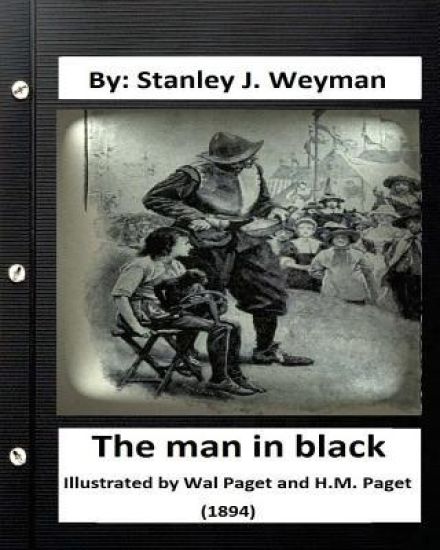
Stanley John Weyman (7 August 1855 - 10 April 1928) was an English novelist sometimes referred to as the "Prince of Romance". Weyman (pronounced "why-man") was born at Ludlow, Shropshire. The second son of a solicitor, he was educated at Shrewsbury School, and at Christ Church, Oxford. He took his degree in modern history in 1877, and was called to the bar at the Inner Temple in 1881, joining the Oxford circuit. He practised as a barrister for eight years until, in 1889, he wrote his first novel entitled The House of the Wolf. This was followed over the following two decades by the novels which were to make his reputation, among them historical romances set amidst the turmoil of 16th and 17th century France. (His entire output is discussed in the annotated bibliography included in the external links below.) He became a great traveller, sometimes in company with his fellow bestselling novelist Henry Seton Merriman. While for years his historical romances enchanted thousands of readers - Robert Louis Stevenson and Oscar Wilde were among the enthusiasts - but today his books are largely neglected.