Kirjojen hintavertailu – 12 859 818 kirjaa ja 27 kauppaa
Kirjailija
Wallace D. Wattles
Kirjat ja teokset yhdessä paikassa: 364 kirjaa, julkaisuja vuosilta 1910–2026, suosituimpiin kuuluu The Wallace Wattles Trilogy: The Science of Being Great, The Science of Being Well, The Science of Getting Rich (Includes Access to free Audiobooks. Vertaile teosten hintoja ja tarkista saatavuus suomalaisista kirjakaupoista.
Nimi esiintyy myös muodoissa: Wallace D Wattles, Wallace D.Wattles
Acaso la riqueza es una CIENCIA exacta, como las matem ticas y la f sica? Existen principios y preceptos que, si los sigues al pie de la letra, virtualmente garantizar n tu xito? D nde est la evidencia de esto? Wallace Wattles escribi lo que est s a punto de leer en 1910, y un sinn mero de escritores, conferencistas y maestros del xito han tomado lo que l escribi , y lo han puesto a prueba en el laboratorio de la vida con excelentes resultados. Dentro de este tratado sobre la riqueza, descubrir s la nica manera en que el dinero viene hacia ti -puedes probar de muchas maneras diferentes (y probablemente lo est s haciendo) y, si no haces lo que se menciona aqu , NO OBTENDR S RESULTADOS. Parte esencial de la f rmula del xito y la abundancia financiera que se obtiene de la manera m s eficiente es hacer las cosas de Cierta Manera. Este principio es lo que causa que esta f rmula tenga esa certeza matem tica. Si est s listo para dejar atr s las excusas y enfilarte hacia tu propia abundancia financiera, este es el libro que hab as estado buscando. nete a las legiones de triunfadores que han descubierto y a diario practican La Ciencia de Hacerse Rico. Tambi n puedes tener acceso directo e inmediato al Audiolibro de La Ciencia de Hacerse Rico, narrado por el Dr. C sar Vargas, a trav s de este enlace directo: https: //shop.platformpurple.com/product/?shop=2580&product=14699&sid=AmazonCiencia ] (si no es un enlace en vivo, puedes copier y pegar todo el URL, que est dentro de los corchetes).
This definitive work on the perils and promise of the social- media revolution collects writings by today's best thinkers and cultural commentators, with an all-new introduction by Bauerlein. Twitter, Facebook, e-publishing, blogs, distance-learning and other social media raise some of the most divisive cultural questions of our time. Some see the technological breakthroughs we live with as hopeful and democratic new steps in education, information gathering, and human progress. But others are deeply concerned by the eroding of civility online, declining reading habits, withering attention spans, and the treacherous effects of 24/7 peer pressure on our young. With "The Dumbest Generation," Mark Bauerlein emerged as the foremost voice against the development of an overwhelming digital social culture. But The Digital Divide doesn't take sides. Framing the discussion so that leading voices from across the spectrum, supporters and detractors alike, have the opportunity to weigh in on the profound issues raised by the new media-from questions of reading skills and attention span, to cyber-bullying and the digital playground- Bauerlein's new book takes the debate to a higher ground. The book includes essays by Steven Johnson, Nicholas Carr, Don Tapscott, Douglas Rushkoff, Maggie Jackson, Clay Shirky, Todd Gitlin, and many more. Though these pieces have been previously published, the organization of "The Digital Divide" gives them freshness and new relevancy, making them part of a single document readers can use to truly get a handle on online privacy, the perils of a plugged-in childhood, and other technology-related hot topics. Rather than dividing the book into "pro" and "con" sections, the essays are arranged by subject-"The Brain, the Senses," "Learning in and out of the Classroom," "Social and Personal Life," "The Millennials," "The Fate of Culture," and "The Human (and Political) Impact." Bauerlein incorporates a short headnote and a capsule bio about each contributor, as well as relevant contextual information about the source of the selection. Bauerlein also provides a new introduction that traces the development of the debate, from the initial Digital Age zeal, to a wave of skepticism, and to a third stage of reflection that wavers between criticism and endorsement. Enthusiasms for the Digital Age has cooled with the passage of time and the piling up of real-life examples that prove the risks of an online-focused culture. However, there is still much debate, comprising thousands of commentaries and hundreds of books, about how these technologies are rewriting our futures. Now, with this timely and definitive volume, readers can finally cut through the clamor, read the the very best writings from each side of "The Digital Divide," and make more informed decisions about the presence and place of technology in their lives.
The Science of Being Well is a book written by the New Thought Movement writer Wallace D. Wattles, published in 1910. It is the second in a series by Wallace D. Wattles . The first (The Science of Getting Rich) was about how to get wealthy; this one is about how to get healthy. As in his prior work, Wattles advises the reader to think and act in a certain way. The concepts are simple the challenge is having the discipline to apply the concepts with faith and persistence. Follow the certain way and everyone can attain good health. This publication of The Science of Being Well is part of the Qualitas Classics Life Series, where pure, ageless classics are presented in clean, easy to read reprints. For a complete list of titles, see: http: //www.libraryoftheclassics.com
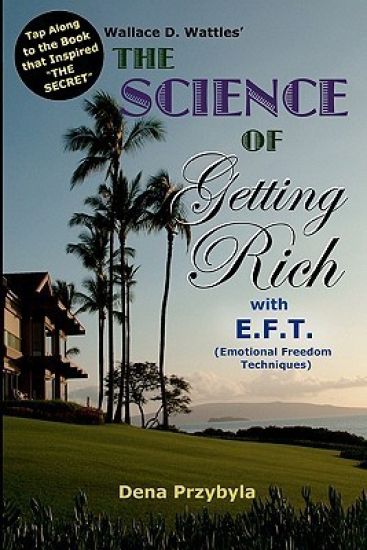
The Science of Getting Rich is a book written by the New Thought Movement writer Wallace D. Wattles, published in 1910. The book is still in print after 100 years and was a major inspiration for Rhonda Byrne's bestselling book and film The Secret (2006 film). The text consists of 17 short, to-the-point chapters that explain how to overcome mental barriers and how creation, not competition, is the hidden key to gaining wealth. In the words of the author: "The ownership of money and property comes as a result of doing things in a certain way. Those who do things in this certain way, whether on purpose or accidentally, get rich. Those who do not do things in this certain way, no matter how hard they work or how able they are, remain poor... It is a natural law that like causes always produce like effects. Therefore, any man or woman who learns to do things in this certain way will infallibly get rich." This publication of The Science of Getting Rich is part of the Qualitas Classics Life Series, where pure, ageless classics are presented in clean, easy to read reprints. For a complete list of titles, see: http: //www.libraryoftheclassics.com
Review "If you are looking for philosophy and metaphysical theory, this book is not for you. If you are looking for results . . . Read this book " - Jordan S. Wright, President of E-Books for Successful Living Product Description Serendipity is not an accident, as many people think. It's something we create. Similarly, getting rich and being successful are completely up to you too. Before Norman Vincent Peale . . . before Napoleon Hill . . . before Deepak Chopra . . . there was Wallace D. Wattles - the first success and prosperity writer. Wattles introduced the world to the power of positive thinking and preceded all the Law of Attraction writers, speakers and mentors who came after him. Without Wattles, there never would have been The Secret, The Law of Attraction or The Power of Positive Thinking. Now you can go directly to the source with this easy to understand book on using the Law of Attraction to attract wealth. Enjoy reading this pioneer success writer's original classic - The Science of Getting Rich - in this delightful new edition and discover The Law of Attraction in Action . . . or as Madeleine Kay calls it - The Power of Serendipity. "This book is pragmatical, not philosophical; a practical manual, not a treatise upon theories. It is intended for the men and women whose most pressing need is for money; who wish to get rich first, and philosophize afterward." - Wallace D. Wattles, From the Preface About the Author Wallace D. Wattles (1860-1911) was an American author and pioneer success writer, who began his life in poverty, but achieved success and wealth through the development and practice of the New Thought principles about which he wrote. His most famous work is The Science of Getting Rich in which he explains - very simply and practically - how to get rich. Other popular books by Wallace include The Science of Being Great and The Science of Being Well. Madeleine Kay is the Best Selling Author of Living Serendipitously and Serendipitously Rich. Considered America's leading expert on serendipity, she brings the wisdom, passion and playfulness of serendipity sprinkled with her own unique brand of practical, down-to-earth common sense to help people get, claim and enjoy all the joy and riches they desire.
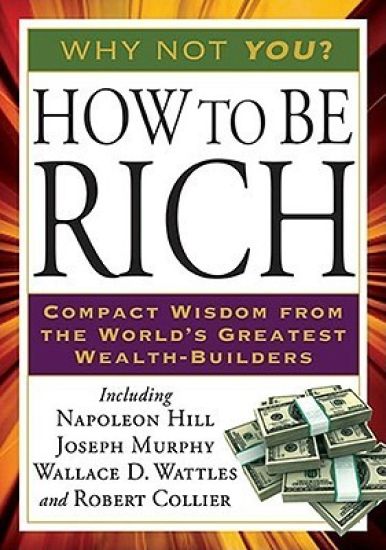
The accumulated wisdom of the most celebrated motivational writers of all time is distilled into one brief playbook for unlocking the prosperity-power of your mind. Why Not You? This is the guiding question of How to Be Rich. To answer it, this compact book gleans must-read passages, powerful meditations, and tantalizing wealth-building techniques from the collected work of the greatest motivational writers ever. Each chapter in How to Be Rich is short enough to read in a grocery store checkout line-yet powerful enough to challenge years of ingrained, self-limiting thinking. How to Be Rich boils down the cumulative insight of leading self-help and positive-thinking guides into one surprisingly concise rule book for releasing your hidden potential. Chapters include: -To Prosper, Let No One Control You by Christian Larson -What We Are Seeking Is Seeking Us: The Mind as Magnet by Julia Seton -The Immense, Secret Power of Gratitude by Wallace D. Wattles -Why Doing More Work Than We're Paid for Leads to Wealth by Napoleon Hill -In Order to Get, We Must Give by Ralph Waldo Trine -The Power of Meditation by James Allen -Fourteen Steps to Success by Joseph Murphy