Kirjailija
Wallace Stegner
Kirjat ja teokset yhdessä paikassa: 38 kirjaa, julkaisuja vuosilta 1981–2024, suosituimpiin kuuluu Angle of Repose. Vertaile teosten hintoja ja tarkista saatavuus suomalaisista kirjakaupoista.
38 kirjaa
Kirjojen julkaisuvuodet: 1981–2024.
A book of timeless importance about the American West and a modern classic by National Book Award- and Pulitzer Prize-winning Wallace Stegner. "Stegner catches the paradoxical essence of American civilzation." --Choice The essays, memoirs, letters, and speeches collected in The Sound of Mountain Water encompass memoir, nature conservation, history, geography, and literature. Compositions delve into the post-World War II boom that brought the Rocky Mountain West--from Montana and Idaho to Utah and Nevada--into the modern age. Other works feature eloquent sketches of the West's history and environment, directing our imagination to the sublime beauty of such places as Robbers Roost and Glen Canyon. A final section examines the state of Western literature, of the mythical past and the diminished present, and analyzesd the difficulties facing any contemporary Western writer. Written over a period of twenty-five years, a time in which the West witnessed rapid changes to its cultural and natural heritage, and by a writer and thinker who will always hold a unique position in modern American letters, The Sound of Mountain Water is a hymn to the Western landscape, an affirmation of the hope emobided therein, and a careful and rich investigation of the West's complex legacy.

This tour-de-force of American literature and a winner of the National Book Award is a profound, intimate, affecting novel from one of the most esteemed literary minds of the last century and a beloved chronicler of the West. Joe Allston is a cantankerous, retired literary agent who is, in his own words, "just killing time until time gets around to killing me." His parents and his only son are long dead, leaving him with neither ancestors nor descendants, tradition nor ties. His job, trafficking the talent of others, has not been his choice. He has passed through life as a spectator, before retreating to the woods of California in the 1970s with only his wife, Ruth, by his side. When an unexpected postcard from a long-lost friend arrives, Allston returns to the journals of a trip he has taken years before, a journey to his mother's birthplace where he once sought a link with his past. Uncovering this history floods Allston with memories, both grotesque and poignant, and finally vindicates him of his past and lays bare that Joe Allston has never been quite spectator enough.
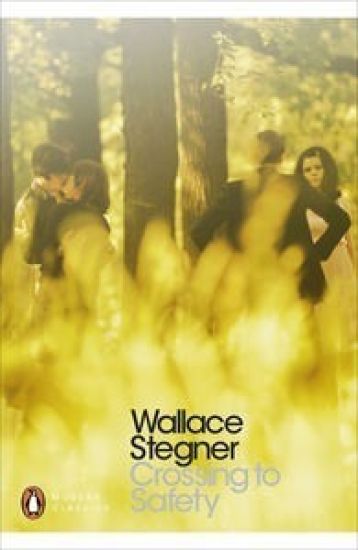
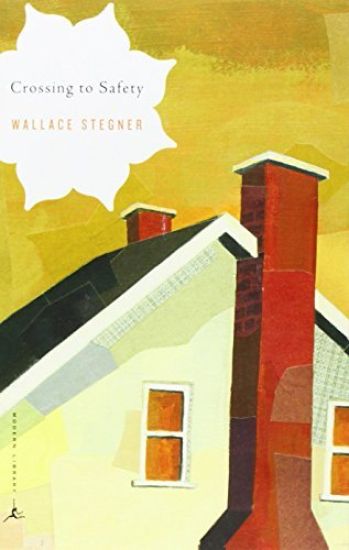
A novel of the friendships and woes of two couples, which tells the story of their lives in lyrical, evocative prose by one of the finest American writers of the late 20th century. When two young couples meet for the first time during the Great Depression, they quickly find they have much in common: Charity Lang and Sally Morgan are both pregnant, while their husbands Sid and Larry both have jobs in the English department at the University of Wisconsin. Immediately a lifelong friendship is born, which becomes increasingly complex as they share decades of love, loyalty, vulnerability and conflict. Written from the perspective of the aging Larry Morgan,Crossing to Safety is a beautiful and deeply moving exploration of the struggle of four people to come to terms with the trials and tragedies of everyday life. With an introduction by Jane Smiley. Wallace Stegner (1909-1993) was the author of, among other novels, Remembering Laughter, 1937; A Shooting Star, 1961; Angle of Repose (Pulitzer Prize), 1971; The Spectator Bird (National Book award), 1977; Recapitulation, 1979. Three of his short stories have won O. Henry prizes, and in 1980 he received the Robert Kirsch award from the Los Angeles Times for his lifetime literary achievements. His collected stories were published in 1990. Jane Smiley is the author of many novels and works of non-fiction, including, most recently, "Thirteen Ways of Looking at the Novel", about the history and anatomy of the novel. Her most recent novel is "Good Faith". She won the Pulitzer Prize in 1992 for "A Thousand Acres", and was shortlisted for The Orange Prize in 2001 for Horse Heaven.
'Timely and timeless ... Will hold any reader to its last haunting page' Chicago TribuneThe early life of Joe Allston, the retired literary agent of Stegner's National Book Award-winning novel, The Spectator Bird, features in this disquieting and keenly observed novel. Scarred by the senseless death of their son and baffled by the engulfing chaos of the 1960s, Allston and his wife, Ruth, have left the coast for a California retreat. And although their new home looks like Eden, it also has serpents: Jim Peck, a messianic exponent of drugs, yoga and sex; and Marian Catlin, an attractive young woman whose otherworldly innocence is far more appealing - and far more dangerous. 'The Great Gatsby captures the twenties and yet transcends them. All the Little Live Things is a comparable achievement for the sixties ... Stegner's craft is here at an apex' Virginia Quarterly Review
'One of our greatest contemporary novelists' Washington PostBruce Mason returns to Salt Lake City not for his aunt's funeral, but to encounter the place he fled in bitterness forty-five years ago. A successful statesman and diplomat, Mason had buried his awkward childhood to become a figure who commanded international respect. But the realities of the present recede in the face of ghosts of his past. As he makes the perfunctory arrangements for the funeral, his inner pilgrimage leads him to the father who darkened his childhood, the mother whose support was both redeeming and embarrassing, the friend who drew him into the respectable world of which he so craved to be a part, and the woman he nearly married. In this profoundly moving book, Stegner has drawn an intimate portrait of a man understanding how his life has been shaped by experiences seemingly remote and inconsequential.
'This is the age for the short story. None will be better or more worthy of admiration than Wallace Stegner's Collected Stories' Washington Post Book WorldIn a literary career spanning more than fifty years, Wallace Stegner, winner of a Pulitzer Prize and the National Book Award, has created a remarkable record of the history and culture of twentieth-century America. These thirty-one stories demonstrate why he is acclaimed as one of America's master storytellers. Here are tales of young love and older wisdom, of the order and consistency of the natural world and the chaos, contradictions and continuities of the human being.'Exemplary stories ... The reader of Stegner's writing is immediately reminded of an essential America ... a distinct place, a unique people, a common history, and a shared heritage remembered as only Stegner can' Los Angeles Times
The Twilight of Self Reliance
Wallace Stegner; William Bass
University of Utah Press,U.S.
2009
nidottu
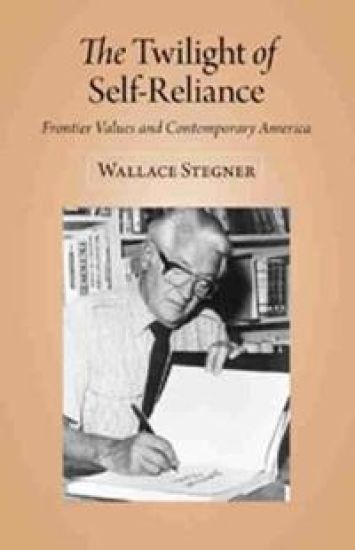
We can refresh ourselves with our own best image, and renew our image of America: not as Perfection, not as Heaven on Earth, not as New Jerusalem, but as flawed glory and exhilarating task.' –-from The Twilight of Self-Reliance: Frontier Values and Contemporary AmericaThe occasions of the centennial of Wallace Stegner’s birth on February 18, 1909, and the University of Utah Press’s announcement of the Wallace Stegner Publication Prize in Environmental and American Western History have provided the impetus for the re-publication of 'The Twilight of Self-Reliance: Frontier Values and Contemporary America,' which was originally delivered as a Tanner Lecture at the University of Utah on February 25, 1980.
"A finger smashed in a car door and a missed geology examination at the University of Utah led Wallace Stegner to a special assignment about Clarence E. Dutton, thence to John Wesley Powell, and finally in 1954 to publication of what is arguably the single best nonfiction book dealing with the American West. "Beyond the Hundredth Meridian" remains in print fifty-two years after its initial appearance. Not many books have survived that length of time and thrived, despite competing works on the same subject. This combination of biography, history, and environmental primer written with the flair and the technical skill of a novelist who could masterfully evoke scenes and sustain a gripping factual narrative sprang from "Clarence Edward Dutton: An Appraisal." Seldom has such a classic book had such a humble beginning. Stegner was a young English instructor at the University of Utah when he produced the Dutton essay. He was ambitious and desperate for recognition, a raise (he was earning $1,700 a year), and steady employment in the Depression years. The essay contains hints, in terms of style and content, of what Stegner would eventually produce. "Dutton" was Stegner s first published work of nonfiction, and it is fair to say that it lead him, in conjunction with Bernard DeVoto s prodding, to the subject of conservation." from the foreword "Clarence Edward Dutton: An Appraisal" was first published by the University of Utah in 1936 and has since become a rarity on the antiquarian book market. It is reproduced in facsimile for this edition."
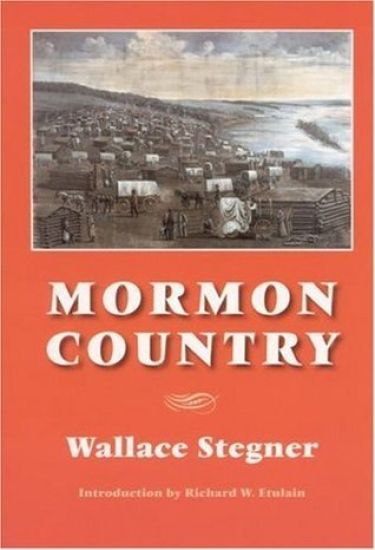
Where others saw only sage, a salt lake, and a great desert, the Mormons saw their “lovely Deseret,” a land of lilacs, honeycombs, poplars, and fruit trees. Unwelcome in Ohio, Missouri, and Illinois, they migrated to the dry lands between the Rockies and the Sierra Nevada to establish Mormon country, a wasteland made green. Like the land the Mormons settled, their habits stood in stark contrast to the frenzied recklessness of the American West. Opposed to the often prodigal individualism of the West, Mormons lived in closely knit – some say ironclad – communities. The story of Mormon country is one of self-sacrifice and labor spent in the search for an ideal in the most forbidding territory of the American West. Richard W. Etulain provides a new introduction to this edition.
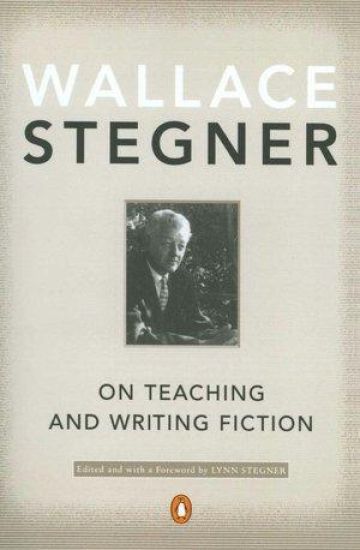
Wallace Stegner founded the acclaimed Stanford Writing Program-a program whose alumni include such literary luminaries as Larry McMurtry, Robert Stone, and Raymond Carver. Here Lynn Stegner brings together eight of Stegner's previously uncollected essays-including four never-before-published pieces -on writing fiction and teaching creative writing. In this unique collection he addresses every aspect of fiction writing-from the writer's vision to his or her audience, from the use of symbolism to swear words, from the mystery of the creative process to the recognizable truth it seeks finally to reveal. His insights will benefit anyone interested in writing fiction or exploring ideas about fiction's role in the broader culture.
Where the Bluebird Sings to the Lemonade Springs: Living and Writing in the West
Wallace Stegner
Modern Library
2002
nidottu
Halvin toimitettuna 21,70 €
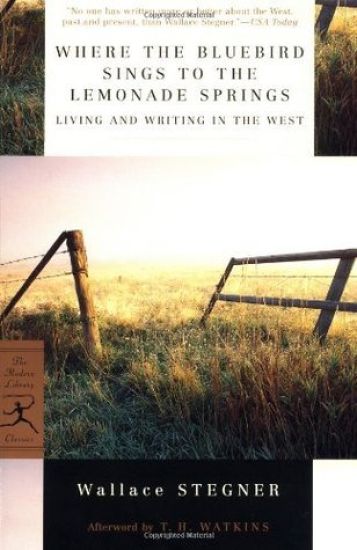
Nominated for a National Book Critics Circle award, Where the Bluebird Sings to the Lemonade Springs gathers together Wallace Stegner s most important and memorable writings on the American West: its landscapes, diverse history, and shifting identity; its beauty, fragility, and power. With subjects ranging from the writer s own migrant childhood to the need to protect what remains of the great western wilderness (which Stegner dubs the geography of hope ) to poignant profiles of western writers such as John Steinbeck and Norman Maclean, this collection is a riveting testament to the power of place. At the same time it communicates vividly the sensibility and range of this most gifted of American writers, historians, and environmentalists."
Called a "magnificently crafted story...brimming with wisdom" by Howard Frank Mosher in The Washington Post Book World, Crossing to Safety has, since its publication in 1987, established itself as one of the greatest and most cherished American novels of the twentieth century. Tracing the lives, loves, and aspirations of two couples who move between Vermont and Wisconsin, it is a work of quiet majesty, deep compassion, and powerful insight into the alchemy of friendship and marriage.
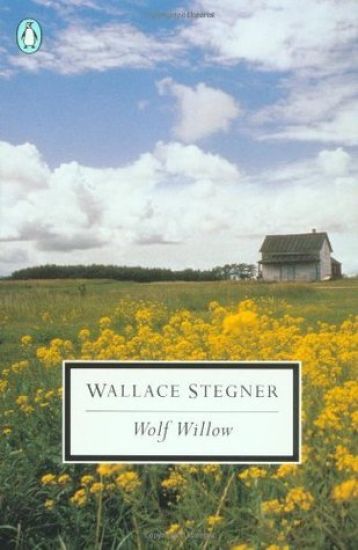
Wolf Willow: A History, a Story, and a Memory of the Last Plains Frontier
Wallace Stegner
PENGUIN CLASSICS
2000
nidottu
Wallace Stegner weaves together fiction and nonfiction, history and impressions, childhood remembrance and adult reflections in this unusual portrait of his boyhood. Set in Cypress Hills in southern Saskatchewan, where Stegner's family homesteaded from 1914 to 1920, Wolf Willow brings to life both the pioneer community and the magnificent landscape that surrounds it. For more than seventy years, Penguin has been the leading publisher of classic literature in the English-speaking world. With more than 1,700 titles, Penguin Classics represents a global bookshelf of the best works throughout history and across genres and disciplines. Readers trust the series to provide authoritative texts enhanced by introductions and notes by distinguished scholars and contemporary authors, as well as up-to-date translations by award-winning translators.
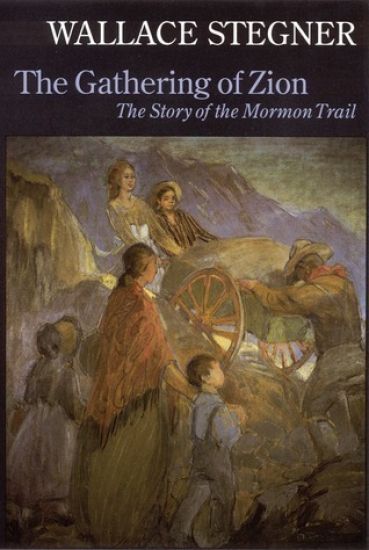
Pulitzer Prize-winning author Wallace Stegner tells about a thousand-mile migration marked by hardship and sudden death—but unique in American history for its purpose, discipline, and solidarity. Other Bison Books by Wallace Stegner include Mormon Country, Recapitulation, Second Growth, and Women on the Wall.
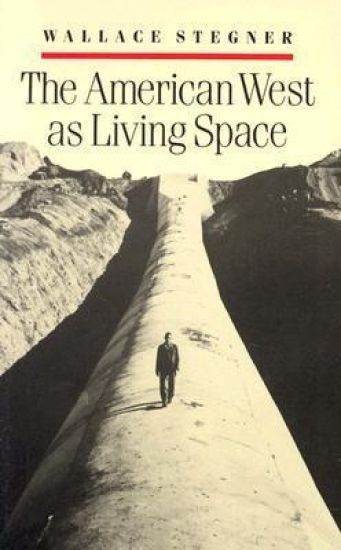
A passionate work about the fragile and arid West that Stegner loves
A New England village, untouched by history since the American Revolution, is the unquiet arena containing, but just barely, the aloof natives and the summer residents. Their paths cross, happily or disastrously, in a book that seems too real to be fiction. As Wallace Stegner writes, the conflict on this particular frontier "has been reproduced in an endlessly changing pattern all over the United States."
Written during World War II and its immediate aftermath, the eighteen stories of The Women on the Wall move from women to war and back again, but it is the women who remain central. There are Alma, a war bride who runs a farm better than the neighbor men; Lucy, a former WAAF, working through college; Tamsen, who keeps her husband drunk so she can do as she pleases; and the women on the wall, who, with nothing to do but wait for their husbands to return from the war, find their private consolations. To these stories Wallace Stegner brings the same skill and thoughtfulness that won him the National Book Award for The Spectator Bird