
Kirjailija
Walt Whitman
Kirjat ja teokset yhdessä paikassa: 515 kirjaa, julkaisuja vuosilta 1855–2026, suosituimpiin kuuluu Ny Jord 3-4. Vertaile teosten hintoja ja tarkista saatavuus suomalaisista kirjakaupoista.
515 kirjaa
Kirjojen julkaisuvuodet: 1855–2026.
The maker of moons. By: Robert W. Chambers, and By: Walt Whitman: The Maker of Moons is an 1896 short story collection by Robert W. Chambers w
Walt Whitman; Robert W. Chambers
Createspace Independent Publishing Platform
2016
nidottu
Walter "Walt" Whitman ( May 31, 1819 - March 26, 1892) was an American poet, essayist, and journalist. A humanist, he was a part of the transition between transcendentalism and realism, incorporating both views in his works... The Maker of Moons is an 1896 short story collection by Robert W. Chambers which followed the publication of Chambers' most famous work, The King in Yellow (1895). It contained eight new stories, including the title story "The Maker of Moons", one of his weird tales, and several romantic Art Nouveau stories, concluding with two less distinguished weird tales. The latter were subsequently incorporated into the episodic novel In Search of the Unknown. The first three stories are linked by the theme of a dream wife who is named Ysonde, and they form a triptych. The weird nature of the first story has interesting echoes in the other two, which feature picturesque animal figures, such as a Red Ibis and a disagreeable porcupine. The story "In The Name of the Most High" is a war story set in the American Civil War. The next two stories are humorous romantic tales with a fishing theme and setting. Chambers' love of natural scenery illuminates most of the stories. The quality throughout is rather fine. Published by Putnam's, New York and London, in 1896. The first edition featured a frontispiece with a black and white illustration by Lancelot Speed. Contents: "The Maker of Moons" "The Silent Land" "The Black Water" "In the Name of the Most High" "Boy's Sister" "The Crime" "A Pleasant Evening" "The Man At The Next Table"... Robert William Chambers (May 26, 1865 - December 16, 1933) was an American artist and fiction writer, best known for his book of short stories entitled The King in Yellow, published in 1895. He was born in Brooklyn, New York, to William P. Chambers (1827-1911), a corporate and bankruptcy lawyer, and Caroline Smith Boughton (1842-1913). His parents met when Caroline was twelve years old and William P. was interning with her father, Joseph Boughton, a prominent corporate lawyer. Eventually the two formed the law firm of Chambers and Boughton which continued to prosper even after Joseph's death in 1861. Robert's great-grandfather, William Chambers (birth unknown), a lieutenant in the British Royal Navy, was married to Amelia Saunders, (1765-1822), the great grand daughter of Tobias Saunders, of Westerly, Rhode Island. The couple moved from Westerly, to Greenfield, Massachusetts and then to Galway, New York, where their son, also William Chambers, (1798-1874) was born. The second William graduated from Union College at the age of 18, and then went to a college in Boston, where he studied to be a doctor. Upon graduating, he and his wife, Eliza P. Allen (1793-1880), a direct descendant of Roger Williams, the founder of Providence, Rhode Island were among the first settlers of Broadalbin, New York. His brother was architect Walter Boughton Chambers. Robert was first educated at the Brooklyn Polytechnic Institute, and then entered the Art Students' League at around the age of twenty, where the artist Charles Dana Gibson was his fellow student. Chambers studied at the cole des Beaux-Arts, and at Acad mie Julian, in Paris from 1886 to 1893, and his work was displayed at the Salon as early as 1889. On his return to New York, he succeeded in selling his illustrations to Life, Truth, and Vogue magazines. Then, for reasons unclear, he devoted his time to writing, producing his first novel, In the Quarter (written in 1887 in Munich). His most famous, and perhaps most meritorious, effort is The King in Yellow, a collection of Art Nouveau short stories published in 1895. This included several famous weird short stories which are connected by the theme of a fictitious drama of the same title, which drives those who read it insane. E. F. Bleiler described The King in Yellow as one of the most important works of American supernatural fiction. It was also strongly admired by H. P. Lovecraft and his circle
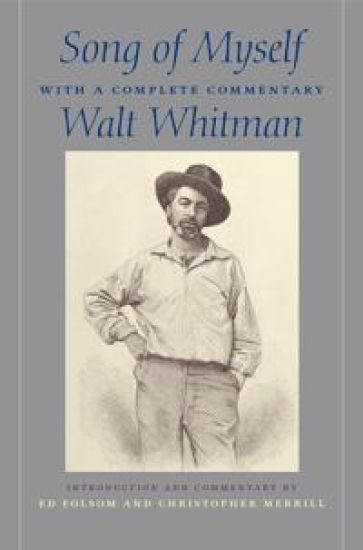
This book offers the most comprehensive and detailed reading to date of Song of Myself. One of the most distinguished critics in Whitman studies, Ed Folsom, and one of the nation’s most prominent writers and literary figures, Christopher Merrill, carry on a dialog with Whitman, and with each other, section by section, as they invite readers to enter into the conversation about how the poem develops, moves, improvises, and surprises. Instead of picking and choosing particular passages to support a reading of the poem, Folsom and Merrill take Whitman at his word and interact with “every atom” of his work. The book presents Whitman’s final version of the poem, arranged in fifty-two sections; each section is followed by Folsom’s detailed critical examination of the passage, and then Merrill offers a poet’s perspective, suggesting broader contexts for thinking about both the passage in question and the entire poem.

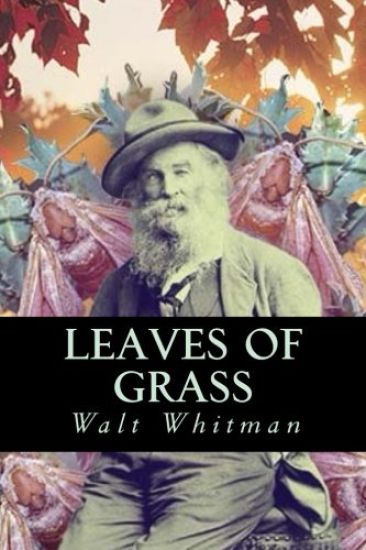
Leaves of Grass is a poetry collection by the American poet Walt Whitman (1819-1892). Although the first edition was published in 1855, Whitman spent most of his professional life writing and re-writing Leaves of Grass, revising it multiple times until his death. This resulted in vastly different editions over four decades-the first a small book of twelve poems and the last a compilation of over 400.

Leaves of Grass: The First (1855) Edition
Walt Whitman
Createspace Independent Publishing Platform
2016
nidottu
Leaves of Grass: The Original 1855 Edition by: Walt Whitman
Walt Whitman
Createspace Independent Publishing Platform
2016
nidottu
Halvin toimitettuna 14,50 €
Leaves of grass, By Walt Whitman (poetry)
Walt Whitman
Createspace Independent Publishing Platform
2016
nidottu
Leaves of Grass is a poetry collection by the American poet Walt Whitman (1819-1892). Though the first edition was published in 1855, Whitman spent most of his professional life writing and re-writing Leaves of Grass, revising it multiple times until his death. This resulted in vastly different editions over four decades-the first a small book of twelve poems and the last a compilation of over 400. The poems of Leaves of Grass are loosely connected, with each representing Whitman's celebration of his philosophy of life and humanity. This book is notable for its discussion of delight in sensual pleasures during a time when such candid displays were considered immoral. Where much previous poetry, especially English, relied on symbolism, allegory, and meditation on the religious and spiritual, Leaves of Grass (particularly the first edition) exalted the body and the material world. Influenced by Ralph Waldo Emerson and the Transcendentalist movement, itself an offshoot of Romanticism, Whitman's poetry praises nature and the individual human's role in it. However, much like Emerson, Whitman does not diminish the role of the mind or the spirit; rather, he elevates the human form and the human mind, deeming both worthy of poetic praise. With one exception, the poems do not rhyme or follow standard rules for meter and line length. Among the poems in the collection are "Song of Myself", "I Sing the Body Electric", "Out of the Cradle Endlessly Rocking". Later editions included Whitman's elegy to the assassinated President Abraham Lincoln, "When Lilacs Last in the Dooryard Bloom'd". Leaves of Grass was highly controversial during its time for its explicit sexual imagery, and Whitman was subject to derision by many contemporary critics. Over time, the collection has infiltrated popular culture and been recognized as one of the central works of American poetry. Walter "Walt" Whitman ( May 31, 1819 - March 26, 1892) was an American poet, essayist, and journalist. A humanist, he was a part of the transition between transcendentalism and realism, incorporating both views in his works. Whitman is among the most influential poets in the American canon, often called the father of free verse. His work was very controversial in its time, particularly his poetry collection Leaves of Grass, which was described as obscene for its overt sexuality. Born in Huntington on Long Island, Whitman worked as a journalist, a teacher, a government clerk, and-in addition to publishing his poetry-was a volunteer nurse during the American Civil War. Early in his career, he also produced a temperance novel, Franklin Evans (1842). Whitman's major work, Leaves of Grass, was first published in 1855 with his own money. The work was an attempt at reaching out to the common person with an American epic. He continued expanding and revising it until his death in 1892. After a stroke towards the end of his life, he moved to Camden, New Jersey, where his health further declined. When he died at age 72, his funeral became a public spectacle....
Poems by Walt Whitman
William Michael Rossetti; Walt Whitman
Createspace Independent Publishing Platform
2016
nidottu
Manly Health and Training with Off-hand Hints towards their Conditions
Walt Whitman; Mose Velsor
Arcadia Publishing (SC)
2016
nidottu
Written by Walt Whitman under the pseudonym Mose Velsor, and originally published in the New York Atlas between 1858-1860, Manly Health and Training is a series of Whitman essays on topics such as diet, exercise, aging, stress, and medicine. These previously unknown Whitman essays were rediscovered in the summer of 2015.
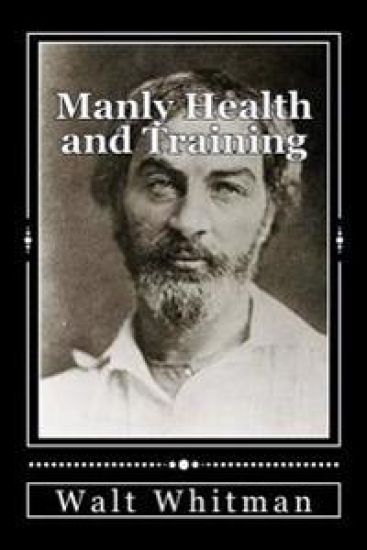
Manly Health and Training: With Off-Hand Hints Toward Their Conditions - New American Edition
Evan Rofheart; Walt Whitman
Createspace Independent Publishing Platform
2016
nidottu
Walt Whitman, an icon of the original American Transcendentalists, wrote Manly Health and Training a decidedly non-transcendentalist manifesto in 1858. As was his style he wrote it using one of his common pen names, Mose Velsor. It was originally published in serial form by the newspaper The New York Atlas, over several months. By the politically correct standards of today, it is unlikely that it would have seen the light of day. In many respects, Manly Health is a very American individualistic guide to life. Whitman touches on many things, food, alcohol, sex, boxing, bathing, footwear and just about anything else he felt warranted inclusion. In an interview in the New York Times, Ed Folsom, a professor of English at the University of Iowa and Whitman scholar, speaking about Manly Health said, "One of Whitman's core beliefs was that the body was the basis of democracy." He continues, Manly Health ..".is a hymn to the male body, as well as a guide to taking care of what he saw as the most vital unit of democratic living." Manly Health is an important window into mid-1800s North-Eastern America. Enlightenment Press is pleased to be making this valuable addition to the body of Walt Whitman's work available.
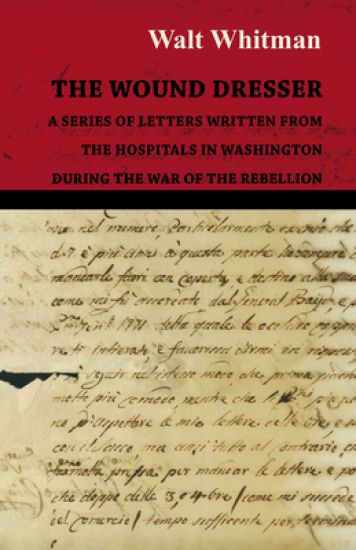
The Wound Dresser - A Series of Letters Written from the Hospitals in Washington During the War of the Rebellion
Walt Whitman
Read Books
2016
pokkari
First published in 1897, "The Wound Dresser" contains a collection of Walt Whitman's letters written from hospitals in Washington during the American civil war. This fascinating volume offers a unique glimpse into Whitman's experiences volunteering as a nurse in army hospitals during the American civil war, providing the reader with a telling insight into the mind of America's greatest poet. "The Wound Dresser" was published posthumously by Whitman's literary executor Richard Maurice Bucke. Walt Whitman (1819 - 1892) was an American essayist, poet, and journalist who was pivotal to the transition from transcendentalism to realism. His work was notably divisive and claimed by many to be obscene when first published, but he is now considered to be one of the most influential people in the American poetic canon and the "father of free verse". Other notable works by this author include: "Franklin Evans" (1842), "Life and Adventures of Jack Engle" (1852), and "Leaves of Grass" (1855). Many vintage books such as this are becoming increasingly scarce and expensive. It is with this in mind that we are republishing this volume now in an affordable, modern, high-quality edition complete with the original text and artwork.