
Kirjailija
Walter Allen
Kirjat ja teokset yhdessä paikassa: 21 kirjaa, julkaisuja vuosilta 2007–2025, suosituimpiin kuuluu Ulysses S. Grant. Vertaile teosten hintoja ja tarkista saatavuus suomalaisista kirjakaupoista.
21 kirjaa
Kirjojen julkaisuvuodet: 2007–2025.

Radical Brown
Margaret Beale Spencer; Nancy E. Dowd; Walter Allen
Harvard Educational Publishing Group
2024
nidottu
A rallying cry for equitable education informed by a revolutionary re-reading of Brown v. Board of Education, on the 70th anniversary of the ruling. In Radical Brown, renowned developmental scholar Margaret Beale Spencer and critical legal analyst Nancy E. Dowd offer a fresh perspective on the Brown v. Board of Education decision. Noting that decades of flawed implementation have subverted Brown's great promise of educational equality for K–12 public school students, Spencer and Dowd propose a bold framework for a new interpretation of the Supreme Court decision, one that is inclusive, identity affirming, and culturally sensitive. Even as they envision a more equitable future for US students, Spencer and Dowd look critically at the historical context of Brown v. Board of Education, examining the roots of the inequality and segregation the ruling attempted to address, the resistance that the resulting school integration met, and the legacy of attempts to enforce the ruling. They trace the ways in which post-Brown policies have reinforced race privilege for white students and race subordination for Black and marginalised students and show how structural and cultural racism in education have impeded youth development and caused collective identity injury for all. Ultimately, this galvanising work introduces a way forward that upholds the Brown ruling's intended meaning and mandate. Radical Brown offers suggestions for action, from everyday practice to policy change, to help legislators, school boards, scholars, and educators correct course and enact the decision's true intent--of safeguarding rights based on a common humanity.

Ulysses S. Grant, a classical book, has been considered important throughout the human history, and so that this work is never forgotten we at Alpha Editions have made efforts in its preservation by republishing this book in a modern format for present and future generations. This whole book has been reformatted, retyped and designed. These books are not made of scanned copies of their original work and hence the text is clear and readable.

Behind the Diversity Numbers
W. Carson Byrd; Walter Allen
Harvard Educational Publishing Group
2021
nidottu
Behind the Diversity Numbers uncovers how frequently used approaches to examine and understand race-related issues on college campuses can reinforce racism and inequality, rather than combat them. The book argues that educational leaders must look beyond quantitative metrics in order to develop institutional policies and practices that promote racial equality. Utilizing nearly thirty years of data and research, W. Carson Byrd shows that limiting conversations about racial inequality to numeric representation and outcomes fails to take into account that inequality is also an experience. Quantitative-heavy approaches can turn students into numbers, devaluing their lived experiences of marginalization on campus. Byrd repositions these experiences to better understand how to design effective analytic and policy strategies to promote racial equity and justice in higher education. Behind the Diversity Numbers focuses on how racial stratification and inequality can hide in plain sight behind analyses of diversity, equity, and inclusion. It provides readers with a range of suggestions for institutional change, including how to incorporate racial equity as a central component of higher education, especially when it comes to analyzing and monitoring data that can inform decision-making and policy making. The conclusion offers recommendations for systemic institutional change and for incorporating racial justice and equity as central components of higher education. Behind the Diversity Numbers will enhance how institutions, higher education agencies, and policy makers think about what should be done to reduce racial inequality and to create diverse and equitable campuses.

Behind the Diversity Numbers
W. Carson Byrd; Walter Allen
Harvard Educational Publishing Group
2021
sidottu
Behind the Diversity Numbers uncovers how frequently used approaches to examine and understand race-related issues on college campuses can reinforce racism and inequality, rather than combat them. The book argues that educational leaders must look beyond quantitative metrics in order to develop institutional policies and practices that promote racial equality. Utilizing nearly thirty years of data and research, W. Carson Byrd shows that limiting conversations about racial inequality to numeric representation and outcomes fails to take into account that inequality is also an experience. Quantitative-heavy approaches can turn students into numbers, devaluing their lived experiences of marginalization on campus. Byrd repositions these experiences to better understand how to design effective analytic and policy strategies to promote racial equity and justice in higher education. Behind the Diversity Numbers focuses on how racial stratification and inequality can hide in plain sight behind analyses of diversity, equity, and inclusion. It provides readers with a range of suggestions for institutional change, including how to incorporate racial equity as a central component of higher education, especially when it comes to analyzing and monitoring data that can inform decision-making and policy making. The conclusion offers recommendations for systemic institutional change and for incorporating racial justice and equity as central components of higher education. Behind the Diversity Numbers will enhance how institutions, higher education agencies, and policy makers think about what should be done to reduce racial inequality and to create diverse and equitable campuses.





Born in Ohio, the son of a tanner, Ulysses Grant was a man who initially struggled for success. He was, at best, a very average student at West Point, and his first career in the US Army was ended by an enforced resignation over a charge of intoxication. After leaving the Army, Grant was unsuccessful as a farmer, a bill collector and a salesman, but when the Civil War came, he was a man who found greatness, rising to the rank of Commanding General of the United States Army, leading the armies of the Union to victory in the Civil War before later becoming the two-term 18th President of the United States. This biography of President Grant was written in 1901, less than twenty years after his death, and offers a much more immediate image of Grant than later biographies.



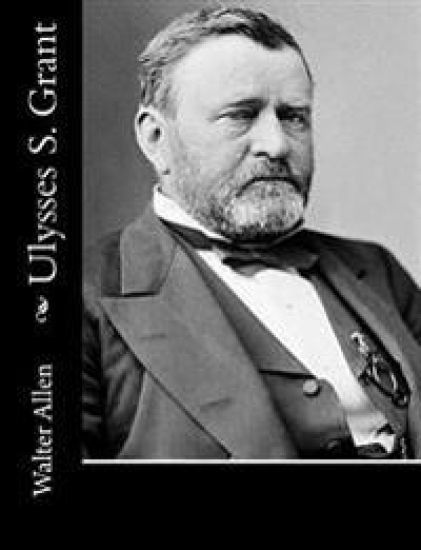


Ulysses S. Grant (born Hiram Ulysses Grant (April 27, 1822 - July 23, 1885) was an American soldier and statesman who served as Commanding General of the Army and President of the United States, the highest positions in military and government. A prominent United States Army general during the American Civil War, Grant led the Union Army to victory over the Confederacy with the supervision of Abraham Lincoln. As the 18th President of the United States (1869-77) Grant led the Republicans in their efforts to remove the vestiges of Confederate nationalism and slavery during Reconstruction. Grant was born and raised in Ohio by Methodist parents whose lineage in the new world went back several generations. As a youth he often worked in his father's tannery and showed an early talent for riding, taming and managing horses. After graduating from West Point in 1843 Grant served with distinction in the Mexican-American War. Upon his return he married Julia Dent, and together they had four children. Grant retired from the army in 1854 and struggled financially in civilian life. When the Civil War began in 1861 he rejoined the army and quickly rose through the ranks. As a general he took control of Kentucky, most of Tennessee, won major battles at Shiloh and seized Vicksburg, gaining control of the Mississippi River and dividing the Confederacy. These victories, combined with those in the Chattanooga Campaign, persuaded Abraham Lincoln that Grant was the general best suited to lead the combined Union armies. Grant was promoted to Lieutenant General, a rank previously reserved for George Washington, in March 1864. He confronted Robert E. Lee, trapping his army in their defense of Richmond, while coordinating a series of campaigns in other theaters. In April 1865 Lee surrendered to Grant at Appomattox, effectively ending the war. Historians have hailed Grant's military genius, and his strategies are featured in military history textbooks. After Lincoln's assassination, Grant became increasingly disillusioned by President Andrew Johnson's approach to Reconstruction, and drifted toward the "Radical" Republicans. Elected president in 1868, Grant was the youngest man ever elected. He stabilized the post-war national economy, created the Department of Justice, used the military to enforce laws in the former Confederacy and prosecuted the Ku Klux Klan. Grant strengthened the Republican Party in the South and signed three civil rights acts into law. He appointed African-Americans and Jewish-Americans to prominent federal offices. In 1871 he created the first Civil Service Commission. The Democrats and Liberal Republicans united behind President Grant's opponent in the presidential election of 1872, but Grant was re-elected by a large margin. Generally regarded as personally honest, he nonetheless faced accusations of corruption within his administration. Grant's Peace Policy with Native Americans was a bold departure for its time. In foreign policy, President Grant sought to increase trade and influence while remaining at peace with the world. With Secretary of State Hamilton Fish, President Grant successfully resolved the Alabama claims with Great Britain. Grant and Fish negotiated a peaceful resolution with Spain over the Virginius Affair. Congress rejected Grant's initiative to annex the Dominican Republic, creating a rift among Republicans. In national affairs, Grant's administration implemented a gold standard and sought to strengthen the dollar. Grant's immediate response to the Panic of 1873 failed to halt a severe industrial depression that produced high unemployment, deflation, and bankruptcies. When he left office in 1877, he embarked on a two-and-a-half-year world tour that captured favorable global attention for him and the United States.

General Grant: The Riverside Biographical Series Volume 7
Walter Allen
Createspace Independent Publishing Platform
2013
nidottu


Governor Chamberlain's Administration In South Carolina
Walter Allen
KESSINGER PUBLISHING, LLC
2008
nidottu