Kirjojen hintavertailu – 12 859 818 kirjaa ja 27 kauppaa

Kirjailija

Walter Benjamin

Kirjat ja teokset yhdessä paikassa: 262 kirjaa, julkaisuja vuosilta 1971–2027, suosituimpiin kuuluu Charles Baudelaire. Vertaile teosten hintoja ja tarkista saatavuus suomalaisista kirjakaupoista.

262 kirjaa

Kirjojen julkaisuvuodet: 1971–2027.

Messiaanisen sirpaleita

Messiaanisen sirpaleita

Walter Benjamin

TUTKIJALIITTO
2023
nidottu
Tämä valikoima Walter Benjaminin (1892-1940) - saksanjuutalaisen esseistin, kirjallisuuskriitikon, kielen ja historian filosofin - kirjoituksia pyrkii tekemään Benjaminin ajattelua tunnetuksi suomalaiselle yleisölle. Kokoelma sisältää esseitä muun muassa kielestä, kirjallisuudesta, taiteesta ja filosofiasta.
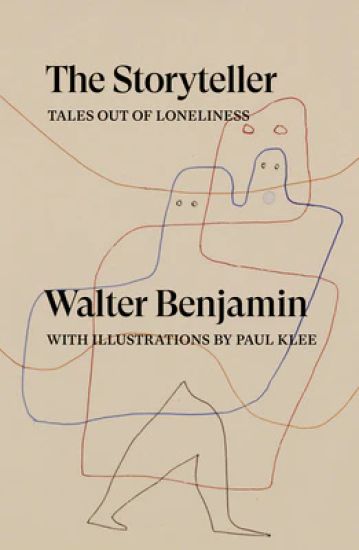
The Storyteller

The Storyteller

Walter Benjamin

Verso Books
2023
nidottu

Halvin toimitettuna 20,30 €

The Storyteller gathers for the first time the fiction of the legendary critic and philosopher Walter Benjamin, best known for his groundbreaking studies of culture and literature, including Illuminations, One-Way Street and The Arcades Project. His stories revel in the erotic tensions of city life, cross the threshold between rational and hallucinatory realms, celebrate the importance of games, and delve into the peculiar relationship between gambling and fortune-telling, and explore the themes that defined Benjamin. The novellas, fables, histories, aphorisms, parables and riddles in this collection are brought to life by the playful imagery of the modernist artist and Bauhaus figure Paul Klee.
Das Kunstwerk im Zeitalter seiner technischen Reproduzierbarkeit

Das Kunstwerk im Zeitalter seiner technischen Reproduzierbarkeit

Redaktion Gröls-Verlag; Walter Benjamin

Grols Verlag
2023
sidottu
"Als Marx die Analyse der kapitalistischen Produktionsweise unternahm, war diese Produktionsweise in den Anf ngen. Marx richtete seine Unternehmungen so ein, dass sie prognostischen Wert bekamen. Er ging auf die Grundverh ltnisse der kapitalistischen Produktion zur ck und stellte sie so dar, dass sich aus ihnen ergab, was man k nftighin dem Kapitalismus noch zutrauen k nne. Es ergab sich, dass man ihm nicht nur eine zunehmend versch rfte Ausbeutung der Proletarier zutrauen k nne, sondern schlie lich auch die Herstellung von Bedingungen, die die Abschaffung seiner selbst m glich machen. Die im folgenden neu in die Kunsttheorie eingef hrten Begriffe unterscheiden sich von gel ufigeren dadurch, dass sie f r die Zwecke des Faschismus vollkommen unbrauchbar sind. Dagegen sind sie zur Formulierung revolution rer Forderungen in der Kunstpolitik brauchbar." Walter Benjamin (aus dem Vorwort) - Gr ls-Klassiker
Das Kunstwerk im Zeitalter seiner technischen Reproduzierbarkeit
"Als Marx die Analyse der kapitalistischen Produktionsweise unternahm, war diese Produktionsweise in den Anf ngen. Marx richtete seine Unternehmungen so ein, dass sie prognostischen Wert bekamen. Er ging auf die Grundverh ltnisse der kapitalistischen Produktion zur ck und stellte sie so dar, dass sich aus ihnen ergab, was man k nftighin dem Kapitalismus noch zutrauen k nne. Es ergab sich, dass man ihm nicht nur eine zunehmend versch rfte Ausbeutung der Proletarier zutrauen k nne, sondern schlie lich auch die Herstellung von Bedingungen, die die Abschaffung seiner selbst m glich machen. Die im folgenden neu in die Kunsttheorie eingef hrten Begriffe unterscheiden sich von gel ufigeren dadurch, dass sie f r die Zwecke des Faschismus vollkommen unbrauchbar sind. Dagegen sind sie zur Formulierung revolution rer Forderungen in der Kunstpolitik brauchbar." Walter Benjamin (aus dem Vorwort) - Gr ls-Klassiker
The Work of Art in the Age of Mechanical Reproduction
Walter Benjamin discusses whether art is diminished by the modern culture of mass replication, arriving at the conclusion that the aura or soul of an artwork is indeed removed by duplication. In an essay critical of modern fashion and manufacture, Benjamin decries how new technology affects art. The notion of fine arts is threatened by an absence of scarcity; an affair which diminishes the authenticity and essence of the artist's work. Though the process of art replication dates to classical antiquity, only the modern era allows for a mass quantity of prints or mass production. Given that the unique aura of an artist's work, and the reaction it provokes in those who see it, is diminished, Benjamin posits that artwork is much more political in significance. The style of modern propaganda, of the use of art for the purpose of generating raw emotion or arousing belief, is likely to become more prevalent versus the old-fashioned production of simpler beauty or meaning in a cultural or religious context.
Über Sprache überhaupt und über die Sprache des Menschen
"Jede u erung menschlichen Geisteslebens kann als eine Art der Sprache aufgefa t werden, und diese Auffassung erschlie t nach Art einer wahrhaften Methode berall neue Fragestellungen. Man kann von einer Sprache der Musik und der Plastik reden, von einer Sprache der Justiz, 7 die nichts mit denjenigen, in denen deutsche oder englische Rechtsspr che abgefa t sind, unmittelbar zu tun hat, von einer Sprache der Technik, die nicht die Fachsprache der Techniker ist. Sprache bedeutet in solchem Zusammenhang das auf Mitteilung geistiger Inhalte gerichtete Prinzip in den betreffenden Gegenst nden: in Technik, Kunst, Justiz oder Religion." Walter Benjamin (Gr ls-Klassiker - Edition Kleine Klassiker)
Paris, capitale du XIXe siècle

Paris, capitale du XIXe siècle

Walter Benjamin

Shs Editions
2022
pokkari
Con u tout d'abord, entre 1927 et 1929, comme une f erie dialectique proche, par l'inspiration, des d ambulations surr alistes de Breton et surtout d'Aragon, le projet d'essai sur les passages parisiens changea de nature lorsque Walter Benjamin le reprit en 1934. C' tait d sormais un livre que travaillait l'exil allemand r fugi sous l'architecture de fer de la Biblioth que nationale, une oeuvre qui devait tre non seulement une histoire sociale de Paris au XIXe si cle, comme l'annon ait l'Institut de recherche sociale d'Adorno et d'Horkheimer, mais une tentative d'interpr tation globale du XIXe si cle et de son quivoque modernit . "" Chaque poque r ve la suivante "" disait Michelet. Benjamin nous offre, pour d chiffrer les figures quivoques du r ve propre au XIXe si cle, des cat gories aussi originales que f condes qu'il appartient au lecteur d'associer et de combiner: l'ennui, l'oisivet , la construction en fer, les expositions universelles, la mode, le collectionneur, l'int rieur, le miroir, le joueur, les passages, etc. Elles lui permettent de montrer l' mergence de formes de construction, de communication et de transport dans les villes, dont le XXe si cle a pu seul mesurer la port e politique, en m me temps qu'elles lui servent d gager, au commencement m me de ces techniques de masse, une fragile aspiration utopique et une promesse oubli e de libert . C'est cette ambivalence qui fait des Passages, m me sous leur forme fragmentaire, un extraordinaire hommage critique au Paris du XIXe si cle, son architecture et ses crivains.

Unpacking My Library

Unpacking My Library

Walter Benjamin

Eris
2022
nidottu
"I fully realize that my discussion of the mental climate of collecting will confirm many of you in your conviction that this passion is behind the times, in your distrust of the collector type. Nothing is further from my mind than to shake either your conviction or your distrust." Walter Benjamin was one of the great cultural critics of the twentieth century. In Unpacking My Library he offers a strikingly personal meditation on his career as a book collector and on the strange relations that spring up between objects and their owners. Witty, erudite and often moving, this book will resonate with bibliophiles of all kinds.