Kirjojen hintavertailu – 12 859 818 kirjaa ja 27 kauppaa
Kirjailija
Walter Brueggemann
Kirjat ja teokset yhdessä paikassa: 207 kirjaa, julkaisuja vuosilta 1985–2026, suosituimpiin kuuluu Struggling with Scripture. Vertaile teosten hintoja ja tarkista saatavuus suomalaisista kirjakaupoista.
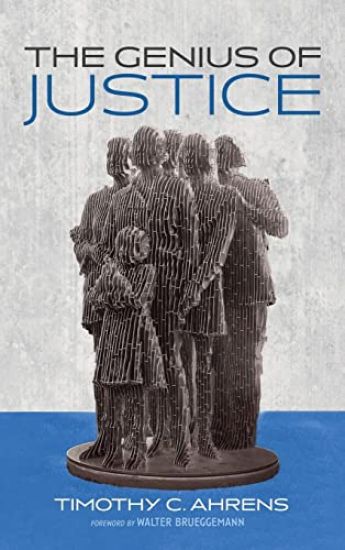
There are geniuses in every field of work and all walks of life. Throughout my life, I have seen the geniuses of justice at work in this nation and in faith communities. This book tells the stories of fifty-three "geniuses of justice." They are Conservative and Reform Jews, Mainline, Pentecostal, Evangelical and Catholic Christians, "spiritual but not religious," women, men; Black, brown, white, gay and straight, young and old. Each is a powerful witness for justice. Each has the "IT" factor of justice burning in their bones. How did they become who they are? What drives them to "do the right thing" on behalf of others that is translatable to anyone, anywhere? These geniuses of justice are "just folks" who are justice folk. They can empower and teach each of us to change the world right where we are. This book passes on their genius for justice to you to strengthen and empower you for "bending the moral arc of the universe" to justice. This book is for everyone to learn something that will empower them to change the world - in the place where they live and have power to make a difference.
Arguably the most imaginative and energetic church response to the pandemic has been that of HeartEdge, the interdenominational church renewal movement founded at St Martin in the Fields by Samuel Wells but now extending beyond the UK to Europe, North America and Australia. From serving thousands of meals on London’s streets to becoming, in all but name, an online conference centre and theological college offering hundreds of events, one outstanding feature of its programme has been Samuel Wells’ monthly conversations about the future of the Church with leading figures from Britain and America, attended by large online audiences. This volume offers a distillation of those conversations which, instead of being preoccupied with decline, focus on what Christian presence and practice might look like in the world that is being reshaped by what the pandemic has revealed, and the theology that is needed to sustain such a vision.
The Walter Brueggemann Library brings together the wide-ranging and enlivening thought of popular biblical scholar Walter Brueggemann over his storied career. Each volume collects previously published work on a biblical theme that has deeply informed Brueggemann's scholarship, in an accessible digest for readers who want to freshly engage his prophetically minded but approachable writing on the topic. In Our Hearts Wait, Brueggemann meditates on the emotional range of our longings and gratitudes in the psalms, revealing how this bold outpouring of our full selves to the divine has effects far beyond introspection. He traces how the language of the psalms offers a template for liturgies that shape not only our collective worship and communities, but the worlds they create and sustain. Words of worship do not fall vacant and inactive—they help bring into being realities both sacred and sociopolitical. Throughout this exploration of the psalms, Brueggemann shows readers how the language we use in worship performs what it proclaims. It nurtures and challenges us in seasons of orientation and praise, disorientation and grief, reorientation, and thanksgiving—bringing our full attention to each experience in its turn. But in doing so, the words and deeds of worship can also sharpen our awareness of social constructions and relationships that undergird our common life. They reveal power imbalances and uneven distributions of resources, and, if we let them, urge us forward in our efforts toward justice. Thus, psalms of praise express trust in and abandonment to God, and also pose sharp critiques of unjust public policies that abandon those who are socially invisible. The psalms of grief and lament accompany communities through real experiences of loss and suffering—but also make room for the sufferers to be heard and to challenge the status quo. The language of worship, when used intentionally and with care, helps to create a reality marked by fidelity, abundance, truth, hope, and dependence on God. With Brueggemann as guide, readers can apprehend the potency of the psalms' bold petition and dialogue with God, giving voice to the distressed and anticipating the transformation of our lives together and as a society. Questions for reflection are included at the end of each chapter, making this book ideal for individual or group study.
The Walter Brueggemann Library brings together the wide-ranging and enlivening thought of popular biblical scholar Walter Brueggemann over his storied career. Each volume collects previously published work on a biblical theme that has deeply informed Brueggemann’s scholarship, in an accessible digest for readers who want to engage his writing on the topic. This first volume in the series, Deliver Us, fittingly begins with the narrative of the exodus. Brueggemann has consistently brought attention to how the themes of the exodus event and the stories of the giving of the law that follow lay the groundwork for a biblical understanding of salvation. Drawn from numerous publications in recent decades, this volume reveals Brueggemann's clear understanding that divine liberation from exploitation and acquisitiveness also means liberation for generous action for the common benefit. This salvation involves not the security of the individual soul but a wholehearted transformation of social identities and relationships. With the gift of deliverance—dramatically enacted in the Hebrew people's being led out from the oppression of pharoah—comes the task of obedience—articulated in the covenantal laws given at Mount Sinai, in the wilderness, and beyond. Brueggemann shows how this double theme of the gift and the task is forged in the exodus narrative, then reenacted in salvation motifs throughout the Bible. The people of God, always susceptible to mentalities of scarcity, selfishness, and the compulsion to consume, are again and again called out by the subversive message of the prophets, and Jesus himself, to forsake exploitation and to liberate the marginalized—to return to covenant obedience and align themselves with God's radical commitment to create and sustain a more just and flourishing world. Deliver Us extends this same message of salvation, insightfully elucidated by Brueggemann in this single volume, for the benefit of both individual readers and the contemporary church. Questions for reflection are included at the end of each chapter, making this book ideal for individual or group study.
This collection of essays constitutes an attempt to work faithfully at the generative interface of the Bible and our life in the world. This interface variously yields, in our attentiveness, assurances and summons and often empowerment for the work of faith. That work of faith is in our moment urgent, given the force of evil and violence among us, performed by willing thuggery, by dark money, and by the hidden manipulation of social power in hurtful ways. Given such social reality, it is Brueggemann's hope that these pieces may be a source of strength and support for those who resist and refuse those nefarious forces in our midst. Thus he intends that these pieces give voice to the assurance and summons of the gospel, so that we may be able to live differently in the world, differently in ways that are marked by forgiveness, generosity, and hospitality. Such living is in the face of great pressure toward scorekeeping, parsimony, and fearful exclusion. Such living is a way of joy and hope that is on offer nowhere else. It is Brueggemann's intent to contribute as he can to the hopes that drive us onward, in resistance to the fears that hold us back.
Christian Theology after Christendom: Engaging the Thought of Douglas John Hall brings together contemporary thinkers to engage and build upon Douglas John Hall’s work—and to take up his challenge to reclaim a contextual and de-colonizing theology of the cross as a means to speak to the realities of life and faith today. With a focus on contemporary issues, this edited collection critically analyzes and deconstructs the centuries-old colonial triumphalism of Christian theology and the church in the West. This book seeks to frame present day crises in ways that honor a deeply rooted theologia crucis that does not colonize the “other.” It explores constructive decolonizing possibilities for Christian theology at the end of Christendom.
The Pivotal Moments in the Old Testament series helps readers see Scripture with new eyes, highlighting short, key texts—pivotal moments—that shift our expectations and invite us to turn toward another reality transformed by God's purposes and action. The book of Jeremiah tells the story of a prophetic mission that seems doomed to fail. God instructs Jeremiah to call to account a people who refuse to turn from their unfaithfulness until it is too late, and they encounter destruction at the hands of the Babylonians. Yet underlying the themes of warning and judgment is a steady refrain: God’s desire to draw God’s people back into covenant, even when things seem past the point of no return. What lessons can contemporary readers draw from the narrative of a stubborn people who cling to their exploitative ways and a God who, even so, relentlessly pursues them? In Returning from the Abyss, Walter Brueggemann explores the historical and literary context of the book of Jeremiah to illuminate the dual themes of Israel’s long walk into, and out of, the trauma and devastation of exile. Throughout, Brueggemann points out the role of the prophet in overturning a people’s illusory sense of security in unjust structures that are not of God and leading those same people toward the hope of restoration and return. He also highlights the persistent themes of empire, self-sufficiency, and withholding from neighbor that inform the narratives of both Israel and "American exceptionalism" and examines how the holiness of God is at work in untamed historical processes that point us toward a costly hope for a just economic and political future.
In these several pieces I have worked to trace out possible interfaces between specific scripture references and matters at the forefront of our common social life. It is my hunch that, almost without fail, such an interface creates a very different angle of vision for any element of our common social life, because it situates such a topic in the context of the biblical narrative that is occupied by the holy agency of God. Such an alternative angle of vision helps to defamiliarize us from our usual discernment according to the master narrative of democratic capitalism that is most widely shared across the spectrum of conservatives and progressives. Because our common angle of vision shared by progressives and conservatives has a very low ceiling of human ultimacy, we (all of us ) easily come to think that our particular reading of social reality is absolute and beyond question, even if dominated by a tacit ideology. It is my bet that an interface with biblical testimony can and will deabsolutize our excessive certitude and permit us to look again at the social "facts" that are in front of us. I do not think and do not suggest that such interfaces with scripture are inevitable; they are rather suggestive, impressionistic, and fleeting, the kind of linkage that is available in the matrix of faith that is not fixed on certitude.
In these several pieces I have worked to trace out possible interfaces between specific scripture references and matters at the forefront of our common social life. It is my hunch that, almost without fail, such an interface creates a very different angle of vision for any element of our common social life, because it situates such a topic in the context of the biblical narrative that is occupied by the holy agency of God. Such an alternative angle of vision helps to defamiliarize us from our usual discernment according to the master narrative of democratic capitalism that is most widely shared across the spectrum of conservatives and progressives. Because our common angle of vision shared by progressives and conservatives has a very low ceiling of human ultimacy, we (all of us ) easily come to think that our particular reading of social reality is absolute and beyond question, even if dominated by a tacit ideology. It is my bet that an interface with biblical testimony can and will deabsolutize our excessive certitude and permit us to look again at the social "facts" that are in front of us. I do not think and do not suggest that such interfaces with scripture are inevitable; they are rather suggestive, impressionistic, and fleeting, the kind of linkage that is available in the matrix of faith that is not fixed on certitude.
The Pivotal Moments in the Old Testament Series helps readers see Scripture with new eyes, highlighting short, key texts—"pivotal moments"—that shift our expectations and invite us to turn toward another reality transformed by God's purposes and action. The book of Exodus brims with dramatic stories familiar to most of us: Moses’ ringing proclamation to Pharaoh to “let my people go,” the freed Israelites astonished by manna in the wilderness, God’s descending on Mount Sinai in a cloud of fire and glory to deliver the law to Moses and the people. These signs of God’s liberating agency, provision, and covenant have sustained oppressed peoples over the ages. But Exodus is also a complex book, which is why we divide it into two parts. Readers of parts one and two of Pivotal Moments in the Book of Exodus will encounter multilayered narratives about the mysterious action of the divine to overturn exploitative systems, the giving of a new law meant to set the people of Israel apart, and instructions for building a tabernacle in which God will dwell in glory. How does a contemporary reader make sense of it all? In Delivered into Covenant, Walter Brueggemann offers a guide to the second half of Exodus—from Israel’s journey through the wilderness to Mount Sinai to the establishment of the tabernacle—drawing out “pivotal moments” in the text. Throughout, Brueggemann shows how Exodus consistently reveals a God who is in radical solidarity with the powerless and who is dedicated to cultivating a covenant people who act to repudiate the powers of empire. Questions for reflection and discussion are included at the end of each of the fourteen chapters, making it ideal for individual or group study.
"Smith's sage advice will aid Christians in recognizing the simple joys of practicing their faith."--Publishers WeeklyWestern culture is in a tailspin, and Christian faith is entangled in it: we do kingdom things in empire ways. Western approaches to faith leave us feeling depressed, doubting, anxious, and burned out. We know something is wrong with the way we do faith and church in the West, but we're so steeped in it that we don't know where to begin to break old habits. Popular pastor and speaker Mandy Smith invites us to be unfettered from the deeply ingrained habits of Western culture so we can do kingdom things in kingdom ways again. She explores how we can be transformed by new postures and habits that help us see God already at work in and around us. The way forward isn't more ideas, programs, and problem-solving but in Jesus's surprising invitation to the kingdom through childlikeness. Ultimately, rediscovering childlike habits is a way for us to remember how to be human. Unfettered helps us reimagine how to follow God with our whole selves again and join with God's mission in the world. Foreword by Walter Brueggemann.
In today's confused and confusing world, it is good to be shown once more that God is never absent. That is the heartening message of Ichabod toward Home. In this volume one of our most respected biblical scholars explores the nature of God's glory, using the engaging story of the ark of the covenant to illuminate the meaning of God's presence -- not only for the ancient Israelites but for the whole world. Offering a unique entry into Old Testament theology, Walter Brueggemann examines 1 Samuel 4-6, the biblical text in which the ark of God is captured by the Philistines, seen to be a dangerous threat, and finally returned to Israel. In looking anew at what this story reveals about God's glory -- or kabod, from which the name "Ichabod" derives -- Brueggemann builds a powerful new theology of God's sovereignty. Additionally, Brueggemann demonstrates that this ancient story of the ark has profound relevance today. The three-day story of the ark's capture, detention, and return is transposed, first, into the three-day Christian story of Easter and, second, into the three days of the modern consumer weekend. In a provocative contemporary application of Old Testament theology, Brueggemann shows that the Ark narrative, in its rendering of God's glory, strongly contradicts the dominant narrative of our own culture, with its strident emphasis on self-indulgence, narcissism, and self-sufficiency.
The Pivotal Moments in the Old Testament Series helps readers see Scripture with new eyes, highlighting short, key texts—"pivotal moments"—that shift our expectations and invite us to turn toward another reality transformed by God's purposes and action. The book of Exodus brims with dramatic stories familiar to most of us: the burning bush, Moses' ringing proclamation to Pharaoh to "Let my people go," the parting of the Red Sea. These signs of God's liberating agency have sustained oppressed people seeking deliverance over the ages. But Exodus is also a complex book. Reading the text firsthand, one encounters multilayered narratives: about entrenched socioeconomic systems that exploit the vulnerable, the mysterious action of the divine, and the giving of a new law meant to set the people of Israel apart. How does a contemporary reader make sense of it all? And what does Exodus have to say about our own systems of domination and economic excess? In Delivered out of Empire, Walter Brueggemann offers a guide to the first half of Exodus, drawing out "pivotal moments" in the text to help readers untangle it. Throughout, Brueggemann shows how Exodus consistently reveals a God in radical solidarity with the powerless.
A decade ago, Walter Brueggemann called the church to journey together for the good of our community through neighborliness, covenanting, and reconstruction. He distilled this challenge to its most basic issues: Where is the church going? What is its role in contemporary society? What lessons does it have to offer a world enmeshed in turbulent times? Published originally in 2010, Journey to the Common Good spoke to an era defined in large part by America's efforts to rebuild from an age of terror as it navigated its way through an economic collapse. Today, the dual crises of the coronavirus and the disease of racial injustice present daunting new challenges for the church as it seeks the good of its neighbors. In a new introduction to this updated edition, Brueggemann links the wilderness tradition of Exodus to these current crises, as a framework to help the church navigate this time of risk and vulnerability and to pursue a genuine social alternative to the governance of Pharaoh. The answer to the question of the church’s role in society is the same answer God gave to the Israelites thousands of years ago: love your neighbor and work for the common good.
Christian Zionism—a movement based on the belief that support of Israel, and Israeli ownership of and residence in Jerusalem, is a prerequisite for Christ’s return—has been a significant substratum within theologies and ecclesiologies of many churches in the US and Europe for centuries. Since the 1970s, US-based Christian Zionism organizations, encouraged by and collaborating with the Israeli government, have used a significant amount of resources to spread the movement into other regions of the world, including Africa. In many African countries, Christian Zionism combines perniciously with Prosperity Gospel preaching, interpreting Genesis 12:3 as a divine map to gain blessings—material and otherwise—through complete and uncritical support for the modern-day State of Israel. Many African governments have come to understand that this support is lucrative--and coercive. African officials working with Israel learn that openly supporting Palestine will result in their partnerships with Israel being discontinued. Contributors to this interdisciplinary volume analyze the meaning and ramifications of the emergence of Christian Zionist ideologies in Africa and its churches, in interfaith work, in politics, in law, and in the use and abuse of power between peoples of different races, histories, economic strength, and influence on the international stage.
Christian Theology after Christendom: Engaging the Thought of Douglas John Hall brings together contemporary thinkers to engage and build upon Douglas John Hall’s work—and to take up his challenge to reclaim a contextual and de-colonizing theology of the cross as a means to speak of the realities of life and faith today. With a focus on contemporary issues, this collection of essays critically analyzes and deconstructs the centuries-old colonial triumphalism of Christian theology and the church in the West. This edited collection seeks to frame present day crises in ways that honor a deeply rooted theologia crucis that does not colonize the “other.” It explores constructive decolonizing possibilities for Christian theology at the end of Christendom.
What's the point of the church anyway? The emerging generation is opting out of the church in large numbers. They're embarrassed at how the church is portrayed in the media and dismayed at what appears to be their options for participation. Is church really necessary anymore in our day? Is it even possible? Tim Soerens sees this unsettled state of affairs as an extraordinary opportunity: the church, he says, is on the edge of a new possibility at the very moment so much of it feels like it's falling apart. In his extensive travels in all kinds of neighborhoods, Soerens has seen the beginnings of this movement firsthand. In Everywhere You Look, he lays out practical, actionable steps for building collaborative communities in any neighborhood. Here is a vision of the church grounded in a grassroots movement of ordinary people living out what it means to be the church in their everyday lives. Read this book—and join the movement.
Why bother with the interpretive categories of biblical faith when in fact our energy and interest are focused on more immediate matters? The answer is simple and obvious. We linger because, in the midst of our immediate preoccupation with our felt jeopardy and our hope for relief, our imagination does indeed range beyond the immediate to larger, deeper wonderments. Our free-ranging imagination is not finally or fully contained in the immediacy of our stress, anxiety, and jeopardy. Beyond these demanding immediacies, we have a deep sense that our life is not fully contained in the cause-and-effect reasoning of the Enlightenment that seeks to explain and control. There is more than that and other than that to our life in God's world