Kirjailija
Walter Brueggemann
Kirjat ja teokset yhdessä paikassa: 207 kirjaa, julkaisuja vuosilta 1985–2026, suosituimpiin kuuluu Struggling with Scripture. Vertaile teosten hintoja ja tarkista saatavuus suomalaisista kirjakaupoista.
207 kirjaa
Kirjojen julkaisuvuodet: 1985–2026.
A number of moving prayers can be found in the Old Testament and throughout Scripture. In this accessible volume, world-renowned scholar Walter Brueggemann offers his insight and wisdom on twelve prayers in the Old Testament, listening to the biblical text and explaining how these examples of ancient prayer can make prayer come alive for us today. Among the prayers explored are those by Abraham, Moses, Hannah, David, Solomon, Jonah, Jeremiah, Hezekiah, Ezra, Nehemiah, Daniel, and Job. The prayers in this volume express joy and lament and show the depths of human experience and the majestic grace of a loving God who hears everything and takes every prayer to heart.
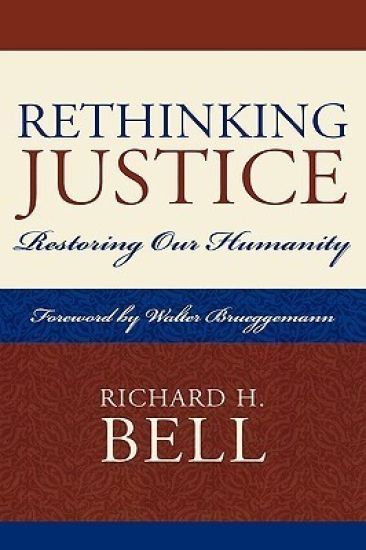
In Rethinking Justice, Richard H. Bell lifts up and restores an idea of justice found in classical writers such as Socrates and Seneca as well as in more recent thinkers. Justice, classically, has dealt with righting wrongs and restoring peace to individuals and human communities. We have lost sight of this in our modern political and legal dealings and must find a way to return it to mind and to practice. Each chapter looks at ways to restore such reconciliatory practices to the idea of justice that can be found in our contemporary life and literature and focuses on numerous recent cases of abuse of justice among individuals, groups and nations. Bell approaches justice as a concept that goes hand in hand with compassion, mercy, and trust. Rethinking Justice reminds us that we have an obligation to foster peace, be merciful, and promote reconciliation with our brothers and sisters in humanity.
In "Prayers for a Privileged People," this much-published author sculpts as carefully as if with chisel prayers on behalf of those who are people of privilege and entitlement the "haves" at an urgent moment in our society. The privileged face, on the one hand, the seduction of denial or, on the other, the temptation of despair. These prayers of wisdom and prophetic power remind us that when things go wrong, when we are afraid, and when we feel prodded by those who lack voice, there is a conversation we can have a conversation situated amid the promises and commands of God. From the Circuit Rider review: "This is a beautiful collection of poetic and prophetic prayers, words to be prayed with, mulled over, pondered, savored and challenged by. For in this little text, we glimpse a side of Brueggemann we may not have known through his rich Scripture studies alone. Here, he draws on not only his extensive years of study and teaching of the Psalms and the prophets, but his own faith immersion in the church year and in the liturgies of the church." (Click here to read the entire review.)"
A readable and powerful call, by a leading Old Testament scholar, to pray with and through the Psalms. Walter Brueggemann pushes his readers to recognize the full gamut of passions reflected in the Psalms: joy and exultation but also disappointment, sorrow, anger, resentment, even the desire for vengeance. We are invited into a daring relationship with the God who calls us to pray with honesty. In the spiritual classic readers are guided into a thoughtful and prayerful encounter with God through the Psalms. This new edition includes a thoroughly revised text, new notes and new bibliography. In Praying the Psalms, Brueggemann carefully guides us away from the bland colours of contemporary culture and into the ancient and extreme world of praise and lament. This is essential reading. Ian Stackhouse Senior Pastor, Guildford Baptist Church
In Rethinking Justice, Richard H. Bell lifts up and restores an idea of justice found in classical writers such as Socrates and Seneca as well as in more recent thinkers. Justice, classically, has dealt with righting wrongs and restoring peace to individuals and human communities. We have lost sight of this in our modern political and legal dealings and must find a way to return it to mind and to practice. Each chapter looks at ways to restore such reconciliatory practices to the idea of justice that can be found in our contemporary life and literature and focuses on numerous recent cases of abuse of justice among individuals, groups and nations. Bell approaches justice as a concept that goes hand in hand with compassion, mercy, and trust. Rethinking Justice reminds us that we have an obligation to foster peace, be merciful, and promote reconciliation with our brothers and sisters in humanity.
In this thoroughly revised edition of a classic in spirituality, Walter Brueggemann guides the reader into a thoughtful and moving encounter with the Psalms. This new edition includes a revised text, new notes, and new bibliography. "The movement and meeting of God with us is indeed a speech-event in which new humanness is evoked among us. Being attentive to language means cultivating the candid imagination to bring our own experience to the Psalms and permitting it to be disciplined by the speech of the Psalms. And, conversely, it means letting the Psalms address us and having that language reshape our sensitivities and fill our minds with new pictures and images that may redirect our lives." --from Chapter 3 "I am so glad to see this second edition of Praying the Psalms. In it Walter Brueggemann reveals the ways in which the Psalms teach the mother tongue of biblical speech by inviting us to the risk of daring candor with God. The contemporary church in North America regularly suffers collective amnesia in the face of the languages of techno-speak, market share and sentimental cliche that shape the world we inhabit. Praying the Psalms offers a surprising antidote to this chronic forgetfulness. It invites us to recover our ancient memory and true identity by learning again to pray the Psalms. I know of no better book for introducing a congregation to the Psalms than this one." --Edwin Searcy, Pastor, University Hill Congregation, United Church of Canada, Vancouver, BC "'The Psalms just don't speak to me.' Anyone who has ever felt this way should read Brueggemann's book. . . . He shows how these ancient prayers can lead us from the disorientation of our chaotic lives into a reorientation of transformation. His treatment of both the post-Holocaust Christian use of these very Jewish prayers and the troublesome call for vengeance is most timely. This book shows how the Psalms can indeed speak to us." --Dianne Bergant, CSA author of Preaching the New Lectionary ." . . Brueggemann pushes me and other readers to recognize the full gamut of passions reflected in the Psalms: joy and exultation but also disappointment, sorrow, anger, resentment, even the desire for vengeance. . . . I am grateful to Brueggemann for making me more alert to what the Psalms are saying about our common human relation to God and more honest about my own feelings as I pray the Psalms every day as part of the Liturgy of the Hours." --Joseph A. Bracken, SJ coauthor of Self-Emptying Love in a Global Context "Few persons have so lived in and with the Psalms as Walter Brueggemann. Here he takes us into their depths, which are so clearly the depths of our human existence. The piety of the Psalms is strong medicine. Brueggemann bids us take it for the cure of our souls." --Patrick D. Miller author of Interpreting the Psalms and They Cried to the Lord Walter Brueggemann is William Marcellus McPheeters Professor of Old Testament Emeritus at Columbia Theological Seminary, Decatur, Georgia. He is the author of numerous works including Theology of the Old Testament, Inscribing the Text, Prophetic Imagination, and David's Truth.

The present study focuses on the theology of the Book of Jeremiah. That theology revolves around themes familiar from Israel's covenantal faith, especially the sovereignty of YHWH expressed in judgment and promise. The outcome of this theological nexus of context, person, and tradition is a book that moves into the abyss and out of the abyss in unexpected ways. It does so, in part, by asserting that God continues to be generatively and disturbingly operative in the affairs of the world, up to and including our contemporary abysses (such as 9/11). The God attested in the Book of Jeremiah invites its readers into and through any and all such dislocations to new futures that combine divine agency and human inventiveness rooted in faithfulness.
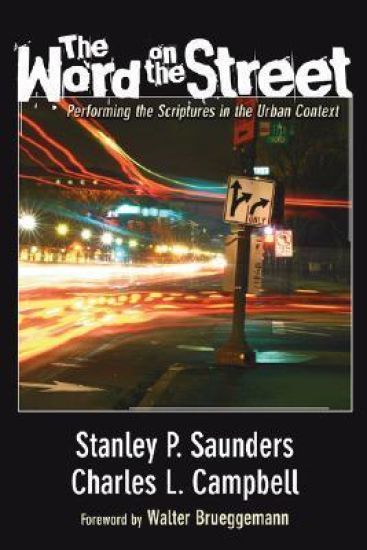
The Word on the Street
Stanley P Saunders; Charles L Campbell; Walter Brueggemann
Wipf Stock Publishers
2006
pokkari
WHAT HAPPENS WHEN TWO SEMINARY PROFESSORS LEAVE their classrooms and spend time among the homeless people and teach on city streets? In this unique collection of essays and sermons, Stanley P Saunders and Charles L. Campbell reflect on their encounters with the homeless folks in Atlanta and seek to discern the way of Jesus on the streets of the city. These passionate, often moving writings demonstrate the power of Scripture to shape the way we see the world, and they explore the significance of social location for exegesis, ethics, worship, and preaching. From the perspective of the street, central Christian practices such as baptism, Eucharist, and preaching come to life in new ways. Scripture takes on fresh meaning too, while ancient insights into the principalities and powers, the practice of scapegoating, and the organization of households become contemporary and immediate. Even theological themes--grace and discipleship, sin and forgiveness, crucifixion and resurrection--look different when take to the street. Accented by six powerful artworks from Christina Bray's exhibit Street Prayers/Spiritual Journeys, this book also sheds light on the problem of homelessness in America and calls the church to action. Through their reflection on personal experiences and their interpretation of biblical texts, Saunders and Campbell provide meaningful theological categories for addressing pressing social issues in the urban context, making The Word on the Street a helpful resource on the realities of poverty, race, and injustice. The Word on the Street? I'm not sure the Word can be proclaimed anywhere else. My response to this account is one of awe--and awe does not lend itself to our frail language. --Will D. Campbell This volume gives us theology that is both responsible and responsive. With inspiration and grace, Saunders and Campbell show us that when faith hits the streets, it takes on unjust systems and transforms human hearts. --Joyce Hollyday Stanley P. Saunders is Associate Professor of New Testament, Columbia Theological Seminary Charles L. Campbell is Peter Marshall Professor of Homiletics, Columbia Theological Seminary.
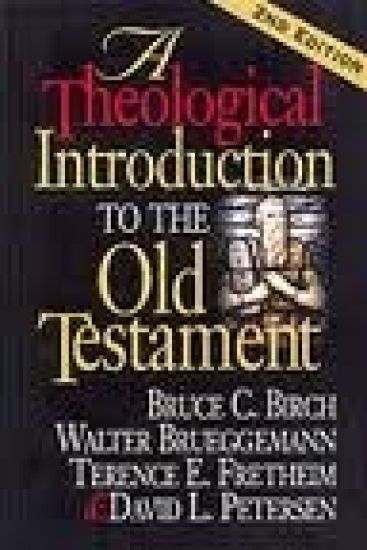
A Theological Introduction to the Old Testament
Bruce C. Birch; Terence E. Fretheim; Walter Brueggemann
Abingdon Press
2005
nidottu
Halvin toimitettuna 47,30 €
This book introduces the Old Testament both as a witness of ancient Israel and as a witness to the church and synagogue through the generations of those who have passed these texts on as scripture.
In this informative and keen look at contemporary trends in Old Testament theology, Perdue builds on his earlier volume "The Collapse of History" (1994). He investigates how a variety of perspectives and methodologies have impacted how the Old Testament is read in the twenty-first century including: literary criticism; rhetorical criticism, feminist, womanist, and mujerista theologies, liberation theology; Jewish theology; postmodernism; and postcolonialism.
In an engaging style--characteristic of the author, Walter Brueggemann--this Essential Guide describes the leading motifs of ancient Israel s worship traditions in the Old Testament. The author guides the reader through the themes, central texts, prayers, festivals, and practices of that worship. He sees throughout the Old Testament a central emphasis on worship as a covenantal gesture and utterance by the community in the presence of God. In addition to being an essential guide to this subject, this book is intended to be in the service of current theological and practical issues concerning worship of the church in its ecumenical character."
Walter Brueggemann bietet in diesem Band die Konturen seiner viel diskutierten theoretischen und methodologischen UEberlegungen zu einer Neugestaltung der alttestamentlichen Theologie anhand der aktuellen Texte des Alten Testaments. Es kommen mehrere Perspektiven zum Verhaltnis von Gesellschaft und alttestamentlichem Text unter die Lupe. Der Verfasser bemuht sich, in einer exemplarischen Entwicklung von Detailthemen sowohl die theologische Relevanz von Motiven wie Gebet, Gehorsam und Gotteslob, als auch die gefahrlichen und anstoessigen Aspekte des prophetischen Verstandnisses vom goettlichen Wort aufzuzeigen. Das Buch ist ein programmatischer Versuch, Theologie als Vergegenwartigung von spezifischen Texten statt als Systembildung anlasslich solcher Texte zu verstehen.
Lamentations & the Tears of World
Kathleen M. O'Connor; Walter Brueggemann
Orbis Books (USA)
2004
nidottu
Explores the book of Lamentations and its meaning for faith and ministry today. The five poems that comprise Lamentations tell of the community's pain in the aftermath of Jerusalem's destruction.
With his typical interpretive coherence, Walter Brueggemann explores more than one hundred Old Testament themes--from "ancestors" to "YHWH." Providing much more than dictionary-style entries, Brueggemann acknowledges the deep interconnectedness of these themes as he explores their depth, complexities, and interrelationships. By reading across the entries, readers will sense the dynamism of the faith of ancient Israel. Each entry states the consensus reading, identifies what is at issue in the interpretive question, and discusses the practical significance of the issue for the church today--in part by suggesting contemporary connections to the ancient texts. Reverberations of Faith will be a great resource for both students and laity.
The land was one of the most vibrant symbols for the people of ancient Israel. In the land-gift, promise, and challenge-was found the physical source of Israel's fertility and life, and a place for the gathering of the hopes of the covenant people. In this careful treatment, Walter Brueggemann follows the development of his theme through the major blocks of Israel's traditions. The book provides a point of entrance both to the theology of the Old Testament and to aspects of the New Testament-even as it illuminates crucial issues of the contemporary scene. In this fully revised version, Brueggemann provides new insights, as well as updating the discussion, notes, and bibliography.
In this completely revised edition, Brueggemann examines four different sets of David narratives, each reflecting a particular social context, social hope and community. Thus these stories offer a distinctly different mode of truth concerning this pivotal biblical figure.
The Bible and its preaching are for every generation urgent and indispensable, but they are especially urgent today. Within the preaching of Elijah and Elisha lie the possibilities and inspiration for the church to recover its voice in a way that is unfettered and unencumbered by old habits. It is the chance, and the responsibility, of this new voice to replicate in the present life of the church alternatives underway in the biblical text itself, to show that life "could be otherwise, " and to make it so. Considering these narratives canonically, Walter Brueggemann shows how the memories of Elijah and Elisha took on a quality and authority of lasting testimony. They exhibit a world profoundly open to the gifts, energies, and visions given by God. Brueggemann shows how such prophetic narratives summon listening Israel to a radical either/or decision, endlessly insisting that there are choices to be made that hold options for the world as otherwise.