
Kirjojen hintavertailu – 12 903 724 kirjaa ja 27 kauppaa

Kirjailija

Walter Gillis Peacock

Kirjat ja teokset yhdessä paikassa: 2 kirjaa, julkaisuja vuosilta 2008–2014, suosituimpiin kuuluu Planning for Community Resilience. Vertaile teosten hintoja ja tarkista saatavuus suomalaisista kirjakaupoista.

2 kirjaa

Kirjojen julkaisuvuodet: 2008–2014.

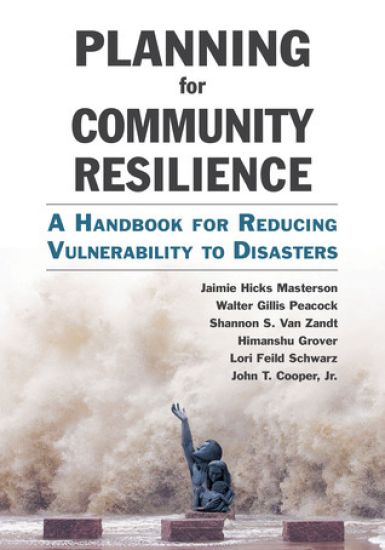
Planning for Community Resilience

Planning for Community Resilience

Jaimie Hicks Masterson; Walter Gillis Peacock; Shannon S. Van Zandt; Himanshu Grover; Lori Feild Schwarz; John T. Cooper

Island Press
2014
nidottu
This timely handbook brings together the fields of planning, disaster response, and hazards management to provide a field-tested process on how to make communities disaster-resilient. How can we plan and design stronger communities? Communities struck by natural disasters struggle to recover long after the first responders have left. Globally, the average annual number of natural disasters has more than doubled since 1980. These catastrophes are increasing in number as well as in magnitude, causing greater damage as we experience rising sea levels and other effects of climate change. Communities can reduce their vulnerability to disaster by becoming more resilient, to not only bounce back more readily from disasters but to grow stronger, more socially cohesive, and more environmentally responsible. To be truly resilient, disaster preparation and recovery must consider all populations in the community. By bringing together natural hazards planning and community planning to consider vulnerabilities, more resilient and equitable communities are achievable. In Planning for Community Resilience the authors describe an inclusive process for creating disaster-resilient communities. This handbook guides any community through the process of determining their level of hazard exposure, physical vulnerability, and social vulnerability with the goal of determining the best planning strategy. This will be an invaluable tool for professionals working to protect communities from disturbance.
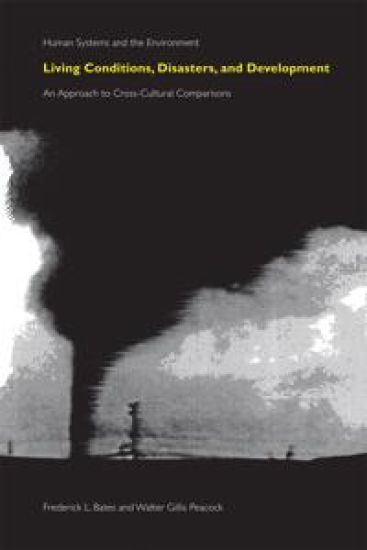
Living Conditions, Disasters and Development

Living Conditions, Disasters and Development

Frederick Bates; Walter Gillis Peacock

University of Georgia Press
2008
pokkari
Because most environmental problems result from human intervention in the ecosystem, ecological research in the social sciences is now joining research in the biological and physical sciences as a means of addressing long-range problems. Within this type of social science research, no problem is more important than the investigation of disasters. To assess the impact of sudden cataclysms on the living conditions of families or communities, scientists need a set of pretested, standardized measures that can be used cross-culturally. Once a disaster strikes, investigators are often faced with insufficient tools for assessing its impact and evaluating whether aid programs have enabled households to recover or improve their conditions. In this book, the authors introduce and describe a measure—the Domestic Assets Scale—-that they have developed to deal with these research problems. They first present theoretical arguments that relate living conditions to the concepts of disaster and development; they then show how the measure was constructed with the use of data collected in sample communities in Italy, Mexico, Peru, Turkey, the United States, and Yugoslavia. Throughout their discussions, they emphasize the practical application of their theoretical arguments and address the research problems and constraints faced by investigators using this procedure. Finally, they assess the validity and reliability of the Domestic Assets Scale and show how it can be used to measure long-term change, especially in the wake of catastrophic events.