Kirjojen hintavertailu – 12 903 735 kirjaa ja 27 kauppaa

Kirjailija

Walter Glannon

Kirjat ja teokset yhdessä paikassa: 17 kirjaa, julkaisuja vuosilta 2001–2025, suosituimpiin kuuluu The Neurodynamic Soul. Vertaile teosten hintoja ja tarkista saatavuus suomalaisista kirjakaupoista.

17 kirjaa

Kirjojen julkaisuvuodet: 2001–2025.

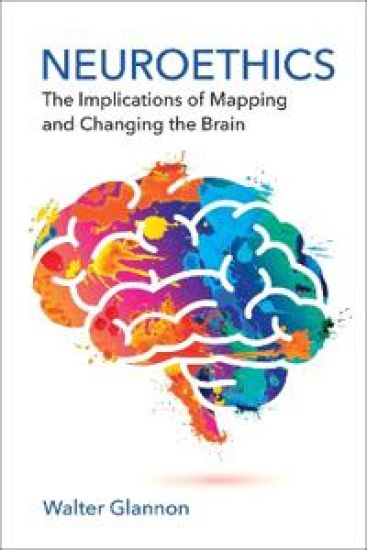
Neuroethics: The Implications of Mapping and Changing the Brain
An examination of ethical issues in recording and intervening in the brain, and the neurobiological basis of moral decision-making. Neuroethics is an introduction to the main ethical and legal issues in six areas of experimental and clinical neuroscience: neuroimaging; disorders of consciousness; brain death; cognitive and moral enhancement; the neurobiological basis of moral reasoning; and neural prosthetics. The book is distinctive in offering a comprehensive discussion of the main issues in the ethics of neuroscience and the neuroscience of ethics that have developed over the last 25 years. Walter Glannon captures the historical, current, and future-oriented aspects of neuroethics and discusses emerging issues like the use of machine learning and artificial intelligence in diagnostic and predictive neuroimaging, brain organoids, and neural prosthetics, as well as neurorights to protect information about people's brains.
The Neurodynamic Soul

The Neurodynamic Soul

Grant Gillett; Walter Glannon

Springer International Publishing AG
2024
nidottu
The authors provide a richer and more robust account of the soul, or mind, than other accounts by framing it in neuroscientific and philosophical terms that do not explain it away but explain it as something that is shaped by how it responds to the natural and social environment in enabling flexible and adaptive behavior.
The Neurodynamic Soul

The Neurodynamic Soul

Grant Gillett; Walter Glannon

Springer International Publishing AG
2023
sidottu
This book is an analysis and discussion of the soul as a psychophysical process and its role in mental representation, meaning, understanding and agency. Grant Gillett and Walter Glannon combine contemporary neuroscience and philosophy to address fundamental issues about human existence and living and acting in the world. Based in part on Aristotle's hylomorphism and model of the psyche, their approach is informed by a neuroscientific model of the brain as a dynamic organ in which patterns of neural oscillation and synchronization are shaped by biological, social and cultural factors inside and outside of it. The authors provide a richer and more robust account of the soul, or mind, than other accounts by framing it in neuroscientific and philosophical terms that do not explain it away but explain it as something that is shaped by how it responds to the natural and social environment in enabling flexible and adaptive behavior.
Immune Ethics

Immune Ethics

Walter Glannon

Cambridge University Press
2023
pokkari
The immune system maintains homeostasis within human organisms and protects them from pathogenic threats. But sometimes it cannot provide this protection on its own, and vaccines may be necessary to ensure our health and survival. Immune functions can become dysregulated and result in autoimmune disease or multi-system damage. Pharmacological and genomic interventions may activate or modulate immune functions to prevent these outcomes. This Element is an analysis and discussion of some of the ethical implications of these interventions. After describing the main components of innate and adaptive immunity and how it might be enhanced, it considers the potential benefit and harm from vaccines against addiction and viruses, immunotherapy for cancer, neuroimmunomodulating agents to prevent or treat neurodevelopmental and neurodegenerative diseases, and gene editing of immunity to enable xenotransplantation and prevent infectious disease. The Element concludes with an exploration of a possible outcome of natural competition between humans and microbes.
The Ethics of Consciousness

The Ethics of Consciousness

Walter Glannon

Cambridge University Press
2022
pokkari

Halvin toimitettuna 30,00 €

This Element examines the main ethical aspects of consciousness It argues that consciousness is not intrinsically valuable but has value or disvalue for individuals depending on its phenomenology (what it is like to be aware) and content (what one is aware of). These two components of awareness shape normative judgments about how ordered, disordered, altered, restored, diminished and suppressed conscious states can benefit or harm individuals. They also influence moral judgments about whether intentionally causing these states is permissible or impermissible and how these states can affect behavior. After describing its neurobiological basis, this Element discusses ethical and legal issues in six categories of consciousness: phenomenal and access consciousness; intraoperative awareness; prolonged disorders of consciousness, dissociative disorders, the role of consciousness in determining death; and altering and suppressing awareness near the end of life.
Neural Prosthetics

Neural Prosthetics

Walter Glannon

Oxford University Press
2021
sidottu
Neural prosthetics are systems or devices implanted in or connected to the brain that influence the input and output of information. They modulate, bypass, supplement, or replace regions of the brain and its connections to parts of the body that are damaged, dysfunctional, or lost, whether from congenital conditions, brain injury, limb loss, or neurodegenerative disease. Neural prosthetics can restore sensory, motor, and cognitive functions in people with these conditions and enable them to regain functional independence and improve their quality of life. This book explores the neuroscientific and philosophical implications of neural prosthetics. Neuroscientific discussion focuses on how neural prosthetics can restore brain and bodily functions to varying degrees, looking at auditory and visual prosthetics, deep brain and responsive neurostimulation, brain-computer interfaces, brain-to-brain interfaces, and memory prosthetics. Philosophical discussion then considers the degree to which people with these prosthetics can benefit from or be harmed by them. Finally, it explores how these devices and systems can lead to a better understanding of the brain-mind relation, mental causation, and agency. This is an essential volume for anyone invested in the current and future directions of neural prosthetics, including neuroscientists, neurologists, neurosurgeons, neural engineers, psychologists, and psychiatrists, as well as philosophers, bioethicists, and legal theorists.
The Mental Basis of Responsibility

The Mental Basis of Responsibility

Walter Glannon

Routledge
2020
nidottu
This title was first published in 2002: This book is an analysis of the ways in which mental states ground attributions of responsibility to persons. Particular features of the book include: attention to the agent’s epistemic capacity for beliefs about the foreseeable consequences of actions and omissions; attention to the essential role of emotions in prudential and moral reasoning; a conception of personal identity that can justify holding persons responsible at later times for actions performed at earlier times; an emphasis on neurobiology as the science that should inform our thinking about free will and responsibility; and the melding of literature on free will and responsibility in contemporary analytic philosophy with legal cases, abnormal psychology, neurology and psychiatry, which offers a richer texture to the general debate on the relevant issues.
Genes And Future People

Genes And Future People

Walter Glannon

Routledge
2019
sidottu
Advances in genetic technology in general and medical genetics in particular will enable us to intervene in the process of human biological development which extends from zygotes and embryos to people. This will allow us to control to a great extent the identities and the length and quality of the lives of people who already exist, as well as those
The Neuroethics of Memory

The Neuroethics of Memory

Walter Glannon

Cambridge University Press
2019
pokkari
The Neuroethics of Memory is a thematically integrated analysis and discussion of neuroethical questions about memory capacity and content, as well as interventions to alter it. These include: how does memory function enable agency, and how does memory dysfunction disable it? To what extent is identity based on our capacity to accurately recall the past? Could a person who becomes aware during surgery be harmed if they have no memory of the experience? How do we weigh the benefits and risks of brain implants designed to enhance, weaken or erase memory? Can a person be responsible for an action if they do not recall it? Would a victim of an assault have an obligation to retain a memory of this act, or the right to erase it? This book uses a framework informed by neuroscience, psychology, and philosophy combined with actual and hypothetical cases to examine these and related questions.
The Neuroethics of Memory

The Neuroethics of Memory

Walter Glannon

Cambridge University Press
2019
sidottu
The Neuroethics of Memory is a thematically integrated analysis and discussion of neuroethical questions about memory capacity and content, as well as interventions to alter it. These include: how does memory function enable agency, and how does memory dysfunction disable it? To what extent is identity based on our capacity to accurately recall the past? Could a person who becomes aware during surgery be harmed if they have no memory of the experience? How do we weigh the benefits and risks of brain implants designed to enhance, weaken or erase memory? Can a person be responsible for an action if they do not recall it? Would a victim of an assault have an obligation to retain a memory of this act, or the right to erase it? This book uses a framework informed by neuroscience, psychology, and philosophy combined with actual and hypothetical cases to examine these and related questions.
Psychiatric Neuroethics

Psychiatric Neuroethics

Walter Glannon

Oxford University Press
2018
nidottu
Advances in psychiatric research and clinical psychiatry in the last 30 years have given rise to a host of new questions that lie at the intersection of psychiatry, neuroscience, philosophy and law. Such questions include: -Are psychiatric disorders diseases of the brain, caused by dysfunctional neural circuits and neurotransmitters? -What role do genes, neuro-endocrine, neuro-immune interactions and the environment play in the development of these disorders? -How do different explanations of the etiology and pathophysiology of mental illness influence diagnosis, prognosis and decisions about treatment? -Would it be rational for a person with a chronic treatment-resistant disorder to request euthanasia or assisted suicide to end their suffering? -Could psychiatric disorders be predicted and prevented? Psychiatric Neuroethics explores these questions in a comprehensive and systematic way, discussing the medical and philosophical implications of neuroscience and the Research Domain Criteria (RDoc) in the fields of psychiatry and mental health. It examines the extent to which circuit-based criteria can offer a satisfactory explanation of psychiatric disorders and how they compare with the symptom-based criteria of the Diagnostic and Statistical Manual of Mental Disorders (DSMV). This book will be of interest to a multidisciplinary audience, including psychiatrists, neurologists, neurosurgeons, philosophers, psychologists and legal theorists.
The Mental Basis of Responsibility

The Mental Basis of Responsibility

Walter Glannon

Routledge
2018
sidottu
This title was first published in 2002: This book is an analysis of the ways in which mental states ground attributions of responsibility to persons. Particular features of the book include: attention to the agent’s epistemic capacity for beliefs about the foreseeable consequences of actions and omissions; attention to the essential role of emotions in prudential and moral reasoning; a conception of personal identity that can justify holding persons responsible at later times for actions performed at earlier times; an emphasis on neurobiology as the science that should inform our thinking about free will and responsibility; and the melding of literature on free will and responsibility in contemporary analytic philosophy with legal cases, abnormal psychology, neurology and psychiatry, which offers a richer texture to the general debate on the relevant issues.
Brain, Body, and Mind

Brain, Body, and Mind

Walter Glannon

Oxford University Press Inc
2013
nidottu
This book is a discussion of the most timely and contentious issues in the two branches of neuroethics: the neuroscience of ethics; and the ethics of neuroscience. Drawing upon recent work in psychiatry, neurology, and neurosurgery, it develops a phenomenologically inspired theory of neuroscience to explain the brain-mind relation. The idea that the mind is shaped not just by the brain but also by the body and how the human subject interacts with the environment has significant implications for free will, moral responsibility, and moral justification of actions. It also provides a better understanding of how different interventions in the brain can benefit or harm us. In addition, the book discusses brain imaging techniques to diagnose altered states of consciousness, deep-brain stimulation to treat neuropsychiatric disorders, and restorative neurosurgery for neurodegenerative diseases. It examines the medical and ethical trade-offs of these interventions in the brain when they produce both positive and negative physical and psychological effects, and how these trade-offs shape decisions by physicians and patients about whether to provide and undergo them.
Brain, Body, and Mind

Brain, Body, and Mind

Walter Glannon

Oxford University Press Inc
2011
sidottu
This book is a discussion of the most timely and contentious issues in the two branches of neuroethics: the neuroscience of ethics; and the ethics of neuroscience. Drawing upon recent work in psychiatry, neurology, and neurosurgery, it develops a phenomenologically inspired theory of neuroscience to explain the brain-mind relation. The idea that the mind is shaped not just by the brain but also by the body and how the human subject interacts with the environment has significant implications for free will, moral responsibility, and moral justification of actions. It also provides a better understanding of how different interventions in the brain can benefit or harm us. In addition, the book discusses brain imaging techniques to diagnose altered states of consciousness, deep-brain stimulation to treat neuropsychiatric disorders, and restorative neurosurgery for neurodegenerative diseases. It examines the medical and ethical trade-offs of these interventions in the brain when they produce both positive and negative physical and psychological effects, and how these trade-offs shape decisions by physicians and patients about whether to provide and undergo them.
Bioethics and the Brain

Bioethics and the Brain

Walter Glannon

Oxford University Press Inc
2008
nidottu
This is the first single-author book on what has come to be known as neuroethics. Walter Glannon uses a philosophical framework that is fully informed by cutting edge neuroscience as well as contemporary legal cases such as Terri Schiavo, to offer readers an introduction to this fascinating topic.
Bioethics and the Brain

Bioethics and the Brain

Walter Glannon

Oxford University Press Inc
2006
sidottu
Our ability to map and intervene in the structure of the human brain is proceeding at a very quick rate. Advances in psychiatry, neurology, and neurosurgery have given us fresh insights into the neurobiological basis of human thought and behaviour. Technologies like MRI and PET scans can detect early signs of psychiatric disorders before they manifest symptoms. Electrical and magnetic stimulation of the brain can non-invasively relieve symptoms of obsessive-compulsive disorder, depression and other conditions resistant to treatment, while implanting neuro-electrodes can help patients with Parkinsons and other motor control-related diseases. New drugs can help regenerate neuronal connections otherwise disrupted by schizophrenia and similar diseases. All these procedures and drugs alter the neural correlates of our mind and raise fascinating and important ethical questions about their benefits and harms. They are, in a sense, among the most profound bioethical questions we face, since these techniques can touch on the deepest aspects of the human mind: free will; personal identity; the self; and the soul. In this book, Walter Glannon uses a philosophical framework that is fully informed by cutting edge neuroscience as well as contemporary legal cases such as Terri Schiavo, to offer readers an introduction to this fascinating topic. He starts by describing the state of the art in neuroscientific research and treatment, and gives the reader an up-to-date picture of the brain. Glannon then looks at the ethical implications of various kinds of treatments, such as: whether or not brain imaging will end up changing our views on free will and moral responsibility; whether patients should always be told that they are at future risk for neurological diseases; if erasing unconscious emotional memories implicated in depression can go too far; if forcing behaviour-modifying drugs or surgery on violent offenders can ever be justified; the implications of drugs that enhance cognitive abilities; and how to define brain death and the criteria for the withdrawal of life-support.
Genes And Future People

Genes And Future People

Walter Glannon

Westview Press Inc
2001
pokkari
Advances in genetic technology in general and medical genetics in particular will enable us to intervene in the process of human biological development which extends from zygotes and embryos to people. This will allow us to control to a great extent the identities and the length and quality of the lives of people who already exist, as well as those we bring into existence in the near and distant future. Genes and Future People explores two general philosophical questions, one metaphysical, the other moral: (1) How do genes, and different forms of genetic intervention (gene therapy, genetic enhancement, presymptomatic genetic testing of adults, genetic testing of preimplantation embryos), affect the identities of the people who already exist and those we bring into existence? and (2) How do these interventions benefit or harm the people we cause to exist in the near future and those who will exist in the distant future by satisfying or defeating their interest in having reasonably long and disease-free lives? Genes and Future People begins by explaining the connection between genes and disease, placing genetic within a framework of evolutionary biology. It then discusses such topics as how genes and genetic intervention influence personal identity, what genetic testing of individuals and the knowledge resulting from it entails about responsibility to others who may be at risk, as well as how gene therapy and genetic enhancement can affect the identities of people and benefit or harm them. Furthermore, it discusses various moral aspects of cloning human beings and body parts. Finally, it explores the metaphysical and moral implications of genetic manipulation of the mechanisms of aging to extend the human life span. The aim Genes and Future People is to move philosophers, bioethicists, and readers in general to reflect on the extent to which genes determine whether we are healthy or diseased, our identities as persons, the quality of our lives, and our moral obligations to future generations of people.