
Kirjailija
Walter Hines Page
Kirjat ja teokset yhdessä paikassa: 14 kirjaa, julkaisuja vuosilta 1905–2025, suosituimpiin kuuluu The Southerner. Vertaile teosten hintoja ja tarkista saatavuus suomalaisista kirjakaupoista.
14 kirjaa
Kirjojen julkaisuvuodet: 1905–2025.





"The Southerner," by Walter Hines Page, offers a compelling glimpse into the post-Civil War South. Set against the backdrop of a region grappling with defeat and societal transformation, this novel explores the challenges and complexities faced by Southerners during the Reconstruction Era. Through vivid characters and evocative prose, Page paints a portrait of a society struggling to reconcile its past with an uncertain future. The narrative delves into themes of honor, tradition, and the search for identity in a world irrevocably changed. A noteworthy work of American literature, "The Southerner" provides valuable insights into a pivotal period in American history and the enduring spirit of its people. This work has been selected by scholars as being culturally important, and is part of the knowledge base of civilization as we know it. This work was reproduced from the original artifact, and remains as true to the original work as possible. Therefore, you will see the original copyright references, library stamps (as most of these works have been housed in our most important libraries around the world), and other notations in the work. This work is in the public domain in the United States of America, and possibly other nations. Within the United States, you may freely copy and distribute this work, as no entity (individual or corporate) has a copyright on the body of the work. As a reproduction of a historical artifact, this work may contain missing or blurred pages, poor pictures, errant marks, etc. Scholars believe, and we concur, that this work is important enough to be preserved, reproduced, and made generally available to the public. We appreciate your support of the preservation process, and thank you for being an important part of keeping this knowledge alive and relevant.


This work has been selected by scholars as being culturally important, and is part of the knowledge base of civilization as we know it. This work was reproduced from the original artifact, and remains as true to the original work as possible. Therefore, you will see the original copyright references, library stamps (as most of these works have been housed in our most important libraries around the world), and other notations in the work. This work is in the public domain in the United States of America, and possibly other nations. Within the United States, you may freely copy and distribute this work, as no entity (individual or corporate) has a copyright on the body of the work. As a reproduction of a historical artifact, this work may contain missing or blurred pages, poor pictures, errant marks, etc. Scholars believe, and we concur, that this work is important enough to be preserved, reproduced, and made generally available to the public. We appreciate your support of the preservation process, and thank you for being an important part of keeping this knowledge alive and relevant.


The United States and Great Britain; The British Commonwealth of Nations; America and Freedom
Walter Hines Page; Jan Christiaan Smuts; Viscount Falloden
Literary Licensing, LLC
2013
nidottu
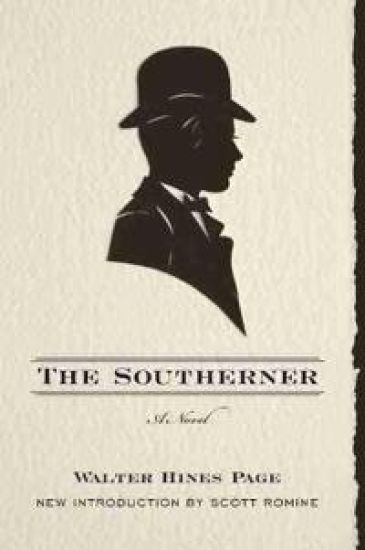
This is a fictious rendering of the uphill battles of a progressive southerner advocating open education. Presaging Faulkner's Quentin Compson, the protagonist of Page's ""The Southerner"" perpetually lurches toward progressive ideals while bearing the unshakeable weight of the past in the post-Civil War South. The novel is the fictional autobiography of Nicholas Worth, a Harvard-educated southern who unsuccessfully champions open education in his native state. First published serially in ""The Atlantic"" in 1906 and subsequently in book form by Doubleday, Page, and Company in 1909, ""The Southerner"" espouses a distinctive southern sensibility that pits an ennobling sense of social obligation against a culture misguided by mythos of a bygone era. Through Worth, Page voices hopeful opinions on social and economic reconciliation while never losing sight of the stumbling blocks marring the path toward progress - particularly the obstacle of education, but also those of party politics, the press, the church, and institutions invested in lionizing the Confederacy. Valuable for its historical perspectives on conflicting attitudes of racial and regional differences in the post - war years, ""The Southerner"" also warrants reading for its high literary merits. As editor of the ""Atlantic Monthly"" during the 1890s and co-owner of Doubleday, Page, and Company, Page was deeply immersed in the best literary endeavors of his day. His writing shows the influence of the realism employed by Ellen Glasgow and Theodore Dreiser as well as the thoughtful engagements with race seen in the works of Charles Chesnutt and W. E. B. Du Bois. ""The Southern Classics"" edition of the novel includes a new introduction by Scott Romine that places the book in its cultural context and examines the work's literary reception.