Kirjojen hintavertailu – 12 859 829 kirjaa ja 27 kauppaa

Kirjailija

Walter LaFeber

Kirjat ja teokset yhdessä paikassa: 17 kirjaa, julkaisuja vuosilta 1993–2024, suosituimpiin kuuluu The Deadly Bet. Vertaile teosten hintoja ja tarkista saatavuus suomalaisista kirjakaupoista.

17 kirjaa

Kirjojen julkaisuvuodet: 1993–2024.

The American Century

The American Century

Robert D. Johnston; Walter LaFeber; Richard Polenberg; Nancy Woloch

TAYLOR FRANCIS LTD
2024
sidottu
The new edition of this classic text on modern U. S. history seamlessly blends political, social, cultural, intellectual, and economic themes into an authoritative and readable account of America’s national story since the 1890s. Written by four highly respected scholars, this book has been fully updated with new coverage of the Trump and Biden presidencies, the culture wars, deep political polarization, and the crisis of democracy. The text’s most distinctive quality is its close attention to both history within the United States and the relationships the country has forged with the rest of the world. The eighth edition remains engaging and approachable while continuing to include the most recent scholarship. Each chapter contains a special feature section devoted to cultural topics including the arts and architecture, sports and recreation, technology, and education. Web links to additional online resources accompany each feature, offering complementary learning opportunities to students. While carefully attending to the complexity of history, The American Century traces the long roots of some of the most pressing current issues in the United States and continues to be a compelling resource for students of recent American history.
The American Century

The American Century

Robert D. Johnston; Walter LaFeber; Richard Polenberg; Nancy Woloch

TAYLOR FRANCIS LTD
2024
nidottu
The new edition of this classic text on modern U. S. history seamlessly blends political, social, cultural, intellectual, and economic themes into an authoritative and readable account of America’s national story since the 1890s. Written by four highly respected scholars, this book has been fully updated with new coverage of the Trump and Biden presidencies, the culture wars, deep political polarization, and the crisis of democracy. The text’s most distinctive quality is its close attention to both history within the United States and the relationships the country has forged with the rest of the world. The eighth edition remains engaging and approachable while continuing to include the most recent scholarship. Each chapter contains a special feature section devoted to cultural topics including the arts and architecture, sports and recreation, technology, and education. Web links to additional online resources accompany each feature, offering complementary learning opportunities to students. While carefully attending to the complexity of history, The American Century traces the long roots of some of the most pressing current issues in the United States and continues to be a compelling resource for students of recent American history.
The American Century

The American Century

Walter LaFeber; Richard Polenberg; Nancy Woloch

Routledge
2015
sidottu
The new edition of this classic text on modern U. S. history brings the story of contemporary America into the second decade of the twenty-first century with new coverage of the Obama presidency and the 2012 elections. Written by three highly respected scholars, the book seamlessly blends political, social, cultural, intellectual, and economic themes into an authoritative and readable account of our increasingly complex national story. The seventh edition retains its affordability and conciseness while continuing to add the most recent scholarship. Each chapter contains a special feature section devoted to cultural topics including the arts and architecture, sports and recreation, technology and education. Adding to the readers' learning experience is the addition of web links to each of these features, providing numerous complementary visual study tools. These links become live, and illustrations appear in full color, in the ebook edition. An American Century instructor site provides instructors who adopt the book with high interest features--illustrations, photos, maps, quizzes, an elaboration of key themes in the book, PowerPoint presentations, and lecture launchers on topics including the Versailles Conference, the "Military-Industrial Complex" Speech by Dwight D. Eisenhower, the Tet Offensive, and the prospects for a Second American Century. In addition, students have free access to a multimedia primary source archive of materials carefully selected to support the themes of each chapter.
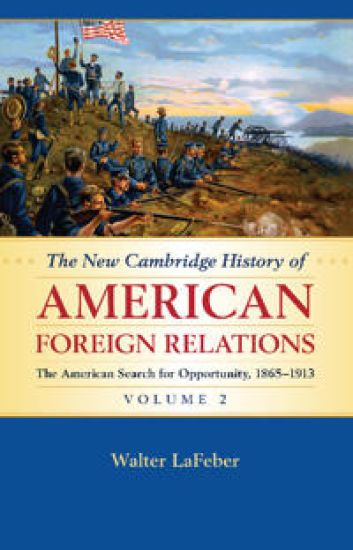
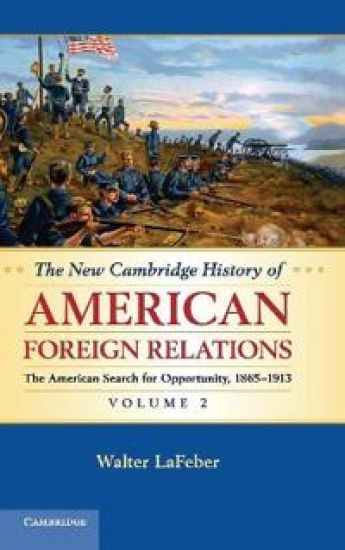
The New Cambridge History of American Foreign Relations: Volume 2, The American Search for Opportunity, 1865–1913
Since their first publication, the four volumes of the Cambridge History of American Foreign Relations have served as the definitive source for the topic, from the colonial period to the Cold War. This second volume of the updated edition describes the causes and dynamics of United States foreign policy from 1865 to 1913, the era when the United States became one of the four great world powers and the world's greatest economic power. The dramatic expansion of global power during this period was set in motion by the strike-ridden, bloody, economic depression from 1873 to 1897 when American farms and factories began seeking overseas markets for their surplus goods, as well as by a series of foreign policy triumphs, as America extended its authority to Cuba, Puerto Rico, the Panama Canal Zone, Central America, the Philippines and China. Ironically, as Americans searched for opportunity and stability abroad, they helped create revolutions in Central America, Panama, the Philippines, Mexico, China and Russia.
The American Century

The American Century

Walter LaFeber; Richard Polenberg; Nancy Woloch

Routledge
2013
sidottu
The new edition of this classic text for courses on recent U. S. history covers the story of contemporary America from World War II into the second decade of the twenty-first century with new coverage of the Obama presidency and the 2012 elections. Written by three highly respected scholars, the book seamlessly blends political, social, cultural, intellectual, and economic themes into an authoritative and readable account of our increasingly complex national story. The seventh edition retains its affordability and conciseness while continuing to add the most recent scholarship. Each chapter contains a special feature section devoted to cultural topics including the arts and architecture, sports and recreation, technology and education. Enhancing the students' learning experience is the addition of web links to each of these features to provide complementary visual study tools. An American Century instructor site provides instructors who adopt the book with high interest features--illustrations, photos, maps, quizzes, an elaboration of key themes in the book, PowerPoint presentations, and lecture launchers on topics including the "Military-Industrial Complex" Speech by Dwight D. Eisenhower, the Tet Offensive, and the prospects for a Second American Century. In addition, students have free access to a multimedia primary source archive of materials carefully selected to support the themes of each chapter.
The American Century

The American Century

Walter LaFeber; Richard Polenberg; Nancy Woloch

Routledge
2013
nidottu
This book focuses on the U. S. foreign and domestic policies, at points noting how the two are necessarily related. It includes brief analyses of developments elsewhere in the world to help students understand the foreign policy.
The New Cambridge History of American Foreign Relations

The New Cambridge History of American Foreign Relations

Walter LaFeber

Cambridge University Press
2013
sidottu
Since their first publication, the four volumes of the Cambridge History of American Foreign Relations have served as the definitive source for the topic, from the colonial period to the Cold War. This second volume of the updated edition describes the causes and dynamics of United States foreign policy from 1865 to 1913, the era when the United States became one of the four great world powers and the world's greatest economic power. The dramatic expansion of global power during this period was set in motion by the strike-ridden, bloody, economic depression from 1873 to 1897 when American farms and factories began seeking overseas markets for their surplus goods, as well as by a series of foreign policy triumphs, as America extended its authority to Cuba, Puerto Rico, the Panama Canal Zone, Central America, the Philippines and China. Ironically, as Americans searched for opportunity and stability abroad, they helped create revolutions in Central America, Panama, the Philippines, Mexico, China and Russia.
The Deadly Bet

The Deadly Bet

Walter LaFeber

Rowman Littlefield Publishers
2005
sidottu
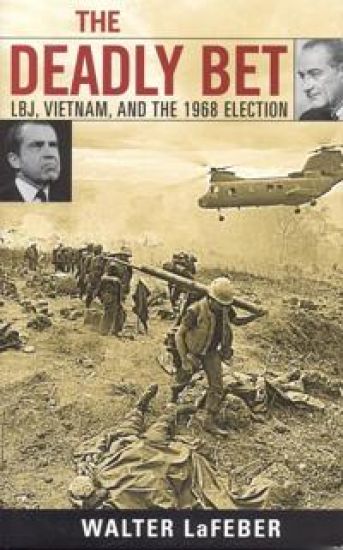
Lyndon Johnson made a life or death bet during his Presidential term, and lost. Intent upon fighting an extended war against a determined foe, he gambled that American society could also endure a vast array of domestic reforms. The result was the turmoil of the 1968 presidential election—a crisis more severe than any since the Civil War. With thousands killed in Vietnam, hundreds dead in civil rights riots, televised chaos at the Democratic National Convention, and two major assassinations, Americans responded by voting for the law and order message of Richard Nixon. In The Deadly Bet, distinguished historian Walter LaFeber explores the turbulent election of 1968 and its significance in the larger context of American history. Looking through the eyes of the year's most important players—including Robert F. Kennedy, Eugene McCarthy, Martin Luther King, Hubert Humphrey, Richard Nixon, George Wallace, Nguyen Van Thieu, and Lyndon Johnson—LaFeber argues that the domestic upheaval had more impact on the election than the war in Vietnam. Clear, concise, and engaging, this work sheds important light on the crucial year of 1968.
The Deadly Bet

The Deadly Bet

Walter LaFeber

Rowman Littlefield Publishers
2005
nidottu
Lyndon Johnson made a life or death bet during his Presidential term, and lost. Intent upon fighting an extended war against a determined foe, he gambled that American society could also endure a vast array of domestic reforms. The result was the turmoil of the 1968 presidential election—a crisis more severe than any since the Civil War. With thousands killed in Vietnam, hundreds dead in civil rights riots, televised chaos at the Democratic National Convention, and two major assassinations, Americans responded by voting for the law and order message of Richard Nixon. In The Deadly Bet, distinguished historian Walter LaFeber explores the turbulent election of 1968 and its significance in the larger context of American history. Looking through the eyes of the year's most important players—including Robert F. Kennedy, Eugene McCarthy, Martin Luther King, Hubert Humphrey, Richard Nixon, George Wallace, Nguyen Van Thieu, and Lyndon Johnson—LaFeber argues that the domestic upheaval had more impact on the election than the war in Vietnam. Clear, concise, and engaging, this work sheds important light on the crucial year of 1968.
Michael Jordan and the New Global Capitalism
With Michael Jordan and the New Global Capitalism, Walter LaFeber has written a biography, a social history, and a far-ranging economic critique. From basketball prodigy to international phenomenon to seductive commercial ideal, Michael Jordan is the supreme example of how American corporations have used technology in a brave, massively wired new world to sell their products in every corner of the globe. LaFeber's examination of Nike and its particular dominion over the global marketplace is often scathing, while his fascinating mini-biography of Michael Jordan and the commercial history of basketball reveal much about American society. For this new paperback edition, LaFeber has added a chapter on globalization in a changed world, after mass protests and since September 11. "Bold, riveting.... Brilliantly illuminates how hyper-US capitalism has spread its financial wings around the globe."—Douglas Brinkley "LaFeber brings an impressive intellect to bear on his subject."—Barbara Rudolph, Chicago Tribune
The Clash

The Clash

Walter LaFeber

WW Norton Co
1999
nidottu
When Commodore Matthew Perry sailed into Tokyo harbor in July 1853, opening Japan to the West, a century and a half of economic, cultural, and occasionally violent clashes between Americans and Japanese began. Walter LaFeber has written the first book to tell the entire story behind the disagreements, tensions, and skirmishes between Japan—a compact, homogenous, closely knit society terrified of disorder—and America—a sprawling, open-ended society that fears economic depression and continually seeks an international marketplace. Using both American and Japanese sources, LaFeber provides the history behind the vicissitudes of rearming Japan, the present-day tensions in U. S.-Japan trade talks, Japan's continuing importance in financing America's huge deficit, and both nations' drive to develop China—a shadow that has darkened American-Japanese relations from the beginning.
The American Age

The American Age

Walter LaFeber

WW Norton Co
1995
nidottu
Traces the evolution of U. S. foreign policy from its roots to the present, considering the role of presidential power and surveying the world events which have shaped and continue to effect the United States' political relations.
The American Age

The American Age

Walter LaFeber

WW Norton Co
1995
nidottu
His narrative account featured several major politics; the impact of American economic development on foreign policy interests; popular culture, particularly film, as a filter for public opinion on American commitments abroad; the roles of public opinion, leadership, and bureaucracy in the formation of policy. In the Second Edition, LaFeber has revised nearly every chapter in the book. In the early chapters, there is more attention to the origins of foreign policy institutions and practices, including precedents for the executive agreement, and new discussions of U. S. relations with Britain in the eighteenth and nineteenth centuries. The more recent chapters feature fresh insights on Potsdam, the origins of the Korean War, and the Cuban Missile Crisis—all based on new evidence drawn from Soviet archives. The new edition amply covers the momentous events that brought the Cold War to an end and thrust the United States into the uncertain position of the world's only superpower.
The Cambridge History of American Foreign Relations: Volume 2, The American Search for Opportunity, 1865–1913
Between the American Civil War and the outbreak of world War I, global history was transformed by two events: the United States's rise to the status of a great world power (indeed, the world's greatest economic power) and the eruption of nineteenth- and twentieth-century revolutions in Mexico, China, Russia, Cuba, the Philippines, Hawaii, Panama, Nicaragua, and elsewhere. The American Search for Opportunity traces the U. S. foreign policy between 1865 and 1913, linking these two historic trends by noting how the United States - usually thought of as antirevolutionary and embarked on a 'search for order' during this era - actually was a determinative force in helping to trigger these revolutions. Walter LaFeber argues that industrialization fuelled centralisation: Post-Civil War America remained a vast, unwieldy country of isolated, parochial communities, but the federal government and a new corporate capitalism now had the power to invade these areas and integrate them into an industrialization, railway-linked nation-state. The furious pace of economic growth in America attracted refugees from all parts of the world. Professor LaFeber describes and influx of immigration so enormous that it led to America's first exclusionary immigration act. In 1882, the United States passed legislation preventing all Chinese immigrant labour, skilled and unskilled, from entering the country for the next 10 years. Racism and domestic affairs, exemplified by the hundreds of lynchings in the United States during the 1890's and the rampant anti-Asian outbreaks of the era, influenced foreign policy as well. Racism was particularly important in the Philippine and native-American cases. In the late 1880's U. S. military forces consolidated white power by destroying the last major Indian opposition. This success in empire building at home led to attempts in the late 1890's to create a new empire of commerce and insular possession in the Caribbean and across the Pacific Ocean. The struggle for markets in Asia and elsewhere drove U. S. foreign policy during the era. The Cuban crisis of 1898, which sparked the Spanish-American War, provided the opportunity to annex the Philippines and thereby secure one of the most strategic positions in the Asian region. America's rise to the status of a world power necessitated the development of its naval forces to protect the nation's commerce. Such a navy, in turn, required overseas coaling bases and rest stops. These years were the beginning of the 'American century'. The roots of that century, and its two great products - U. S. power and revolutions abroad - are analysed here, as well as the 'imperial presidency' that U. S. officials developed to control the revolutionary outbreaks and restore order for the sake of further American opportunity. The book includes a valuable bibliographic essay on the large historical literature of American foreign relations during the period.
The American Age

The American Age

Walter LaFeber

WW Norton Co
1994
nidottu
In the Second Edition, LaFeber has revised nearly every chapter in the book. In the early chapters, there is more attention to the origins of foreign policy institutions and practices, including precedents for the executive agreement, and new discussions of U. S. relations with Britain in the eighteenth and nineteenth centuries. The more recent chapters feature fresh insights of Potsdam, the origins of the Korean War, and the Cuban Missile Crisis--all based on new evidence drawn from Soviet archives. The new edition amply covers the momentous events that brought the Cold War to an end and thrust the United States into the uncetain position of the world's only superpower.