Kirjojen hintavertailu – 12 859 828 kirjaa ja 27 kauppaa

Kirjailija

Walter Scheidel

Kirjat ja teokset yhdessä paikassa: 12 kirjaa, julkaisuja vuosilta 1994–2025, suosituimpiin kuuluu Grundpacht Und Lohnarbeit in Der Landwirtschaft Des Roemischen Italien. Vertaile teosten hintoja ja tarkista saatavuus suomalaisista kirjakaupoista.

12 kirjaa

Kirjojen julkaisuvuodet: 1994–2025.

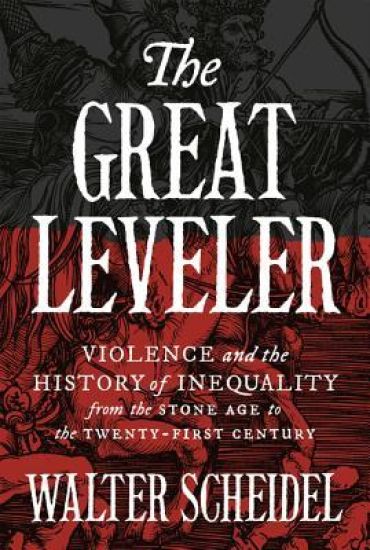
The Great Leveler

The Great Leveler

Walter Scheidel

PRINCETON UNIVERSITY PRESS
2025
pokkari

Halvin toimitettuna 26,60 €

How only violence and catastrophes have consistently reduced inequality throughout world historyAre mass violence and catastrophes the only forces that can seriously decrease economic inequality? To judge by thousands of years of history, the answer is yes. Tracing the global history of inequality from the Stone Age to today, Walter Scheidel shows that inequality never dies peacefully. Inequality declines when carnage and disaster strike and increases when peace and stability return. The Great Leveler is the first book to chart the crucial role of violent shocks in reducing inequality over the full sweep of human history around the world. Ever since humans began to farm, herd livestock, and pass on their assets to future generations, economic inequality has been a defining feature of civilization. Over thousands of years, only violent events have significantly lessened inequality. The "Four Horsemen" of leveling—mass-mobilization warfare, transformative revolutions, state collapse, and catastrophic plagues—have repeatedly destroyed the fortunes of the rich. Scheidel identifies and examines these processes, from the crises of the earliest civilizations to the cataclysmic world wars and communist revolutions of the twentieth century. Today, the violence that reduced inequality in the past seems to have diminished, and that is a good thing. But it casts serious doubt on the prospects for a more equal future. An essential contribution to the debate about inequality, The Great Leveler provides important new insights about why inequality is so persistent—and why it is unlikely to decline anytime soon.
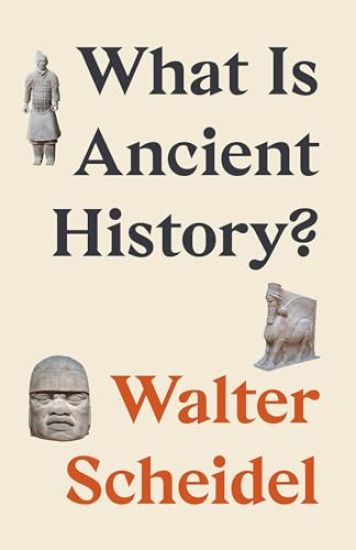
What Is Ancient History?

What Is Ancient History?

Walter Scheidel

PRINCETON UNIVERSITY PRESS
2025
sidottu

Halvin toimitettuna 35,30 €

From one of today’s most innovative ancient historians, a provocative new vision of why ancient history matters—and why it needs to be told in a radically different, global wayIt’s easy to think that ancient history is, well, ancient history—obsolete, irrelevant, unjustifiably focused on Greece and Rome, and at risk of extinction. In What Is Ancient History?, Walter Scheidel presents a compelling case for a new kind of ancient history—a global history that captures antiquity’s pivotal role as a decisive phase in human development, one that provided the shared foundation of our world and continues to shape our lives today. For Scheidel, ancient history is when the earliest versions of today’s ways of life were created and spread—from farming, mining, and engineering to housing and transportation, cities and government, writing and belief systems. Transforming the planet, this process unfolded all over the world, in Eurasia, Africa, and the Americas, often at different times, sometimes haltingly but ultimately unstoppably. Yet it’s rarely studied or taught that way. Since the eighteenth century, Western intellectuals have dismembered the ancient world, driven not only by their quest for professional expertise but also by nationalism, colonialism, racism, and the idealization of Greece and Rome. Specialized scholarship has fractured into numerous academic niches, obscuring broader patterns and dynamics and keeping us from understanding just how much humanity has long had in common. The time has come, Scheidel argues, to put the ancient world back together—by moving beyond the limitations of Greco-Roman “classics,” by systematically comparing ancient societies, and by exploring early exchanges and connections between them. The time has come, in other words, for an ancient history for everyone.
State Power in Ancient China and Rome

State Power in Ancient China and Rome

Walter Scheidel

Oxford University Press Inc
2021
nidottu

Halvin toimitettuna 60,90 €

Two thousand years ago, the Qin/Han and Roman empires were the largest political entities of the ancient world, developing simultaneously yet independently at opposite ends of Eurasia. Although their territories constituted only a small percentage of the global land mass, these two Eurasian polities controlled up to half of the world population and endured longer than most pre-modern imperial states. Similarly, their eventual collapse occurred during the same time. The parallel nature of the Qin/Han and Roman empires has rarely been studied comparatively. Yet here is a collection of pioneering case studies, compiled by Walter Scheidel, that sheds new light on the prominent aspects of imperial state formation. This essential new volume builds on the foundation of Scheidel's Rome and China (2009), and opens up a comparative dialogue among distinguished scholars. They provide unique insights into the complexities of imperial rule, including the relationship between rulers and elite groups, the funding of state agents, the determinants of urban development, and the rise of bureaucracies. By bringing together experts in each civilization, State Power in Ancient China and Rome provides a unique forum to explore social evolution, helping us further understand government and power relations in the ancient world.
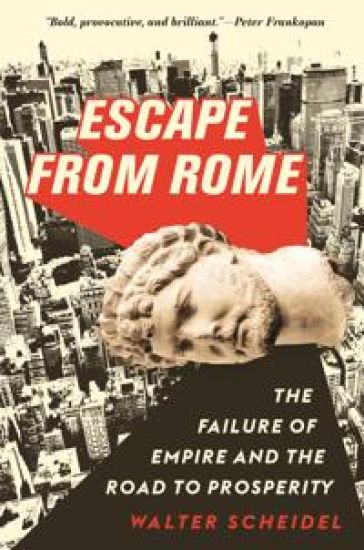
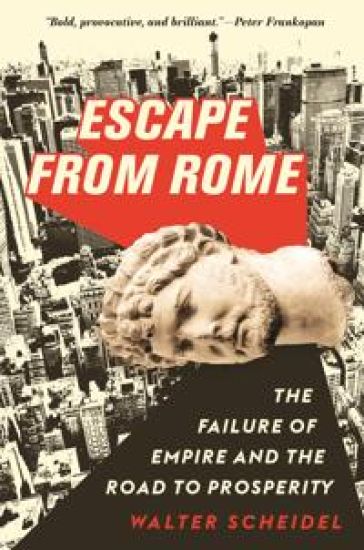
Escape from Rome

Escape from Rome

Walter Scheidel

Princeton University Press
2021
pokkari
The gripping story of how the end of the Roman Empire was the beginning of the modern worldThe fall of the Roman Empire has long been considered one of the greatest disasters in history. But in this groundbreaking book, Walter Scheidel argues that Rome's dramatic collapse was actually the best thing that ever happened, clearing the path for Europe's economic rise and the creation of the modern age. Ranging across the entire premodern world, Escape from Rome offers new answers to some of the biggest questions in history: Why did the Roman Empire appear? Why did nothing like it ever return to Europe? And, above all, why did Europeans come to dominate the world? In an absorbing narrative that begins with ancient Rome but stretches far beyond it, from Byzantium to China and from Genghis Khan to Napoleon, Scheidel shows how the demise of Rome and the enduring failure of empire-building on European soil launched an economic transformation that changed the continent and ultimately the world.
Escape from Rome

Escape from Rome

Walter Scheidel

PRINCETON UNIVERSITY PRESS
2019
sidottu

Halvin toimitettuna 42,10 €

The gripping story of how the end of the Roman Empire was the beginning of the modern worldThe fall of the Roman Empire has long been considered one of the greatest disasters in history. But in this groundbreaking book, Walter Scheidel argues that Rome's dramatic collapse was actually the best thing that ever happened, clearing the path for Europe's economic rise and the creation of the modern age. Ranging across the entire premodern world, Escape from Rome offers new answers to some of the biggest questions in history: Why did the Roman Empire appear? Why did nothing like it ever return to Europe? And, above all, why did Europeans come to dominate the world? In an absorbing narrative that begins with ancient Rome but stretches far beyond it, from Byzantium to China and from Genghis Khan to Napoleon, Scheidel shows how the demise of Rome and the enduring failure of empire-building on European soil ensured competitive fragmentation between and within states. This rich diversity encouraged political, economic, scientific, and technological breakthroughs that allowed Europe to surge ahead while other parts of the world lagged behind, burdened as they were by traditional empires and predatory regimes that lived by conquest. It wasn’t until Europe "escaped" from Rome that it launched an economic transformation that changed the continent and ultimately the world. What has the Roman Empire ever done for us? Fall and go away.
The Great Leveler

The Great Leveler

Walter Scheidel

Princeton University Press
2018
pokkari
How only violence and catastrophes have consistently reduced inequality throughout world historyAre mass violence and catastrophes the only forces that can seriously decrease economic inequality? To judge by thousands of years of history, the answer is yes. Tracing the global history of inequality from the Stone Age to today, Walter Scheidel shows that inequality never dies peacefully. Inequality declines when carnage and disaster strike and increases when peace and stability return. The Great Leveler is the first book to chart the crucial role of violent shocks in reducing inequality over the full sweep of human history around the world. Ever since humans began to farm, herd livestock, and pass on their assets to future generations, economic inequality has been a defining feature of civilization. Over thousands of years, only violent events have significantly lessened inequality. The "Four Horsemen" of leveling—mass-mobilization warfare, transformative revolutions, state collapse, and catastrophic plagues—have repeatedly destroyed the fortunes of the rich. Scheidel identifies and examines these processes, from the crises of the earliest civilizations to the cataclysmic world wars and communist revolutions of the twentieth century. Today, the violence that reduced inequality in the past seems to have diminished, and that is a good thing. But it casts serious doubt on the prospects for a more equal future. An essential contribution to the debate about inequality, The Great Leveler provides important new insights about why inequality is so persistent—and why it is unlikely to decline anytime soon.
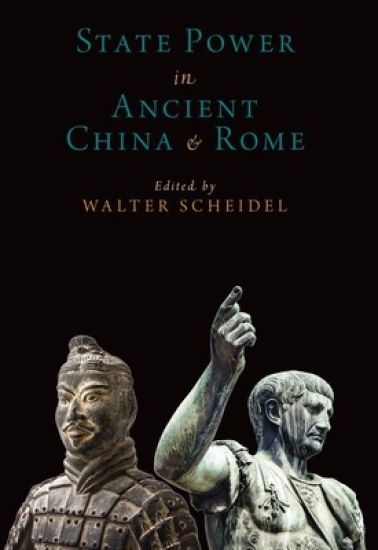
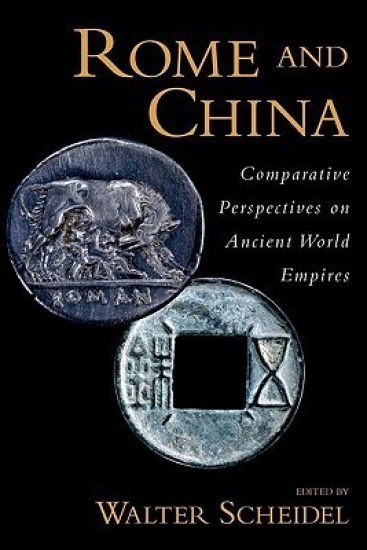
Rome and China

Rome and China

Walter Scheidel

Oxford University Press Inc
2011
nidottu
Transcending ethnic, linguistic, and religious boundaries, early empires shaped thousands of years of world history. Yet despite the global prominence of empire, individual cases are often studied in isolation. This series seeks to change the terms of the debate by promoting cross-cultural, comparative, and transdisciplinary perspectives on imperial state formation prior to the European colonial expansion. Two thousand years ago, up to one-half of the human species was contained within two political systems, the Roman empire in western Eurasia (centered on the Mediterranean Sea) and the Han empire in eastern Eurasia (centered on the great North China Plain). Both empires were broadly comparable in terms of size and population, and even largely coextensive in chronological terms (221 BCE to 220 CE for the Qin/Han empire, c. 200 BCE to 395 CE for the unified Roman empire). At the most basic level of resolution, the circumstances of their creation are not very different. In the East, the Shang and Western Zhou periods created a shared cultural framework for the Warring States, with the gradual consolidation of numerous small polities into a handful of large kingdoms which were finally united by the westernmost marcher state of Qin. In the Mediterranean, we can observe comparable political fragmentation and gradual expansion of a unifying civilization, Greek in this case, followed by the gradual formation of a handful of major warring states (the Hellenistic kingdoms in the east, Rome-Italy, Syracuse and Carthage in the west), and likewise eventual unification by the westernmost marcher state, the Roman-led Italian confederation. Subsequent destabilization occurred again in strikingly similar ways: both empires came to be divided into two halves, one that contained the original core but was more exposed to the main barbarian periphery (the west in the Roman case, the north in China), and a traditionalist half in the east (Rome) and south (China). These processes of initial convergence and subsequent divergence in Eurasian state formation have never been the object of systematic comparative analysis. This volume, which brings together experts in the history of the ancient Mediterranean and early China, makes a first step in this direction, by presenting a series of comparative case studies on clearly defined aspects of state formation in early eastern and western Eurasia, focusing on the process of initial developmental convergence. It includes a general introduction that makes the case for a comparative approach; a broad sketch of the character of state formation in western and eastern Eurasia during the final millennium of antiquity; and six thematically connected case studies of particularly salient aspects of this process.
The Ancient Economy

The Ancient Economy

Walter Scheidel; Sitta Von Reden

ROUTLEDGE
2002
sidottu
The Ancient Economy introduces readers to the nature of economic life in the ancient world, and provides a valuable guide to scholarly debates on the subject. The book describes and examines the economic processes and fluctuations of the ancient world, and shows how these relate to political and social change and conditions. Leading experts address the central issues, from agricultural production to the uses of money and the creation of markets. Taken as a whole the book exemplifies the range of interdisciplinary perspectives on the ancient economy, and illustrates the methodological approaches scholars have deployed to understand it. In doing so it draws on literary, ecological and archaeological evidence.
The Ancient Economy

The Ancient Economy

Walter Scheidel

Routledge
2002
nidottu
The Ancient Economy introduces readers to the nature of economic life in the ancient world, and provides a valuable guide to scholarly debates on the subject. The book describes and examines the economic processes and fluctuations of the ancient world, and shows how these relate to political and social change and conditions. Leading experts address the central issues, from agricultural production to the uses of money and the creation of markets. Taken as a whole the book exemplifies the range of interdisciplinary perspectives on the ancient economy, and illustrates the methodological approaches scholars have deployed to understand it. In doing so it draws on literary, ecological and archaeological evidence.
Grundpacht Und Lohnarbeit in Der Landwirtschaft Des Roemischen Italien
Im romischen Italien bestand unselbstandige Landarbeit seit dem 2. Jh. v. Chr. neben der Plantagensklaverei vor allem in Grundpacht und Lohnarbeit. Die vorliegende Untersuchung ist der zentralen Frage gewidmet, die sich aus dem Spannungsverhaltnis zwischen den oft ambivalenten antiken Nachrichten uber diese beiden Einrichtungen und den Interpretationen der modernen Forschung ergibt: In Bezug auf welche Fragestellungen bieten die erhaltenen Quellen uberhaupt eine Basis fur historische Schlussfolgerungen? Fallweise erganzt durch Vergleichsmaterial aus anderen Epochen, korrigiert oder relativiert diese Studie in vielen Punkten bisherige Deutungen der Uberlieferung, um auf diese Weise die tatsachlichen Grundlagen modellhafter Rekonstruktionen im Detail herauszuarbeiten und kritisch zu evaluieren."