Kirjojen hintavertailu – 12 859 827 kirjaa ja 27 kauppaa
Kirjailija
Walter Scott
Kirjat ja teokset yhdessä paikassa: 2 841 kirjaa, julkaisuja vuosilta 1922–2026, suosituimpiin kuuluu Harold l'Indomptable. Vertaile teosten hintoja ja tarkista saatavuus suomalaisista kirjakaupoista.
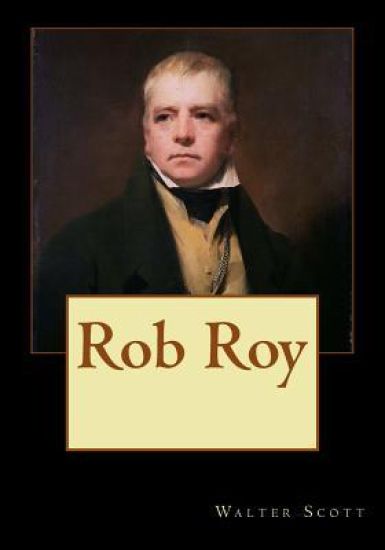
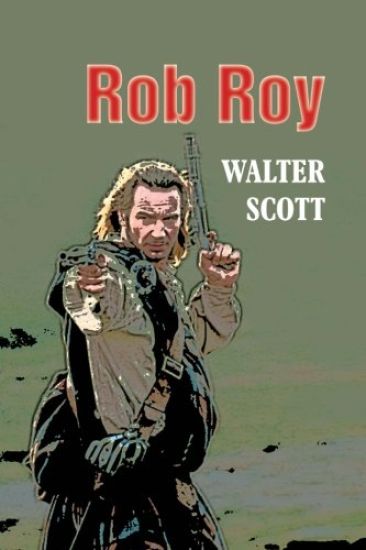
La novela comienza cuando Frank Osbaldistone, hijo de un comerciante Ingl s, viaja por primera vez al norte de Inglaterra, y posteriormente a la Tierras Altas de Escocia, con el objeto de cobrar una deuda robada a su padre. Pero cuando el joven Francis descubre que su intrigante y astuto primo Rashleigh intenta hacerse tanto con los negocios de su padre como con el amor de Diana Vernon, la joven a la que pretende, no le queda otro remedio que acudir en busca del legendario Rob Roy y solicitar su ayuda. Rob Roy es el l der del clan MacGregor, y, aunque valiente y sin miedo, es a su vez un proscrito con precio sobre su cabeza. Pese a ello, decide ayudar a Francis para enfrentarse a Rashleigh, aunque le cueste su propia captura. Ambientada en las visperas del alzamiento jacobita de 1715 en Escocia, Rob Roy es probablemente la novela mas celebre de Sir Walter Scott, donde se narran los hechos hist ricos del popular personaje, y la imaginaci n del autor que desarrollo el concepto de novela hist rica, en un retrato incomparable de intriga, rivalidad y romance.
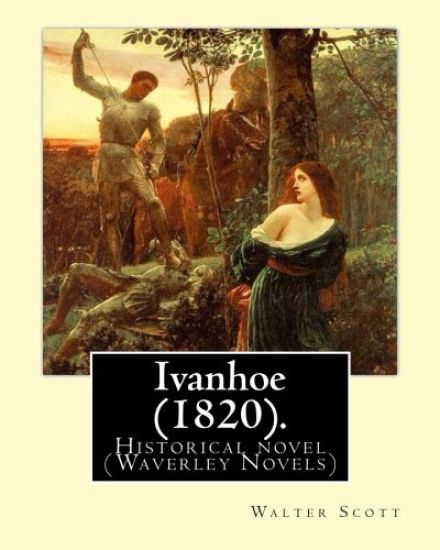
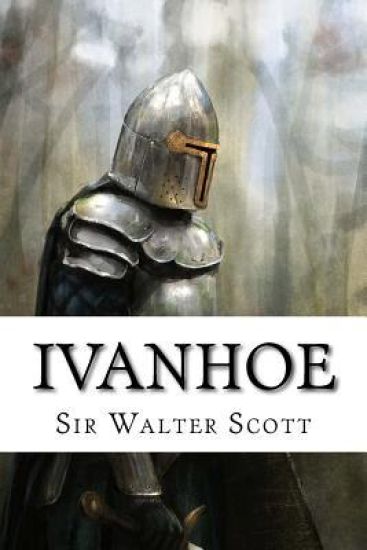
Ivanhoe is a historical novel by Sir Walter Scott, first published in 1820 in three volumes and subtitled A Romance. At the time it was written it represented a shift by Scott away from fairly realistic novels set in Scotland in the comparatively recent past, to a somewhat fanciful depiction of mediaeval England. It has proved to be one of the best known and most influential of Scott's novels. Ivanhoe is set in 12th century England, with colourful descriptions of tournaments, outlaws, witch trials and divisions between Jews and Christians. It has been credited for increasing interest in romance and medievalism; John Henry Newman claimed Scott "had first turned men's minds in the direction of the Middle Ages", while Carlyle and Ruskin made similar assertions of Scott's overwhelming influence over the revival, based primarily on the publication of this novel. It has also had an important influence on popular perceptions of Robin Hood, Richard the Lionheart and King John.
Walter Scott's s mtliche Werke - 21. Band: Peveril vom Gipfel ist ein unver nderter, hochwertiger Nachdruck der Originalausgabe aus dem Jahr 1865. Hansebooks ist Herausgeber von Literatur zu unterschiedlichen Themengebieten wie Forschung und Wissenschaft, Reisen und Expeditionen, Kochen und Ern hrung, Medizin und weiteren Genres. Der Schwerpunkt des Verlages liegt auf dem Erhalt historischer Literatur. Viele Werke historischer Schriftsteller und Wissenschaftler sind heute nur noch als Antiquit ten erh ltlich. Hansebooks verlegt diese B cher neu und tr gt damit zum Erhalt selten gewordener Literatur und historischem Wissen auch f r die Zukunft bei.
Walter Scott's s mtliche Werke - 18. Band: Anna von Geierstein ist ein unver nderter, hochwertiger Nachdruck der Originalausgabe aus dem Jahr 1862. Hansebooks ist Herausgeber von Literatur zu unterschiedlichen Themengebieten wie Forschung und Wissenschaft, Reisen und Expeditionen, Kochen und Ern hrung, Medizin und weiteren Genres. Der Schwerpunkt des Verlages liegt auf dem Erhalt historischer Literatur. Viele Werke historischer Schriftsteller und Wissenschaftler sind heute nur noch als Antiquit ten erh ltlich. Hansebooks verlegt diese B cher neu und tr gt damit zum Erhalt selten gewordener Literatur und historischem Wissen auch f r die Zukunft bei.
Walter Scott's S mtliche Werke - 22. Band: Redgauntlet ist ein unver nderter, hochwertiger Nachdruck der Originalausgabe aus dem Jahr 1865. Hansebooks ist Herausgeber von Literatur zu unterschiedlichen Themengebieten wie Forschung und Wissenschaft, Reisen und Expeditionen, Kochen und Ern hrung, Medizin und weiteren Genres. Der Schwerpunkt des Verlages liegt auf dem Erhalt historischer Literatur. Viele Werke historischer Schriftsteller und Wissenschaftler sind heute nur noch als Antiquit ten erh ltlich. Hansebooks verlegt diese B cher neu und tr gt damit zum Erhalt selten gewordener Literatur und historischem Wissen auch f r die Zukunft bei.
Ivanhoe is a historical novel by Sir Walter Scott, first published in 1820 in three volumes and subtitled A Romance. At the time it was written it represented a shift by Scott away from fairly realistic novels set in Scotland in the comparatively recent past, to a somewhat fanciful depiction of mediaeval England. It has proved to be one of the best known and most influential of Scott's novels. Ivanhoe is set in 12th century England, with colourful descriptions of tournaments, outlaws, witch trials and divisions between Jews and Christians. It has been credited for increasing interest in romance and medievalism; John Henry Newman claimed Scott "had first turned men's minds in the direction of the Middle Ages", while Carlyle and Ruskin made similar assertions of Scott's overwhelming influence over the revival, based primarily on the publication of this novel. It has also had an important influence on popular perceptions of Robin Hood, Richard the Lionheart and King John. Ivanhoe is the story of one of the remaining Saxon noble families at a time when the nobility in England was overwhelmingly Norman. It follows the Saxon protagonist, Sir Wilfred of Ivanhoe, who is out of favour with his father for his allegiance to the Norman king Richard the Lionheart. The story is set in 1194, after the failure of the Third Crusade, when many of the Crusaders were still returning to their homes in Europe. King Richard, who had been captured by Leopold of Austria on his return journey to England, was believed to still be in captivity. The legendary Robin Hood, initially under the name of Locksley, is also a character in the story, as are his "merry men". The character that Scott gave to Robin Hood in Ivanhoe helped shape the modern notion of this figure as a cheery noble outlaw. Other major characters include Ivanhoe's intractable father, Cedric, one of the few remaining Saxon lords; various Knights Templar, most notable of whom is Brian de Bois-Guilbert, Ivanhoe's main rival; a number of clergymen; the loyal serfs: Gurth the swineherd and the jester Wamba, whose observations punctuate much of the action; and the Jewish moneylender, Isaac of York, who is equally passionate about his people and his beautiful daughter, Rebecca. The book was written and published during a period of increasing struggle for the emancipation of the Jews in England, and there are frequent references to injustices against them........ Sir Walter Scott, 1st Baronet, FRSE (15 August 1771 - 21 September 1832) was a Scottish historical novelist, playwright and poet with many contemporary readers in Europe, Australia, and North America. Scott's novels and poetry are still read, and many of his works remain classics of both English-language literature and of Scottish literature. Famous titles include Ivanhoe, Rob Roy, Old Mortality, The Lady of the Lake, Waverley, The Heart of Midlothian and The Bride of Lammermoor. Although primarily remembered for his extensive literary works and his political engagement, Scott was an advocate, judge and legal administrator by profession, and throughout his career combined his writing and editing work with his daily occupation as Clerk of Session and Sheriff-Depute of Selkirkshire....
L'action de ce roman se situe au d but de la premi re croisade, en 1097. Les barons arrivent Constantinople, porte d'entr e de l'Asie. Il se produit alors un choc de cultures et de mentalit s: dans un pays o il n'est pas facile de distinguer ce qui est vrai ou faux, r el ou illusoire, des brutes occidentales cupides, simples et d termin es doivent composer avec le jeu trouble d'Orientaux retors.
Sir Walter Scott, 1st Baronet, FRSE (15 August 1771 - 21 September 1832) was a Scottish historical novelist, playwright and poet with many contemporary readers in Europe, Australia, and North America. Scott's novels and poetry are still read, and many of his works remain classics of both English-language literature and of Scottish literature. Famous titles include Ivanhoe, Rob Roy, Old Mortality, The Lady of the Lake, Waverley, The Heart of Midlothian and The Bride of Lammermoor. Although primarily remembered for his extensive literary works and his political engagement, Scott was an advocate, judge and legal administrator by profession, and throughout his career combined his writing and editing work with his daily occupation as Clerk of Session and Sheriff-Depute of Selkirkshire. A prominent member of the Tory establishment in Edinburgh, Scott was an active member of the Highland Society and served a long term as President of the Royal Society of Edinburgh (1820-32). In 1796, Scott's friend James Ballantyne 16] founded a printing press in Kelso, in the Scottish Borders. Through Ballantyne, Scott was able to publish his first works, including "Glenfinlas" and "The Eve of St. John", and his poetry then began to bring him to public attention. In 1805, The Lay of the Last Minstrel captured wide public imagination, and his career as a writer was established in spectacular fashion. He published many other poems over the next ten years, including the popular The Lady of the Lake, printed in 1810 and set in the Trossachs. Portions of the German translation of this work were set to music by Franz Schubert. One of these songs, "Ellens dritter Gesang", is popularly labelled as "Schubert's Ave Maria". Beethoven's opus 108 "Twenty-Five Scottish Songs" includes 3 folk songs whose words are by Walter Scott. Marmion, published in 1808, produced lines that have become proverbial. Canto VI. Stanza 17 reads: Yet Clare's sharp questions must I shun Must separate Constance from the nun Oh what a tangled web we weave When first we practise to deceive A Palmer too No wonder why I felt rebuked beneath his eye. In 1809 Scott persuaded James Ballantyne and his brother to move to Edinburgh and to establish their printing press there. He became a partner in their business. As a political conservative, Scott helped to found the Tory Quarterly Review, a review journal to which he made several anonymous contributions. Scott was also a contributor to the Edinburgh Review, which espoused Whig views. Scott was ordained as an elder in the Presbyterian Church of Duddington and sat in the General Assembly for a time as representative elder of the burgh of Selkirk. When the lease of Ashestiel expired in 1811 Scott bought Cartley Hole Farm, on the south bank of the River Tweed nearer Melrose. The farm had the nickname of "Clarty Hole", and when Scott built a family cottage there in 1812 he named it "Abbotsford". He continued to expand the estate, and built Abbotsford House in a series of extensions. In 1813 Scott was offered the position of Poet Laureate. He declined, due to concerns that "such an appointment would be a poisoned chalice", as the Laureateship had fallen into disrepute, due to the decline in quality of work suffered by previous title holders, ", as a succession of poetasters had churned out conventional and obsequious odes on royal occasions." He sought advice from the Duke of Buccleuch, who counseled him to retain his literary independence, and the position went to Scott's friend, Robert Southey.
Ivanhoe is the story of one of the remaining Saxon noble families at a time when the English nobility was overwhelmingly Norman. It follows the Saxon protagonist, Wilfrid of Ivanhoe, who is out of favour with his father owing to his courting the Lady Rowena and for his allegiance to the Norman king Richard I of England. The story is set in 1194, after the end of the Third Crusade, when many of the Crusaders were still returning to Europe. King Richard, having been captured by the Duke of Saxony, on his way back, was still supposed to be in the arms of his captors. The legendary Robin Hood, initially under the name of Locksley, is also a character in the story, as are his 'merry men, ' including Friar Tuck and, less so, Alan-a-Dale. (Little John is merely mentioned.) The character that Scott gave to Robin Hood in Ivanhoe helped shape the modern notion of this figure as a cheery noble outlaw
Rob Roy, tambi n llamado "el pr ncipe de los ladrones", es el Robin Hood escoc s del siglo XVII. Frank Osbaldistone, heredero de una casa comercial de Londres, tendr que enfrentarse a su malvado primo Rasleigh, por la disputa de los negocios de su padre y el amor de Diana Vernon.
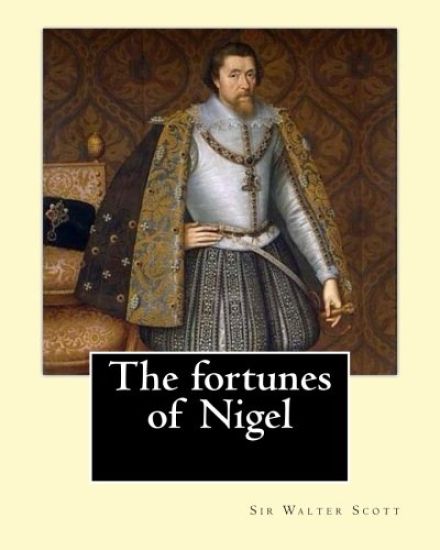
Sir Walter Scott, 1st Baronet, FRSE (15 August 1771 - 21 September 1832) was a Scottish historical novelist, playwright and poet with many contemporary readers in Europe, Australia, and North America. Scott's novels and poetry are still read, and many of his works remain classics of both English-language literature and of Scottish literature. Famous titles include Ivanhoe, Rob Roy, Old Mortality, The Lady of the Lake, Waverley, The Heart of Midlothian and The Bride of Lammermoor. Although primarily remembered for his extensive literary works and his political engagement, Scott was an advocate, judge and legal administrator by profession, and throughout his career combined his writing and editing work with his daily occupation as Clerk of Session and Sheriff-Depute of Selkirkshire. A prominent member of the Tory establishment in Edinburgh, Scott was an active member of the Highland Society and served a long term as President of the Royal Society of Edinburgh (1820-32)......... James VI and I (19 June 1566 - 27 March 1625) was King of Scotland as James VI from 24 July 1567 and King of England and Ireland as James I from the union of the Scottish and English crowns on 24 March 1603 until his death. The kingdoms of Scotland and England were individual sovereign states, with their own parliaments, judiciary, and laws, though both were ruled by James in personal union. James was the son of Mary, Queen of Scots, and a great-great-grandson of Henry VII, King of England and Lord of Ireland, positioning him to eventually accede to all three thrones. James succeeded to the Scottish throne at the age of thirteen months, after his mother Mary was compelled to abdicate in his favour. Four different regents governed during his minority, which ended officially in 1578, though he did not gain full control of his government until 1583. In 1603, he succeeded the last Tudor monarch of England and Ireland, Elizabeth I, who died without issue. a] He continued to reign in all three kingdoms for 22 years, a period known as the Jacobean era after him, until his death in 1625 at the age of 58. After the Union of the Crowns, he based himself in England (the largest of the three realms) from 1603, only returning to Scotland once in 1617, and styled himself "King of Great Britain and Ireland". b] He was a major advocate of a single parliament for England and Scotland. In his reign, the Plantation of Ulster and British colonization of the Americas began. At 57 years and 246 days, James's reign in Scotland was longer than those of any of his predecessors. He achieved most of his aims in Scotland but faced great difficulties in England, including the Gunpowder Plot in 1605 and repeated conflicts with the English Parliament. Under James, the "Golden Age" of Elizabethan literature and drama continued, with writers such as William Shakespeare, John Donne, Ben Jonson, and Sir Francis Bacon contributing to a flourishing literary culture. 1] James himself was a talented scholar, the author of works such as Daemonologie (1597), The True Law of Free Monarchies (1598), and Basilikon Doron (1599). He sponsored the translation of the Bible that would later be named after him: the Authorised King James Version. c] Sir Anthony Weldon claimed that James had been termed "the wisest fool in Christendom", an epithet associated with his character ever since. Since the latter half of the 20th century, historians have tended to revise James's reputation and treat him as a serious and thoughtful monarch.
The Antiquary (1816) is a novel by Sir Walter Scott about several characters including an antiquary: an amateur historian, archaeologist and collector of items of dubious antiquity. Although he is the eponymous character, he is not necessarily the hero, as many of the characters around him undergo far more significant journeys or change. Instead, he provides a central figure (and location) for other more exciting characters and events - on which he provides a sardonic commentary. The book is written in the third person so the narrative does not remain with the antiquary. This is Scott's gothic novel, redolent with family secrets, stories of hidden treasure and hopeless love, with a mysterious, handsome, young man, benighted aristocracy and a night-time funeral procession to a ruined abbey. The romance and mystery is counterpoised by some of Scott's more down-to-earth characters, and grittily unromantic events. Scott wrote in an advertisement to the novel that his purpose in writing it, similar to that of his novels Waverley and Guy Mannering, was to document Scottish life and manners of a certain period, in this case the last decade of the 18th century. Scott included a glossary of Scottish terms as an appendix to the novel. At the opening of the story, Lovel meets Oldbuck while taking a coach from Edinburgh. Oldbuck, interested as he is in antiquities, has with him Gordon's Itinerarium, a book about Roman ruins. The book interests Lovel, to the surprise of Oldbuck and by their shared interest the two become friends. Oldbuck invites Lovel to come to Monkbarns and takes the opportunity of a willing listener to divulge his ancient knowledge. In the process of which, Oldbuck shows Lovel a plot of land he purchased at great cost where he found an inscription "A. D. L. L", which Oldbuck takes to mean "Agricola Dicavit Libens Lubens". Edie Ochiltree, the local beggar, disputes the antiquary's history, in one of the more amusing scenes of the story . Oldbuck decides to introduce Lovel to his good friend, Sir Arthur Wardour. When Sir Arthur arrives, Lovel meets Arthur's daughter, Isabella and the two realize they have seen each other before. Because Lovel is illegitimate, she knows her father would not approve of a marriage between them. When she sees Lovel standing in the road waiting to talk to her, she convinces her father to take the long way home, walking down to the beach. Luckily, Edie Ochiltree, having the insight that someone may be trapped on the beach not knowing that the tide was coming in, finds the Wardours and helps them escape the rising waters. Then, Lovel appears and gets them to relative safety, huddling on the side of a rocky cliff. Finally, Oldbuck arrives with men and ropes to pull the four up over the cliff to safety. A while later, Oldbuck takes Lovel, the Wardours, his niece and nephew, Douster-swivel and a priest to the ancient ruins of Saint Ruth on Sir Arthur's property. While exploring the property, they discuss an ancient treasure that they believe to be buried at the ruins. Captain M'Intyre dominates Isabella's attention, which she leaves in favor of Lovel's to the dismay of M'Intyre. M'Intyre, angered at this slight, discovers that Lovel is in the military, but realizes he knows of no one named Lovel in his division and calls him out upon the topic. They agree to a duel and return to the scene to fight for their individual honor.... Sir Walter Scott, 1st Baronet, FRSE (15 August 1771 - 21 September 1832) was a Scottish historical novelist, playwright and poet with many contemporary readers in Europe, Australia, and North America.... Cavenagh, F. A. (Francis Alexander) 1884-1946...