Kirjojen hintavertailu – 12 903 725 kirjaa ja 27 kauppaa

Kirjailija

Walter White

Kirjat ja teokset yhdessä paikassa: 64 kirjaa, julkaisuja vuosilta 1995–2026, suosituimpiin kuuluu The Fire in the Flint. Vertaile teosten hintoja ja tarkista saatavuus suomalaisista kirjakaupoista.

64 kirjaa

Kirjojen julkaisuvuodet: 1995–2026.

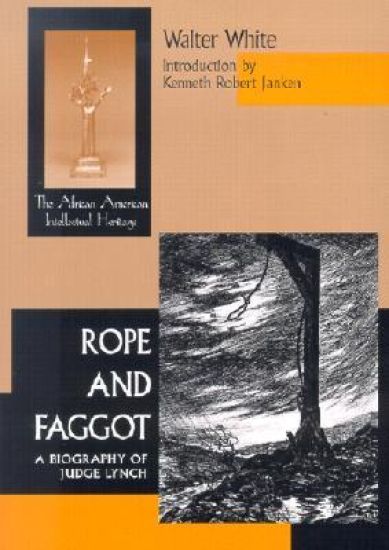
Rope and Faggot

Rope and Faggot

Walter White

University of Notre Dame Press
2002
nidottu
In 1926, Walter White, assistant secretary of the National Association for the Advancement of Colored People, broke the story of a horrific lynching in Aiken, South Carolina, in which three African Americans were murdered while more than one thousand spectators watched. Because of his light complexion, blonde hair, and blue eyes, White, an African American, was able to investigate first-hand more than forty lynchings and eight race riots. Following the lynchings in Aiken, White took a leave of absence from the NAACP and, with help from a Guggenheim grant, spent a year in France writing Rope and Faggot. Ironically subtitled "A Biography of Judge Lynch," Rope and Faggot is a compelling example of partisan scholarship and is based on White's first-hand investigations. It was first published in 1929. Rope and Faggot debunked the "big lie" that lynching punished black men for raping white women and it provided White with an opportunity to deliver a penetrating critique of the southern culture that nourished this form of blood sport. White marshaled statistics demonstrating that accusations of rape or attempted rape accounted for less than 30 percent of all lynchings. Despite the emphasis on sexual issues in instances of lynching, White insisted that the fury and sadism with which white mobs attacked their victims stemmed primarily from a desire to keep blacks in their place and control the black labor force. Some of the strongest sections of Rope and Faggot deal with White's analysis of the economic and cultural foundations of lynching. Walter White's powerful study of a shameful practice in modern American history is now back in print, with a new introduction by Kenneth Robert Janken.
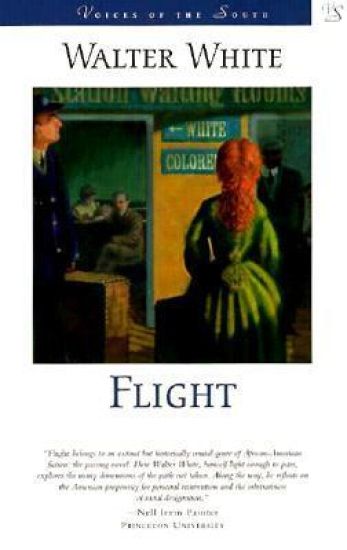
Flight

Flight

Walter White

Louisiana State University Press
1998
nidottu
Published amid controversy in 1926, Flight focuses on the dilemma of Mimi Daquin, a light-complexioned African American woman who passes, for a time, as white. In the New Orleans of her birth, Mimi never encountered the hierarchies of skin colour that existed elsewhere. But when her family moves to Atlanta, she embarks on a lifelong lesson about what it really means to belong to a people. From the Atlanta riot of 1906 to her shameful expulsion from black bourgeois society because of an out-of-wedlock pregnancy, to her working-class status in Philadelphia and Harlem, Mimi eventually decides to escape her miseries by passing for white in New York City. There, her success exceeds her expectations but even so cannot quell a recurrent yearning.
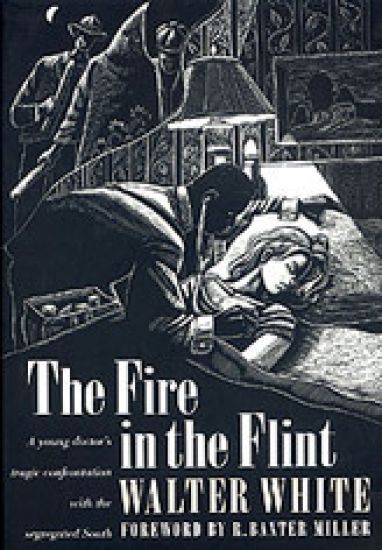
The Fire in the Flint

The Fire in the Flint

Walter White; R. Baxter Miller

University of Georgia Press
1996
pokkari
Written by a lifelong champion of civil rights, this is the story of Kenneth Harper, a young black physician who, after having studied in the North in the early part of the twentieth century and believing the days of oppression for blacks in the South were waning, returns to his hometown of Central City in South Georgia to practice medicine. Harper finds all too soon that the roots of intolerance grow deep. As he becomes increasingly aware of the ways in which the black community remains enslaved, Harper helps local sharecroppers organize a cooperative society to share in the economic freedom traditionally reserved for white landowners. The Ku Klux Klan is quickly rallied into action, and Harper finds himself in a violent and vengeful battle with the Klan. Amid the story's tragedy and violence, White reflects the complex nuances of humanity within white and black communities in conflict.
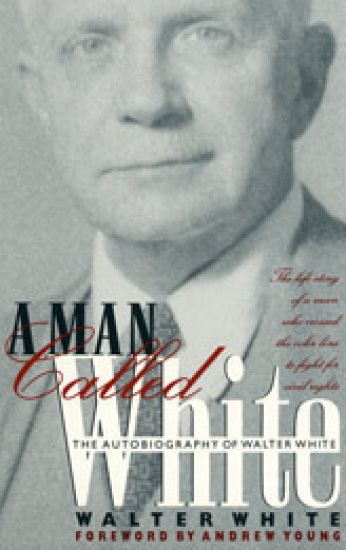
A Man Called White

A Man Called White

Walter White

University of Georgia Press
1995
pokkari
First published in 1948, A Man Called White is the autobiography of the famous civil rights activist Walter White during his first thirty years of service to the National Association for the Advancement of Colored People. White joined the NAACP in 1918 and served as its executive secretary from 1931 until his death in 1955. His recollections tell not only of his personal life, but amount to an insider's history of the association's first decades. Although an African American, White was fair-skinned, blond-haired, and blue-eyed. His ability to pass as a white man allowed him—at great personal risk—to gather important information regarding lynchings, disfranchisement, and discrimination. Much of A Man Called White recounts his infiltration of the country's white-racist power structure and the numerous legal battles fought by the NAACP that were aided by his daring efforts. Penetrating and detailed, this autobiography provides an important account of crucial events in the development of race relations before 1950—from the trial of the "Scottsboro Boys" to an investigation of the treatment of African American servicemen in World War II, from the struggle against the all-white primaries in the South to court decisions—at all levels—on equal education.