Kirjojen hintavertailu – 12 903 725 kirjaa ja 27 kauppaa

Kirjailija

Wang Gungwu

Kirjat ja teokset yhdessä paikassa: 11 kirjaa, julkaisuja vuosilta 2003–2025, suosituimpiin kuuluu What is China? : observations and perspectives. Vertaile teosten hintoja ja tarkista saatavuus suomalaisista kirjakaupoista.

11 kirjaa

Kirjojen julkaisuvuodet: 2003–2025.

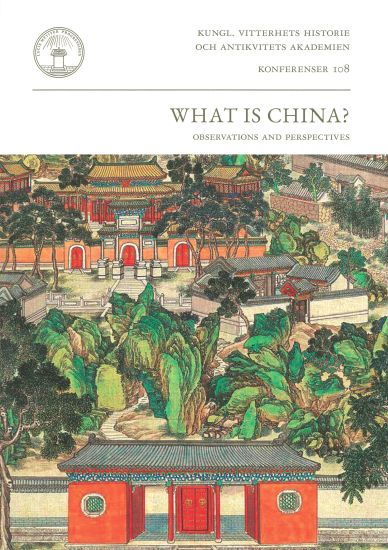
What is China? : observations and perspectives

What is China? : observations and perspectives

Joakim Enwall; Fredrik Fällman; Ge Zhaoguang; Chun-Chieh Huang; Youngmin Kim; Torbjörn Lodén; Ooi Kee beng; Fansen Wang; Wang Gungwu; Zhang Longxi

Kungl. Vitterhetsakademien
2023
nidottu
“China is”, in the words of Bertrand Russell, “much less a political entity than a civilization.” To this we may add that China is also a geographical area. The word China has multiple meanings charged with different kinds of values and preconceptions. In this book ten scholars from Mainland China, Hong Kong, Korea, Malaysia, Singapore, Sweden, and Taiwan explore various meanings and aspects of Chinese identity. What does “China” mean as a cultural concept and when referring to a geographical territory? What is the significance of the historical relationship between the interior and exterior for the Chinese identity? How have classical texts been used by the Chinese state? These are central questions in this book, where you will also find contributions analysing, among other topics, the Chinese self-image and China as seen from the outside. One article examines the ideological use of the notion of “Chinese characteristics” in contemporary Mainland China, while another analyses China’s future development in terms of the country’s transformation from a multiethnic empire to a homogenous national state.
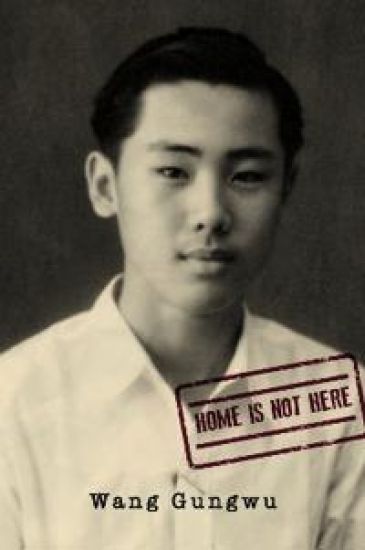
Home Is not Here

Home Is not Here

Wang Gungwu

Nus Press
2025
nidottu
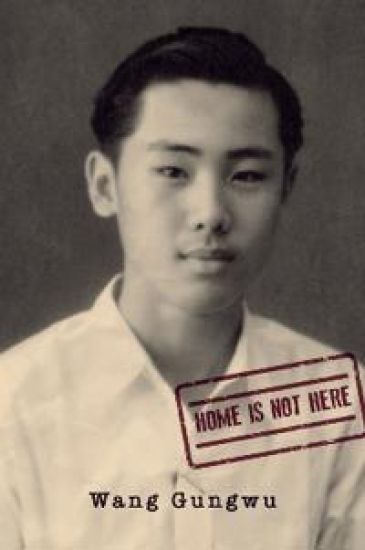
As someone who has studied history for much of my life, I have found the past fascinating. But it has always been some grand and even intimidating universe that I wanted to unpick and explain to myself. Wang Gungwu is one of Asia's most important public intellectuals. He is best-known for his explorations of Chinese history in the long view, and for his writings on the Chinese diaspora. With Home is Not Here, the historian of grand themes turns to a single life history: his own. Wang writes about his multicultural upbringing and life under British rule. He was born in Surabaya, Java, but his parents' orientation was always to China. Wang grew up in the plural, multi-ethnic town of Ipoh, Malaya (now Malaysia). He learned English in colonial schools and was taught the Confucian classics at home. After the end of WWII and Japanese occupation, he left for the National Central University in Nanjing to study alongside some of the finest of his generation of Chinese undergraduates. The victory of Mao Zedong's Communist Party interrupted his education, and he ends this volume with his return to Malaya. Wise and moving, this is a fascinating reflection on family, identity, and belonging, and on the ability of the individual to find a place amid the historical currents that have shaped Asia and the world.
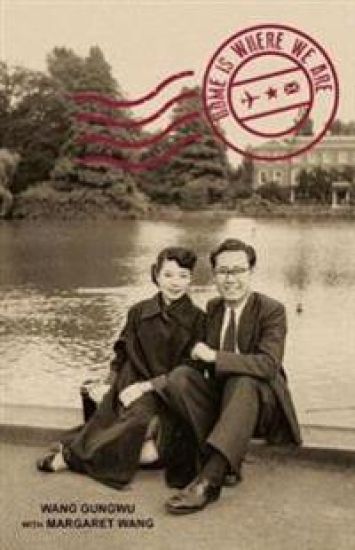
Home Is Where We Are

Home Is Where We Are

Wang Gungwu; Margaret Wang

Ridge Books
2021
sidottu
Does home have to be a country or a city? ... Or is home this house or that? We have been fortunate... We seemed always to have been home. Wang Gungwu, historian of grand themes and broad perspectives, has held positions in universities around the world, from London and Cambridge to Kuala Lumpur, Canberra, Hong Kong and Singapore. This second volume of his memoirs, written with his wife Margaret, continues the very personal story begun in Home is Not Here. Wang’s account of his years at the University of Malaya, captures the excitement, the ambition — and the naïveté — of young English-educated elites being prepared for leadership by the departing colonial power. He introduces us to some outstanding personalities of this founding generation of two nations, including young medical student Mahathir Mohamad. We also see these years from Margaret’s perspective, her own fascinating family story, and her impressions of this young bearded poet. The exploration of the emotional and intellectual journey towards the formation of an identity, treasured by readers of Home is Not Here, extends in this volume into an appreciation of love, family life, and the life of the mind. Wise and moving, this is a fascinating reflection on identity and belonging, and on the ability of the individual to find a place amidst the historical currents that have shaped Asia and the world.
Home Is not Here

Home Is not Here

Wang Gungwu

NUS Press
2018
sidottu
One of Asia’s most important public intellectuals, Wang Gungwu is best-known for his explorations of Chinese history in the long view, and for his writings on the Chinese overseas. Here the historian of grand themes turns to the intimate scale of a single life history: his own. "As someone who has studied history for much of my life, I have found the past fascinating. But it has always been some grand and even intimidating universe that I wanted to unpick and explain to myself.... While we talk grandly of the importance of history, we can be insensitive to what people felt and thought.... In time, I realized how partial my understanding of the past was." Wang was born in Surabaya, Java, but his parents’ orientation was always to China; they had travelled to Southeast Asia to help in the education of the Chinese overseas. Wang grew up in the plural, multiethnic town of Ipoh, Malaya, now Malaysia, was educated at home in the Confucian classics and in English medium schools as a colonial subject. He proceeded from Ipoh to National Central University in Nanjing to study alongside some of the finest of his generation of Chinese undergraduates. The victory of Mao Zedong’s Communist Party interrupted his education, and he ends this volume with his return to Malaya. Wise and moving, this is a fascinating reflection on family, identity and belonging, and on the ability of the individual to find a place amidst the historical currents that have shaped Asia and the world.
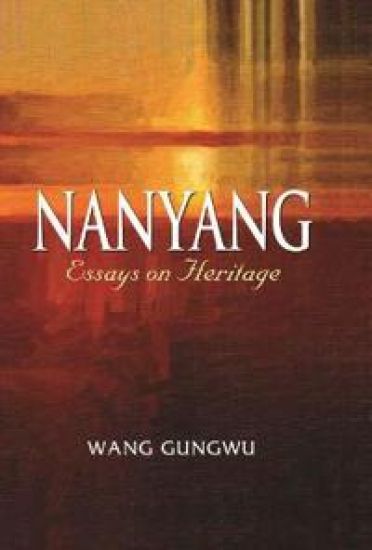
Nanyang

Nanyang

Wang Gungwu

Institute for Southeast Asian Studies
2018
sidottu
This volume is a book of reflections and encounters about the region that the Chinese knew as Nanyang. The essays in it look back at the years of uncertainty after the end of World War II and explore the period largely through images of mixed heritages in Malaysia and Singapore. They also look at the trends towards social and political divisiveness following the years of decolonization in Southeast Asia. Never far in the background is the struggle to build new nations during four decades of an ideological Cold War and the Chinese determination to move from near-collapse in the 1940s and out of the traumatic changes of the Maoist revolution to become the powerhouse that it now is.
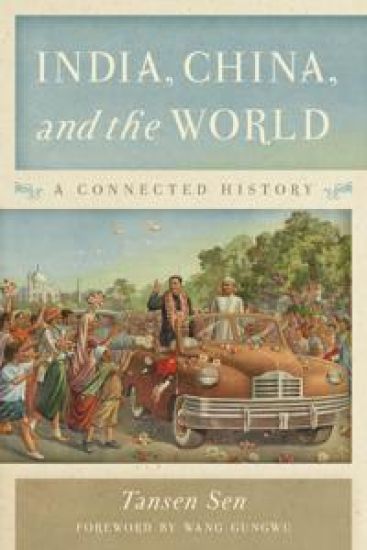
India, China, and the World

India, China, and the World

Tansen Sen; Wang Gungwu

Rowman Littlefield
2017
sidottu
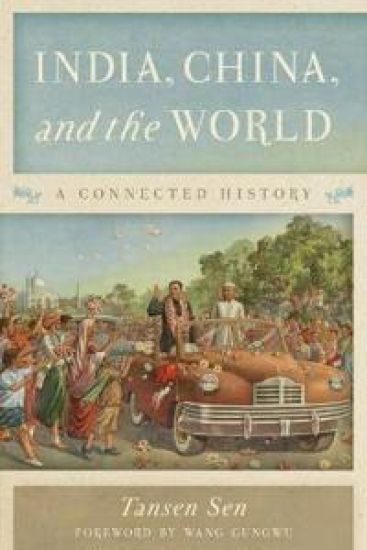
This pathbreaking study provides the first comprehensive examination of India-China interactions in the broader contexts of Asian and world history. By focusing on material exchanges, transmissions of knowledge and technologies, networks of exchange during the colonial period, and little-known facets of interactions between the Republic of India and the People’s Republic of China, Tansen Sen argues convincingly that the analysis of India-China connections must extend beyond the traditional frameworks of nation-states or bilateralism. Instead, he demonstrates that a wide canvas of space, people, objects, and timeframe is needed to fully comprehend the interactions between India and China in the past and during the contemporary period. Considering as well the contributions of people and groups from beyond India and China, Sen also explores the interactions between Indians and Chinese outside the Asian continent. The author’s formidable array of sources, pulled from archives and libraries around the world, range from Chinese travel accounts to Indian intelligence reports. Examining the connected histories of the two regions, Sen fills a striking gap in the study of India and China in a global setting.
India, China, and the World

India, China, and the World

Tansen Sen; Wang Gungwu

Rowman Littlefield
2017
nidottu
This pathbreaking study provides the first comprehensive examination of India-China interactions in the broader contexts of Asian and world history. By focusing on material exchanges, transmissions of knowledge and technologies, networks of exchange during the colonial period, and little-known facets of interactions between the Republic of India and the People’s Republic of China, Tansen Sen argues convincingly that the analysis of India-China connections must extend beyond the traditional frameworks of nation-states or bilateralism. Instead, he demonstrates that a wide canvas of space, people, objects, and timeframe is needed to fully comprehend the interactions between India and China in the past and during the contemporary period. Considering as well the contributions of people and groups from beyond India and China, Sen also explores the interactions between Indians and Chinese outside the Asian continent. The author’s formidable array of sources, pulled from archives and libraries around the world, range from Chinese travel accounts to Indian intelligence reports. Examining the connected histories of the two regions, Sen fills a striking gap in the study of India and China in a global setting.
Renewal

Renewal

Wang Gungwu

The Chinese University Press
2013
sidottu
The Chinese state has been the subject of fierce debates since reformers and revolutionaries first fought to redefine it at the end of the Qing dynasty. After the 1912 Revolution, when the idea of “empire” gave way to that of “nation-state,” the Chinese people sought a modern identity, re-designed their governance system and re-wrote their history. Revolution became the source of the legitimacy that the new leaders defended in a world based on state sovereignty. They soon found the task of reconciling their republic with the political culture they inherited extraordinarily difficult. They now sense that their state is neither an empire nor a nation-state and seek to renew the Chinese state through a civilisation of industry and science fused with the best of their heritage. Chinese statehood will also be shaped by the country’s relations with its neighbours, the way its leaders deal with global issues of social justice, its attitudes towards culture and identity among all varieties of Chinese peoples, and the deep sense of history that guides state formation. The author probes into the Chinese perception of its place in world history, and examines the unique features that propel China onto its modern global trajectory. By bringing these themes together, he depicts the travails of renewal that the Chinese have to face and betters our understanding of China’s position in today’s interconnected world.
Orientalism in Sinology

Orientalism in Sinology

Adrian Chan; Wang Gungwu

Academica Press
2009
nidottu
Foreword by Professor Wang Gungwu,former Vice Chancellor, University of Hong Kong and currently Director of the East asian Institute, University of Singapore. This research monograph is a major contribution to Chinese Studies especially in area studies of comparative religion, Chinese Rhetoric, History and translation (esp. Chinese to English). Professor Chan, using questions first raised in Edward Said’s ORIENTALISM, begins with a close examination of the intellectual production of Christian missionaries to the Middle Kingdom in the 16th and 17th centuries and the creation of Sinology. Chan believes from cosmogony theory to history of Science (Joseph Needham) many Western scholars have distorted and misunderstood the cultural and intellectual stance of classic Chinese thought and have attempted to create a Chinese equivalent of European material civilization and culture. Chan begins his critique by describing the problem of Chinese cosmogonies, Confucian thought, moral improvement and non Deistic teaching to the first Western scholars to reach China. This search for “mirror” events (events and trends in China “mirroring” events in Europe and America) consumes much of Western intellectual energies for centuries leading such historians as Spengler, Needham, Roberts and McKay. Finally, Chan discusses the disaster of overarching “development” theories on China and the misappropriation of Chinese events by Marxists and non Marxists alike.
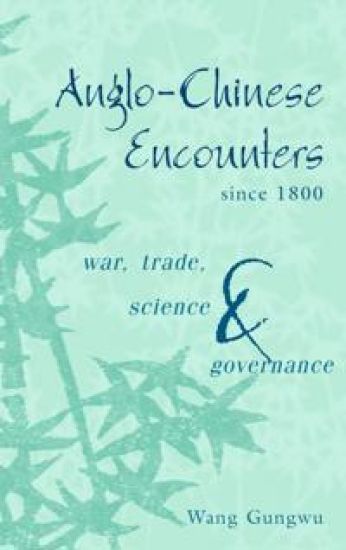
Anglo-Chinese Encounters since 1800

Anglo-Chinese Encounters since 1800

Wang Gungwu

Cambridge University Press
2003
sidottu
Chinese encounters with the British were more than merely those between two great powers. There was the larger canvas of the Empire and Commonwealth where the two peoples traded and interacted. In China, officials and merchants had to place the British beside other enterprising foreign peoples who were equally intent on influencing developments there. There were also Chinese who encountered the British in personal ways, and individual British who ventured into a 'vast unknown' with its deep history. Wang Gungwu's 2003 book, based on lectures linking China and the Chinese with imperial Britain, examines the possibilities in, as well as the limits of, their encounters. It takes the story beyond the clichés of opium, fighting, and the diplomatic skills needed to fend off rivals and enemies, and probes some areas of more intimate encounters, not least the beginnings of a wider English-speaking future.
Anglo-Chinese Encounters since 1800

Anglo-Chinese Encounters since 1800

Wang Gungwu

Cambridge University Press
2003
pokkari
Chinese encounters with the British were more than merely those between two great powers. There was the larger canvas of the Empire and Commonwealth where the two peoples traded and interacted. In China, officials and merchants had to place the British beside other enterprising foreign peoples who were equally intent on influencing developments there. There were also Chinese who encountered the British in personal ways, and individual British who ventured into a ‘vast unknown’ with its deep history. Wang Gungwu’s book, based on lectures linking China and the Chinese with imperial Britain, examines the possibilities in, as well as the limits of, their encounters. It takes the story beyond the clichés of opium, fighting, and the diplomatic skills needed to fend off rivals and enemies, and probes some areas of more intimate encounters, not least the beginnings of a wider English-speaking future.