Kirjojen hintavertailu – 12 903 725 kirjaa ja 27 kauppaa

Kirjailija

Ward Churchill

Kirjat ja teokset yhdessä paikassa: 11 kirjaa, julkaisuja vuosilta 2002–2022, suosituimpiin kuuluu Islamophobia. Vertaile teosten hintoja ja tarkista saatavuus suomalaisista kirjakaupoista.

11 kirjaa

Kirjojen julkaisuvuodet: 2002–2022.

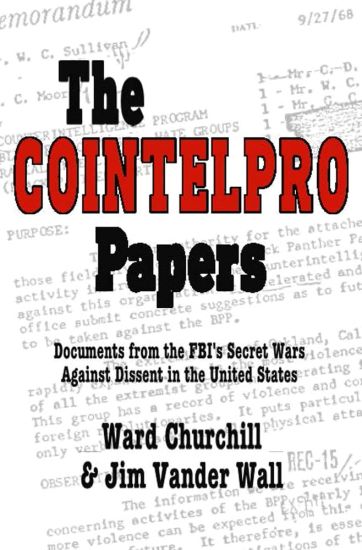
The Cointelpro Papers

The Cointelpro Papers

Ward Churchill; Jim Vander Wall

BLACK CLASSIC PRESS
2022
nidottu
Ward Churchill and Jim Vander Wall's expos of America's political police force, the FBI, reveals the steel fist undergirding "compassionate conservatism's" velvet glove. Using original FBI memos, the authors provide extensive analysis of the agency's treatment of the left, from the Communist Party in the 1950s to the Central America solidarity movement in the 1980s. The authors' new introduction posits likely trajectories for domestic repression.
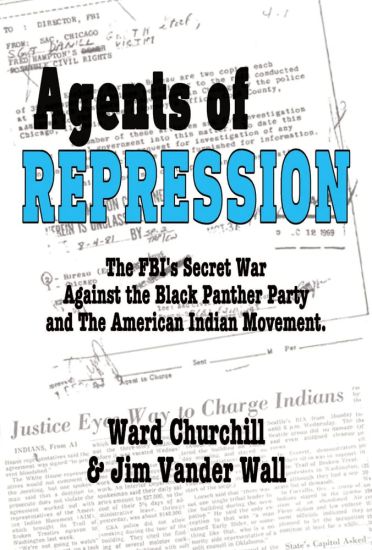
Agents of Repression: The Fbi's Secret Wars Against the Black Panther Party and the American Indian Movement

Agents of Repression: The Fbi's Secret Wars Against the Black Panther Party and the American Indian Movement

Ward Churchill; Jim Vander Wall

BLACK CLASSIC PRESS
2022
nidottu

Halvin toimitettuna 24,80 €

For those wondering how Bill Clinton could pardon white-collar fugitive Marc Rich but not Native American leader Leonard Peltier, important clues can be found in this classic study of the FBI's COINTELPRO (Counterintelligence Program). Agents of Repression includes an incisive historical account of the FBI siege of Wounded Knee, and reveals the viciousness of COINTELPRO campaigns targeting the Black Liberation movement. The authors' new introduction examines the legacies of the Panthers and AIM, and shows how the FBI still presents a threat to those committed to fundamental social change.
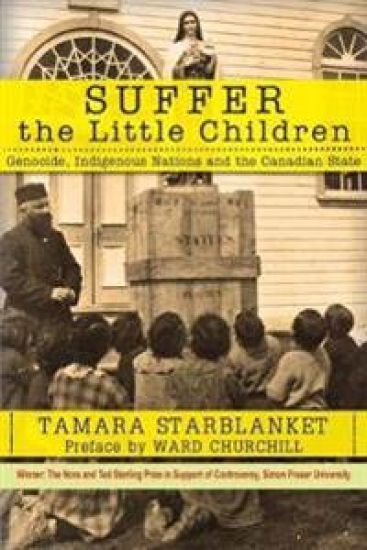
Suffer the Little Children

Suffer the Little Children

Tamara Starblanket; Ward Churchill

Clarity Press
2018
pokkari
Winner of The Nora and Ted Sterling Prize in Support of Controversy, Simon Fraser University Originally approved as a master of laws thesis by a respected Canadian university, this book tackles one of the most compelling issues of our time--the crime of genocide--and whether in fact it can be said to have occurred in relation to the many Original Nations on Great Turtle Island now claimed by a state called Canada. It has been hailed as groundbreaking by many Indigenous and other scholars engaged with this issue, impacting not just Canada but states worldwide where entrapped Indigenous nations face absorption by a dominating colonial state. Starblanket unpacks Canada's role in the removal of cultural genocide from the Genocide Convention, though the disappearance of an Original Nation by forced assimilation was regarded by many states as equally genocidal as destruction by slaughter. Did Canada seek to tailor the definition of genocide to escape its own crimes which were then even ongoing? The crime of genocide, to be held as such under current international law, must address the complicated issue of mens rea (not just the commission of a crime, but the specific intent to do so). This book permits readers to make a judgment on whether or not this was the case. Starblanket examines how genocide was operationalized in Canada, focused primarily on breaking the intergenerational transmission of culture from parents to children. Seeking to absorb the new generations into a different cultural identity--English-speaking, Christian, Anglo-Saxon, termed Canadian--Canada seized children from their parents, and oversaw and enforced the stripping of their cultural beliefs, languages and traditions, replacing them by those still in process of being established by the emerging Canadian state. She outlines the array and extent of the destruction which inevitably took place as part of the effort to bring about such a wrenching change--forcible indoctrination by means of massive and widespread death by disease and dilapidated living conditions, torture, forced starvation, labor, and sexual predation--collateral damage to Canada's effort to absorb diverse original nations into one larger, alien and dominating body politic. The cumulative effects of genocide continue to be exhibited by the survivors and their descendants who suffer from the trauma and dysfunction, primarily in healthy proper parenting, which results in ongoing forcible removals via the child welfare systems to this day.
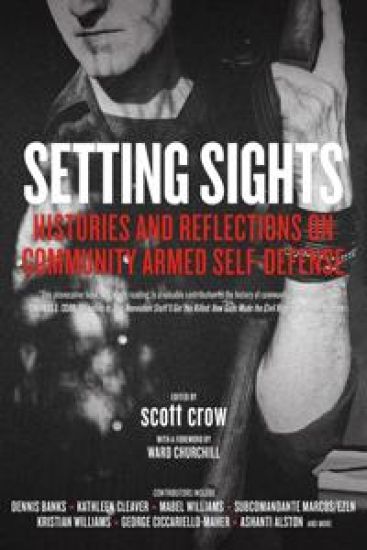
Setting Sights

Setting Sights

Ward Churchill

PM Press
2018
nidottu
This wide-ranging anthology uncovers the hidden histories of community armed self-defense, exploring how it has been used by marginalized and oppressed communities as well as anarchists and radicals within significant social movements of the 20th and 21st centuries. Far from a call to arms, or a "how-to" manual for warfare, this volume offers histories, reflections, and questions about the role of firearms in small collective defense efforts and its place in larger efforts toward the creation of autonomy and liberation. Featuring diverse perspectives from movements across the globe, Setting Sights includes vivid histories and personal reflections from both researchers and those who participated in community armed self-defense. Contributors include Dennis Banks, Kathleen Cleaver, Mable Williams, Subcomandante Marcos, Kristian Williams, George Ciccariello-Maher, Ashanti Alston, and many more.
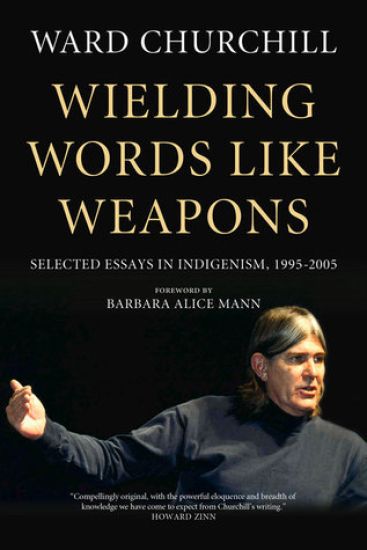
Wielding Words Like Weapons

Wielding Words Like Weapons

Ward Churchill; Barbara Alice Mann

PM Press
2017
nidottu
Wielding Words Like Weapons is a collection of acclaimed American Indian Movement activist-intellectual Ward Churchill's essays on indigenism, selected from material written during the decade 1995-2005. Beginning with a foreword by Seneca historian Barbara Alice Mann describing sustained efforts by police and intelligence agencies as well as university administrators and other academic adversaries to discredit or otherwise "neutralize" both the man and his work, the book includes material illustrating the range of formats Churchill has adopted in stating his case, from sharply framed book reviews and review essays, to equally pointed polemics and op-eds, and formal essays designed to reach both scholarly and popular audiences. The items selected, several of them previously unpublished, also reflect the broad range of topics addressed in Churchill's scholarship, from the fallacies of archeological/anthropological orthodoxy like the Bering Strait migration hypothesis and the insistence of "cannibologists" that American Indians were traditionally man-eaters, to cinematic degradations of native people by Hollywood, the historical and ongoing genocide of North America's native peoples, questions of American Indian identity, and the systematic distortion of political and legal history by reactionary scholars as a means of denying the realities of U. S.-Indian relations. Also included are both the initial "stream-of-consciousness" version of Churchill's famous--or notorious--"little Eichmanns" opinion piece analyzing the causes of the attacks on 9/11, as well as the counterpart essay in which his argument was fully developed and garnered honorable mention for the 2004 Gustavus Myers Award for best writing on human rights. Less typical of Churchill's oeuvre is an essay commemorating the passing of Cherokee anthropologist Robert K. Thomas, and another on that of Yankton Sioux legal scholar and theologian Vine Deloria Jr., to each of whom he acknowledges a deep intellectual debt. More unusual still is his moving and profoundly personal effort to come to grips with the life and death of his late wife, Leah Renae Kelly, thereby illuminating in very human terms the grim and lasting effects of Canada's residential schools upon the country's indigenous peoples.
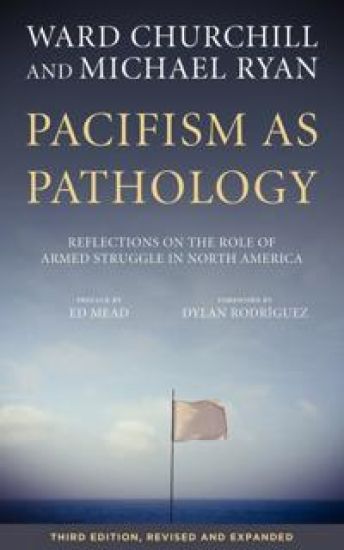
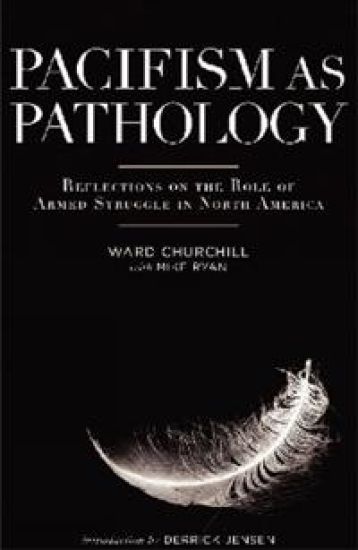
Pacifism As Pathology

Pacifism As Pathology

Ward Churchill; Michael Ryan

PM Press
2017
nidottu
Originally written during the mid-1980s, the seminal essay Pacifism as Pathology was prompted by veteran activist Ward Churchill's frustration with what he diagnosed as a growing--and deliberately self-neutralizing---hegemony of nonviolence- on the North American left. The essay's publication unleashed a raging debate among activists in both the U. S. and Canada, a significant result of which was Michael Ryan's penning of a follow-up essay reinforcing Churchill's premise that nonviolence, at least as the term is popularly employed by white -progressives, - is inherently counterrevolutionary. This book challenges the pacifist movement's heralded victories, suggesting that their success was in spite of, rather than because of, their nonviolent tactics. Along with a preface by Ed Mead, postscripts by both Churchill and Ryan, and a new foreword by leading oppositionist intellectual Dylan Rodriguez, these essays are being released in a fresh edition.
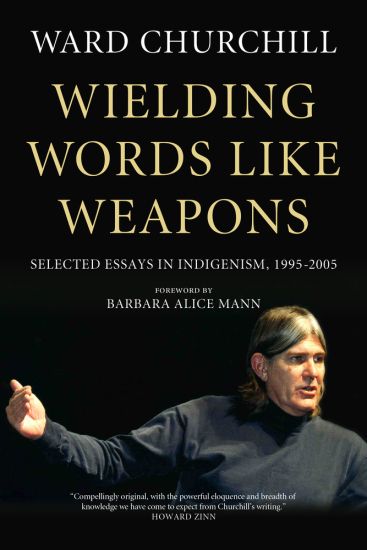
Wielding Words like Weapons

Wielding Words like Weapons

Ward Churchill; Barbara Alice Mann

PM Press
2017
sidottu
Wielding Words Like Weapons is a collection of acclaimed American Indian Movement activist-intellectual Ward Churchill's essays on indigenism, selected from material written during the decade 1995-2005. Beginning with a foreword by Seneca historian Barbara Alice Mann describing sustained efforts by police and intelligence agencies as well as university administrators and other academic adversaries to discredit or otherwise "neutralize" both the man and his work, the book includes material illustrating the range of formats Churchill has adopted in stating his case, from sharply framed book reviews and review essays, to equally pointed polemics and op-eds, and formal essays designed to reach both scholarly and popular audiences. The items selected, several of them previously unpublished, also reflect the broad range of topics addressed in Churchill's scholarship, from the fallacies of archeological/anthropological orthodoxy like the Bering Strait migration hypothesis and the insistence of "cannibologists" that American Indians were traditionally man-eaters, to cinematic degradations of native people by Hollywood, the historical and ongoing genocide of North America's native peoples, questions of American Indian identity, and the systematic distortion of political and legal history by reactionary scholars as a means of denying the realities of U. S.-Indian relations. Also included are both the initial "stream-of-consciousness" version of Churchill's famous--or notorious--"little Eichmanns" opinion piece analyzing the causes of the attacks on 9/11, as well as the counterpart essay in which his argument was fully developed and garnered honorable mention for the 2004 Gustavus Myers Award for best writing on human rights. Less typical of Churchill's oeuvre is an essay commemorating the passing of Cherokee anthropologist Robert K. Thomas, and another on that of Yankton Sioux legal scholar and theologian Vine Deloria Jr., to each of whom he acknowledges a deep intellectual debt. More unusual still is his moving and profoundly personal effort to come to grips with the life and death of his late wife, Leah Renae Kelly, thereby illuminating in very human terms the grim and lasting effects of Canada's residential schools upon the country's indigenous peoples.
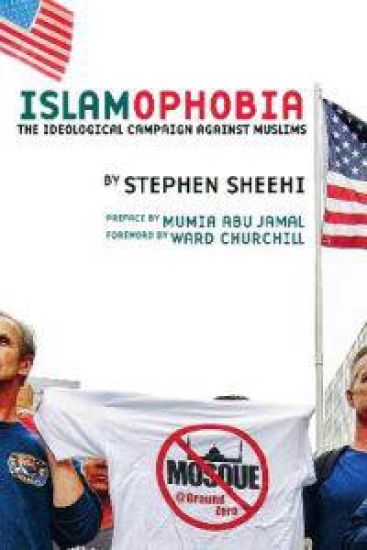
Islamophobia

Islamophobia

Stephen Sheehi; Ward Churchill

Clarity Press
2011
nidottu
In this title, Sheehi examines the rise of anti-Muslim and anti-Arab sentiments in the West following the end of the Cold War through GW Bush's War on Terror to the Age of Obama. He investigates the increased mainstreaming of Muslim-bating rhetoric and explicitly racist legislation, police surveillance, witch-trials and discriminatory policies towards Muslims. The book focuses on the various genres and modalities of Islamophobia from the works of academics to the commentary by mainstream journalists, to campaigns by political hacks and special interest groups. Featured are Bernard Lewis, Fareed Zakaria, Thomas Friedman, David Horowitz, Ayaan Hirsi Ali, Irshad Manji, George W. Bush, Dick Cheney, John McCain, Hilary Clinton and Barack Obama. Sheehi contends that their theories and opinions operate on an assumption that Muslims, particularly Arab Muslims, suffer from particular cultural lacuna that prevent their cultures from progress, democracy and human rights. While the assertion originated in the colonial era, Sheehi demonstrates that it was refurbished as a viable explanation for Muslim resistance to economic and cultural globalization during the Clinton era. Moreover, the theory was honed into the empirical basis for an interventionist foreign policy and propaganda campaign during the Bush regime and continues to underlie Barack Obama's new internationalism. If the assertions of media pundits and such academics became the basis for White House foreign policy, Sheehi also demonstrates how they were translated into a sustained domestic policy of racial profiling and Muslim-baiting by US agencies from Homeland Security to the Department of Justice. Furthermore, Sheehi examines the collusion between non-governmental agencies, activist groups and lobbies and US local, state and federal agencies to in suppressing political speech on US campuses critical of racial profiling, US foreign policy in the Middle East and Israel. While much of the direct violence against Muslims on American streets, shops and campuses has subsided, Islamophobia runs throughout the Obama administration. Sheehi, therefore, concludes that Muslim and Arab-hating emanate from all corners of the American political and cultural spectrum, serving poignant ideological functions in the age of economic, cultural and political globalization.

Acts of Rebellion

Acts of Rebellion

Ward Churchill

Routledge
2002
sidottu
What could be more American than Columbus Day? Or the Washington Redskins? For Native Americans, they are bitter reminders that they live in a world where their identity is still fodder for white society." The law has always been used as toilet paper by the status quo where American Indians are concerned," writes Ward Churchill in Acts of Rebellion, a collection of his most important writings from the past twenty years. Vocal and incisive, Churchill stands at the forefront of American Indian concerns, from land issues to the American Indian Movement, from government repression to the history of genocide. Churchill, one of the most respected writers on Native American issues, lends a strong and radical voice to the American Indian cause. Acts ofRebellion shows how the most basic civil rights' laws put into place to aid all Americans failed miserably, and continue to fail, when put into practice for our indigenous brothers and sisters. Seeking to convey what has been done to Native North America, Churchill skillfully dissects Native Americans' struggles for property and freedom, their resistance and repression, cultural issues, and radical Indian ideologies.
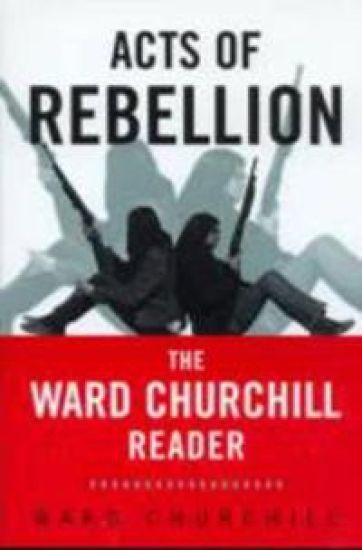
Acts of Rebellion

Acts of Rebellion

Ward Churchill

Routledge
2002
nidottu
What could be more American than Columbus Day? Or the Washington Redskins? For Native Americans, they are bitter reminders that they live in a world where their identity is still fodder for white society." The law has always been used as toilet paper by the status quo where American Indians are concerned," writes Ward Churchill in Acts of Rebellion, a collection of his most important writings from the past twenty years. Vocal and incisive, Churchill stands at the forefront of American Indian concerns, from land issues to the American Indian Movement, from government repression to the history of genocide. Churchill, one of the most respected writers on Native American issues, lends a strong and radical voice to the American Indian cause. Acts ofRebellion shows how the most basic civil rights' laws put into place to aid all Americans failed miserably, and continue to fail, when put into practice for our indigenous brothers and sisters. Seeking to convey what has been done to Native North America, Churchill skillfully dissects Native Americans' struggles for property and freedom, their resistance and repression, cultural issues, and radical Indian ideologies.