Kirjojen hintavertailu – 12 859 829 kirjaa ja 27 kauppaa

Kirjailija

Warren G. Bennis

Kirjat ja teokset yhdessä paikassa: 10 kirjaa, julkaisuja vuosilta 1970–2018, suosituimpiin kuuluu Leaders. Vertaile teosten hintoja ja tarkista saatavuus suomalaisista kirjakaupoista.

Nimi esiintyy myös muodoissa: Warren G Bennis

10 kirjaa

Kirjojen julkaisuvuodet: 1970–2018.

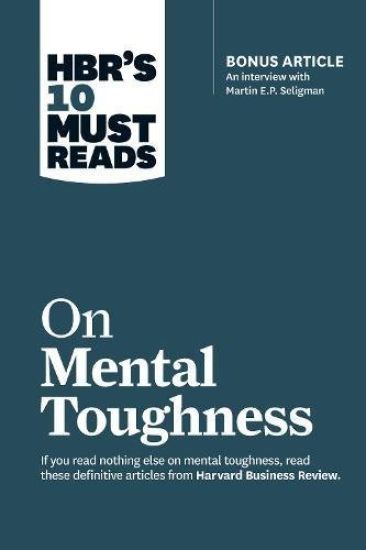
HBR's 10 Must Reads on Mental Toughness (with bonus interview "Post-Traumatic Growth and Building Resilience" with Martin Seligman) (HBR's 10 Must Reads)

HBR's 10 Must Reads on Mental Toughness (with bonus interview "Post-Traumatic Growth and Building Resilience" with Martin Seligman) (HBR's 10 Must Reads)

Harvard Business Review; Martin E.P. Seligman; Tony Schwartz; Robert J. Thomas; Warren G. Bennis

Harvard Business Review Press
2018
pokkari

Halvin toimitettuna 24,30 €

Come back from every setback a stronger and better leader. If you read nothing else on mental toughness, read these ten articles by experts in the field. We've combed through hundreds of articles in the Harvard Business Review archive and selected the most important ones to help you build your emotional strength and resilience--and to achieve high performance. This book will inspire you to:Thrive on pressure like an Olympic athleteManage and overcome negative emotions by acknowledging themPlan short-term goals to achieve long-term aspirationsSurround yourself with the people who will push you the hardestUse challenges to become a better leaderUse creativity to move past traumaUnderstand the tools your mind uses to recover from setbacksThis collection of articles includes "How the Best of the Best Get Better and Better," by Graham Jones; "Crucibles of Leadership," by Warren G. Bennis and Robert J. Thomas; "Building Resilience," by Martin E. P. Seligman; "Cognitive Fitness," by Roderick Gilkey and Clint Kilts; "The Making of a Corporate Athlete," by Jim Loehr and Tony Schwartz; "Stress Can Be a Good Thing If You Know How to Use It," by Alla Crum and Thomas Crum; "How to Bounce Back from Adversity," by Joshua D. Margolis and Paul G. Stoltz; "Rebounding from Career Setbacks," by Mitchell Lee Marks, Philip Mirvis, and Ron Ashkenas; "Realizing What You're Made Of," by Glenn E. Mangurian; "Extreme Negotiations," by Jeff Weiss, Aram Donigian, and Jonathan Hughes; and "Post-Traumatic Growth and Building Resilience," by Martin Seligman and Sarah Green Carmichael. HBR's 10 Must Reads paperback series is the definitive collection of books for new and experienced leaders alike. Leaders looking for the inspiration that big ideas provide, both to accelerate their own growth and that of their companies, should look no further. HBR's 10 Must Reads series focuses on the core topics that every ambitious manager needs to know: leadership, strategy, change, managing people, and managing yourself. Harvard Business Review has sorted through hundreds of articles and selected only the most essential reading on each topic. Each title includes timeless advice that will be relevant regardless of an ever-changing business environment.
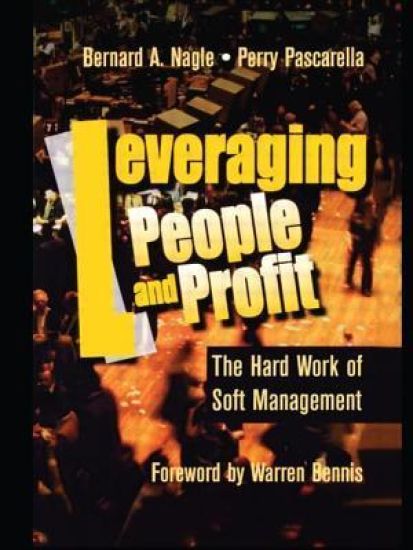
Leveraging People and Profit

Leveraging People and Profit

Bernard Nagle; Perry Pascarella; Warren G Bennis

Routledge
2017
sidottu
The manager who can balance the people and profit factors has the best chance of succeeding in tomorrow's corporation. The "altrupreneur"_one who conducts the affairs of an enterprise with conspicuous regard for the welfare of others_builds communities that produce value for all the organization's stakeholders. This new breed of leader responds to the needs of the organization and the demands of people coming to the workplace and marketplace. Drawing examples from top and middle management, the authors describe the characteristics of altrupreneurs and the core principles by which they operate: their values and vision, optimism, integrity, confidence, and enthusiasm. Altrupreneurial organizations create innovation-friendly environments, where it is not only safe to innovate, it is encouraged. This book shows what it means to challenge the routine, be other-centered, and build community. Bernard A. Nagle has over 22 years of executive operations experience in the fields of manufacturing, quality assurance, supply chain management, distribution, strategic planning, and new product development. A native of Pennsylvania, Mr. Nagle currently resides in the St. Louis area. Perry Pascarella is a nationally recognized authority on humanistic management, worker motivation, and the role of business in society. Until 1996, he was vice president-editorial of Penton Publishing Inc., publisher of 42 business and professional magazines. Mr. Pascarella has collaborated with such celebrated management experts as Peter Drucker, Tom Peters, and Frederick Herzberg. He lives in the Cleveland area.
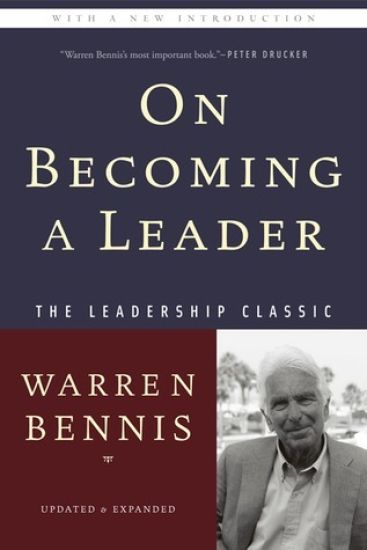
On Becoming a Leader

On Becoming a Leader

Warren G. Bennis

Basic Books
2009
pokkari

Halvin toimitettuna 27,80 €

Deemed the dean of leadership gurus" by Forbes magazine, Warren Bennis has for years persuasively argued that leaders are not born,they are made. Delving into the qualities that define leadership, the people who exemplify it, and the strategies that anyone can apply to achieve it, his classic work On Becoming a Leader has served as a source of essential insight for countless readers. In a world increasingly defined by turbulence and uncertainty, the call to leadership is more urgent than ever. Featuring a provocative new introduction, this new edition will inspire a fresh generation of potential leaders to excellence.
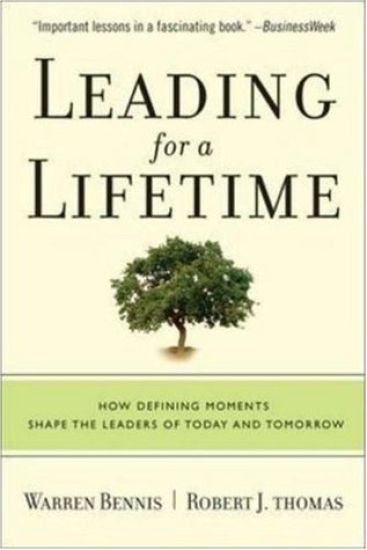
Leading for a Lifetime

Leading for a Lifetime

Warren G. Bennis; Robert J. Thomas

Harvard Business Review Press
2007
pokkari
Today's young leaders grew up in the glow of television and computers; the leaders of their grandparents' generation in the shadow of the Depression and World War II. In "Leading for a Lifetime", Warren Bennis and Robert Thomas set to find out how era and values shape those who lead. At the heart of this model are what the authors call "crucibles" - utterly transforming periods of testing from which one can emerge either hopelessly broken or powerfully emboldened to learn and to lead. Whether losing an election or burying a child, learning from a mentor or mastering a martial art, crucibles force us to decide who we are and what we are capable of.
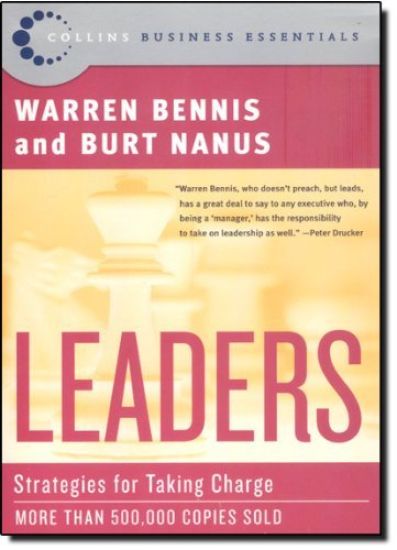
Leaders

Leaders

Warren G. Bennis; Burt Nanus

HarperBusiness
2004
nidottu
In this illuminating study of corporate America's most critical issue-leadership-world-renowned leadership guru Warren Bennis and his co-author Burt Nanus reveal the four key principles every manager should know: Attention Through Vision, Meaning Through Communication, Trust Through Positioning, and The Deployment of Self. In this age of "process", with downsizing and restructuring affecting many workplaces, companies have fallen trap to lack of communication and distrust, and vision and leadership are needed more than ever before. The wisdom and insight in Leaders addresses this need. It is an indispensable source of guidance all readers will appreciate, whether they're running a small department or in charge of an entire corporation.
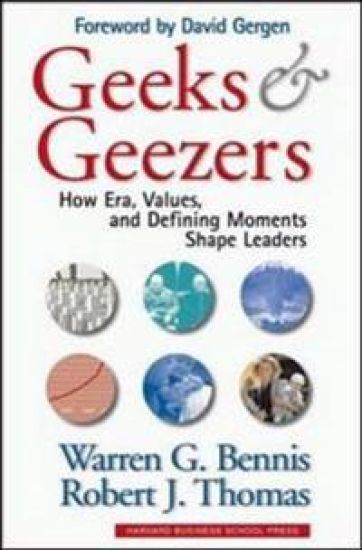
Geeks and Geezers

Geeks and Geezers

Warren G. Bennis; Robert J. Thomas

Harvard Business Review Press
2002
sidottu
Today's young leaders grew up in the glow of television and computers; the leaders of their grandparents' generation in the shadow of the Depression and World War II. In a groundbreaking study of these two disparate groups - affectionately labeled "geeks" and "geezers" - legendary leadership expert Warren Bennis and leadership consultant Robert Thomas set out to find out how era and values shape those who lead. What they discovered was something far more profound: the powerful process through which leaders of any era emerge. "Geeks and Geezers" is a book that will forever change how we view not just leadership-but the very way we learn and ultimately live our lives. It presents for the first time a compelling new model that predicts who is likely to become - and remain - a leader, and why. At the heart of this model are what the authors call "crucibles" - utterly transforming periods of testing from which one can emerge either hopelessly broken, or powerfully emboldened to learn and to lead. Whether losing an election or burying a child, learning from a mentor or mastering a martial art, crucibles are turning points: defining events that force us to decide who we are and what we are capable of. Through the candid and often deeply moving crucibles of pioneering journalist Mike Wallace to new economy entrepreneur Michael Klein, from New York Stock Exchange trailblazer Muriel Siebert to environmental crusader Tara Church, "Geeks and Geezers" illustrates the stunning metamorphoses of true leaders. It also reveals the critical traits they share, including adaptability, vision, integrity, unquenchable optimism, and "neoteny" - a youthful curiosity and zest for knowledge. Highlighting the forces that enable any of us to learn and lead not for a time, but for a lifetime, this book is essential reading for geeks, geezers, and everyone in between. Warren Bennis is Professor and Founding Chairman of The Leadership Institute at the University of Southern California, and the author of over thirty visionary books on leadership. Robert J. Thomas is an Associate Partner and Senior Fellow with the Accenture Institute for Strategic Change and award-winning author of "What Machines Can't Do".
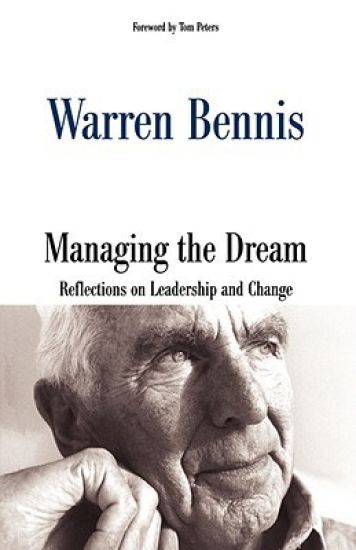
Managing The Dream

Managing The Dream

Warren G. Bennis

Perseus Books
2000
pokkari
Warren Bennis has become synonymous with leadership, exploring all its dimensions as both practitioner and scholar for over four decades. Managing the Dream is an intimate portrait of leadership, comprising over a dozen essays that represent the author's most incisive and creative thinking. It features many of Bennis's most recent works, including "The End of Leadership," and a new preface reflecting on the challenge of leadership in the new millennium.
American Bureaucracy

American Bureaucracy

Warren G Bennis

Transaction Publishers
1970
nidottu
Like it or not, contemporary man is man-in-bureaucracy. He spends the majority of his waking hours in a bureaucracy; establishes an identity and status in a bureaucracy; garners most of his satisfactions and disappointments in a bureaucracy; and, increasingly, he is what he does. Aside from the importance of understanding those institutions that shape our values, behavior, and experience, bureaucracy is a vital area for study because it reveals a wide range of social behavior in a compact and comprehensible way. The abstract and ephemeral problems of society at large are brought down to earth —made measurable, comprehensible and visible in the bureaucratic microcosm. Problems of power and influence, change and innovation, intergroup conflict, ambition and aspiration, self-realization versus participative democracy, technology versus humanism: all can be observed and analyzed in human organizations. This volume pinpoints the dilemma of present bureaucratic organizations: the conflict between the need to sustain innovation and bureaucratic drives toward rationality and stability. The essays it contains discuss specific human needs that bureaucracy must meet if it is to continue to attract talented people and takes a step into the future to analyze the kinds of organizations that may be expected to evolve as institutions seek more flexible use of human resources.
American Bureaucracy

American Bureaucracy

Warren G Bennis

Transaction Publishers
1970
sidottu
Like it or not, contemporary man is man-in-bureaucracy. He spends the majority of his waking hours in a bureaucracy; establishes an identity and status in a bureaucracy; garners most of his satisfactions and disappointments in a bureaucracy; and, increasingly, he is what he does. Aside from the importance of understanding those institutions that shape our values, behavior, and experience, bureaucracy is a vital area for study because it reveals a wide range of social behavior in a compact and comprehensible way. The abstract and ephemeral problems of society at large are brought down to earth —made measurable, comprehensible and visible in the bureaucratic microcosm. Problems of power and influence, change and innovation, intergroup conflict, ambition and aspiration, self-realization versus participative democracy, technology versus humanism: all can be observed and analyzed in human organizations. This volume pinpoints the dilemma of present bureaucratic organizations: the conflict between the need to sustain innovation and bureaucratic drives toward rationality and stability. The essays it contains discuss specific human needs that bureaucracy must meet if it is to continue to attract talented people and takes a step into the future to analyze the kinds of organizations that may be expected to evolve as institutions seek more flexible use of human resources.