Kirjojen hintavertailu – 12 903 724 kirjaa ja 27 kauppaa

Kirjailija

Warren Mansell

Kirjat ja teokset yhdessä paikassa: 10 kirjaa, julkaisuja vuosilta 2004–2023, suosituimpiin kuuluu Transdiagnostic Group Therapy Training and Implementation. Vertaile teosten hintoja ja tarkista saatavuus suomalaisista kirjakaupoista.

10 kirjaa

Kirjojen julkaisuvuodet: 2004–2023.

Rethinking Secondary Mental Healthcare

Rethinking Secondary Mental Healthcare

Robert Griffiths; Vyv Huddy; Stuart Eaton; Jasmine Waldorf; Warren Mansell

TAYLOR FRANCIS LTD
2023
sidottu
This book considers how principles derived from a theory of human behaviour - Perceptual Control Theory - can be applied to create mental health services that are more effective, efficient, and humane. Authored by clinicians, academics, and experts-by-experience, the text explores the way Perceptual Control Theory (PCT) principles can be applied within the secondary mental healthcare system – from the overall commissioning and design of services to the practice of individual clinicians. A range of topics relevant to the delivery of secondary mental healthcare are covered, including community and inpatient working, the delivery of individual psychological therapy, the use of restrictive practices, and working with relatives and carers. The book concludes by describing PCT’s unique contribution to the field of mental healthcare. The book, one of the first of its kind, will be of interest to students and practitioners from a range of health and social care backgrounds, as well as service managers, commissioners, academics, and policy makers. The Open Access version of this book, available at http://www.taylorfrancis.com, has been made available under a Creative Commons [Attribution-Non Commercial-No Derivatives (CC-BY-NC-ND)] 4.0 license.

Rethinking Secondary Mental Healthcare

Rethinking Secondary Mental Healthcare

Robert Griffiths; Vyv Huddy; Stuart Eaton; Jasmine Waldorf; Warren Mansell

TAYLOR FRANCIS LTD
2023
nidottu
This book considers how principles derived from a theory of human behaviour - Perceptual Control Theory - can be applied to create mental health services that are more effective, efficient, and humane. Authored by clinicians, academics, and experts-by-experience, the text explores the way Perceptual Control Theory (PCT) principles can be applied within the secondary mental healthcare system – from the overall commissioning and design of services to the practice of individual clinicians. A range of topics relevant to the delivery of secondary mental healthcare are covered, including community and inpatient working, the delivery of individual psychological therapy, the use of restrictive practices, and working with relatives and carers. The book concludes by describing PCT’s unique contribution to the field of mental healthcare. The book, one of the first of its kind, will be of interest to students and practitioners from a range of health and social care backgrounds, as well as service managers, commissioners, academics, and policy makers. The Open Access version of this book, available at http://www.taylorfrancis.com, has been made available under a Creative Commons [Attribution-Non Commercial-No Derivatives (CC-BY-NC-ND)] 4.0 license.

Transdiagnostic Group Therapy Training and Implementation

Transdiagnostic Group Therapy Training and Implementation

Lydia Morris; Phil Mcevoy; Tanya Wallwork; Rachel Bates; Jody Comiskey; Warren Mansell

Academic Press Inc
2018
nidottu
Transdiagnostic Group Therapy Training and Implementation provides clinicians with a user-friendly roadmap for delivering a brief, transdiagnostic group therapy that can be used for patients suffering from stress, depression, anxiety, and a range of other related mental health problems. This is supplemented by over an hour of training videos hosted on the book’s companion website, visually demonstrating how to effectively implement the therapy. The book introduces the empirical research that has led to a greater emphasis on transdiagnostic treatment approaches, and details how to implement each phase of the therapy, supported by clinical examples to make practical application easier.
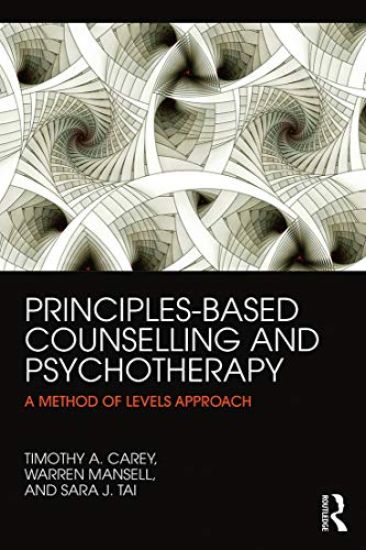
Principles-Based Counselling and Psychotherapy

Principles-Based Counselling and Psychotherapy

Timothy A. Carey; Warren Mansell; Sara Tai

Routledge
2015
sidottu
Many current approaches to the treatment of psychological problems focus on specific disorders and techniques that are purported to be effective and distinct. Recent advances in knowledge and theory, however, have called into question this approach. The conceptual framework of transdiagnostic, rather than disorder specific, processes is gaining traction. Alongside this has been the call to focus on evidence-based principles rather than evidence-based practices and techniques. The rationale behind this is that many apparently unique and innovative practices are usually the reflection of common underlying principles. This book describes three foundational principles that are key to understanding both the rise and the resolution of psychological distress. Principles-Based Counselling and Psychotherapy promotes a Method of Levels (MOL) approach to counselling and psychotherapy. Using clinical examples and vignettes to help practitioners implement a principles-based approach, this book describes three fundamental principles for effective therapeutic practice and their clinical implications. The first chapter of the book provides a rationale for the principles-based approach. The second chapter describes the three principles of control, conflict, and reorganisation and how they relate to each other from within a robust theory of physical and psychological functioning. The remainder of the book covers important aspects of psychological treatment such as the therapeutic relationship, appointment scheduling, and the change process from the application of these three principles. With important implications for all therapeutic approaches, Principles-Based Counselling and Psychotherapy will be an invaluable resource for psychotherapists, counsellors and clinical psychologists in practice and training. It provides clarity about their role, and a means for providing a resolution to psychological distress and improving the effectiveness of their practice.
Principles-Based Counselling and Psychotherapy

Principles-Based Counselling and Psychotherapy

Timothy A. Carey; Warren Mansell; Sara Tai

Routledge
2015
nidottu
Many current approaches to the treatment of psychological problems focus on specific disorders and techniques that are purported to be effective and distinct. Recent advances in knowledge and theory, however, have called into question this approach. The conceptual framework of transdiagnostic, rather than disorder specific, processes is gaining traction. Alongside this has been the call to focus on evidence-based principles rather than evidence-based practices and techniques. The rationale behind this is that many apparently unique and innovative practices are usually the reflection of common underlying principles. This book describes three foundational principles that are key to understanding both the rise and the resolution of psychological distress. Principles-Based Counselling and Psychotherapy promotes a Method of Levels (MOL) approach to counselling and psychotherapy. Using clinical examples and vignettes to help practitioners implement a principles-based approach, this book describes three fundamental principles for effective therapeutic practice and their clinical implications. The first chapter of the book provides a rationale for the principles-based approach. The second chapter describes the three principles of control, conflict, and reorganisation and how they relate to each other from within a robust theory of physical and psychological functioning. The remainder of the book covers important aspects of psychological treatment such as the therapeutic relationship, appointment scheduling, and the change process from the application of these three principles. With important implications for all therapeutic approaches, Principles-Based Counselling and Psychotherapy will be an invaluable resource for psychotherapists, counsellors and clinical psychologists in practice and training. It provides clarity about their role, and a means for providing a resolution to psychological distress and improving the effectiveness of their practice.
A Transdiagnostic Approach to CBT using Method of Levels Therapy

A Transdiagnostic Approach to CBT using Method of Levels Therapy

Warren Mansell; Timothy A. Carey; Sara J. Tai

Routledge
2012
sidottu
Cognitive Behavioural Therapy (CBT) is the treatment of choice for most mental health problems. Each different problem is usually treated by a different model of CBT. Yet evidence tells us that the same processes are responsible for long term distress in us all. This handy manual draws on evidence and theory to provide the key principles to aid change and recovery. The transdiagnostic approach is supported by a wealth of evidence that processes such as worry, emotion suppression, self-criticism and avoidance maintain distress across psychological disorders. Perceptual Control Theory (PCT) explains all of these processes as forms of ‘inflexible control’, and Method of Levels Therapy (MOL) helps people to let go of these habits. The principles and techniques of MOL are clearly and practically described for clinicians to offer a transdiagnostic CBT that is tailor-made to the goals of each client. This novel volume will be essential reading for novice and experienced CBT therapists, as well as counsellors and psychotherapists. Its accessible explanation of Perceptual Control Theory and its application to real world problems also makes a useful resource for undergraduates, graduates and researchers in psychology.
A Transdiagnostic Approach to CBT using Method of Levels Therapy

A Transdiagnostic Approach to CBT using Method of Levels Therapy

Warren Mansell; Timothy A. Carey; Sara J. Tai

Routledge
2012
nidottu
Cognitive Behavioural Therapy (CBT) is the treatment of choice for most mental health problems. Each different problem is usually treated by a different model of CBT. Yet evidence tells us that the same processes are responsible for long term distress in us all. This handy manual draws on evidence and theory to provide the key principles to aid change and recovery. The transdiagnostic approach is supported by a wealth of evidence that processes such as worry, emotion suppression, self-criticism and avoidance maintain distress across psychological disorders. Perceptual Control Theory (PCT) explains all of these processes as forms of ‘inflexible control’, and Method of Levels Therapy (MOL) helps people to let go of these habits. The principles and techniques of MOL are clearly and practically described for clinicians to offer a transdiagnostic CBT that is tailor-made to the goals of each client. This novel volume will be essential reading for novice and experienced CBT therapists, as well as counsellors and psychotherapists. Its accessible explanation of Perceptual Control Theory and its application to real world problems also makes a useful resource for undergraduates, graduates and researchers in psychology.
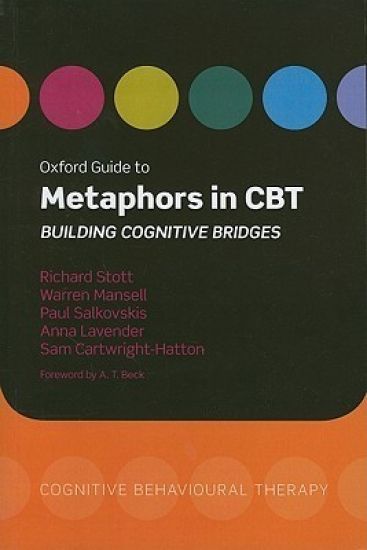
Oxford Guide to Metaphors in CBT

Oxford Guide to Metaphors in CBT

Richard Stott; Warren Mansell; Paul Salkovskis; Anna Lavender; Sam Cartwright-Hatton

Oxford University Press
2010
nidottu
The business of cognitive therapy is to transform meanings. What better way to achieve this than through a metaphor? Metaphors straddle two different domains at once, providing a conceptual bridge from a problematic interpretation to a fresh new perspective that can cast one's experiences in a new light. Even the simplest metaphor can be used again and again with different clients, yet still achieve the desired effect. One such example is the 'broken leg' metaphor for depression. Clients with depression are understandably frustrated with their symptoms. They may often push themselves to get better or tell themselves that they should be better by now. As a therapist, it is fair to ask, would the client be so harsh and demanding on herself after getting a broken leg? A broken leg needs time to heal and you need to begin to walk on it gradually as it builds up in strength. "You can't run before you can walk", and if you try, you are likely to make it worse. For many clients this simple metaphor is enlightening, changing their view of their symptoms as a sign of their own laziness and worthlessness, to a view of them as part of an understandable illness, that while open to improvement, cannot get better over night. This book shows just how metaphors can be used productively in CBT as an integral part of the treatment. It describes the use of metaphors for a wide range of problems, including anxiety and depression, and provides countless examples of metaphors that have been used by others in CBT. It brings together in one place hundreds of metaphors that experienced therapists have used to great success. It will be a valuable sourcebook for all cognitive behaviour therapists, as well as those training in CBT.
Coping with Fears and Phobias

Coping with Fears and Phobias

Warren Mansell

Oneworld Publications
2007
nidottu
Fear is a normal emotion. For one out of ten people, however, fear is extreme and disruptive because approximately 10% of people have an anxiety disorder at any one time, only a tiny proportion of whom receive appropriate psychological treatment. This book provides you with information about fears and phobias and how to cope with them, so you can reclaim your life. Incorporating extensive research on anxiety and phobias, Dr Mansell writes accessibly and supportively. He provides real-life examples and many easy-to-learn techniques from cognitive behavioural therapy (CBT), all of which will help sufferers develop a lasting change. Coping with Fears and Phobias is supported by a dedicated website for sufferers and carers.
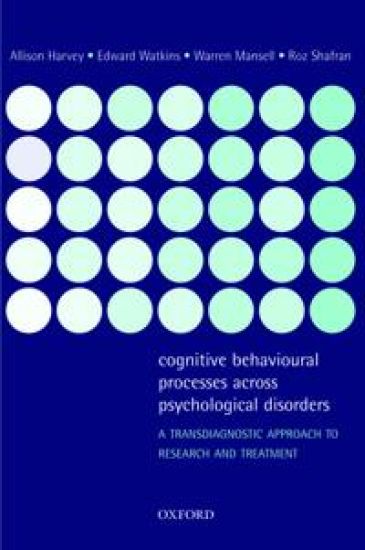
Cognitive Behavioural Processes across Psychological Disorders

Cognitive Behavioural Processes across Psychological Disorders

Allison Harvey; Edward Watkins; Warren Mansell; Roz Shafran

Oxford University Press
2004
nidottu
Cognitive Behavioural Therapy (CBT) has established itself as one of the most effective therapies for treating a wide range of psychological disorders. However, research and treatment in this field typically adopts a DSM driven 'disorder-focused' approach - researchers and clinicians target a specific disorder, try to understand its aetiology and maintenance, and try to develop more effective strategies to treat the disorder. This book proposes an insightful and original approach to understanding these disorders, one that focuses on what they have in common. Instead of examining in isolation, for example, obsessive compulsive disorders, insomnia, schizophrenia, it asks - what do patients with these disorders have in common? It takes each cognitive and behavioural process - attention, memory, reasoning, thought, behaviour, and examines whether it is a transdiagnostic process - i.e., serves to maintain a broad range of psychological disorders. Having shown how these disorders share several important processes, it then describes the practical implications of such an approach to diagnosis and treatment. Importantly it explores why the different psychological disorders can present so differently, despite being maintained by the same cognitive and behavioural processes. It also provides an account of the high rates of comorbidity observed among the different disorders. This book provides a novel review and integration of the empirical literature and gives clinicians and researchers a valuable new theoretical base for assessing and treating psychological disorders.