Kirjojen hintavertailu – 12 867 221 kirjaa ja 27 kauppaa

Kirjailija

Warren Young

Kirjat ja teokset yhdessä paikassa: 17 kirjaa, julkaisuja vuosilta 1998–2026, suosituimpiin kuuluu A Financial Theory of the Business Cycle. Vertaile teosten hintoja ja tarkista saatavuus suomalaisista kirjakaupoista.

17 kirjaa

Kirjojen julkaisuvuodet: 1998–2026.

Endogenous Growth

Endogenous Growth

Peter Galbács; Stephen Spear; Warren Young

Emerald Publishing Limited
2026
sidottu
Endogenous Growth traces the intellectual evolution of growth theory, from its formative origins to its modern formalisation. The authors investigate how endogenous growth theory developed alongside the dominant analytical frameworks of dynamic macroeconomics. The book examines why models incorporating imperfect competition, heterogeneous returns, and alternative equilibrium concepts were long overshadowed. Through careful attention to the mathematical foundations—Hamiltonians, dynamic programming, and the shifting conceptualisation of capital—the authors reveal how the field’s trajectory shaped both the promise and the limitations of its models, and why a richer treatment of competition, capital, and equilibrium is essential for understanding long-run growth. This volume of the International Symposia in Economic Theory and Econometrics series fills a conspicuous gap in contemporary macroeconomic pedagogy. By devoting greater space to model exposition, historical context, and dynamic optimization techniques, the authors provide a gentler yet analytically robust pathway into modern mathematical economics. The result is a timely, clarifying work that engages constructively with established literature while offering a complementary framework for understanding the mechanisms that truly drive economic growth.

A Financial Theory of the Business Cycle

A Financial Theory of the Business Cycle

Edward W. Fuller; Warren Young

Taylor & Francis
2026
Nidottu
A Financial Theory of the Business Cycle presents a new approach to business cycle theory based on the net present value. The book develops a novel diagrammatic approach to illustrate how fractional reserve banking systematically distorts net-present-value calculations. In addition to providing fresh insights, the new diagrammatic approach provides a comparative framework that can be used to compare pre-existing theories, including those of John Maynard Keynes, Friedrich Hayek, Milton Friedman, and Robert E. Lucas, Jr. The net present value is the most important concept in the theory and practice of modern finance. As such, it is the proper framework for explaining the systematic financial losses that occur during the business cycle. Eugen von Böhm-Bawerk and Irving Fisher developed the modern theory of the net present value, and the financial theory of the business cycle developed in this book is rooted in their tradition. Although financial elements played a central role in their respective theories, Keynes and Hayek did not use the net present value. This failure created problems that still haunt business cycle theory today. This book addresses these problems and attempts to steer financial theories of the business cycle back to the course set by Böhm-Bawerk and Fisher. In addition to macroeconomists, this book will appeal to financial economists, money and banking experts, accountants, financial analysts, and businesspeople generally.
A Financial Theory of the Business Cycle

A Financial Theory of the Business Cycle

Edward W. Fuller; Warren Young

TAYLOR FRANCIS LTD
2025
sidottu
A Financial Theory of the Business Cycle presents a new approach to business cycle theory based on the net present value. The book develops a novel diagrammatic approach to illustrate how fractional reserve banking systematically distorts net-present-value calculations. In addition to providing fresh insights, the new diagrammatic approach provides a comparative framework that can be used to compare pre-existing theories, including those of John Maynard Keynes, Friedrich Hayek, Milton Friedman, and Robert E. Lucas, Jr. The net present value is the most important concept in the theory and practice of modern finance. As such, it is the proper framework for explaining the systematic financial losses that occur during the business cycle. Eugen von Böhm-Bawerk and Irving Fisher developed the modern theory of the net present value, and the financial theory of the business cycle developed in this book is rooted in their tradition. Although financial elements played a central role in their respective theories, Keynes and Hayek did not use the net present value. This failure created problems that still haunt business cycle theory today. This book addresses these problems and attempts to steer financial theories of the business cycle back to the course set by Böhm-Bawerk and Fisher. In addition to macroeconomists, this book will appeal to financial economists, money and banking experts, accountants, financial analysts, and businesspeople generally.
Overlapping Generations

Overlapping Generations

Stephen Spear; Warren Young

Emerald Publishing Limited
2023
sidottu
The 800 pound gorilla in the room of macroeconomics is the question of why the overlapping generations model didn’t become the central workhorse model for macroeconomics. Introduced in 1958 by Paul Samuelson, the model postulates an infinite number of finite-lived families. This is in stark contrast to the more dominant neoclassical growth model, which is based on the assumption that real economies are populated by a finite number of dynastic families. Despite the greater realism of the former model and the inherent implausibility of the assumptions underlying the growth model, the growth model has become dominant. The authors here explore the co-evolution of the two models to shed light on why this happened, spanning the entire post-WWII era.
Reinterpreting Mr. Keynes

Reinterpreting Mr. Keynes

Warren Young; Edward W. Fuller

Springer Nature Switzerland AG
2023
nidottu
This book examines the origins of the IS-LM model, one of the most significant innovations in the history of economic thought. It shows that the complete IS-LM model, including the equations and diagram, was produced by a group of economists who contributed their respective mathematical models of Keynes’s General Theory, including Champernowne, Reddaway, Harrod, and Meade, not to mention Hicks. Furthermore, the book discusses the implications of newly discovered archival material, including a previously overlooked document showing that John Maynard Keynes himself was the first to present the IS-LM model equations in a lecture he gave on December 4, 1933. It focuses on the implications of this material in terms of understanding the evolution of Keynes’s approach from 1933 to 1937, later interpreters of his General Theory, and the ongoing debate between Keynesians and Post-Keynesians on the nature of his system. Given the revelations it presents, this book will transform the profession’s understanding of the origins of the IS-LM model and modern macroeconomics.
Reinterpreting Mr. Keynes

Reinterpreting Mr. Keynes

Warren Young; Edward W. Fuller

Springer Nature Switzerland AG
2022
sidottu
This book examines the origins of the IS-LM model, one of the most significant innovations in the history of economic thought. It shows that the complete IS-LM model, including the equations and diagram, was produced by a group of economists who contributed their respective mathematical models of Keynes’s General Theory, including Champernowne, Reddaway, Harrod, and Meade, not to mention Hicks. Furthermore, the book discusses the implications of newly discovered archival material, including a previously overlooked document showing that John Maynard Keynes himself was the first to present the IS-LM model equations in a lecture he gave on December 4, 1933. It focuses on the implications of this material in terms of understanding the evolution of Keynes’s approach from 1933 to 1937, later interpreters of his General Theory, and the ongoing debate between Keynesians and Post-Keynesians on the nature of his system. Given the revelations it presents, this book will transform the profession’s understanding of the origins of the IS-LM model and modern macroeconomics.
The Role of Economic Advisers in Israel's Economic Policy

The Role of Economic Advisers in Israel's Economic Policy

Daniel Schiffman; Warren Young; Yaron Zelekha

Springer Nature Switzerland AG
2018
nidottu
This book illustrates the role of international economic advisors in the development of Israel’s economic policies. Based on extensive archival and historical research, it presents case studies on the policy impacts of the world-renowned advisors Michal Kalecki, Abba Lerner, Richard Kahn, Milton Friedman, Herbert Stein and Stanley Fischer. The authors evaluate the contributions of these advisors to policy developments in various fields, including international trade and capital flows, exchange rates, fiscal and monetary policy, industrial policy and labor relations. Readers will discover a wealth of previously unpublished information on these advisors’ activities, perspectives on policy and interactions with policymakers and the public. Using the Israeli experience as a guide, the authors subsequently derive general hypotheses regarding the conditions that are conducive to the success of economic advisors.
The Role of Economic Advisers in Israel's Economic Policy

The Role of Economic Advisers in Israel's Economic Policy

Daniel Schiffman; Warren Young; Yaron Zelekha

Springer International Publishing AG
2018
sidottu
This book illustrates the role of international economic advisors in the development of Israel’s economic policies. Based on extensive archival and historical research, it presents case studies on the policy impacts of the world-renowned advisors Michal Kalecki, Abba Lerner, Richard Kahn, Milton Friedman, Herbert Stein and Stanley Fischer. The authors evaluate the contributions of these advisors to policy developments in various fields, including international trade and capital flows, exchange rates, fiscal and monetary policy, industrial policy and labor relations. Readers will discover a wealth of previously unpublished information on these advisors’ activities, perspectives on policy and interactions with policymakers and the public. Using the Israeli experience as a guide, the authors subsequently derive general hypotheses regarding the conditions that are conducive to the success of economic advisors.
Real Business Cycle Models in Economics
The purpose of this book is to describe the intellectual process by which Real Business Cycle models were developed. The approach taken focuses on the core elements in the development of RBC models: (i) building blocks, (ii) catalysts, and (iii) meta-syntheses. This is done by detailed examination of all available unpublished variorum drafts of the key papers in the RBC story, so as to determine the origins of the ideas. The analysis of the process their discovery is then set out followed by explanations of the evolution and dissemination of the models, from first generation papers through full blown research programs. This is supplemented by interviews and correspondence with the individuals who were at the center of the development of RBC models, such as Kydland, Prescott, Long, Plosser, King, Lucas and Barro, among others. This book gets stright to the heart of the debates surrounding RBC models and as such contributes to a real assessment of their impact on modern macroeconomics. The volume, therefore, will interest all scholars looking at macroeconomics as well as historians of economic thought more generally.
Atomic Energy Costing

Atomic Energy Costing

Warren Young

Springer-Verlag New York Inc.
2012
nidottu
In the centennial year of the birth of Sir John Cockcroft, first master of my Cam­ bridge College, Churchill, and the first man to split the atomic nucleus by artificial means, it is indeed relevant to consider the outcome of his efforts at developing atomic power. From the earliest days of the construction of Calder Hall-the first nuclear power station in Britain-and the establishment of the British Atomic Re­ search Center at Harwell, and the Chalk River Nuclear Station in Canada, through the "Windscale" nuclear accident in Britain, up to the present, when some 20% of UK energy is derived from nuclear power, the Cockcroft legacy is felt. As the British historian Mark Goldie put it, in the "pure and sanguine 1950s," Cockcroft had almost absolute "faith in 'peaceful atoms' and in the boundless, almost cost free, energy that atoms would soon produce" (Goldie, 1997, p. 21). But, as the eminent economist Frank Hahn recalled, "the only failing Cockcroft had" was "that he wasn't up to much in economics. " Indeed, Hahn recalled that he "had to explain" to Cockcroft "the economic notion of optimum durability" as it related to the "interest rate" in the context of building Churchill College with "hand-made bricks. " After his explana­ tion, as Hahn recalled "Cockcroft smiled and proceeded to order more hand-made bricks" (Hahn, 1997, p. 27).
Economics, Economists and Expectations

Economics, Economists and Expectations

William Darity; Robert Leeson; Warren Young

Routledge
2012
nidottu
The concept of rational expectations has played a hugely important role in economics over the years. Dealing with the origins and development of modern approaches to expectations in micro and macroeconomics, this book makes use of primary sources and previously unpublished material from such figures as Hicks, Hawtrey and Hart. The accounts of the 'founding fathers' of the models themselves are also presented here for the first time. The authors trace the development of different approaches to expectations from the likes of Hayek, Morgenstern, and Coase right up to more modern theorists such as Friedman, Patinkin, Phelps and Lucas. The startling conclusion that there was no 'Rational Expectations Revolution' is articulated, supported and defended with impressive clarity and authority. A necessity for economists across the world, this book will deserve its place upon many an academic bookshelf.
Economics, Economists and Expectations

Economics, Economists and Expectations

William Darity; Robert Leeson; Warren Young

Routledge
2004
sidottu
The concept of rational expectations has played a hugely important role in economics over the years. Dealing with the origins and development of modern approaches to expectations in micro and macroeconomics, this book makes use of primary sources and previously unpublished material from such figures as Hicks, Hawtrey and Hart. The accounts of the 'founding fathers' of the models themselves are also presented here for the first time. The authors trace the development of different approaches to expectations from the likes of Hayek, Morgenstern, and Coase right up to more modern theorists such as Friedman, Patinkin, Phelps and Lucas. The startling conclusion that there was no 'Rational Expectations Revolution' is articulated, supported and defended with impressive clarity and authority. A necessity for economists across the world, this book will deserve its place upon many an academic bookshelf.
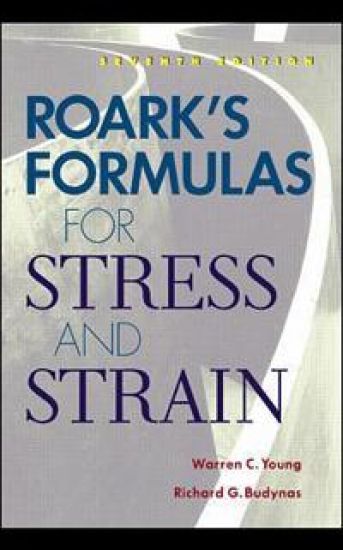
Roark's Formulas for Stress and Strain

Roark's Formulas for Stress and Strain

Warren Young; Richard Budynas

McGraw-Hill Professional
2001
sidottu
Now updated with 30% new material: the ultimate resource for designers, engineers, and analyst working with calculations of loads and stress. This landmark reference continues its tradition of presenting equations and diagrams of structural properties--all in an easy-to-use, thumb-through format. New to this edition: expanded coverage of joints, bearing and shear stress, experimental stress analysis, and stress concentrations, plus material behavior coverage and stress and strain measurement. Now includes expanded tables and cases; improved notations and figures in the tables; consistent table and equation numbering; verification of correction factors. Features a solutions-based approach to quick calculations in structural element design and analysis.
Atomic Energy Costing

Atomic Energy Costing

Warren Young

Springer
1998
sidottu
In the centennial year of the birth of Sir John Cockcroft, first master of my Cam­ bridge College, Churchill, and the first man to split the atomic nucleus by artificial means, it is indeed relevant to consider the outcome of his efforts at developing atomic power. From the earliest days of the construction of Calder Hall-the first nuclear power station in Britain-and the establishment of the British Atomic Re­ search Center at Harwell, and the Chalk River Nuclear Station in Canada, through the "Windscale" nuclear accident in Britain, up to the present, when some 20% of UK energy is derived from nuclear power, the Cockcroft legacy is felt. As the British historian Mark Goldie put it, in the "pure and sanguine 1950s," Cockcroft had almost absolute "faith in 'peaceful atoms' and in the boundless, almost cost free, energy that atoms would soon produce" (Goldie, 1997, p. 21). But, as the eminent economist Frank Hahn recalled, "the only failing Cockcroft had" was "that he wasn't up to much in economics. " Indeed, Hahn recalled that he "had to explain" to Cockcroft "the economic notion of optimum durability" as it related to the "interest rate" in the context of building Churchill College with "hand-made bricks. " After his explana­ tion, as Hahn recalled "Cockcroft smiled and proceeded to order more hand-made bricks" (Hahn, 1997, p. 27).
Advanced Mechanics of Materials

Advanced Mechanics of Materials

Robert Cook; Warren Young

Pearson
1998
nidottu
For a one/two-semester upper-level undergraduate/graduate-level second course in Mechanics of Materials. This text covers all topics usually treated in an advanced mechanics of materials course. Throughout, topics are treated by extending concepts and procedures of elementary mechanics of materials, assisted when necessary by advanced methods such as theory of elasticity.