Kirjojen hintavertailu – 12 903 725 kirjaa ja 27 kauppaa

Kirjailija

Warwick Funnell

Kirjat ja teokset yhdessä paikassa: 8 kirjaa, julkaisuja vuosilta 2009–2018, suosituimpiin kuuluu A History of British National Audit:. Vertaile teosten hintoja ja tarkista saatavuus suomalaisista kirjakaupoista.

8 kirjaa

Kirjojen julkaisuvuodet: 2009–2018.

Accounting by the First Public Company

Accounting by the First Public Company

Warwick Funnell; Jeffrey Robertson

Routledge
2018
nidottu
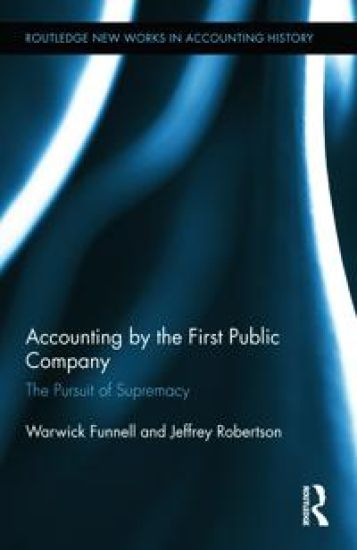
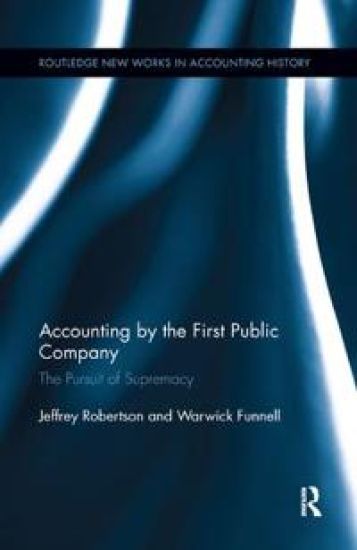
The United Dutch East India Company was the first public company, preceding the formation of the English East-India Company by over 40 years. Its fame as the first public company which heralded the transition from feudalism to modern capitalism and its remarkable financial success for nearly two centuries ensure its importance in the history of capitalism. Although a publicly owned, highly complex and diversified business, and commonly agreed to be the largest and most profitable business in the 17th century, throughout its existence the Dutch East-India Company never produced public accounts of its financial affairs which would have allowed investors to judge the performance of the Company. Its financial accounting, which changed little during its lifetime, was not designed as an aid to rational investment decision-making by communicating the Company’s financial performance but to be a means of promoting sound stewardship by senior management. This study examines the contributions of accounting to the remarkable success of the Dutch East-India Company and the influences on these accounting practices. From the time that the German economic historian Werner Sombart proposed that accounting techniques, most especially double-entry bookkeeping, were critical to the development of modern capitalism and the public company, historians and accounting scholars have debated the extent and importance of these contributions. The Dutch East-India Company was a capitalistic enterprise that had a public, permanent capital and its principal objective was to continually increase profit by reinvesting its returns in the business. Rather than the organisation and management of the Dutch East-India Company reflecting the perceived benefits of a particular bookkeeping method, the supremacy that it achieved and maintained in a very hazardous business at a time of recurring conflict between European states was a consequence of the practicalities of 17th century business and The Netherlands’ unique, threatening natural environment which shaped its social and political institutions.
Accounting at War

Accounting at War

Warwick Funnell; Michele Chwastiak

Routledge
2018
nidottu
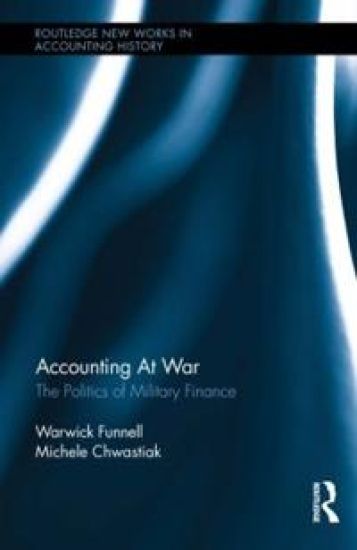
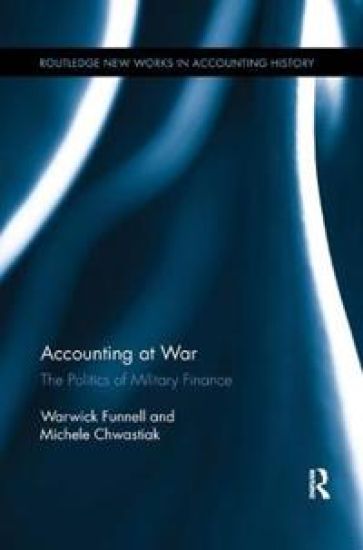
Accounting is frequently portrayed as a value free mechanism for allocating resources and ensuring they are employed in the most efficient manner. Contrary to this popular opinion, the research presented in Accounting at War demonstrates that accounting for military forces is primarily a political practice. Throughout history, military force has been so pervasive that no community of any degree of complexity has succeeded in. Through to the present day, for all nation states, accounting for the military and its operations has primarily served broader political purposes. From the Crimean War to the War on Terror, accounting has been used to assert civilian control over the military, instill rational business practices on war, and create the visibilities and invisibilities necessary to legitimize the use of force. Accounting at War emphasizes the significant power that financial and accounting controls gave to political elites and the impact of these controls on military performance. Accounting at War examines the effects of these controls in wars such as the Crimean, South African and Vietnam wars. Accounting at War also emphasizes how accounting has provided the means to rationalize and normalize violence, which has often contributed to the acceleration and expansion of war. Aimed at researchers and academics in the fields of accounting, accounting history, political management and sociology, Accounting at War represents a unique and critical perspective to this cutting-edge research field.
A History of British National Audit:

A History of British National Audit:

David Dewar; Warwick Funnell

Oxford University Press
2016
sidottu
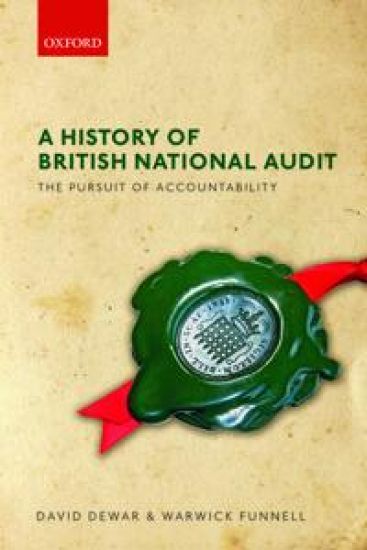
The core theme of the book is the importance of an independent state audit to ensure that the Executive is held accountable to Parliament. Instilling effective financial control and accountability for the use of public funds and the proper conduct of public business has been an incremental process that has taken centuries. This book provides a detailed history of the forces and personalities involved in the development of public sector audit, including the battles which extended well into the 20th century to establish a public sector audit that was constitutionally and in practice independent from the influence and control of the Executive. It identifies key themes that have emerged and re-emerged in these developments, and the challenges and obstacles faced and overcome over the years to arrive at today's modern audit framework and to establish current principles and practice in accountability to Parliament and the public. The book charts the movement of public sector audit from a focus on the presentation and accuracy of accounts to the introduction of the added dimension of ensuring that funds are spent only for purposes approved by Parliament and that resources have been used efficiently, effectively and with economy. It explores the seminal relationships of the NAO and its predecessors with the Treasury, spending departments and the Public Accounts Committee; and it deals with the impact of major changes still taking place in the objectives, management and delivery of government programmes and services, including the growing involvement of outside agencies and the private sector. The book reviews the NAO's current achievements, continuing challenges, developments in the range and nature of its work, and future priorities. Importantly, it provides an authoritative source of reference for professionals and academics, while remaining accessible to readers with a more general interest in the developments and issues examined.
Accounting at War

Accounting at War

Warwick Funnell; Michele Chwastiak

Routledge
2015
sidottu
Accounting is frequently portrayed as a value free mechanism for allocating resources and ensuring they are employed in the most efficient manner. Contrary to this popular opinion, the research presented in Accounting at War demonstrates that accounting for military forces is primarily a political practice. Throughout history, military force has been so pervasive that no community of any degree of complexity has succeeded in. Through to the present day, for all nation states, accounting for the military and its operations has primarily served broader political purposes. From the Crimean War to the War on Terror, accounting has been used to assert civilian control over the military, instill rational business practices on war, and create the visibilities and invisibilities necessary to legitimize the use of force. Accounting at War emphasizes the significant power that financial and accounting controls gave to political elites and the impact of these controls on military performance. Accounting at War examines the effects of these controls in wars such as the Crimean, South African and Vietnam wars. Accounting at War also emphasizes how accounting has provided the means to rationalize and normalize violence, which has often contributed to the acceleration and expansion of war. Aimed at researchers and academics in the fields of accounting, accounting history, political management and sociology, Accounting at War represents a unique and critical perspective to this cutting-edge research field.
Accounting by the First Public Company

Accounting by the First Public Company

Warwick Funnell; Jeffrey Robertson

Routledge
2013
sidottu
The United Dutch East India Company was the first public company, preceding the formation of the English East-India Company by over 40 years. Its fame as the first public company which heralded the transition from feudalism to modern capitalism and its remarkable financial success for nearly two centuries ensure its importance in the history of capitalism. Although a publicly owned, highly complex and diversified business, and commonly agreed to be the largest and most profitable business in the 17th century, throughout its existence the Dutch East-India Company never produced public accounts of its financial affairs which would have allowed investors to judge the performance of the Company. Its financial accounting, which changed little during its lifetime, was not designed as an aid to rational investment decision-making by communicating the Company’s financial performance but to be a means of promoting sound stewardship by senior management. This study examines the contributions of accounting to the remarkable success of the Dutch East-India Company and the influences on these accounting practices. From the time that the German economic historian Werner Sombart proposed that accounting techniques, most especially double-entry bookkeeping, were critical to the development of modern capitalism and the public company, historians and accounting scholars have debated the extent and importance of these contributions. The Dutch East-India Company was a capitalistic enterprise that had a public, permanent capital and its principal objective was to continually increase profit by reinvesting its returns in the business. Rather than the organisation and management of the Dutch East-India Company reflecting the perceived benefits of a particular bookkeeping method, the supremacy that it achieved and maintained in a very hazardous business at a time of recurring conflict between European states was a consequence of the practicalities of 17th century business and The Netherlands’ unique, threatening natural environment which shaped its social and political institutions.
Public Sector Accounting and Accountability in Australia

Public Sector Accounting and Accountability in Australia

Warwick Funnell; Kathie Cooper; Janet Lee

NewSouth Publishing
2012
nidottu
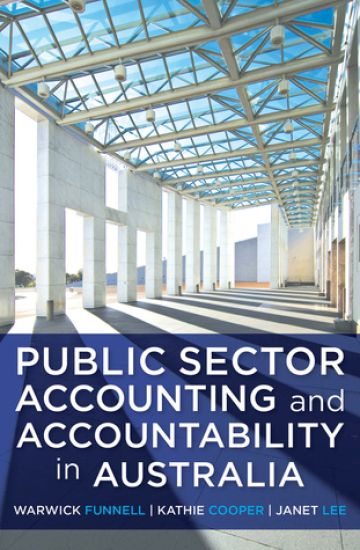
The second edition of Public Sector Accounting and Accountability in Australia is a comprehensive resource on public sector accountability for those who work in the public service, elected representatives and students of the public sector. It's a wide-ranging, up-to-date resource on the practices and institutional arrangements of public sector accountability and the principles that drive public sector reforms in Australia. Like the first edition, it is the authority on Australian public sector accounting and accountability. The new edition introduces more critique of controversial or failed public sector reforms. The authors highlight the problem of applying private sector solutions to public sector problems. This is pertinent at a time when the importance of public financial accountability is underscored as profligate states throughout the world struggle to save not only their economies, but the very fabric of their societies.
In Government We Trust

In Government We Trust

Warwick Funnell

Pluto Press
2009
sidottu
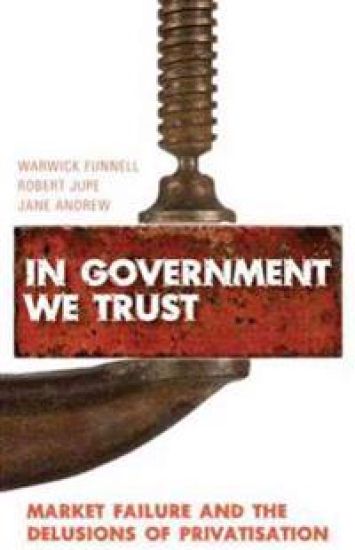
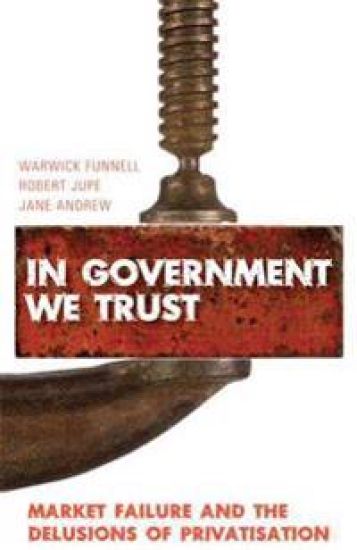
Neoliberalism has convinced governments in liberal democratic states to transform themselves and society according to the values and practices of the market. This book examines these changes within the context of market failures in services relinquished to the private sector by governments. Using examples such as the collapse of Railtrack in the UK, the energy crisis in the US and the Sydney water treatment scandal in Australia, it exposes the level of risk which remains with government after privatisation, requiring them to resume responsibility when the private sector fails.
In Government We Trust

In Government We Trust

Warwick Funnell

Pluto Press
2009
nidottu
Neoliberalism has convinced governments in liberal democratic states to transform themselves and society according to the values and practices of the market. This book examines these changes within the context of market failures in services relinquished to the private sector by governments. Using examples such as the collapse of Railtrack in the UK, the energy crisis in the US and the Sydney water treatment scandal in Australia, it exposes the level of risk which remains with government after privatisation, requiring them to resume responsibility when the private sector fails.