Kirjojen hintavertailu – 12 903 725 kirjaa ja 27 kauppaa

Kirjailija

Warwick Rodwell

Kirjat ja teokset yhdessä paikassa: 7 kirjaa, julkaisuja vuosilta 2005–2025, suosituimpiin kuuluu Archaeology of Britain's Oldest Church Doors. Vertaile teosten hintoja ja tarkista saatavuus suomalaisista kirjakaupoista.

7 kirjaa

Kirjojen julkaisuvuodet: 2005–2025.

Archaeology of Britain's Oldest Church Doors

Archaeology of Britain's Oldest Church Doors

Warwick Rodwell

Casemate Publishers
2025
nidottu
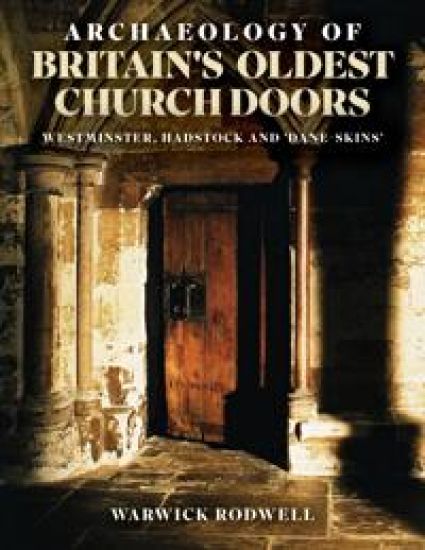
Archaeology of Britain’s Oldest Church Doors presents a detailed and fascinating study of the two oldest doors in England: in the chapter house vestibule at Westminster Abbey, which pre-dates the Norman Conquest (1050s) and the north nave door at Hadstock Church, Essex, dated to the 1060s–70s. The Westminster door was formerly covered with skin on both faces, which had been claimed as human, and variously attributed either to a Danish raider, or to the English merchant who instigated an audacious robbery in 1303 from the royal treasury, housed in the abbey cloister. The Hadstock door was notorious for its presumed great antiquity and the fact that its exterior had also once been covered with hide. Moreover, these doors were embellished with ornate ironwork. Having been responsible for archaeological investigations that involved both of these doors and their settings at Westminster and Hadstock, in this book Warwick Rodwell has brought them together, along with evidence from other early, particularly hide-covered, doors. At these and other locations in England, the assertion was that the remains of hides on church doors were human, and mostly attributed to pillaging Danes. The arguments for why this gruesome claim could not be true are explored and scientific investigations presented in order to separate fact from fiction. Yet this book is concerned with more than just the hides. It considers the form and construction of the earliest surviving English doors. The application of dendrochronology made it possible to date the oak boards from which church doors were constructed. Architectural and archaeological evidence pointed to three doors as potential claimants for the status of being the oldest in Britain and dendrochronology ranked them in date order: Westminster Abbey, 1050s; Hadstock Church, 1060s–70s; and Rochester Cathedral, c. 1080s–90s. All three doors are still in daily use in their respective buildings. A surprising variety of techniques is displayed in the later 11th and 12th centuries, and the Westminster door is unique. Its form of construction is unmatched by any other recorded door in Britain. Are its origins Anglo-Saxon or Norman-French? Two woodwork historians, Peter Massey and Paul Reed, undertook a detailed study of the construction method and tools required to fabricate the Westminster door, and a chapter has been devoted here to their findings.
Northwold Manor Reborn

Northwold Manor Reborn

Warwick Rodwell

Casemate Publishers
2024
sidottu
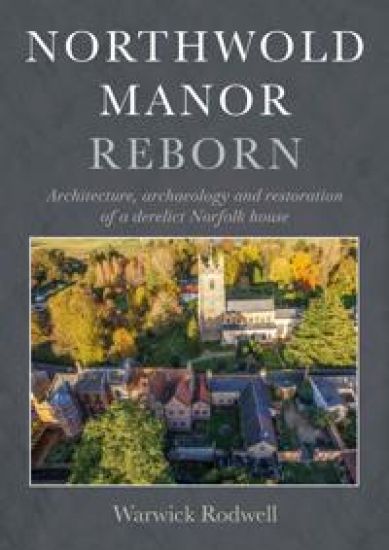
Northwold Manor is a multi-period listed building (grade II*), about which almost nothing was known. Uninhabited since 1955, it had fallen into a state of extreme dereliction, and was beyond economic repair when the author purchased the property in 2014\. He and his wife, Diane Gibbs, embarked on a major restoration that ran for nine years. The restoration was carried out as a quasi-archaeological operation, revealing that the building complex had Tudor origins, followed by the construction of a Stuart house, with Georgian improvements, and a new entertaining suite added in 1814\. The Manor, with its fine drawing room, ballroom and orangery, was the grandest house in Northwold, and research into the families that occupied it revealed unexpected connections to the French Bourbon Court. From the 17th to the 20th century, the Carters were the principal owners, and a local branch of the family included Howard Carter, discoverer of Tutankhamen’s tomb. This account begins with a topographical study of Northwold and its three medieval manors, followed by an exploration of the decline of the Carter family in the late 19th century. That triggered the break-up of the Northwold Estate in 1919\. Passing through several ownerships, the Manor was earmarked for demolition in 1961; reprieved, it became a furniture store in the 1970s, and every room was solidly packed. As the roofs failed and water poured in, ceilings and floors collapsed, carrying with them the stacks of rotting furniture. By the late 1990s, walls and gables were collapsing too, and the local authority attempted to intervene. A long struggle to save the Manor ensued, finally ending with compulsory purchase in 2013. Although manor houses occur in most English parishes, they have received surprisingly little archaeological study. Every year, hundreds are restored or altered, but rarely accompanied by detailed recording or scholarly research; and popular television programs reveal the shameful level of destruction that takes place in the name of ‘restoration’. This is a book like no other: the holistic approach to the rehabilitation of Northwold’s derelict manor house – involving history, archaeology, architecture and genealogy – demonstrates how much can be learned about a building that had never before been studied. The project has received several awards.
The Coronation Chair and Stone of Scone

The Coronation Chair and Stone of Scone

Warwick Rodwell

Casemate Publishers
2023
nidottu
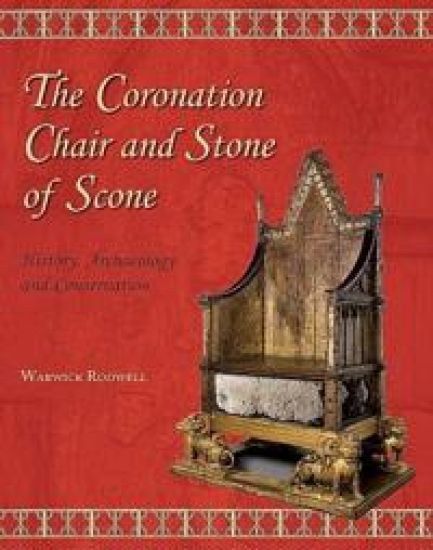
Constructed in 1297-1300 for King Edward I, the Coronation Chair ranks amongst the most remarkable and precious treasures to have survived from the Middle Ages. It incorporated in its seat a block of sandstone, which the king seized at Scone, following his victory over the Scots in 1296. For centuries, Scottish kings had been inaugurated on this symbolic ‘Stone of Scone’, to which a copious mythology had also become attached. Edward I presented the Chair, as a holy relic, to the Shrine of St Edward the Confessor in Westminster Abbey, and most English monarchs since the fourteenth century have been crowned in it, the last being HM Queen Elizabeth II, in 1953. The Chair and the Stone have had eventful histories: in addition to physical alterations, they suffered abuse in the eighteenth century, suffragettes attached a bomb to them in 1914, they were hidden underground during the Second World War, and both were damaged by the gang that sacrilegiously broke into Westminster Abbey and stole the Stone in 1950. It was recovered and restored to the Chair, but since 1996 the Stone has been exhibited on loan in Edinburgh Castle. Now somewhat battered through age, the Chair was once highly ornate, being embellished with gilding, painting and colored glass. Yet, despite its profound historical significance, until now it has never been the subject of detailed archaeological recording. Moreover, the remaining fragile decoration was in need of urgent conservation, which was carried out in 2010-12, accompanied by the first holistic study of the Chair and Stone. In 2013 the Chair was redisplayed to celebrate the Diamond Jubilee of the Coronation of HM The Queen. The latest investigations have revealed and documented the complex history of the Chair: it has been modified on several occasions, and the Stone has been reshaped and much altered since it left Scone. This volume assembles, for the first time, the complementary evidence derived from history, archaeology and conservation, and presents a factual account of the Coronation Chair and the Stone of Scone, not as separate artifacts, but as the entity that they have been for seven centuries. Their combined significance to the British Monarchy and State – and to the history and archaeology of the English and Scottish nations – is greater than the sum of their parts. Also published here for the first time is the second Coronation Chair, made for Queen Mary II in 1689. Finally, accounts are given of the various full-size replica chairs in Britain and Canada, along with a selection of the many models in metal and ceramic which have been made during the last two centuries.
Canterbury Cathedral, Trinity Chapel

Canterbury Cathedral, Trinity Chapel

David S Neal; Warwick Rodwell

OXBOW BOOKS
2022
sidottu
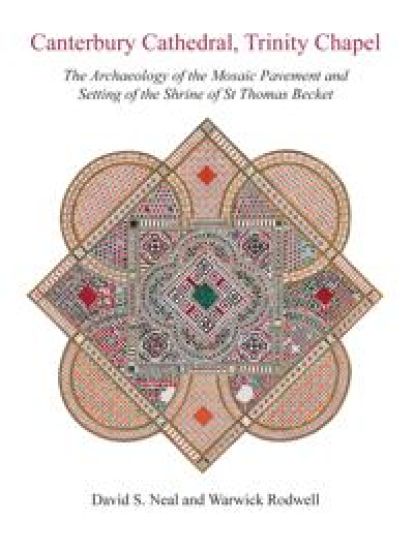
Canterbury Cathedral possesses a unique marble mosaic pavement, dating from the early 12th century, which has long intrigued scholars and been the subject of speculation and debate. It forms part of the floor of the Trinity chapel, adjacent to the site where the shrine of St Thomas Becket stood, prior to the Reformation. Since the mosaic is older than the chapel itself and partly destroyed a pavement of figurative roundels, laid c.1215, it must have been moved here from elsewhere in the cathedral. This volume explores the history and archaeology of the Trinity chapel, the pavement and the physical remains of the cult of Becket, based largely on hitherto unrecorded and unpublished evidence. In the early 12th century, Archbishop Anselm rebuilt the eastern arm of the cathedral, introducing architectural elements from his native Italy, and these included a magnificent mosaic pavement, composed of the most expensive marbles, which lay in front of the high altar. In 1170, Archbishop Becket was murdered in the cathedral, and his body rested overnight on the pavement before being buried in the crypt. Thomas was immediately revered as a martyr, and in 1173 was canonised by the pope; a simple shrine was erected over his tomb. In the following year, a fire (arson) destroyed the eastern arm of the cathedral, precipitating the construction of the present Trinity and Corona chapels, wherein St Thomas’s remains were enshrined. After decades of delay and political strife, the enshrinement took place in 1220, in the presence of Henry III. The shrine comprised a great marble table, supported on six clusters of columns. On top of the table was a marble sarcophagus containing the saint’s body in an iron-bound timber coffin, over which stood the sumptuous feretory, a gabled timber ‘roof’, plated with sheets of gold and adorned with jewels. East of the shrine lies the small Corona chapel in which a fragment of Becket’s skull was separately encased in a ‘head-shrine’, and to the west a large area was paved with forty-eight figurative stone roundels, created by French artisans. All around, stained-glass windows display the early miracles of Becket. The layout of the Trinity chapel underwent transmutations, first around 1230, when the mosaic pavement was taken up from the old presbytery, reduced in size and relaid in front of Becket’s shrine, where is it today. Second, the chapel was reordered in c. 1290, when the podium carrying the shrine was enlarged and the paving around it reconfigured. Medieval tombs were now being installed in the chapels, including those of the Black Prince and Henry IV. The end came in 1538, when Henry VIII ordered the thorough destruction of Becket’s shrines, but a great deal of archaeological evidence remained in the floors, walls and a few surviving fragments of the shrines, all now recorded and discussed in this beautifully illustrated volume for the first time.
The Cosmatesque Mosaics of Westminster Abbey

The Cosmatesque Mosaics of Westminster Abbey

Warwick Rodwell; David S. Neal

Oxbow Books
2019
sidottu
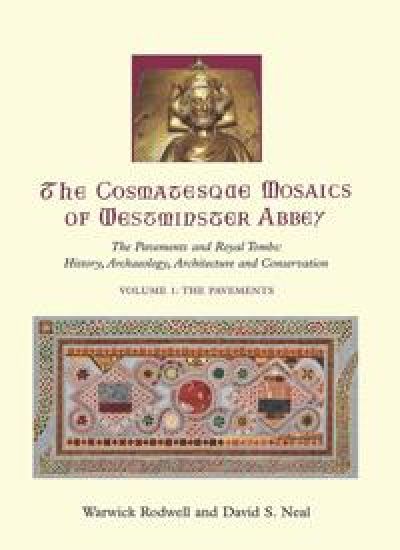
Westminster Abbey contains the only surviving medieval Cosmatesque mosaics outside Italy. They comprise: the ‘Great Pavement’ in the sanctuary; the pavement around the shrine of Edward the Confessor; the saint’s tomb and shrine; Henry III’s tomb; the tomb of a royal child, and some other pieces. Surprisingly, the mosaics have never before received detailed recording and analysis, either individually or as an assemblage. This two-volume publication presents a holistic study of this outstanding group of monuments in their historical architectural and archaeological context. The shrine of St Edward is a remarkable survival, having been dismantled at the Dissolution and re-erected (incorrectly) in 1557 under Queen Mary. Large areas of missing mosaic were replaced with plaster on to which mosaic designs were carefully painted. This 16th-century fictive mosaic is unique in Britain. Conservation of the sanctuary pavement was accompanied by full archaeological recording with every piece of mosaic decoration drawn and coloured by David Neal, phase plans have been prepared, and stone-by-stone examination undertaken, petrologically identifying and recording the locations of all the materials present. It has revealed that both the pavements and tombs include a range of exotic stone types. The Cosmati study has shed fresh light on every aspect of the unique series of monuments in Westminster Abbey; this work will fill a major lacuna in our knowledge of 13th-century English art of the first rank, and will command international interest.
The Archaeology of Churches

The Archaeology of Churches

Warwick Rodwell

Amberley Publishing
2012
nidottu
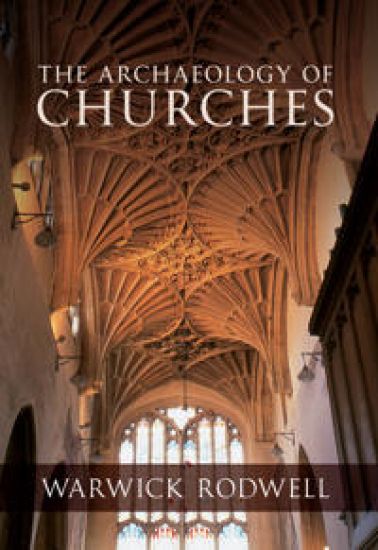
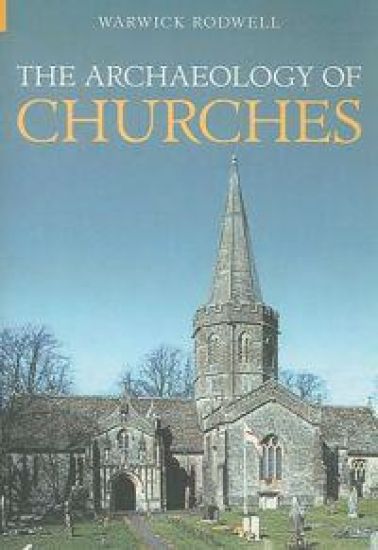
Churches are Britain’s most completely surviving class of historic monument. They are also usually the oldest buildings within their settlements. As such, these structures, from parish church to cathedral, from medieval to Georgian, are a huge architectural and archaeological resource. The last couple of decades have witnessed an unprecedented upsurge of public interest in the historic environment, and the growth of the tourism and ‘heritage’ industries has focused new attention on churches. While some visitors to churches, cathedrals and monastic ruins seem content to wander around with little or no understanding of what they are looking at, many have an interest in learning about the history or usage of the building. How far does it go back? Where is the earliest part of the building? Warwick Rodwell discusses the archaeological techniques that can attempt to answer such questions. In this lavishly illustrated, informative guide, Professor Rodwell explores the buildings themselves, their component parts, from foundations to finials, their sites, furnishings, fixtures and fittings, as well as churchyards and monuments.
The Archaeology of Churches

The Archaeology of Churches

Warwick Rodwell

NPI Media Group
2005
nidottu
This unrivalled textbook explores the complex history of cathedrals and churches, showing how this can be revealed through the skills of the archaeologist. This archaeological study can embrace everything from the building's foundations to the weather-vane on its spire, and at a time when medieval churches and churchyards (Britain's most completely surviving class of historic monument) are being threatened with redundancy, alteration or inappropriate restoration the need for detailed study and recording has never been greater. From Westminster Abbey to the tiniest field chapel, the history of the building, its use and furnishing can be enriched through archaeological study. First published almost 25 years ago, and unavailable for many years, this brand new edition illustrates the problems, techniques, results and rewards of church archaeology. After 25 years this is still the standard textbook on church archaeology. Nothing comparable has ever been published.