

Kirjailija
Washington Irving
Kirjat ja teokset yhdessä paikassa: 1 518 kirjaa, julkaisuja vuosilta 1820–2026, suosituimpiin kuuluu Klassiska skräckhistorier. Vertaile teosten hintoja ja tarkista saatavuus suomalaisista kirjakaupoista.
1 518 kirjaa
Kirjojen julkaisuvuodet: 1820–2026.














The Legend of Sleepy Hollow
Washington Irving
Createspace Independent Publishing Platform
2018
nidottu
The Legend of Sleepy Hollow" is a short story of speculative fiction by American author Washington Irving, contained in his collection of 34 essays and short stories entitled The Sketch Book of Geoffrey Crayon, Gent.. Written while Irving was living abroad in Birmingham, England, "The Legend of Sleepy Hollow" was first published in 1820. Along with Irving's companion piece "Rip Van Winkle", "The Legend of Sleepy Hollow" is among the earliest examples of American fiction with enduring popularity, especially during Halloween because of a character known as the Headless Horseman believed to be a Hessian soldier who lost his head to a cannonball in battle.

The Legend of Sleepy Hollow: Special and Illustrated Edition
Washington Irving
Createspace Independent Publishing Platform
2018
nidottu
Are all the lights on? Is there a parent in the house? Are the windows shut and locked? Double-check They HAVE to be if you are going to read this book, which is undoubtedly the scariest rendition of one of the greatest ghost stories ever told: The Legend of Sleepy Hollow. While you may have heard of Ichabod Crane, Katrina Van Tassel, and the Headless Horseman, you've never SEEN them quite like this. So, take a deep breath and take a long look. And you may want to bring a flashlight to bed with you tonight.... WHY IS THIS EDITION SPECIAL? Because includes: THE AUTHOR'S ACCOUNT OF HIMSELF Where Irving introduces himself to the reader by saying that he has been fond of traveling and observing people and places since he was a child. As a boy he would explore all the different regions of his city and its surrounding country, learning all of the histories and legends of these places. As he grew older he continued to travel and explore, and he explains that had he just been interested in scenery and nature, he never would have felt the need to leave America, which is extremely rich in natural beauty. Irving finds greater charm, however, in the long histories of art, literature, and people to be found in Europe. and THE SPECTRE BRIDEGROOM A short story in where Irving evokes the colorful landscapes of his Hudson Valley hometown, and conjures characters and creatures from its historical past for a unique kind of weird tale that speaks directly to America's experience as a fledgling nation fashioning its own folk heritage
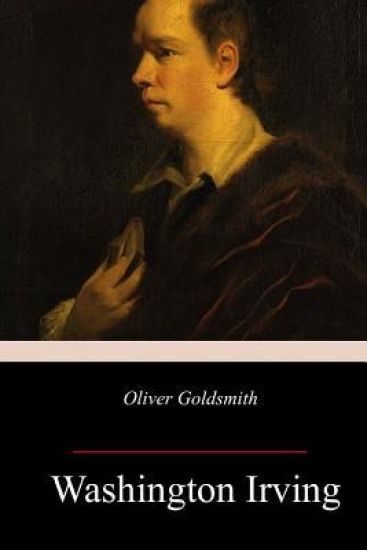
Oliver Goldsmith (10 November 1728 - 4 April 1774) was an Irish novelist, playwright and poet, who is best known for his novel The Vicar of Wakefield (1766), his pastoral poem The Deserted Village (1770), and his plays The Good-Natur'd Man (1768) and She Stoops to Conquer (1771, first performed in 1773). He is thought to have written the classic children's tale The History of Little Goody Two-Shoes (1765)................. Washington Irving (April 3, 1783 - November 28, 1859) was an American short story writer, essayist, biographer, historian, and diplomat of the early 19th century. He is best known for his short stories "Rip Van Winkle" (1819) and "The Legend of Sleepy Hollow" (1820), both of which appear in his collection, The Sketch Book of Geoffrey Crayon, Gent. His historical works include biographies of Oliver Goldsmith, Muhammad, and George Washington, as well as several histories of 15th-century Spain dealing with subjects such as Alhambra, Christopher Columbus, and the Moors. Irving served as the U. S. ambassador to Spain from 1842 to 1846. He made his literary debut in 1802 with a series of observational letters to the Morning Chronicle, written under the pseudonym Jonathan Oldstyle. After moving to England for the family business in 1815, he achieved international fame with the publication of The Sketch Book of Geoffrey Crayon, Gent., serialized from 1819-20. He continued to publish regularly-and almost always successfully-throughout his life, and just eight months before his death (at age 76, in Tarrytown, New York), completed a five-volume biography of George Washington. Irving, along with James Fenimore Cooper, was among the first American writers to earn acclaim in Europe, and Irving encouraged American authors such as Nathaniel Hawthorne, Henry Wadsworth Longfellow, Herman Melville, and Edgar Allan Poe. Irving was also admired by some European writers, including Lord Byron, Thomas Campbell, Charles Dickens, Francis Jeffrey, and Walter Scott. Also, as the United States' first internationally best-selling author, Irving advocated for writing as a legitimate profession and argued for stronger laws to protect American writers from copyright infringement. Washington Irving's parents were William Irving, Sr., originally of Quholm, Shapinsay, Orkney, Scotland, and Sarah (nee Sanders), both Scottish-English immigrants. They married in 1761 while William was serving as a petty officer in the British Navy. They had eleven children, eight of whom survived to adulthood. Their first two sons, each named William, died in infancy, as did their fourth child, John. Their surviving children were: William, Jr. (1766), Ann (1770), Peter (1771), Catherine (1774), Ebenezer (1776), John Treat (1778), Sarah (1780), and Washington. The Irving family settled in Manhattan, New York and was part of the city's small, vibrant merchant class when Washington Irving was born on April 3, 1783, the same week New York City residents learned of the British ceasefire that ended the American Revolution; Irving's mother named him after the hero of the revolution, George Washington. At age 6, with the help of a nanny, Irving met his namesake, who was then living in New York after his inauguration as President of the United States, in 1789. The president blessed young Irving, an encounter Irving later commemorated in a small watercolor painting, which continues to hang in his home. The Irvings lived at 131 William Street at the time of Washington Irving's birth. The family later moved across the street to 128 William St. Several of Washington Irving's older brothers became active New York merchants, and they encouraged their younger brother's literary aspirations....

Knickerbocker's History of New York
Washington Irving
Createspace Independent Publishing Platform
2018
nidottu
Knickerbocker's History of New York is a satire on self-important local history and contemporary politics. Prior to its publication, Irving started a hoax akin to today's viral marketing campaigns; he placed a series of missing person adverts in New York newspapers seeking information on Diedrich Knickerbocker, a crusty Dutch historian who had allegedly gone missing from his hotel in New York City. As part of the ruse, Irving placed a notice-allegedly from the hotel's proprietor-informing readers that if Mr. Knickerbocker failed to return to the hotel to pay his bill, he would publish a manuscript Knickerbocker had left behind.


This work has been selected by scholars as being culturally important, and is part of the knowledge base of civilization as we know it. This work was reproduced from the original artifact, and remains as true to the original work as possible. Therefore, you will see the original copyright references, library stamps (as most of these works have been housed in our most important libraries around the world), and other notations in the work. This work is in the public domain in the United States of America, and possibly other nations. Within the United States, you may freely copy and distribute this work, as no entity (individual or corporate) has a copyright on the body of the work. As a reproduction of a historical artifact, this work may contain missing or blurred pages, poor pictures, errant marks, etc. Scholars believe, and we concur, that this work is important enough to be preserved, reproduced, and made generally available to the public. We appreciate your support of the preservation process, and thank you for being an important part of keeping this knowledge alive and relevant.