
Kirjailija
Wassily Kandinsky
Kirjat ja teokset yhdessä paikassa: 52 kirjaa, julkaisuja vuosilta 1912–2026, suosituimpiin kuuluu Essäer om konst och konstnärer. Vertaile teosten hintoja ja tarkista saatavuus suomalaisista kirjakaupoista.
52 kirjaa
Kirjojen julkaisuvuodet: 1912–2026.
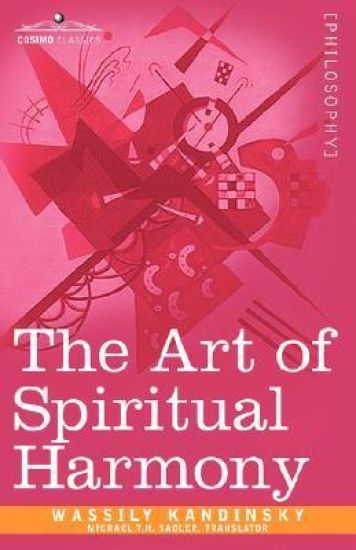
"Wassily Kandinsky s contributions as a theorist were arguably more influential on modern art than any of his paintings. In Concerning the Spiritual in Art, first published in 1914, Kandinsky both promotes and defends a form of art in which painters express themselves in abstract terms independent of the material world around them, much as musicians do. Divided into two parts, About General Aesthetic (including an examination of geometrical forms) and About Painting (a discussion of the psychology of color and the language and form of color), Concerning the Spiritual in Art offers an insight into the mind of one of the most renowned of all abstract painters and a preview of the art that he was to produce in the years to come. Russian painter WASSILY KANDINSKY (1866 1944), one of the most famous artists of the 20th century, pioneered abstract art. His other books include Point and Line to Plane and Kandinsky, Complete Writings on Art."
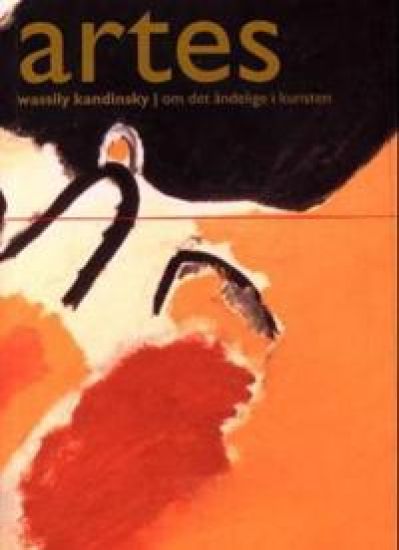
Malerkunsten av i dag er ennå så godt som fullstendig henvist til former som er hentet i naturen. Dens oppgave er å prøve ut sine krefter og midler, utforske dem, slik musikken alt lenge har gjort, og forsøke å anvende disse midlene og kreftene på rent malerisk vis med den kunstneriske skapelse som mål. Det finnes intet "mål" i kunsten; kunsten er evig fri. For ordet "må" flykter kunsten som dagen for natten. Kunstneren har rett til å bruke en hvilken som helst form til sitt uttrykk. Alle midler er hellige når de er indre-nødvendige. Jo friere det abstrakte ved formen opptrer, desto renere og dermed mer elementært klinger det. Det er bare "få timer" som ennå skiller oss fra den rene komposisjonen.
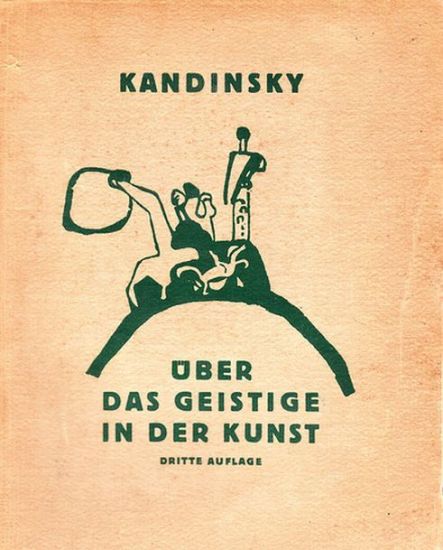
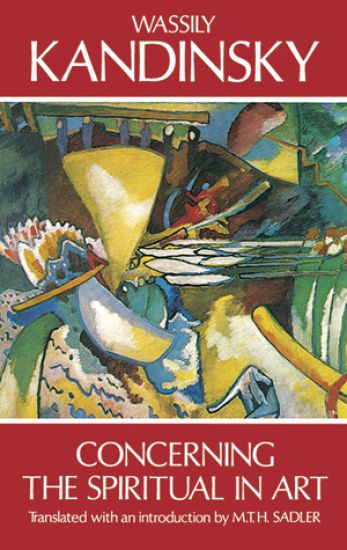
Concerning the Spiritual in Art
Wassily Kandinsky
Dover Publications Inc.
2000
nidottu
Halvin toimitettuna 13,10 €
A pioneering work in the movement to free art from its traditional bonds to material reality, this book is one of the most important documents in the history of modern art. Written by the famous nonobjective painter Wassily Kandinsky (1866-1944), it explains Kandinsky's own theory of painting and crystallizes the ideas that were influencing many other modern artists of the period. Along with his own groundbreaking paintings, this book had a tremendous impact on the development of modern art. Kandinsky's ideas are presented in two parts. The first part, called "About General Aesthetic," issues a call for a spiritual revolution in painting that will let artists express their own inner lives in abstract, non-material terms. Just as musicians do not depend upon the material world for their music, so artists should not have to depend upon the material world for their art. In the second part, "About Painting," Kandinsky discusses the psychology of colors, the language of form and color, and the responsibilities of the artist. An Introduction by the translator, Michael T. H. Sadler, offers additional explanation of Kandinsky's art and theories, while a new Preface by Richard Stratton discusses Kandinsky's career as a whole and the impact of the book. Making the book even more valuable are nine woodcuts by Kandinsky himself that appear at the chapter headings. This English translation of ber das Geistige in der Kunst was a significant contribution to the understanding of nonobjectivism in art. It continues to be a stimulating and necessary reading experience for every artist, art student, and art patron concerned with the direction of 20th-century painting.

It is no common thing to find an artist who, even if he be willing to try, is capable of expressing his aims and ideals with any clearness and moderation. Some people will say that any such capacity is a flaw in the perfect artist, who should find his expression in line and colour, and leave the multitude to grope its way unaided towards comprehension. This attitude is a relic of the days when "l'art pour l'art" was the latest battle cry; when eccentricity of manner and irregularity of life were more important than any talent to the would-be artist; when every one except oneself was bourgeois. The last few years have in some measure removed this absurdity, by destroying the old convention that it was middle-class to be sane, and that between the artist and the outer-world yawned a gulf which few could cross. Modern artists are beginning to realize their social duties. They are the spiritual teachers of the world, and for their teaching to have weight, it must be comprehensible. Any attempt, therefore, to bring artist and public into sympathy, to enable the latter to understand the ideals of the former, should be thoroughly welcome; and such an attempt is this book of Kandinsky's. The author is one of the leaders of the new art movement in Munich. The group of which he is a member includes painters, poets, musicians, dramatists, critics, all working to the same end--the expression of the SOUL of nature and humanity, or, as Kandinsky terms it, the INNERER KLANG.