
Kirjojen hintavertailu – 12 903 725 kirjaa ja 27 kauppaa

Kirjailija

Wayne H. McAlister

Kirjat ja teokset yhdessä paikassa: 2 kirjaa, julkaisuja vuosilta 2004–2008, suosituimpiin kuuluu Paddling the Guadalupe. Vertaile teosten hintoja ja tarkista saatavuus suomalaisista kirjakaupoista.

2 kirjaa

Kirjojen julkaisuvuodet: 2004–2008.

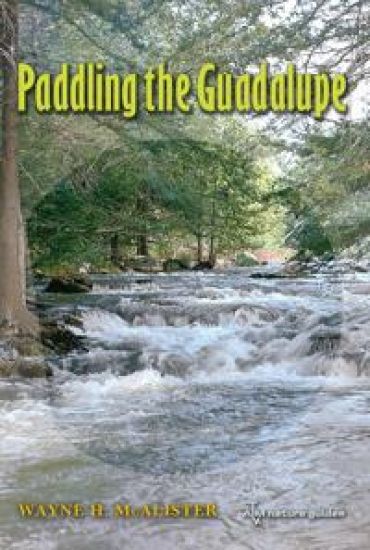
Paddling the Guadalupe

Paddling the Guadalupe

Wayne H. McAlister; Andrew Sansom

Texas A M University Press
2008
nidottu
For more than forty years, Wayne H. McAlister has canoed the Guadalupe River, sometimes called the ""top recreational river in Texas."" In ""Paddling the Guadalupe"", he guides readers down this 400-mile river whose waters spring from the limestone of the Hill Country in Kerr County, meander across the broad Coastal Plain, and finally empty into the Gulf of Mexico at San Antonio Bay. With the expertise of a life and career immersed in nature, he introduces readers to the places, people, plants, and animals - large and small, aquatic and terrestrial - that depend on the Guadalupe for either their livelihoods or their existence. With affection and humor (and sometimes aggravation), he wryly comments on the development and human activity along the river's course, from the headwaters west of Kerrville to its mouth near Tivoli, just east of Refugio. For the traveler, either on the river or along its course, McAlister's knowledge of the grists, sawmills, dams, bridges, swimming holes, and reservoirs bring the history of familiar towns - Comfort, Canyon Lake, New Braunfels, Seguin, Gonzales, Cuero, and Victoria among them - to life. His love of the natural world, which shares the river's bounty, will inspire and enhance anyone's experience of the Guadalupe, from the serious canoer to the family vacationer. Photographs taken over many years provide an intimate perspective, and sixteen maps help orient those interested in getting to know the river on a more personal basis.
Life on Matagorda Island

Life on Matagorda Island

Wayne H. McAlister

Texas A M University Press
2004
nidottu
From most people's point of view, a barrier beach is a paradox: appealing to visit but appalling to live on. An enjoyable day's excursion requires shade, dark glasses, sunblock, drinking water, food, and, of course, a shower afterward. Take all those amenities away and consider existing alone on the island full-time, even during hurricanes. When Wayne and Martha McAlister moved to Matagorda Island, a wildlife refuge off the central Texas coast, they anticipated staying perhaps five years. But sent to take up duties with the U. S. Fish and Wildlife Service, Wayne McAlister fell under the island's spell the moment he stepped out of his aging house trailer and met his first Matagorda rattlesnake. Seven years later, the McAlisters were still observing the flora and fauna of Matagorda. Except for the road and some occasional fence posts, the island appears untouched by humans. In Life on Matagorda Island, Wayne McAlister shows what life was like amid such isolation. McAlister revels in the ghostly twinkles of nights on the beach, as luminescent comb jellies, sea walnuts, and glow worms light up every crest of wave. He watches hungry whooping cranes snatch striped mullet trapped in tidal pools; hunts for Hurter's spadefoots, reclusive amphibians that surface during warm deluges; and sinks to his knees in the sand, flashlight in hand, to catch a glimpse of a whip eel's sharp snout. Not all observations are limited to the psammobionts - the creatures of the sand. McAlister recounts petting a fat-bellied coyote pup and handing out kitchen scraps to wild turkeys. Badgers make their home on Matagorda Island, as do alligators, raccoons, and hundreds of varieties of insects, including the aggravating salt marsh mosquito. But McAlister doesn't merely observe: he tells why and how. Why oysters spit, why pistol shrimp snap, or how debris from offshore boats affects the beach environment. He also relates the more sinister aspects of living on a barrier island, such as finding himself ankle-deep in quicksand. But it's all in a day's work - or play - to the McAlisters, as they balance their lifestyle with the will of the island and its nonhuman inhabitants. ""We try to stay in the background, enthralled observers,"" McAlister writes. ""We do not belong, can never truly belong, but we can coexist and commingle. Close enough.