Kirjojen hintavertailu – 12 859 829 kirjaa ja 27 kauppaa

Kirjailija

Wei Shyy

Kirjat ja teokset yhdessä paikassa: 8 kirjaa, julkaisuja vuosilta 1997–2021, suosituimpiin kuuluu Aerodynamics of Low Reynolds Number Flyers. Vertaile teosten hintoja ja tarkista saatavuus suomalaisista kirjakaupoista.

8 kirjaa

Kirjojen julkaisuvuodet: 1997–2021.

An Introduction to Flapping Wing Aerodynamics

An Introduction to Flapping Wing Aerodynamics

Wei Shyy; Hikaru Aono; Chang-kwon Kang; Hao Liu

Cambridge University Press
2013
sidottu
This is an ideal book for graduate students and researchers interested in the aerodynamics, structural dynamics and flight dynamics of small birds, bats and insects, as well as of micro air vehicles (MAVs), which present some of the richest problems intersecting science and engineering. The agility and spectacular flight performance of natural flyers, thanks to their flexible, deformable wing structures, as well as to outstanding wing, tail and body coordination, is particularly significant. To design and build MAVs with performance comparable to natural flyers, it is essential that natural flyers' combined flexible structural dynamics and aerodynamics are adequately understood. The primary focus of this book is to address the recent developments in flapping wing aerodynamics. This book extends the work presented in Aerodynamics of Low Reynolds Number Flyers (Shyy et al. 2008).

Aerodynamics of Low Reynolds Number Flyers

Aerodynamics of Low Reynolds Number Flyers

Wei Shyy; Yongsheng Lian; Jian Tang; Dragos Viieru; Hao Liu

Cambridge University Press
2011
pokkari
Low Reynolds number aerodynamics is important to a number of natural and man-made flyers. Birds, bats, and insects have been of interest to biologists for years, and active study in the aerospace engineering community, motivated by interest in micro air vehicles (MAVs), has been increasing rapidly. The focus of this book is the aerodynamics associated with fixed and flapping wings. The book considers both biological flyers and MAVs, including a summary of the scaling laws which relate the aerodynamics and flight characteristics to a flyer's sizing on the basis of simple geometric and dynamics analyses, structural flexibility, laminar-turbulent transition, airfoil shapes, and unsteady flapping wing aerodynamics. The interplay between flapping kinematics and key dimensionless parameters such as the Reynolds number, Strouhal number, and reduced frequency is highlighted. The various unsteady lift enhancement mechanisms are also addressed.
Aerodynamics of Low Reynolds Number Flyers

Aerodynamics of Low Reynolds Number Flyers

Wei Shyy; Yongsheng Lian; Jian Tang; Dragos Viieru; Hao Liu

Cambridge University Press
2007
sidottu
Low Reynolds number aerodynamics is important to a number of natural and man-made flyers. Birds, bats, and insects have been of interest to biologists for years, and active study in the aerospace engineering community, motivated by interest in micro air vehicles (MAVs), has been increasing rapidly. The focus of this book is the aerodynamics associated with fixed and flapping wings. The book considers both biological flyers and MAVs, including a summary of the scaling laws which relate the aerodynamics and flight characteristics to a flyer's sizing on the basis of simple geometric and dynamics analyses, structural flexibility, laminar-turbulent transition, airfoil shapes, and unsteady flapping wing aerodynamics. The interplay between flapping kinematics and key dimensionless parameters such as the Reynolds number, Strouhal number, and reduced frequency is highlighted. The various unsteady lift enhancement mechanisms are also addressed.
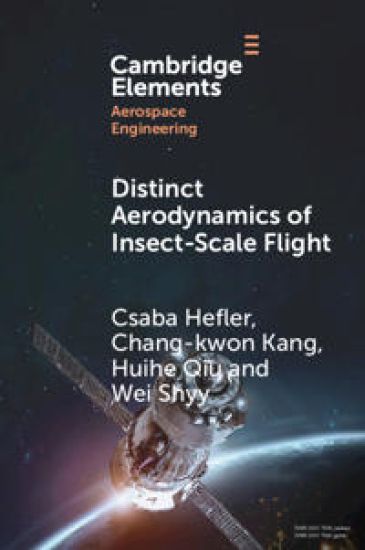
Distinct Aerodynamics of Insect-Scale Flight

Distinct Aerodynamics of Insect-Scale Flight

Csaba Hefler; Chang-kwon Kang; Huihe Qiu; Wei Shyy

Cambridge University Press
2021
pokkari
Insect-scale flapping wing flight vehicles can conduct environmental monitoring, disaster assessment, mapping, positioning and security in complex and challenging surroundings. To develop bio-inspired flight vehicles, systematic probing based on the particular category of flight vehicles is needed. This Element addresses the aerodynamics, aeroelasticity, geometry, stability and dynamics of flexible flapping wings in the insect flight regime. The authors highlight distinct features and issues, contrast aerodynamic stability between rigid and flexible wings, present the implications of the wing-aspect ratio, and use canonical models and dragonflies to elucidate scientific insight as well as technical capabilities of bio-inspired design.
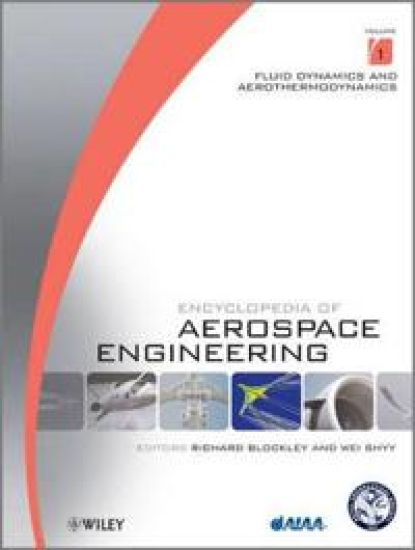
Encyclopedia of Aerospace Engineering, 9 Volume Set

Encyclopedia of Aerospace Engineering, 9 Volume Set

Richard Blockley; Wei Shyy

JOHN WILEY SONS INC
2010
sidottu
The Encyclopedia of Aerospace Engineering represents a major publishing initiative to establish a high quality, carefully coordinated reference work that will enhance education, training and research in this complex and demanding field. Coverage ranges from core disciplines such as electrical and electronic engineering, mechanical engineering and physics, to advanced materials, digital technology and environmental science, all of which have an ever-increasing, interactive role in modern air and spacecraft design. The Encyclopedia provides an unparalleled exposition of essential scientific concepts and their application to current engineering practice, laying a foundation for further research and study in specialist publications. Extensive and up-to-date cross-referencing enhance the value of this monumental work and will ensure its unique contribution to the engineering literature. The Encyclopedia will be available in print or online. The Encyclopedia is structured in the following themed volumes: 1: Fluid Dynamics and Aerothermodynamics 2: Propulsion and Power 3: Structural Technology 4: Materials Technology 5: Dynamics and Control 6: Environmental Impact and Manufacturing 7: Vehicle Design 8: System Engineering 9: Index
Computational Techniques for Complex Transport Phenomena

Computational Techniques for Complex Transport Phenomena

Wei Shyy; S. S. Thakur; H. Ouyang; J. Liu; E. Blosch

Cambridge University Press
2005
pokkari
Complex fluid flows are encountered widely in nature, in living beings and in engineering practice. These flows often involve both geometric and dynamic complexity and present problems that are difficult to analyse because of their wide range of length and time scales, as well as their geometric configuration. This book describes some computational techniques and modelling strategies for analysing and predicting complex transport phenomena. It summarizes advances in the context of a pressure-based algorithm. Among methods discussed are discretization schemes for treating convection and pressure, parallel computing, multigrid methods, and composite, multiblock techniques. With respect to physical modelling, the book addresses issues of turbulence closure and multiscale, multiphase transport from an engineering viewpoint. Both fundamental and practical issues are considered, along with the relative merits of competing approaches. Numerous examples are given throughout the text. Mechanical, aerospace, chemical and materials engineers can use the techniques presented in this book to tackle important, practical problems more effectively.
Computational Techniques for Complex Transport Phenomena

Computational Techniques for Complex Transport Phenomena

Wei Shyy; S. S. Thakur; H. Ouyang; J. Liu; E. Blosch

Cambridge University Press
1997
sidottu
Complex fluid flows are encountered widely in nature, in living beings and in engineering practice. These flows often involve both geometric and dynamic complexity and present problems that are difficult to analyse because of their wide range of length and time scales, as well as their geometric configuration. This book describes some computational techniques and modelling strategies for analysing and predicting complex transport phenomena. It summarizes advances in the context of a pressure-based algorithm. Among methods discussed are discretization schemes for treating convection and pressure, parallel computing, multigrid methods, and composite, multiblock techniques. With respect to physical modelling, the book addresses issues of turbulence closure and multiscale, multiphase transport from an engineering viewpoint. Both fundamental and practical issues are considered, along with the relative merits of competing approaches. Numerous examples are given throughout the text. Mechanical, aerospace, chemical and materials engineers can use the techniques presented in this book to tackle important, practical problems more effectively.