Kirjojen hintavertailu – 12 903 733 kirjaa ja 27 kauppaa

Kirjailija

Wei Xiong

Kirjat ja teokset yhdessä paikassa: 14 kirjaa, julkaisuja vuosilta 2004–2026, suosituimpiin kuuluu Shock Compression and Chemical Reaction of Multifunctional Energetic Structural Materials. Vertaile teosten hintoja ja tarkista saatavuus suomalaisista kirjakaupoista.

14 kirjaa

Kirjojen julkaisuvuodet: 2004–2026.

Shock Compression and Chemical Reaction of Multifunctional Energetic Structural Materials

Shock Compression and Chemical Reaction of Multifunctional Energetic Structural Materials

Xianfeng Zhang; Wei Xiong

ELSEVIER SCIENCE PUBLISHING CO INC
2022
nidottu
Shock Compression and Chemical Reaction of Multifunctional Energetic Structural Materials provides an exhaustive overview of the mechanics, kinetics and physio-chemical behavior caused by shock-induced reaction and shock compression on multifunctional energetic structural materials (MESMs). The book covers foundational knowledge on shock waves and Equation of State (EOS), shock parameters, reaction kinetics, impedance matching, and more. In addition, it looks at more advanced subjects such as experimental analysis methods, numerical modeling techniques (from quasi-static to high-strain rates, including void collapse models), how EOS changes when reaction and detonation are involved, and more. Final chapters cover how to obtain EOS curves from experiments and various testing methods and numerical models for non-reactive porous solids and particulate composites, including 1-D reactive flow models. Flyer plate impact experiments are also discussed, as are the applications of hydrocodes and Lagrangian-framework-based methods.
Impact Mechanics of Ceramic Armor

Impact Mechanics of Ceramic Armor

Xianfeng Zhang; Mengting Tan; Wei Xiong; Chuang Liu

Elsevier - Health Sciences Division
2025
nidottu
Impact Mechanics of Ceramic Armor: Dwell and Interface Defeat provides a thorough overview of the impact dynamics of projectiles and targets, crack propagation, and damage evolution of ceramic armor during interface defeat and penetration. The book provides experimental techniques and results of ceramic armor subjected to projectile damage, covers the mechanics of damage of ceramic armor under impact load, and analyzes the failure processes alongside corresponding theoretical models. Constitutive models and material parameters between projectile and target are explained, techniques for optimum ceramic armor design are outlined, and applications of interface defeat in the field of light armor are provided.
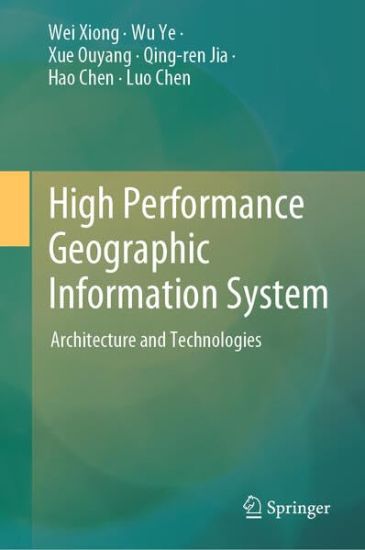
High Performance Geographic Information System

High Performance Geographic Information System

Wei Xiong; Ye Wu; Xue Ouyang; Qing-ren Jia; Hao Chen; Luo Chen

SPRINGER VERLAG, SINGAPORE
2024
sidottu
The development of earth observation and computing technology has promoted the wide application of spatio-temporal big data and artificial intelligence. The enrichment of data and the improvement of computational performance make it possible to perform spatio-temporal analysis and computation on a larger scale. Therefore, it is necessary to study the optimization methods and application methods of high-performance geocomputing, starting from GIS architecture, in order to form a high-performance GIS that can serve the society and economy and support various applications. This book focuses on the architecture, technology, platform, and application of high-performance GIS, analyzes the key technologies of spatio-temporal big data organization and access, parallelized spatial analysis and processing, large-scale map rendering, and parallel visualization under the high-performance computing architecture, explains how to build high-performance geographic information applications, and looks forward to the trend of the new generation of GIS.
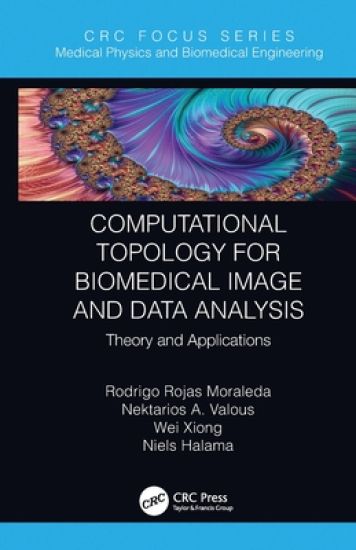
Computational Topology for Biomedical Image and Data Analysis

Computational Topology for Biomedical Image and Data Analysis

Rodrigo Rojas Moraleda; Nektarios Valous; Wei Xiong; Niels Halama

CRC Press
2021
nidottu
This book provides an accessible yet rigorous introduction to topology and homology focused on the simplicial space. It presents a compact pipeline from the foundations of topology to biomedical applications. It will be of interest to medical physicists, computer scientists, and engineers, as well as undergraduate and graduate students interested in this topic. Features: Presents a practical guide to algebraic topology as well as persistence homology Contains application examples in the field of biomedicine, including the analysis of histological images and point cloud data
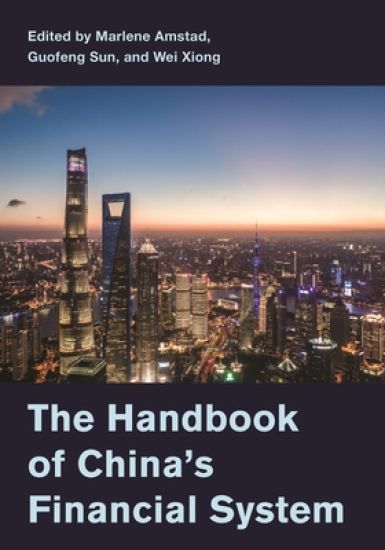
The Handbook of China's Financial System

The Handbook of China's Financial System

Marlene Amstad; Guofeng Sun; Wei Xiong; Darrell Duffie

PRINCETON UNIVERSITY PRESS
2020
sidottu
A comprehensive, in-depth, and authoritative guide to China's financial system The Chinese economy is one of the most important in the world, and its success is driven in large part by its financial system. Though closely scrutinized, this system is poorly understood and vastly different than those in the West. The Handbook of China’s Financial System will serve as a standard reference guide and invaluable resource to the workings of this critical institution. The handbook looks in depth at the central aspects of the system, including banking, bonds, the stock market, asset management, the pension system, and financial technology. Each chapter is written by leading experts in the field, and the contributors represent a unique mix of scholars and policymakers, many with firsthand knowledge of setting and carrying out Chinese financial policy. The first authoritative volume on China’s financial system, this handbook sheds new light on how it developed, how it works, and the prospects and direction of significant reforms to come. Contributors include Franklin Allen, Marlene Amstad, Kaiji Chen, Tuo Deng, Hanming Fang, Jin Feng, Tingting Ge, Kai Guo, Zhiguo He, Yiping Huang, Zhaojun Huang, Ningxin Jiang, Wenxi Jiang, Chang Liu, Jun Ma, Yanliang Mao, Fan Qi, Jun Qian, Chenyu Shan, Guofeng Sun, Xuan Tian, Chu Wang, Cong Wang, Tao Wang, Wei Xiong, Yi Xiong, Tao Zha, Bohui Zhang, Tianyu Zhang, Zhiwei Zhang, Ye Zhao, and Julie Lei Zhu.
Computational Topology for Biomedical Image and Data Analysis

Computational Topology for Biomedical Image and Data Analysis

Rodrigo Rojas Moraleda; Nektarios Valous; Wei Xiong; Niels Halama

CRC Press
2019
sidottu
This book provides an accessible yet rigorous introduction to topology and homology focused on the simplicial space. It presents a compact pipeline from the foundations of topology to biomedical applications. It will be of interest to medical physicists, computer scientists, and engineers, as well as undergraduate and graduate students interested in this topic. Features: Presents a practical guide to algebraic topology as well as persistence homology Contains application examples in the field of biomedicine, including the analysis of histological images and point cloud data
Mechanotransduction of the Hair Cell

Mechanotransduction of the Hair Cell

Wei Xiong; Zhigang Xu

Springer Verlag, Singapore
2018
nidottu
This book summarizes the emerging experimental evidence on hair-cell mechanotransduction, and covers hair’s cellular structure, biophysical properties, molecular components and functions. Auditory hair cells convert sound-induced vibration into electrical signals. This biological process, mechanotransduction, is what allows us to hear and communicate in our daily lives. However, our grasp of hair-cell mechanotransduction is still far from complete. Recent advances in molecular genetics and biophysics have helped us gain deeper insights into this process, especially the molecular constituent and operation of the channel complex. This book provides a cutting-edge snapshot for all readers who are interested in or studying how auditory hair cells detect sound.
Wei Xiong Unaltered Landscapes

Wei Xiong Unaltered Landscapes

Wei Xiong

Artvoices Art Books
2018
sidottu
The paintings of Wei Xiong’s ‘Unaltered Landscapes’ are exuberant, mythic and boundless in their expansiveness and energy. Working with an alternately muted and sometimes bold and colorful palette, Xiong poses a series of questions within these mostly large-scale oil paintings – questions about mortality, our connectivity to the earth, and our often-complex relationship to the divine.
Adaption of new strategies for parameterization of a microstructure-based flow stress model
One of the most important tools in the metal forming technology is the integrated process and microstructual simulation using Finite Element Methods (FEM). It has become more and more popular in recent years, especially in the segment of hot metal forming, e.g. open die forging of large scaled and hardly deformable materials, such as nickel-based super alloys for turbine shaft. Theoretically using this method it is possible to calculate the microstructual evolution along the whole process chain in the numerical simulation of the considered metal forming process. Based on this knowledge a series of benefits can be achieved for the practice, such as to optimize a present metal forming process, to predict the mechanical properties of the final products under the given forming conditions, to detect the possible product failures prematurely, to assist the design of a new production chain and so on. In the face of these trends of the scientific research as well as the industrial demands, different material models have been released in the market to combine the commercial FEM programs specialized in the numerical simulation of metal forming. Among others microstructure-based ow stress models show outstanding performance. Through this kind of material model not only the microstructure such as recrystallization and grain size, but also the interaction between the microstructual evolution and the working hardening, effectively ow stress, can be quantitatively represented. Towards accurate and efficient material modeling, the model parameters have to be determined conveniently and reliably. For this propose a new Hybrid strategy combining the advantages both of direct and indirect methods has been proposed using the example of StrucSim, which is a very good representative of a mircostructure-based ow stress model. At first different aspects, which lead to the disadvantages of the conventional method, i.e. direct method, were discussed. In doing so a high manganese steel was characterized as an example by stepwise graphical and regression analysis. It was found that, the precondition of direct methods, namely recording ow curves under constant Zener-hollomon-parameter conditions, are basically not possible due to both limitations of test equipment and unconquerable physical mechanism like dissipation heating. The common solution to compensate these factors may lead to further inaccuracies, uncertainties and complexities despite large testing and evaluating efforts. Further in order to improve the model quality calibrated by the conventional direct method an efficient hybrid strategy has been derived by combining inverse analysis with offline calculation of ow stress and microstructure. Three different variations of the hybrid strategy were introduced to deal with different available experimental databases, such as isothermal and non-isothermal ow curves. To demonstrate the developed routines of these three hybrid possibilities two kinds of materials including a nickel-based super alloy and a high manganese steel have been taken into account. The investigation has shown that through the introduced hybrid methods better model quality can be achieved even with less experimental data. Owing to the convenience of the inverse technique much experimental and evaluating effort and complexities can be avoided. Finally, another inverse analysis based on inhomogeneous deformation has been proposed, in which hot compression tests with double cone specimen were employed. Thanks to the inhomogeneity of strain and microstructure distribution within the specimen, it becomes possible to get sufficient relevant information as constraints for the inverse parameterization through even fewer experiments. In addition, the established routine of a hybrid strategy as well as the inverse analysis based on non-uniform deformation enhances the transferability of determined model coefficients between two materials within the same group or among similar materials.
Biomedical Image Understanding

Biomedical Image Understanding

Joo-Hwee Lim; Sim-Heng Ong; Wei Xiong

John Wiley Sons Inc
2015
sidottu
A comprehensive guide to understanding and interpreting digital images in medical and functional applications Biomedical Image Understanding focuses on image understanding and semantic interpretation, with clear introductions to related concepts, in-depth theoretical analysis, and detailed descriptions of important biomedical applications. It covers image processing, image filtering, enhancement, de-noising, restoration, and reconstruction; image segmentation and feature extraction; registration; clustering, pattern classification, and data fusion. With contributions from experts in China, France, Italy, Japan, Singapore, the United Kingdom, and the United States, Biomedical Image Understanding: Addresses motion tracking and knowledge-based systems, two areas which are not covered extensively elsewhere in a biomedical contextDescribes important clinical applications, such as virtual colonoscopy, ocular disease diagnosis, and liver tumor detectionContains twelve self-contained chapters, each with an introduction to basic concepts, principles, and methods, and a case study or application With over 150 diagrams and illustrations, this bookis an essential resource for the reader interested in rapidly advancing research and applications in biomedical image understanding.
Paris-Princeton Lectures on Mathematical Finance 2003

Paris-Princeton Lectures on Mathematical Finance 2003

Tomasz R. Bielecki; Tomas Björk; Monique Jeanblanc; Marek Rutkowski; Jose A. Scheinkman; Wei Xiong

Springer-Verlag Berlin and Heidelberg GmbH Co. K
2004
nidottu
The Paris-Princeton Lectures in Financial Mathematics, of which this is the second volume, will, on an annual basis, publish cutting-edge research in self-contained, expository articles from outstanding - established or upcoming! - specialists. The aim is to produce a series of articles that can serve as an introductory reference for research in the field. It arises as a result of frequent exchanges between the finance and financial mathematics groups in Paris and Princeton. This volume presents the following articles: "Hedging of Defaultable Claims" by T. Bielecki, M. Jeanblanc, and M. Rutkowski; "On the Geometry of Interest Rate Models" by T. Björk; "Heterogeneous Beliefs, Speculation and Trading in Financial Markets" by J. A. Scheinkman, and W. Xiong.
The Origins and Evolution of Public–Private Partnerships
This book evaluates how Public–Private Partnerships (PPPs) have evolved from simple financing tools into complex ecosystems that play a central role in addressing global infrastructure gaps. Wei Xiong traces this transformation over three decades, moving beyond Western-centric perspectives to examine the distinct experiences of the Global South and China. Xiong charts the evolution of PPPs from financing-driven arrangements (PPP 1.0), through efficiency-focused models (PPP 2.0), to sustainability-oriented partnerships (PPP 3.0). He integrates economic efficiency, political incentives and public values to provide a coherent framework for understanding why some partnerships succeed and others fail. Drawing on comparative evidence and real-world cases, the book demonstrates how governments and private actors can better create, manage and adapt PPPs over time. It also argues that the future of PPPs lies in broad, multi-actor collaborations designed to address the Sustainable Development Goals. The Origins and Evolution of Public-Private Partnerships is a vital resource for scholars and students of political economics, public administration and public policy. Policymakers and sustainable development professionals will also benefit from its comparative cases and practical lessons.