Kirjojen hintavertailu – 12 903 724 kirjaa ja 27 kauppaa

Kirjailija

Weidong Li

Kirjat ja teokset yhdessä paikassa: 7 kirjaa, julkaisuja vuosilta 2006–2024, suosituimpiin kuuluu Sports Skill Analysis. Vertaile teosten hintoja ja tarkista saatavuus suomalaisista kirjakaupoista.

7 kirjaa

Kirjojen julkaisuvuodet: 2006–2024.

Sports Skill Analysis

Sports Skill Analysis

Weidong Li; Boyi Dai; Qin Zhu

TAYLOR FRANCIS LTD
2024
nidottu
Guided by the conceptualization of content knowledge, this book covers sports analysis (identification of techniques and tactics), skill analysis (identification of critical elements, observation, evaluation of students’ performance through error detection, and interventions), and biomechanical principles and their applications to skill performance and analysis, which teachers or coaches need to possess for effective teaching and coaching. The importance for preservice and in-service physical education teachers or coaches to acquire in-depth content knowledge is supported by national standards and research. Studies have shown that an improvement in preservice and in-service physical education teachers’ specialized content knowledge leads to an increase in their pedagogical content knowledge, which results in better learning and performance among students. Practical examples for conducting sports and skill analysis, designing teaching progressions for interventions, and applying biomechanical principles are provided. This book equips teachers or coaches with knowledge and skills to conduct sports and skill analysis, which are essential for effective teaching and coaching, and will be key reading for undergraduate and graduate students majoring in physical education teacher education and sports coaching and in-service physical education teachers and current coaches.

Sports Skill Analysis

Sports Skill Analysis

Weidong Li; Boyi Dai; Qin Zhu

TAYLOR FRANCIS LTD
2024
sidottu
Guided by the conceptualization of content knowledge, this book covers sports analysis (identification of techniques and tactics), skill analysis (identification of critical elements, observation, evaluation of students’ performance through error detection, and interventions), and biomechanical principles and their applications to skill performance and analysis, which teachers or coaches need to possess for effective teaching and coaching. The importance for preservice and in-service physical education teachers or coaches to acquire in-depth content knowledge is supported by national standards and research. Studies have shown that an improvement in preservice and in-service physical education teachers’ specialized content knowledge leads to an increase in their pedagogical content knowledge, which results in better learning and performance among students. Practical examples for conducting sports and skill analysis, designing teaching progressions for interventions, and applying biomechanical principles are provided. This book equips teachers or coaches with knowledge and skills to conduct sports and skill analysis, which are essential for effective teaching and coaching, and will be key reading for undergraduate and graduate students majoring in physical education teacher education and sports coaching and in-service physical education teachers and current coaches.
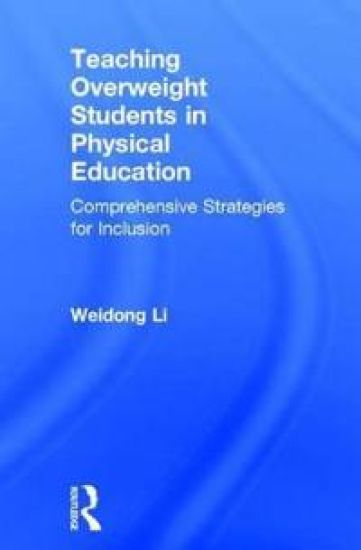
Teaching Overweight Students in Physical Education
Overweight students often suffer negative consequences with regard to low physical ability, skills, and fitness; obesity-related health implications; teasing and exclusion from physical education by their peers; and psychosocial and emotional suffering as a result of weight stigma. Widespread obesity and its negative consequences have presented an unprecedented challenge for teachers, who must include overweight students in physical education activities while striving to provide individualized instruction for diverse learners and foster positive learning environments. Educators stand to benefit greatly from specific knowledge and skills for reducing bias and including overweight students. Teaching Overweight Students in Physical Education offers a compact and easy-to-read take on this problem. It begins by summarizing information on the obesity trend, weight stigma, and coping mechanisms. Next, it introduces the Social Ecological Constraint Model, which casts the teacher as an agent of change who is aware of and manipulates a variety of factors from multiple levels for effective inclusion of overweight students in physical education. Finally, it provides detailed strategies guided by the conceptual model for instructors to implement into their physical education classes. In all, this book provides a map for successfully including overweight students and offers practical strategies to help physical education teachers create inclusive and safe climates, and design differentiated instruction to maximize overweight or obese students’ engagement and learning. Comprehensive, evidence-based, and timely, this book is tailored for physical education educators and practitioners, but will also benefit parents of overweight children by providing them with strategies for educating their children on how to cope with stigma and weight-related teasing.
Teaching Overweight Students in Physical Education
Overweight students often suffer negative consequences with regard to low physical ability, skills, and fitness; obesity-related health implications; teasing and exclusion from physical education by their peers; and psychosocial and emotional suffering as a result of weight stigma. Widespread obesity and its negative consequences have presented an unprecedented challenge for teachers, who must include overweight students in physical education activities while striving to provide individualized instruction for diverse learners and foster positive learning environments. Educators stand to benefit greatly from specific knowledge and skills for reducing bias and including overweight students. Teaching Overweight Students in Physical Education offers a compact and easy-to-read take on this problem. It begins by summarizing information on the obesity trend, weight stigma, and coping mechanisms. Next, it introduces the Social Ecological Constraint Model, which casts the teacher as an agent of change who is aware of and manipulates a variety of factors from multiple levels for effective inclusion of overweight students in physical education. Finally, it provides detailed strategies guided by the conceptual model for instructors to implement into their physical education classes. In all, this book provides a map for successfully including overweight students and offers practical strategies to help physical education teachers create inclusive and safe climates, and design differentiated instruction to maximize overweight or obese students’ engagement and learning. Comprehensive, evidence-based, and timely, this book is tailored for physical education educators and practitioners, but will also benefit parents of overweight children by providing them with strategies for educating their children on how to cope with stigma and weight-related teasing.
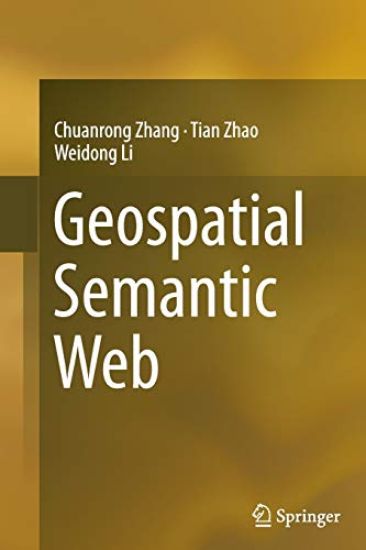
Geospatial Semantic Web

Geospatial Semantic Web

Chuanrong Zhang; Tian Zhao; Weidong Li

Springer International Publishing AG
2016
nidottu
This book covers key issues related to Geospatial Semantic Web, including geospatial web services for spatial data interoperability; geospatial ontology for semantic interoperability; ontology creation, sharing, and integration; querying knowledge and information from heterogeneous data source; interfaces for Geospatial Semantic Web, VGI (Volunteered Geographic Information) and Geospatial Semantic Web; challenges of Geospatial Semantic Web; and development of Geospatial Semantic Web applications. This book also describes state-of-the-art technologies that attempt to solve these problems such as WFS, WMS, RDF, OWL and GeoSPARQL and demonstrates how to use the Geospatial Semantic Web technologies to solve practical real-world problems such as spatial data interoperability.
Geospatial Semantic Web

Geospatial Semantic Web

Chuanrong Zhang; Tian Zhao; Weidong Li

Springer International Publishing AG
2015
sidottu
This book covers key issues related to Geospatial Semantic Web, including geospatial web services for spatial data interoperability; geospatial ontology for semantic interoperability; ontology creation, sharing, and integration; querying knowledge and information from heterogeneous data source; interfaces for Geospatial Semantic Web, VGI (Volunteered Geographic Information) and Geospatial Semantic Web; challenges of Geospatial Semantic Web; and development of Geospatial Semantic Web applications. This book also describes state-of-the-art technologies that attempt to solve these problems such as WFS, WMS, RDF, OWL and GeoSPARQL and demonstrates how to use the Geospatial Semantic Web technologies to solve practical real-world problems such as spatial data interoperability.
Integrated And Collaborative Product Development Environment: Technologies And Implementations

Integrated And Collaborative Product Development Environment: Technologies And Implementations

Andrew Yeh Ching Nee; Weidong Li; Soh Khim Ong

World Scientific Publishing Co Pte Ltd
2006
sidottu
With the rapid advances in computing and Internet technologies, an integrated and collaborative environment, which is based on the complementary functions of concurrent engineering and Internet-based collaborative engineering, is imperative for companies to facilitate and expedite the product realization processes. Topics such as concurrent and collaborative engineering, feature-based design and manufacturing, evolutionary computational techniques such as Tabu Search, Simulated Annealing, Genetic Algorithms features, intelligent and computer-aided process planning are important strategies and enabling technologies for developing an integrative environment, facilitating modern product design and development. This book covers the state-of-the-art research and development status of these strategies and technologies. Implementation strategies and case studies are provided with an emphasis on technical details to help readers understand the underlying algorithms and infrastructures.