Kirjojen hintavertailu – 12 859 828 kirjaa ja 27 kauppaa

Kirjailija

Wellington Didibhuku Thwala

Kirjat ja teokset yhdessä paikassa: 23 kirjaa, julkaisuja vuosilta 2010–2026, suosituimpiin kuuluu A Building Information Modelling Maturity Model for Developing Countries. Vertaile teosten hintoja ja tarkista saatavuus suomalaisista kirjakaupoista.

23 kirjaa

Kirjojen julkaisuvuodet: 2010–2026.

A Building Information Modelling Maturity Model for Developing Countries

A Building Information Modelling Maturity Model for Developing Countries

Samuel Adekunle; Clinton Ohis Aigbavboa; Obuks Ejohwomu; Wellington Didibhuku Thwala; Abdul-Majeed Mahamadu

TAYLOR FRANCIS LTD
2025
nidottu
This book provides a reference point for the development of Building Information Modelling (BIM) maturity in the developing country context. Developing countries have been observed to have low BIM maturity and are struggling to adopt the technology amidst no clearly defined pathways for achieving BIM capability maturity. The research presented in this book provides construction industry stakeholders in developing countries with a framework and nomological map to aid in the advancement of BIM implementation. This work provides a pathway for overcoming the challenges inhibiting BIM maturity in developing countries and ultimately its diffusion in order to harness the benefits. The authors provide critical theoretical insights on BIM maturity in the developing country context, a comparative analysis of BIM maturity in both developing and developed countries, and finally, a conceptualisation of BIM maturity for developing countries. The book is unique as its construct is rooted in the state-of-the-art information management standards in the digitalisation era in the construction industry (ISO 19650). The book delivers a theoretical reference point to the academic and research community and for the industry stakeholder, an essential guide to achieving BIM maturity at macro and micro levels.
A Building Information Modelling Maturity Model for Developing Countries

A Building Information Modelling Maturity Model for Developing Countries

Samuel Adekunle; Clinton Ohis Aigbavboa; Obuks Ejohwomu; Wellington Didibhuku Thwala; Abdul-Majeed Mahamadu

TAYLOR FRANCIS LTD
2023
sidottu
This book provides a reference point for the development of Building Information Modelling (BIM) maturity in the developing country context. Developing countries have been observed to have low BIM maturity and are struggling to adopt the technology amidst no clearly defined pathways for achieving BIM capability maturity. The research presented in this book provides construction industry stakeholders in developing countries with a framework and nomological map to aid in the advancement of BIM implementation. This work provides a pathway for overcoming the challenges inhibiting BIM maturity in developing countries and ultimately its diffusion in order to harness the benefits. The authors provide critical theoretical insights on BIM maturity in the developing country context, a comparative analysis of BIM maturity in both developing and developed countries, and finally, a conceptualisation of BIM maturity for developing countries. The book is unique as its construct is rooted in the state-of-the-art information management standards in the digitalisation era in the construction industry (ISO 19650). The book delivers a theoretical reference point to the academic and research community and for the industry stakeholder, an essential guide to achieving BIM maturity at macro and micro levels.
An Occupational Health and Safety Performance Management Framework for Small-Scale Contractors in Developing Countries

An Occupational Health and Safety Performance Management Framework for Small-Scale Contractors in Developing Countries

Mwewa Mambwe; Erastus Mishengu Mwanaumo; Wellington Didibhuku Thwala; Clinton Ohis Aigbavboa; Sampa Chisumbe

Taylor & Francis
2026
Sidottu
This book provides a comprehensive exploration of occupational health and safety (OHS) performance management for small-scale contractors in developing countries, particularly in the construction industry. It highlights the critical role of OHS in reducing workplace accidents, injuries, and fatalities while improving productivity and competitive advantage. By addressing the unique challenges faced by small-scale contractors, such as limited access to resources and poor implementation of OHS practices, the book aims to bridge the gap in knowledge and practice in these regions. The author team conceptualizes a framework specifically designed for small-scale contractors to measure, benchmark, and improve their OHS performance. It examines the current state of OHS in developing countries, identifies key issues, and provides actionable strategies to enhance safety and health management. The framework is presented as a practical tool for contractors, organizations, and regulatory bodies to adopt and implement, ensuring long-term benefits such as reduced incidents and improved operational efficiency. Additionally, the book serves as a valuable resource for researchers, offering theoretical insights into OHS performance management and its application in small-scale contracting firms. This book is intended for a diverse audience, including small-scale contractors, policymakers, health and safety regulators, project managers, and stakeholders in the construction industry. It is particularly beneficial for those in developing economies seeking to improve OHS practices and performance. Researchers and academics will also find the book useful as a foundation for further studies in OHS management, while organizations can use the framework as a guide to enhance safety standards and compliance.
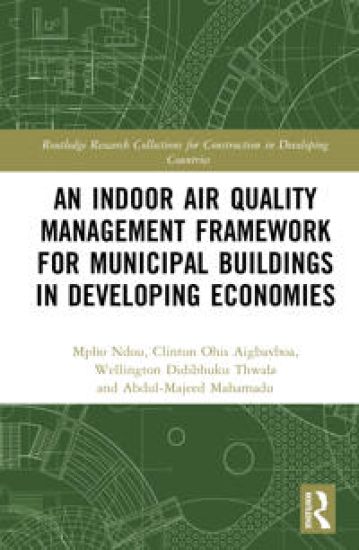
An Indoor Air Quality Management Framework for Municipal Buildings in Developing Economies

An Indoor Air Quality Management Framework for Municipal Buildings in Developing Economies

Mpho Ndou; Clinton Ohis Aigbavboa; Wellington Didibhuku Thwala; Abdul-Majeed Mahamadu

Taylor & Francis
2026
Nidottu
This book delves into the pivotal issue of Indoor Air Quality (IAQ) management in municipal buildings within developing economies, addressing a pressing need in today’s digital age, where individuals spend over 70% of their time indoors. With a strong focus on enhancing environmental quality, this book presents theoretical frameworks and practical recommendations designed explicitly for stakeholders in the higher education sector, encompassing both public and private institutions. As institutions strive to improve their learning environments, this book aligns with global Sustainable Development Goals (SDGs), highlighting the vital connection between effective IAQ management and the health and well-being of the institutional community, including students and staff members. It provides a comprehensive framework that advocates for improved IAQ management and emphasises the importance of quality education and lifelong learning. Furthermore, this book serves as a valuable resource for green building regulatory bodies, ensuring adherence to best practices in IAQ management within municipal buildings. By providing actionable strategies grounded on recent literature, the book is an essential guide for researchers and policymakers seeking to navigate the theoretical and empirical dimensions of IAQ management. Moreover, this book asserts that enhancing IAQ is necessary not only for regulatory compliance and community well-being but also as a vital investment in the academic and operational success of municipal buildings in developing economies.
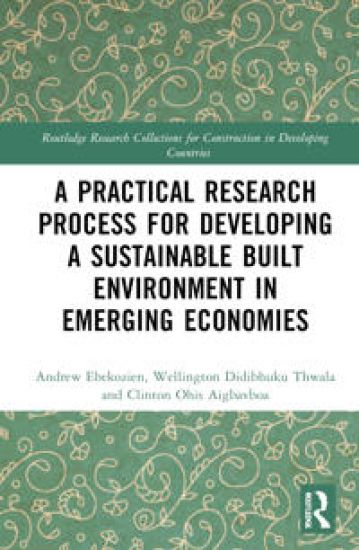
A Practical Research Process for Developing a Sustainable Built Environment in Emerging Economies

A Practical Research Process for Developing a Sustainable Built Environment in Emerging Economies

Andrew Ebekozien; Clinton Ohis Aigbavboa; Wellington Didibhuku Thwala

Taylor & Francis
2026
Nidottu
A Practical Research Process for Developing a Sustainable Built Environment in Emerging Economies aims to fill the dearth of practical research guidance and reference material with specific focus on the built environment in developing countries. Global policy agendas such as Agenda 2030 (the SDGs) highlight the importance and growth of research and knowledge from emerging nations who are increasingly contributing to research that is critical for development and advancement. The role of built environment practitioners will continue to evolve by building on the sound foundations laid down by the professions and by exploiting to the full the new technologies available to us through conducting innovative research, but more guidance on the research process is necessary to ensure the integrity and quality of the output. This book has been structured so that each chapter is largely free-standing, allowing the reader (undergraduate, postgraduate, or practitioner) to reference the material with ease. It aims to provide practical guidance on conducting research and on writing a dissertation or report and begins by considering the general research background in a built environment context. It then covers research ethics, before moving on to discuss the importance of selecting the right research topic and title and writing a clear abstract. The chapters then cover introducing a research project, and the authors include a section on the problem statement, research questions, aims and objectives, research gap(s), and motivations for the study. The book goes on to cover the literature review section, theoretical and conceptual frameworks, the various types of methodological approaches, and when to apply them. The findings section, discussion of the results, and the study’s implications are then discussed, before the final chapters cover the conclusion and recommendations. The book provides a useful reference for higher education students, graduates, postgraduates, and practitioners engaged in all aspects of construction and built environment research.
A Smart City Model for Developing Countries

A Smart City Model for Developing Countries

Chigozie Collins Okafor; Clinton Aigbavboa; Wellington Didibhuku Thwala

Elsevier - Health Sciences Division
2026
nidottu
A Smart City Model for Developing Countries provides an integrated smart city framework achieved by examining the relationship between the existing smart city variables: smart mobility, smart living, smart economy, smart governance, smart environment, and smart people. The exogenous variables of smart building regulations and smart knowledge management have also been taken into consideration. Developed through a rigorous statistical analysis, this integrated smart city framework assists in measuring and determining the factors needed for smart city development, considering the unstructured city planning evident in the cities of most developing countries and the continuous, projected growth in urbanization. The important themes discussed are the concept of smart city development, the theoretical background and overview, the gaps in the study of the smart city, the general concept of city, the methodological approach, the discussion of the results, and the study’s contribution, recommendation and conclusion. It starts with a methodological research approach to establish the smart city performance indicators for developing countries. It then examines the determinants of smart city development in developing countries and the extent to which these determinants influence this development. It then determines the extent to which the gaps in existing smart city studies influence smart city development in developing countries, then develops a conceptual integrated smart city framework for developing countries. It further validates the conceptualised, integrated, smart city framework developed in this study. Researchers, professionals, and students alike will find this a valuable resource for identifying the most effective factors to be utilized in urban planning, construction, architecture and the built environment in order to meet the challenges of developing a sustainable city and ultimately advancing continuous human living and progress.
An Integrated Infrastructure Delivery Model for Developing Economies

An Integrated Infrastructure Delivery Model for Developing Economies

Rembuluwani Netshiswinzhe; Clinton Aigbavboa; Wellington Didibhuku Thwala

TAYLOR FRANCIS LTD
2025
nidottu
This book explores the attributes of an integrated model for infrastructure delivery as a means to achieve high impact investing, sustainable growth and development in a developing economy. An Integrated Infrastructure Delivery Model for Developing Economies: Planning and Delivery Management Attributes is premised on the understanding that one of the most significant barriers to efficient and effective infrastructure delivery is the nature and extent of fragmentation in the ways in which infrastructure projects are planned, designed, and delivered. Using a Delphi method, the research presented in this book examines the infrastructure delivery models and practices that have been employed in South Africa and other developing countries, and in doing so presents eight attributes for integrated infrastructure delivery. These are: (i) developing a common vision for the community, (ii) stakeholder participation, (iii) integrated project development and scoping, (iv) access to planning information, (v) cross-sectoral planning, (vi) integrated infrastructure master plans, (vii) statutory and regulatory compliance and (viii) integrated contractual frameworks. The book presents a practical model that can serve as a guide and a manual for project planning and development to achieve integrated infrastructure delivery in developing economies. The proposed model should serve as a framework to inform future planning and programming of infrastructure projects within the public sector space. Furthermore, the application of the model will help resolve the problems of fragmentation and lack of coordination in how infrastructure projects are planned and implemented. This book will be beneficial to infrastructure practitioners, policymakers, researchers and academics who pursue best practice models to improve the delivery and management of infrastructure.
Measuring Productivity of Labour-Intensive Work Practices in Road Construction in Africa

Measuring Productivity of Labour-Intensive Work Practices in Road Construction in Africa

Emmanuel Bamfo-Agyei; Clinton Aigbavboa; Wellington Didibhuku Thwala

TAYLOR FRANCIS LTD
2025
nidottu
This book examines an issue of constant concern in the construction industry, that of productivity. Using data from Ghana and South Africa, it presents research into the productivity of local contractors in these countries whilst examining the predominance of labour-intensive production methods. The book begins by considering the theoretical and conceptual perspectives on labour productivity in the construction industry in the existing literature, before reviewing current productivity measurement frameworks. The book then explores the productivity of labour-intensive public works projects in South Africa and Ghana alongside a general discussion of key factors affecting construction productivity in these countries. Whilst the focus is on road construction, the framework developed can be applied to any number of construction projects to measure, and ultimately improve productivity. This book is useful reading for researchers and practitioners looking to understand the factors influencing labour productivity in construction at both the industry and the project level, including construction managers, quantity surveyors, cost engineers and project managers.
Sustainable Maintenance Strategies for Government Office Buildings in Emerging Economies

Sustainable Maintenance Strategies for Government Office Buildings in Emerging Economies

Khotso Dithebe; Clinton Ohis Aigbavboa; Wellington Didibhuku Thwala; Bhaven Naik

Emerald Publishing Limited
2025
sidottu
Provision of infrastructure development continues to be a great concern in emerging economies, particularly in ensuring sustainable growth through business continuity, and human development. The functionality and reliability of existing infrastructure is nowhere close to the aspirations of the global infrastructure initiative, thus affecting the rate at which services can be delivered to the public. Lack of understanding on the requirements of maintenance management has exacerbated the reliability of this infrastructure, particularly public office buildings. The expertly curated chapters provide an unambiguous perspective on the practice requirements of maintenance management for public office buildings. Perspectives shared in the book include but not limited to maintenance principles and practice specifications for public asset management. Facility management is mostly to benefit from the perspectives deliberated in the book. More so, government institutions and regulatory bodies will also benefit from the findings of the book regarding practice requirements of maintenance management for public office buildings. The book further contributes towards expanding the existing body of knowledge in the field of maintenance management for public buildings.
An Indoor Air Quality Management Framework for Municipal Buildings in Developing Economies

An Indoor Air Quality Management Framework for Municipal Buildings in Developing Economies

Mpho Ndou; Clinton Ohis Aigbavboa; Wellington Didibhuku Thwala; Abdul-Majeed Mahamadu

TAYLOR FRANCIS LTD
2025
sidottu
This book delves into the pivotal issue of Indoor Air Quality (IAQ) management in municipal buildings within developing economies, addressing a pressing need in today’s digital age, where individuals spend over 70% of their time indoors. With a strong focus on enhancing environmental quality, this book presents theoretical frameworks and practical recommendations designed explicitly for stakeholders in the higher education sector, encompassing both public and private institutions. As institutions strive to improve their learning environments, this book aligns with global Sustainable Development Goals (SDGs), highlighting the vital connection between effective IAQ management and the health and well-being of the institutional community, including students and staff members. It provides a comprehensive framework that advocates for improved IAQ management and emphasises the importance of quality education and lifelong learning. Furthermore, this book serves as a valuable resource for green building regulatory bodies, ensuring adherence to best practices in IAQ management within municipal buildings. By providing actionable strategies grounded on recent literature, the book is an essential guide for researchers and policymakers seeking to navigate the theoretical and empirical dimensions of IAQ management. Moreover, this book asserts that enhancing IAQ is necessary not only for regulatory compliance and community well-being but also as a vital investment in the academic and operational success of municipal buildings in developing economies.
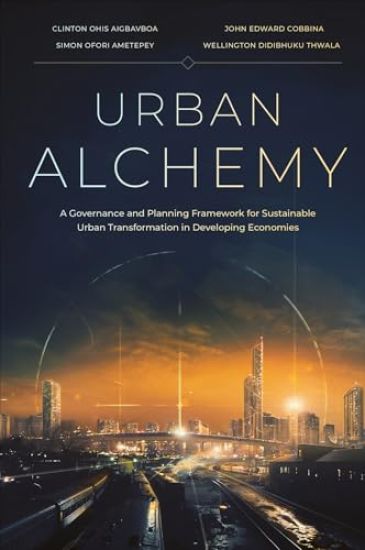
Urban Alchemy

Urban Alchemy

Clinton Ohis Aigbavboa; John Edward Cobbina; Simon Ofori Ametepey; Wellington Didibhuku Thwala

Emerald Publishing Limited
2025
sidottu
Urban Alchemy delves into the pressing challenges and unique opportunities facing developing countries in their quest for sustainable urban transformation. Readers are introduced to a comprehensive framework designed to guide policymakers, urban planners, and scholars in reimagining the future of cities. The chapters the book further strengthens the importance of academic and policy debate on urban governance and planning in the Sustainable Urban Transformation (SUT) process in developing countries through an extensive review of the literature on initiatives in developed or post-industrialized cities. The book contributes to the body of knowledge by providing an understanding of how governance and planning with other variables can help in achieving the SUT agenda in developing countries. It also opens up further academic discussion and motivates policymakers to develop policies and initiatives aimed at the creation of a better life for its citizens now and for future generations, inspiring a new era of sustainable urban planning.
A Practical Research Process for Developing a Sustainable Built Environment in Emerging Economies

A Practical Research Process for Developing a Sustainable Built Environment in Emerging Economies

Andrew Ebekozien; Clinton Ohis Aigbavboa; Wellington Didibhuku Thwala

TAYLOR FRANCIS LTD
2025
sidottu
A Practical Research Process for Developing a Sustainable Built Environment in Emerging Economies aims to fill the dearth of practical research guidance and reference material with specific focus on the built environment in developing countries. Global policy agendas such as Agenda 2030 (the SDGs) highlight the importance and growth of research and knowledge from emerging nations who are increasingly contributing to research that is critical for development and advancement. The role of built environment practitioners will continue to evolve by building on the sound foundations laid down by the professions and by exploiting to the full the new technologies available to us through conducting innovative research, but more guidance on the research process is necessary to ensure the integrity and quality of the output. This book has been structured so that each chapter is largely free-standing, allowing the reader (undergraduate, postgraduate, or practitioner) to reference the material with ease. It aims to provide practical guidance on conducting research and on writing a dissertation or report and begins by considering the general research background in a built environment context. It then covers research ethics, before moving on to discuss the importance of selecting the right research topic and title and writing a clear abstract. The chapters then cover introducing a research project, and the authors include a section on the problem statement, research questions, aims and objectives, research gap(s), and motivations for the study. The book goes on to cover the literature review section, theoretical and conceptual frameworks, the various types of methodological approaches, and when to apply them. The findings section, discussion of the results, and the study’s implications are then discussed, before the final chapters cover the conclusion and recommendations. The book provides a useful reference for higher education students, graduates, postgraduates, and practitioners engaged in all aspects of construction and built environment research.
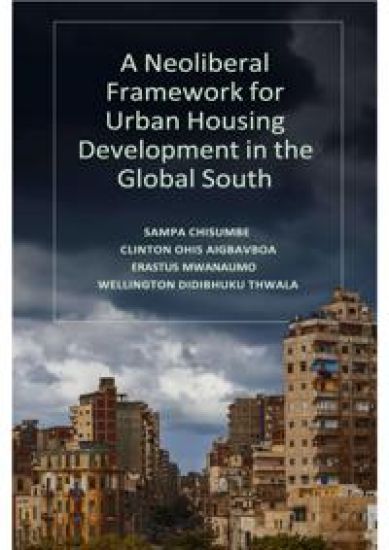
A Neoliberal Framework for Urban Housing Development in the Global South

A Neoliberal Framework for Urban Housing Development in the Global South

Sampa Chisumbe; Clinton Ohis Aigbavboa; Erastus Mwanaumo; Wellington Didibhuku Thwala

Emerald Publishing Limited
2024
sidottu
Cities in developing countries are faced with housing challenges that differ from country to country. The reasons for and the nature of these challenges differ. For cities in sub-Saharan African countries, many residents live in unplanned settlements. As a result, most residents lack decent housing as well as access to basic services. This is due to, among other factors, ineffective urban planning, weak urban governance, low private sector involvement, and lack of access to affordable housing finance – yet few empirical studies have investigated and developed frameworks aimed at improving urban housing. A Neoliberal Framework for Urban Housing Development in the Global South highlights the factors which predict urban housing development from developing countries’ perspective, providing a guide for countries in the sub-Sahara, where governments have limited financial resources competing among several needs. Anchored on neoliberalism, it argues that urban housing development is an eight-factor construct consisting of legal framework, tenure, stakeholder coordination, stakeholder participation, stakeholder capacity, adaptive housing regulations, housing finance, and governance. The authors outline the role of the state in creating an enabling environment for other stakeholders to participate in the provision of affordable housing for all.
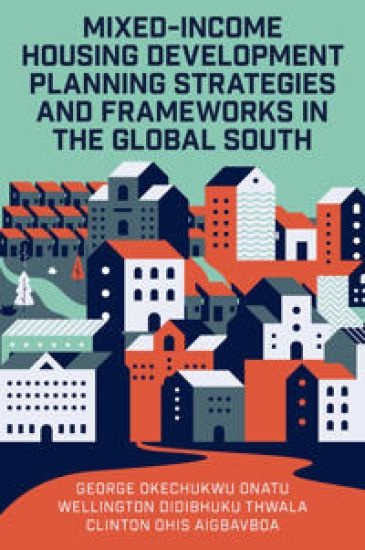
Mixed-Income Housing Development Planning Strategies and Frameworks in the Global South

Mixed-Income Housing Development Planning Strategies and Frameworks in the Global South

George Okechukwu Onatu; Wellington Didibhuku Thwala; Clinton Ohis Aigbavboa

Emerald Publishing Limited
2023
sidottu
Nearly 1.6 billion people worldwide are living in inadequate conditions, according to a recent United Nations report. Local authorities are running out of ways to tackle the increasing challenges of affordable housing. In South Africa, this issue is compounded by historical apartheid and spatial segregation. However, mixed-income housing has proven an effective strategy for alleviating the concentrated poverty that marginalizes certain communities. Functioning as a toolkit for inclusive urban planning, Mixed-Income Housing Development Planning Strategies and Frameworks in the Global South evaluates how this framework meets specific socio-economic goals as opposed taking a broad overview of development. Exploring the relevant policies, planning, and legislation that have guided human settlements in South Africa, the authors consider how best to combat residential segregation, informal settlements, and the exclusive allocation of public housing units to the poorest of the poor. Additional case studies from the USA, Australia, Netherlands, Brazil, Nigeria, Botswana, and Ghana compare emerging building strategies and their benefits, including spatial integration, improved access to social services and other infrastructure, and the promotion of local economic development (LED). Mixed-income housing development has been described as the only way to confront increasing urban poverty and segregation in our built environment. Analysing past projects and focusing on future trends and trajectories, this book acts as both a model for understanding the planning and management of this framework, and a foundation for future research.
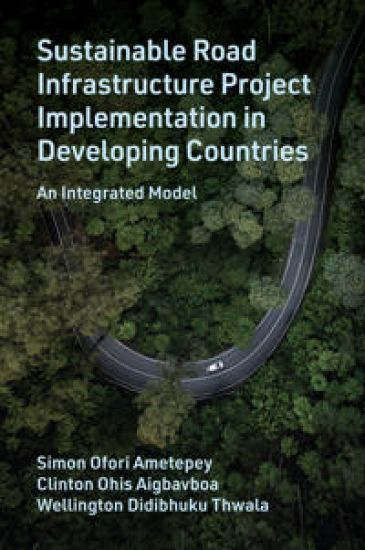
Sustainable Road Infrastructure Project Implementation in Developing Countries

Sustainable Road Infrastructure Project Implementation in Developing Countries

Simon Ofori Ametepey; Clinton Ohis Aigbavboa; Wellington Didibhuku Thwala

Emerald Publishing Limited
2023
sidottu
Seven of the seventeen United Nations Sustainable Development Goals (UNSDGs) are directly related to sustainable infrastructure development. The majority of sectors, including the road infrastructure sector, are under intense pressure to find financially feasible, socially acceptable, and environmentally conscientious project outcomes or techniques that will result in sustainable road infrastructure development (SRID). Sustainable Road Infrastructure Project Implementation in Developing Countries presents a model for implementing sustainable road infrastructure projects in developing countries. Providing readers with comprehensive theoretical and practical directions on implementing sustainable road infrastructure projects in developing countries successfully, the authors discuss the factors which influence the implementation of sustainable road infrastructure projects, including the drivers, barriers, benefits, and determinants of sustainable road project implementation. The model offers road infrastructure stakeholders with a precise and functional tool that promotes collaboration, common language and comprehension, engagement and interaction among all individuals and institutions involved in SRIP implementation. It is beneficial to both professionals and scholars, in the area of architecture; building technology; civil engineering; sustainable/green construction and other disciplines in the built industry.
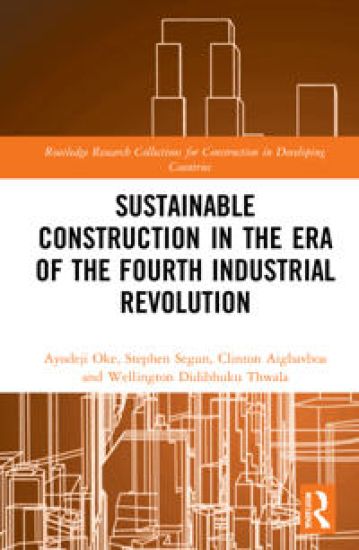
Sustainable Construction in the Era of the Fourth Industrial Revolution

Sustainable Construction in the Era of the Fourth Industrial Revolution

Ayodeji Emmanuel Oke; Clinton Aigbavboa; Seyi S. Stephen; Wellington Didibhuku Thwala

TAYLOR FRANCIS LTD
2023
nidottu
This book provides readers with an understanding of various concepts, benefits, and practices that the adoption of Fourth Industrial Revolution (4IR) technolo>gies can bring when working towards sustainable construction goals. As digitalization continues to advance rapidly, the pressures on stakeholders in the architecture, engineering, construction, and operation (AECO) industry to revamp and restructure their activities and outputs become increasingly prev>alent. This research book explains the importance of various digital tools and principles to achieve sustainable construction projects. It adopts various stand>ards and concepts to highlight how 4IR technologies could assist and accelerate construction sustainability. It is the first book to link construction management with various digital tools to enhance construction projects’ sustainability. It also provides an in-depth insight into the concept of sustainable construction 4.0 across both developing and developed countries for construction professionals, sustainability experts, researchers, educators, and other stakeholders. The book can be adopted as a research guide, framework, and reference on sustainable construction, the concept of sustainable projects, digitalization in the construction industry, and the 4IR.
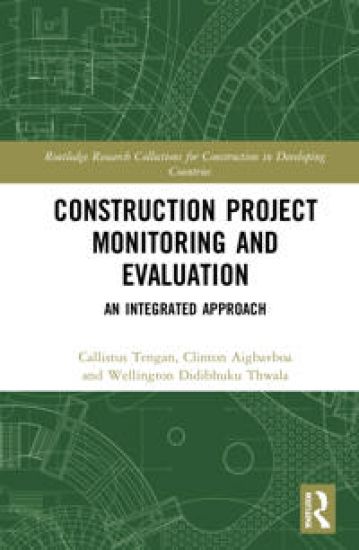
Construction Project Monitoring and Evaluation

Construction Project Monitoring and Evaluation

Callistus Tengan; Clinton Aigbavboa; Wellington Didibhuku Thwala

TAYLOR FRANCIS LTD
2023
nidottu
This book will provide readers with an in-depth theoretical awareness and practical guidance on the implementation of an effective monitoring and evaluation (M&E) system to ensure construction projects meet approved quality, cost, time and social sustainability objectives. The authors discuss the drivers, challenges, determinants and benefits of effective M&E implementation together with the theories and models underpinning construction project M&E practices. Further, a comparative overview of M&E practices in developed and developing countries is presented to elucidate the best practices. The book first conceptualizes M&E as a five-factor model comprising stakeholder involvement, budgetary allocation and logistics, technical capacity and training, leadership, and communication. It then presents an M&E case study on the Ghanaian construction industry before expanding on the idea of M&E systems as an effective tool for project performance and in optimizing a project’s contribution to society and the environment. The book further provides guidance on M&E practice for construction project managers, investors, professionals, researchers and other stakeholders and is therefore of interest to those in architecture, construction engineering, planning, project management and development studies.
An Integrated Infrastructure Delivery Model for Developing Economies

An Integrated Infrastructure Delivery Model for Developing Economies

Rembuluwani Netshiswinzhe; Clinton Aigbavboa; Wellington Didibhuku Thwala

TAYLOR FRANCIS LTD
2023
sidottu
This book explores the attributes of an integrated model for infrastructure delivery as a means to achieve high impact investing, sustainable growth and development in a developing economy. An Integrated Infrastructure Delivery Model for Developing Economies: Planning and Delivery Management Attributes is premised on the understanding that one of the most significant barriers to efficient and effective infrastructure delivery is the nature and extent of fragmentation in the ways in which infrastructure projects are planned, designed, and delivered. Using a Delphi method, the research presented in this book examines the infrastructure delivery models and practices that have been employed in South Africa and other developing countries, and in doing so presents eight attributes for integrated infrastructure delivery. These are: (i) developing a common vision for the community, (ii) stakeholder participation, (iii) integrated project development and scoping, (iv) access to planning information, (v) cross-sectoral planning, (vi) integrated infrastructure master plans, (vii) statutory and regulatory compliance and (viii) integrated contractual frameworks. The book presents a practical model that can serve as a guide and a manual for project planning and development to achieve integrated infrastructure delivery in developing economies. The proposed model should serve as a framework to inform future planning and programming of infrastructure projects within the public sector space. Furthermore, the application of the model will help resolve the problems of fragmentation and lack of coordination in how infrastructure projects are planned and implemented. This book will be beneficial to infrastructure practitioners, policymakers, researchers and academics who pursue best practice models to improve the delivery and management of infrastructure.
Construction Supply Chain Management in the Fourth Industrial Revolution Era

Construction Supply Chain Management in the Fourth Industrial Revolution Era

Temidayo Osunsanmi; Clinton Ohis Aigbavboa; Wellington Didibhuku Thwala; Ayodeji E. Oke

Emerald Publishing Limited
2022
sidottu
Supply chain management in the construction industry has passed through different eras – yet throughout, the construction industry has experienced fragmentation, late project delivery and other Gordian Knots due to its slow adoption of innovative modern technologies and principles in the supply chain processes. Addressing the need to harmonise the construction supply chain and establish the industry as the lynchpin of the economy, Construction Supply Chain Management in the Fourth Industrial Revolution Era acts as a roadmap, re-aligning the activities of the construction supply chain stakeholders with the principles and tenets of Industry 4.0. Gathering evidence on both the benefits and disruptive potentials within the current construction supply chain management domain, this collection determines the acceptable practice and standard for regulatory bodies and managers, appealing also to researchers as it expands the frontiers of knowledge in the fourth industrial era.
Measuring Productivity of Labour-Intensive Work Practices in Road Construction in Africa

Measuring Productivity of Labour-Intensive Work Practices in Road Construction in Africa

Emmanuel Bamfo-Agyei; Clinton Aigbavboa; Wellington Didibhuku Thwala

TAYLOR FRANCIS LTD
2022
sidottu
This book examines an issue of constant concern in the construction industry, that of productivity. Using data from Ghana and South Africa, it presents research into the productivity of local contractors in these countries whilst examining the predominance of labour-intensive production methods. The book begins by considering the theoretical and conceptual perspectives on labour productivity in the construction industry in the existing literature, before reviewing current productivity measurement frameworks. The book then explores the productivity of labour-intensive public works projects in South Africa and Ghana alongside a general discussion of key factors affecting construction productivity in these countries. Whilst the focus is on road construction, the framework developed can be applied to any number of construction projects to measure, and ultimately improve productivity. This book is useful reading for researchers and practitioners looking to understand the factors influencing labour productivity in construction at both the industry and the project level, including construction managers, quantity surveyors, cost engineers and project managers.