Kirjojen hintavertailu – 12 903 724 kirjaa ja 27 kauppaa

Kirjailija

Wendy Dobson

Kirjat ja teokset yhdessä paikassa: 6 kirjaa, julkaisuja vuosilta 1998–2019, suosituimpiin kuuluu Partners and Rivals. Vertaile teosten hintoja ja tarkista saatavuus suomalaisista kirjakaupoista.

6 kirjaa

Kirjojen julkaisuvuodet: 1998–2019.

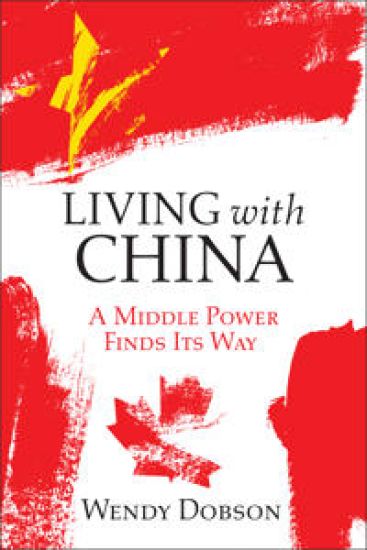
Living with China

Living with China

Wendy Dobson

University of Toronto Press
2019
sidottu
Living with China urges Canadians to adopt a forward-looking China strategy that recognizes the significance of China’s history and values for its development model of authoritarian state capitalism and managed markets. Market reforms will be key drivers of China’s long-term growth, yet Chinese policy is ambivalent about the potential dangers of spontaneous market forces undermining the Party’s central goal of political stability. The tensions between market forces and state intervention and between political and economic goals are identified in the book’s early chapters that outline what Canadians need to know about the Chinese economy. The book also examines how Chinese enterprises are going global through direct investments and participation in the dynamic but troubled Belt and Road Initiative. In an environment of rising tensions over trade and technology – evident in negotiating the USMCA with the United States and doing business with Huawei, the China-based telecommunication giant – Canada needs a China strategy. Living with China is one of the first comprehensive volumes on a forward-looking Canada-China strategy. The recommended strategy includes more leadership from top officials, building a Canada brand, strengthening our international human capital, addressing security issues, and negotiating bilateral trade and investment liberalization. Dobson also acknowledges the importance of addressing such key issues as intellectual property protection, cybersecurity, and value differences such as respect for individual rights.
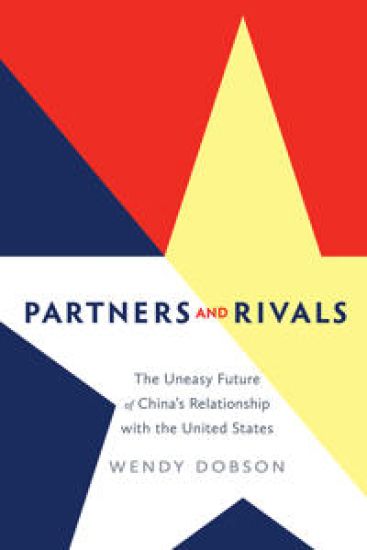
Partners and Rivals

Partners and Rivals

Wendy Dobson

University of Toronto Press
2013
sidottu
Until the global financial crisis, China was thought to be decades away from overtaking the United States as the world’s largest economy. But while the US skirted economic stagnation, China was able to successfully navigate the crisis, and its growth continues to accelerate. Has the time arrived to re-evaluate our assumptions about the current world order? Will China openly contest the United States’ status, unchallenged since the Second World War, as a world leader? Will conflict be inevitable, or would its costs be unthinkable in a globalized world economy? Partners and Rivals, the latest book from acclaimed economist Wendy Dobson, examines the central role that China and the United States will play on the global stage in the next half-century. Dobson provides a balanced and accessibly written understanding of China’s domestic challenges, as well as an analysis of both the United States and China’s goals on the world stage. Demonstrating why neither power will be able to dominate the other, the book emphasizes that they will need to cooperate and work together in the coming decades because of their deep economic interdependence.
Gravity Shift

Gravity Shift

Wendy Dobson

Rotman/UTP Publishing
2010
pokkari
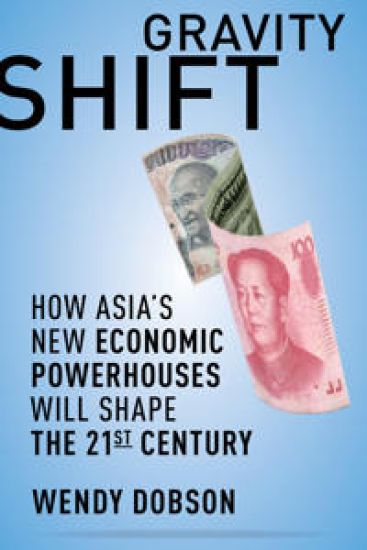
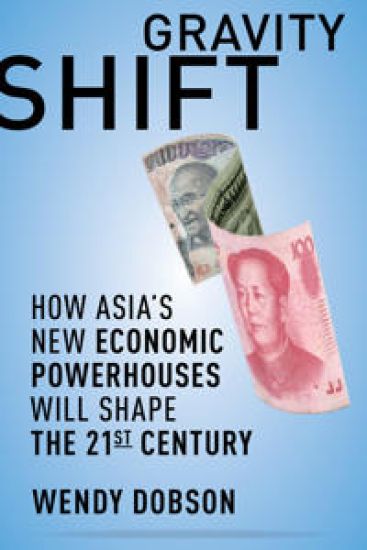
The rapid growth, diversity and strategic importance of the emerging Chinese and Indian economies have fired the world's imagination with both hopes and fears for the future. Wendy Dobson's perceptive analysis of changing institutions, demographics, and politics paints a thoughtful and surprising picture of India and China as economic powerhouses in the year 2030. Examining past events and current trends, Gravity Shift offers bold predictions of the changes we can expect in key economic and political institutions in China and India, changes that will inform and shape tomorrow's business decisions. Dobson's work anticipates that by 2030, China's economy will be larger than those of the United States, India, and Japan, though its population will be ageing and its growth slowing. India will also come into its own, making major strides in modernizing its vast rural population, vanquishing illiteracy, and emerging as an innovative manufacturing powerhouse. A China-India free trade agreement could well become the foundation of a cooperative Asian economic community. As the world re-evaluates business practices in the wake of the global economic crisis, Gravity Shift provides a clear vision of how India and China will reshape the Asian region, to inform and transform global economic institutions.
Gravity Shift

Gravity Shift

Wendy Dobson

Rotman/UTP Publishing
2009
sidottu
The rapid growth, diversity and strategic importance of the emerging Chinese and Indian economies have fired the world's imagination with both hopes and fears for the future. Wendy Dobson's perceptive analysis of changing institutions, demographics, and politics paints a thoughtful and surprising picture of India and China as economic powerhouses in the year 2030. Examining past events and current trends, Gravity Shift offers bold predictions of the changes we can expect in key economic and political institutions in China and India, changes that will inform and shape tomorrow's business decisions. Dobson's work anticipates that by 2030, China's economy will be larger than those of the United States, India, and Japan, though its population will be ageing and its growth slowing. India will also come into its own, making major strides in modernizing its vast rural population, vanquishing illiteracy, and emerging as an innovative manufacturing powerhouse. A China-India free trade agreement could well become the foundation of a cooperative Asian economic community. As the world re-evaluates business practices in the wake of the global economic crisis, Gravity Shift provides a clear vision of how India and China will reshape the Asian region, to inform and transform global economic institutions.
World Capital Markets – Challenge to the G–10

World Capital Markets – Challenge to the G–10

Wendy Dobson; Gary Clyde Hufbauer

The Peterson Institute for International Economics
2001
nidottu
It is often pointed out that "for every bad borrower, and for every failed project, there is also a culpable lender or investor." This observation is particularly apt for the debate now raging in the capital markets: should private bankers and investment managers bear a greater share of the costs when financial crises erupt in emerging economies? Critics who have analyzed the "plumbing" of the world's financial architecture have thus far devoted enormous attention to the demand side-structural weaknesses in emerging markets. They have excoriated the IMF for ineptitude and policy mistakes. But the authors of this study argue that financial leaders of the G-10 nations (industrial nations that were hardly affected by the crises of 1997-98) owe a responsibility-both to their own citizens and the emerging markets-to take a far more vigilant stance. Dobson and Hufbauer criticize the supply side of world capital markets and ask how G-10 capital suppliers can reform their own financial systems to make the world safe for large-scale international capital flows. They draw a comprehensive picture of international finance through an extensive review of capital flows, the major financial players behind these flows, and the balance between costs and benefits of international capital movements. The authors analyze the implications of changing the rules of the game and recommend specific policy measures.
Financial Services Liberalization in the WTO

Financial Services Liberalization in the WTO

Wendy Dobson; Pierre Jacquet

The Peterson Institute for International Economics
1998
nidottu
The stakes were high in the financial services negotiations that were completed in December 1997 at the World Trade Organization (WTO). The developing countries were eager to strengthen and modernize their financial systems. The industrial countries sought access to important emerging markets in Latin America and Asia for their banking, insurance, brokerage, and other financial services firms. In the end, both sides agreed to bind unilateral and regional financial opening and reform that was already under way in many countries, industrial and developing alike. The authors assess the agreement reached in the WTO, identifying its shortcomings and suggesting ways that it can be bolstered in future negotiations. They analyze the impact of the agreement, and of the Asian financial crisis, on the state of liberalization and market opening in several important emerging-market economies-including a summary of the remaining obstacles to establishing efficient and open financial sectors. This book estimates the benefits of opening the financial sector to foreign competition. It assesses the macroeconomic benefits that flow from an improved financial sector and discusses the risks and costs involved in liberalization. The authors conclude with a blueprint for future efforts to liberalize financial services and emphasize that the recent financial services agreement represented only a beginning step in that process.