
Kirjailija
Wendy Doniger
Kirjat ja teokset yhdessä paikassa: 39 kirjaa, julkaisuja vuosilta 1998–2026, suosituimpiin kuuluu Mahabharata. Vertaile teosten hintoja ja tarkista saatavuus suomalaisista kirjakaupoista.
39 kirjaa
Kirjojen julkaisuvuodet: 1998–2026.

Animals and the Human Imagination
Jonathan Safran Foer; Wendy Doniger
Columbia University Press
2012
sidottu
Human beings have long imagined their subjectivity, ethics, and ancestry with and through animals, yet not until the mid-twentieth century did contemporary thought reflect critically on animals' significance in human self-conception. Thinkers such as French philosopher Jacques Derrida, South African novelist J. M. Coetzee, and American theorist Donna Haraway have initiated rigorous inquiries into the question of the animal, now blossoming in a number of directions. It is no longer strange to say that if animals did not exist, we would have to invent them. This interdisciplinary and cross-cultural collection reflects the growth of animal studies as an independent field and the rise of "animality" as a critical lens through which to analyze society and culture, on a par with race and gender. Essays consider the role of animals in the human imagination and the imagination of the human; the worldviews of indigenous peoples; animal-human mythology in early modern China; and political uses of the animal in postcolonial India. They engage with the theoretical underpinnings of the animal protection movement, representations of animals in children's literature, depictions of animals in contemporary art, and the philosophical positioning of the animal from Aristotle to Derrida. The strength of this companion lies in its timeliness and contextual diversity, which makes it essential reading for students and researchers while further developing the parameters of the discipline.

Animals and the Human Imagination
Jonathan Safran Foer; Wendy Doniger
Columbia University Press
2012
pokkari
Human beings have long imagined their subjectivity, ethics, and ancestry with and through animals, yet not until the mid-twentieth century did contemporary thought reflect critically on animals' significance in human self-conception. Thinkers such as French philosopher Jacques Derrida, South African novelist J. M. Coetzee, and American theorist Donna Haraway have initiated rigorous inquiries into the question of the animal, now blossoming in a number of directions. It is no longer strange to say that if animals did not exist, we would have to invent them. This interdisciplinary and cross-cultural collection reflects the growth of animal studies as an independent field and the rise of "animality" as a critical lens through which to analyze society and culture, on a par with race and gender. Essays consider the role of animals in the human imagination and the imagination of the human; the worldviews of indigenous peoples; animal-human mythology in early modern China; and political uses of the animal in postcolonial India. They engage with the theoretical underpinnings of the animal protection movement, representations of animals in children's literature, depictions of animals in contemporary art, and the philosophical positioning of the animal from Aristotle to Derrida. The strength of this companion lies in its timeliness and contextual diversity, which makes it essential reading for students and researchers while further developing the parameters of the discipline.

Wendy Doniger's foundational study is both modern in its engagement with a diverse range of religions and refreshingly classic in its transhistorical, cross-cultural approach. By responsibly analyzing patterns and themes across context, Doniger reinvigorates the comparative reading of religion, tapping into a wealth of narrative traditions, from the instructive tales of Judaism and Christianity to the moral lessons of the Bhagavad Gita. She extracts political meaning from a variety of texts while respecting the original ideas of each. A new preface confronts the difficulty of contextualizing the comparison of religions as well as controversies over choosing subjects and positioning arguments, and the text itself is expanded and updated throughout.

Wendy Doniger's foundational study is both modern in its engagement with a diverse range of religions and refreshingly classic in its transhistorical, cross-cultural approach. By responsibly analyzing patterns and themes across context, Doniger reinvigorates the comparative reading of religion, tapping into a wealth of narrative traditions, from the instructive tales of Judaism and Christianity to the moral lessons of the Bhagavad Gita. She extracts political meaning from a variety of texts while respecting the original ideas of each. A new preface confronts the difficulty of contextualizing the comparison of religions as well as controversies over choosing subjects and positioning arguments, and the text itself is expanded and updated throughout.
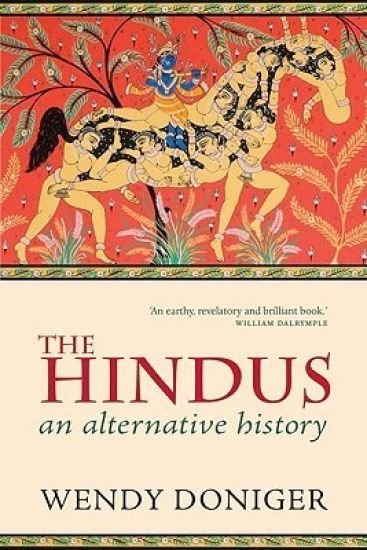
An engrossing and definitive narrative account of history and myth that offers a new way of understanding one of the world's oldest major religions, The Hindus elucidates the relationship between recorded history and imaginary worlds. Hinduism does not lend itself easily to a strictly chronological account: many of its central texts cannot be reliably dated even within a century; its central tenets karma, dharma, to name just two arise at particular moments in Indian history and differ in each era, between genders, and caste to caste; and what is shared among Hindus is overwhelmingly outnumbered by the things that are unique to one group or another. Yet the greatness of Hinduism - its vitality, its earthiness, its vividness - lies precisely in many of those idiosyncratic qualities that continue to inspire debate today. Wendy Doniger is one of the foremost scholars of Hinduism in the world. With her inimitable insight and expertise Doniger illuminates those moments within the tradition that resist forces that would standardize or establish a canon. Without reversing or misrepresenting the historical hierarchies, she reveals how Sanskrit and vernacular sources are rich in knowledge of and compassion toward women and lower castes; how they debate tensions surrounding religion, violence, and tolerance; and how animals are the key to important shifts in attitudes toward different social classes. The Hindus brings a fascinating multiplicity of actors and stories to the stage to show how brilliant and creative thinkers - many of them far removed from Brahmin authors of Sanskrit texts - have kept Hinduism alive in ways that other scholars have not fully explored. In this unique and authoritative account, debates about Hindu traditions become platforms from which to consider the ironies, and overlooked epiphanies, of history.

Hermeneutics, Politics, and the History of Religions
Christian Wedemeyer; Wendy Doniger
Oxford University Press Inc
2010
sidottu
This volume comprises papers presented at a conference marking the 50th anniversary of Joachim Wach's death, and the centennial of Mircea Eliade's birth. Its purpose is to reconsider both the problematic, separate legacies of these two major twentieth-century historians of religions, and the bearing of these two legacies upon each other. Shortly after Wach's death in 1955, Eliade succeeded him as the premiere historian of religions at the University of Chicago. As a result, the two have been associated with each other in many people's minds as the successive leaders of the so-called "Chicago School" in the history of religions. In fact, as this volume makes clear, there never was a monolithic Chicago School. Although Wach reportedly referred to Eliade as the most astute historian of religions of the day; the two never met, and their approaches to the study of religions differed significantly. Several dominant issues run through the essays collected here: the relationship between the two men's writings and their lives, and in Eliade's case, the relationship between his political commitments and his writings in fiction, history of religions, and autobiography. Both men's contributions to the field continue to provoke controversy and debate, and this volume sheds new light on these controversies and what they reveal about these two `scholars' legacies.

Hermeneutics, Politics, and the History of Religions
Christian Wedemeyer; Wendy Doniger
Oxford University Press Inc
2010
nidottu
This volume comprises papers presented at a conference marking the 50th anniversary of Joachim Wach's death, and the centennial of Mircea Eliade's birth. Its purpose is to reconsider both the problematic, separate legacies of these two major twentieth-century historians of religions, and the bearing of these two legacies upon each other. Shortly after Wach's death in 1955, Eliade succeeded him as the premiere historian of religions at the University of Chicago. As a result, the two have been associated with each other in many people's minds as the successive leaders of the so-called "Chicago School" in the history of religions. In fact, as this volume makes clear, there never was a monolithic Chicago School. Although Wach reportedly referred to Eliade as the most astute historian of religions of the day; the two never met, and their approaches to the study of religions differed significantly. Several dominant issues run through the essays collected here: the relationship between the two men's writings and their lives, and in Eliade's case, the relationship between his political commitments and his writings in fiction, history of religions, and autobiography. Both men's contributions to the field continue to provoke controversy and debate, and this volume sheds new light on these controversies and what they reveal about these two `scholars' legacies.
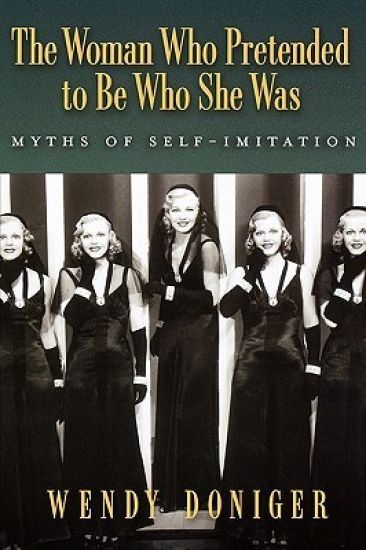
Many cultures have myths about self-imitation, stories about people who pretend to be someone else pretending to be them, in effect masquerading as themselves. This great theme, in literature and in life, tells us that people put on masks to discover who they really are under the masks they usually wear, so that the mask reveals rather than conceals the self beneath the self. In this book, noted scholar of Hinduism and mythology Wendy Doniger offers a cross-cultural exploration of the theme of self-impersonation, whose widespread occurrence argues for both its literary power and its human value. The stories she considers range from ancient Indian literature through medieval European courtly literature and Shakespeare to Hollywood and Bollywood. They illuminate a basic human way of negotiating reality, illusion, identity, and authenticity, not to mention memory, amnesia, and the process of aging. Many of them involve marriage and adultery, for tales of sexual betrayal cut to the heart of the crisis of identity. These stories are extreme examples of what we common folk do, unconsciously, every day. Few of us actually put on masks that replicate our faces, but it is not uncommon for us to become travesties of ourselves, particularly as we age and change. We often slip carelessly across the permeable boundary between the un-self-conscious self-indulgence of our most idiosyncratic mannerisms and the conscious attempt to give the people who know us, personally or publicly, the version of ourselves that they expect. Myths of self-imitation open up for us the possibility of multiple selves and the infinite regress of self-discovery. Drawing on a dizzying array of tales-some fact, some fiction-The Woman Who Pretended to Be Who She Was is a fascinating and learned trip through centuries of culture, guided by a scholar of incomparable wit and erudition.
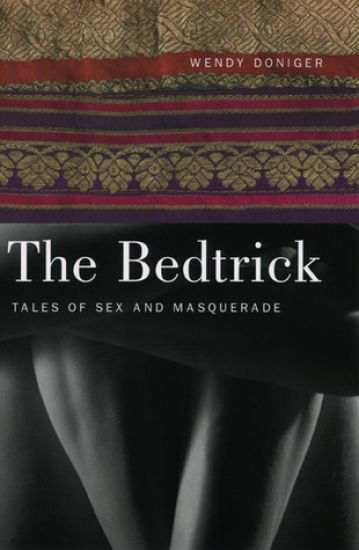
"Somehow I woke up one day and found myself in bed with a stranger." Meant literally or figuratively, this statement describes one of the best-known plots in world mythology and popular storytelling. In a tour that runs from Shakespeare to Hollywood and from Abraham Lincoln to Casanova, the erudite and irrepressible Wendy Doniger shows us the variety, danger, and allure of the "bedtrick," or what it means to wake up with a stranger. "The Bedtrick" brings together hundreds of stories from all over the world, from the earliest recorded Hindu and Hebrew texts to the latest items in the Weekly World News, to show the hilariously convoluted sexual scrapes that people get into and out of. Here you will find wives who accidentally commit adultery with their own husbands. You will learn that in Hong Kong the film "The Crying Game" was retitled "Oh No! My Girlfriend Has a Penis". And that President Clinton was not the first man to be identified by an idiosyncratic organ. Funny, sexy, and engaging, "The Bedtrick" is a masterful work of energetic story-telling and dazzling scholarship. Give it to your spouse and your lover.
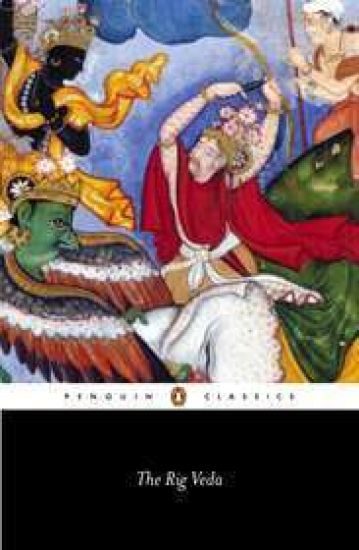
Gathers Vedic hymns about creation, death, sacrifice, ritual, and the various gods and characters of Hindu mythology, in a definitive translation that includes an updated bibliography, comprehensive notes, and informative introduction to the texts. Reprint.

Many cultures have myths about self-imitation, stories about people who pretend to be someone else pretending to be them, in effect masquerading as themselves. This great theme, in literature and in life, tells us that people put on masks to discover who they really are under the masks they usually wear, so that the mask reveals rather than conceals the self beneath the self. In this book, noted scholar of Hinduism and mythology Wendy Doniger offers a cross-cultural exploration of the theme of self-impersonation, whose widespread occurrence argues for both its literary power and its human value. The stories she considers range from ancient Indian literature through medieval European courtly literature and Shakespeare to Hollywood and Bollywood. They illuminate a basic human way of negotiating reality, illusion, identity, and authenticity, not to mention memory, amnesia, and the process of aging. Many of them involve marriage and adultery, for tales of sexual betrayal cut to the heart of the crisis of identity. These stories are extreme examples of what we common folk In this book, noted scholar of Hinduism and mythology Wen oniger offers a cross-cultural exploration of the theme or us to become travesties of ourselves, particularly as we age and change. We often slip carelessly across the permeable boundary between the un-self-conscious self-indulgence of our most idiosyncratic mannerisms and the conscious attempt to give the people who know us, personally or publicly, the version of ourselves that they expect. Myths of self-imitation open up for us the possibility of multiple selves and the infinite regress of self-discovery. Drawing on a dizzying array of tales-some fact, some fiction-The Woman Who Pretended to Be Who She Was is a fascinating and learned trip through centuries of culture, guided by a scholar of incomparable wit and erudition.

The classic novel of a middle-aged man's affair with a worldly younger woman
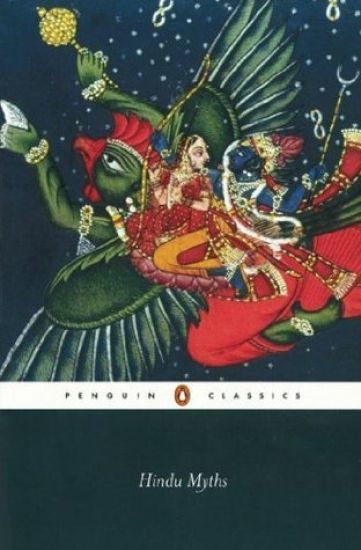
Recorded in sacred Sanskrit texts, including the Rig Veda and the Mahabharata, Hindu Myths are thought to date back as far as the tenth century BCE. Here in these seventy-five seminal myths are the many incarnations of Vishnu, who saves mankind from destruction, and the mischievous child Krishna, alongside stories of the minor gods, demons, rivers and animals including boars, buffalo, serpents and monkeys. Immensely varied and bursting with colour and life, they demonstrate the Hindu belief in the limitless possibilities of the world - from the teeming miracles of creation to the origins of the incarnation of Death who eventually touches them all.
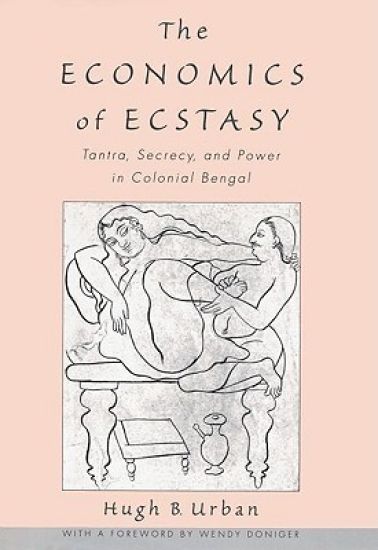
This is a study of the Bengali Kartabhaja sect and its place in the broader movement of Tantrism, an Indian religious movement employing purposely shocking sexual language and rituals. Urban looks closely at the relationship between the rise of the Kartabhajas, who flourished at the turn of the 19th century, and the changing economic context of colonial Bengal. Made up of the poor lower classes laboring in the marketplaces and factories of Calcutta, the Kartabhajas represent "the underworld of the imperial city." Urban shows that their esoteric poetry and songs are in fact saturated with the language of the marketplace and the bazaar, which becomes for them the key metaphor used to communicate secret knowledge and mystical teachings.

At this time of heightened political sensitivities, it may seem impossible to make serious comparisons among different cultures. And at a time when human difference is so relentlessly celebrated, it may even seem impossible to talk about the traditions and experiences that join us across race, religion, and nation. Wendy Doniger offers a powerful antidote to the paralysis of postcolonial intellectual life. In this spirited, enlightening book, she shows just how to make sense of, and learn from, the extraordinary diversity of cultures past and present. Tapping a wealth of traditions, from the Hebrew Bible to the Bhagavad Gita, Doniger crafts a new lens for examining other cultures, and finding in the world's myths--its sacred stories--a way to talk about experiences shared across time and space. "Of all things made with words," Doniger writes, "myths span the widest of human concerns, human paradoxes." Myths, she shows, bridge the cosmic and the familiar, the personal and the abstract, the theological and the political. They encourage us to draw various, even opposed, political meanings from a single text as it travels through different historical contexts. And she demonstrates how studying myths from cultures other than our own can be exhilarating and illuminating. Myth, Doniger shows, provides a near-perfect entree to another culture. Even if scholars such as Freud, Jung, and Joseph Campbell typically overstated the universality of major myths and suppressed the distinctive natures of other cultures, postcolonial critics are wrong to argue that nothing good can come from a systematic comparative study of human cultures. Doniger offers an engaged, expansive critical tool kit for doing just that. She suggests critical and responsible ways in which to compare stories--or texts or myths or traditions--from different cultures by revealing patterns of truth from themes that recur time and again. In this book, Doniger helps expand the arena of meaning we live in, leaping, in her words, "from myth to myth as if they were stepping stones over the gulf that seems to separate cultures." She enables us to see, at last, the "implied spider" that weaves the web of meaning that sustains all human cultures-the fabric of our shared humanity.
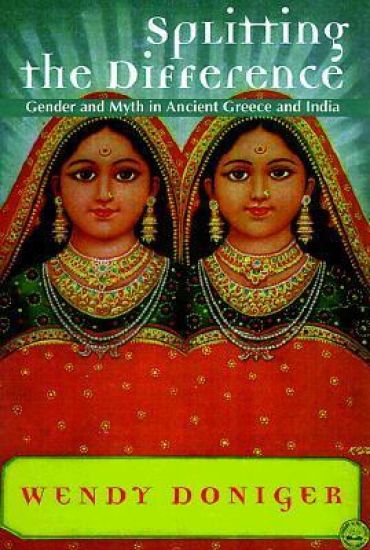
Hindu and Greek mythologies teem with stories of women and men who are doubled, who double themselves, who are seduced by gods doubling as mortals and whose bodies are split or divided. This text recounts and compares a vast range of these tales from ancient Greece and India, with occasional recourse to more recent "double features" from "Dr. Jekyll and Mr. Hyde" to "Face/Off." Wendy Doniger argues that myth responds to the complexities of the human condition by multiplying or splitting its characters into unequal parts, and these sloughed and cloven selves animate mythology's prodigious plots of sexuality and mortality. Doniger's comparisons show that ultimately differences in gender are more significant than differences in culture; Greek and Indian stories of doubled women resemble each other more than they do tales of doubled men in the same culture. In casting Hindu and Greek mythologies as shadows of each other, Doniger shows that culture is sometimes but the shadow of gender.

Jean Dutourd's A Dog's Head is a wonderful piece of magical realism, reminiscent of Voltaire, Borges and Kafka. With biting wit, Dutourd presents the story of Edmund Du Chaillu, a boy born, to his bourgeois parents's horror, with the head of a spaniel. Edmund must endure his school-mate's teasing as well as an urge to carry a newspaper in his mouth. This is the story of his life, trials, and joys as he searches for a normal life of worth and love. "Dutourd is a fine craftsman, whose work has the classic virtues of brevity, lucidity, and concentration. He has written a sardonic divertissement that concerns itself with fundamental problems of man's existence-a tale that is sad-eyed, witty, and often very funny."--Charles J. Rolo, New York Times Book Review "A tiny masterpiece in the French classical tradition... Stylish, elegant and witty, and told with an apparent lightheartedness that points to rather than obscures the hero's essential tragedy."--P. L. Travers, New York Herald Tribune "Wit, a good deal of shrewd classical allusion, and a Voltarian satire are the book's assets." --Edmund Fuller, Chicago Tribune "The work of an expert craftsman and of a careful writer of prose, ending with the rarest gift in modern letters: the comic spirit."--Henri Peyre, The Saturday Review "Dutourd might well have dropped his story at this point, had it been his intention simply to excoriate the human race for its treatment of those who are physically afflicted. Instead, he presses on in his terse, deadpan prose to teach a lesson to the afflicted of the world as well."--Time "A Dog's Head is one of the most curious, most beautifully conceived and written fantasies you've ever come across."--J. H. Jackson, San Francisco Chronicle "A Dog's Head is an excellent joke in the worst possible taste, and its author, M. Jean Dutourd, is a satirist of the first rank."--New Yorker

At this time of heightened political sensitivities, it may seem impossible to make serious comparisons among different cultures. And at a time when human difference is so relentlessly celebrated, it may even seem impossible to talk about the traditions and experiences that join us across race, religion, and nation. Wendy Doniger offers a powerful antidote to the paralysis of postcolonial intellectual life. In this spirited, enlightening book, she shows just how to make sense of, and learn from, the extraordinary diversity of cultures past and present. Tapping a wealth of traditions, from the Hebrew Bible to the Bhagavad Gita, Doniger crafts a new lens for examining other cultures, and finding in the world's myths--its sacred stories--a way to talk about experiences shared across time and space. "Of all things made with words," Doniger writes, "myths span the widest of human concerns, human paradoxes." Myths, she shows, bridge the cosmic and the familiar, the personal and the abstract, the theological and the political. They encourage us to draw various, even opposed, political meanings from a single text as it travels through different historical contexts. And she demonstrates how studying myths from cultures other than our own can be exhilarating and illuminating. Myth, Doniger shows, provides a near-perfect entree to another culture. Even if scholars such as Freud, Jung, and Joseph Campbell typically overstated the universality of major myths and suppressed the distinctive natures of other cultures, postcolonial critics are wrong to argue that nothing good can come from a systematic comparative study of human cultures. Doniger offers an engaged, expansive critical tool kit for doing just that. She suggests critical and responsible ways in which to compare stories--or texts or myths or traditions--from different cultures by revealing patterns of truth from themes that recur time and again. In this book, Doniger helps expand the arena of meaning we live in, leaping, in her words, "from myth to myth as if they were stepping stones over the gulf that seems to separate cultures." She enables us to see, at last, the "implied spider" that weaves the web of meaning that sustains all human cultures-the fabric of our shared humanity.