Kirjojen hintavertailu – 12 859 819 kirjaa ja 27 kauppaa

Kirjailija

Wendy L. Martinek

Kirjat ja teokset yhdessä paikassa: 4 kirjaa, julkaisuja vuosilta 2006–2015, suosituimpiin kuuluu American Judicial Process. Vertaile teosten hintoja ja tarkista saatavuus suomalaisista kirjakaupoista.

4 kirjaa

Kirjojen julkaisuvuodet: 2006–2015.

American Judicial Process

American Judicial Process

Pamela C. Corley; Artemus Ward; Wendy L. Martinek

Routledge
2015
sidottu
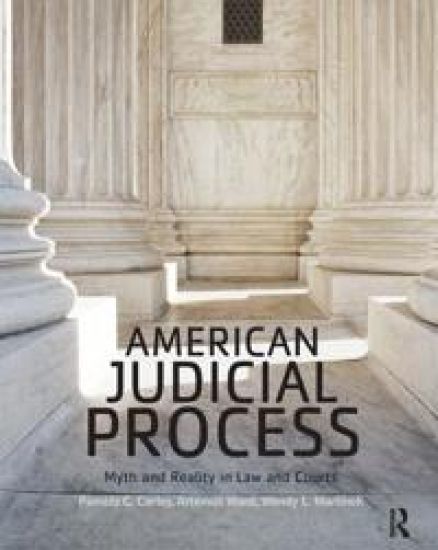
This text is a general introduction to American judicial process. The authors cover the major institutions, actors, and processes that comprise the U. S. legal system, viewed from a political science perspective. Grounding their presentation in empirical social science terms, the authors identify popular myths about the structure and processes of American law and courts and then contrast those myths with what really takes place. Three unique elements of this "myth versus reality" framework are incorporated into each of the topical chapters:1) "Myth versus Reality" boxes that lay out the topics each chapter covers, using the myths about each topic contrasted with the corresponding realities.2) "Pop Culture" boxes that provide students with popular examples from film, television, and music that tie-in to chapter topics and engage student interest.3) "How Do We Know?" boxes that discuss the methods of social scientific inquiry and debunk common myths about the judiciary and legal system. Unlike other textbooks, American Judicial Process emphasizes how pop culture portrays—and often distorts—the judicial process and how social science research is brought to bear to provide an accurate picture of law and courts. In addition, a rich companion website will include PowerPoint lectures, suggested topics for papers and projects, a test bank of objective questions for use by instructors, and downloadable artwork from the book. Students will have access to annotated web links and videos, flash cards of key terms, and a glossary.

American Judicial Process

American Judicial Process

Pamela C. Corley; Artemus Ward; Wendy L. Martinek

Routledge
2015
nidottu
This text is a general introduction to American judicial process. The authors cover the major institutions, actors, and processes that comprise the U. S. legal system, viewed from a political science perspective. Grounding their presentation in empirical social science terms, the authors identify popular myths about the structure and processes of American law and courts and then contrast those myths with what really takes place. Three unique elements of this "myth versus reality" framework are incorporated into each of the topical chapters:1) "Myth versus Reality" boxes that lay out the topics each chapter covers, using the myths about each topic contrasted with the corresponding realities.2) "Pop Culture" boxes that provide students with popular examples from film, television, and music that tie-in to chapter topics and engage student interest.3) "How Do We Know?" boxes that discuss the methods of social scientific inquiry and debunk common myths about the judiciary and legal system. Unlike other textbooks, American Judicial Process emphasizes how pop culture portrays—and often distorts—the judicial process and how social science research is brought to bear to provide an accurate picture of law and courts. In addition, a rich companion website will include PowerPoint lectures, suggested topics for papers and projects, a test bank of objective questions for use by instructors, and downloadable artwork from the book. Students will have access to annotated web links and videos, flash cards of key terms, and a glossary.
Judging on a Collegial Court

Judging on a Collegial Court

Virginia A. Hettinger; Stefanie A. Lindquist; Wendy L. Martinek

University of Virginia Press
2007
nidottu
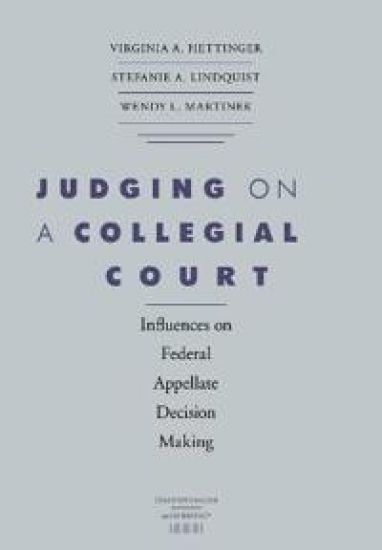
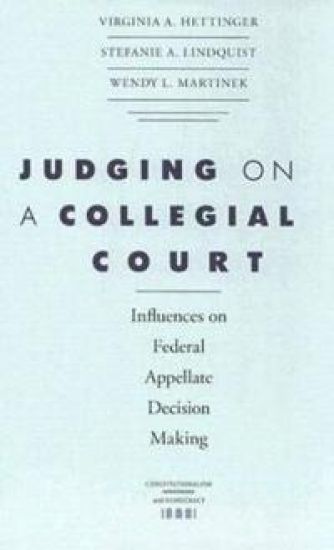
Dissensus is often viewed in the professional world as a starting point for collaboration; rather than leaving decisions to just one person, dissent offers the opportunity to rethink or reinvent an idea, leading, one hopes, to a better result. When dissensus occurs in a federal court, however, it raises the question of whether this difference of opinion maintains the integrity of the judiciary or undermines its legitimacy. In ""Judging on a Collegial Court: Influences on Federal Appellate Decision Making"", Virginia Hettinger, Stefanie Lindquist, and Wendy Martinek examine the dynamic that gives rise to such dissensus in federal appeals courts, revealing how the appellate process shapes the content and the consistency of the law.
Judging On Collegial Court

Judging On Collegial Court

Virginia A. Hettinger; Stefanie A. Lindquist; Wendy L. Martinek

University of Virginia Press
2006
sidottu
in the professional world as a starting point for collaboration; rather than leaving decisions to just one person, dissent offers the opportunity to rethink or reinvent an idea, leading, one hopes, to a better result. When dissensus occurs in a federal court, however, it raises the question of whether this difference of opinion maintains the integrity of the judiciary or undermines its legitimacy. In Judging on a Collegial Court: Influences on Federal Appellate Decision Making, Virginia Hettinger, Stefanie Lindquist, and Wendy Martinek examine the dynamic that gives rise to such dissensus in federal appeals courts, revealing how the appellate process shapes the content and the consistency of the law. The authors examine horizontal dissensus in the minority of cases in which there are dissenting or concurring--as opposed to unanimous--opinions. Primarily investigating why judges on the appeals courts agree or disagree with one another regarding the outcomes of the cases before them, the authors also examine vertical dissensus and ask why judges affirm or reverse lower court judges whose cases are decided on appeal. Focusing on the behavioral aspects of disagreement within a panel and between the levels of the federal judicial hierarchy, the authors reveal the impact of individual attitudes or preferences on judicial decision-making, and hence on political divisions in the broader society.