Kirjojen hintavertailu – 12 873 101 kirjaa ja 26 kauppaa

Kirjailija

Wendy Lower

Kirjat ja teokset yhdessä paikassa: 13 kirjaa, julkaisuja vuosilta 2011–2022, suosituimpiin kuuluu Hitler's Furies: German Women in the Nazi Killing Fields. Vertaile teosten hintoja ja tarkista saatavuus suomalaisista kirjakaupoista.

13 kirjaa

Kirjojen julkaisuvuodet: 2011–2022.

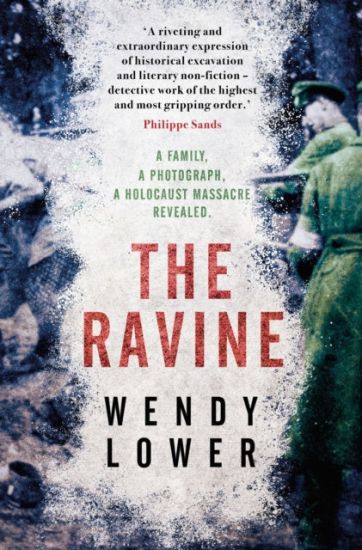
The Ravine: A Family, a Photograph, a Holocaust Massacre Revealed
A single photograph--an exceptionally rare "action shot" documenting the horrific murder of a Jewish family--drives a riveting forensic investigation by a gifted Holocaust scholar. In 2009, the acclaimed author of Hitler's Furies was shown a photograph just brought to the United States Holocaust Memorial Museum. The documentation of the Holocaust is vast, but there are virtually no images of a Jewish family at the actual moment of murder, in this case by German officials and Ukrainian collaborators. A Ukrainian shooter's rifle is inches from a woman's head, obscured in a cloud of smoke. The woman is bending forward, holding the hand of a barefoot boy. And--only one of the shocking revelations of Wendy Lower's brilliant ten-year investigation of this image--the photograph reveals the shins of another child, slipping from the woman's lap. Wendy Lower's gripping detective work--in Ukraine, Germany, Slovakia, Israel, and the United States--recovers astonishing layers of detail concerning the open-air massacres in Ukraine. The identities of the victims, of the killers--and, remarkably, of the photographer who openly took the picture, as a secret act of resistance--are dramatically uncovered. Finally, in the hands of this exceptional scholar, a single image unlocks a new understanding of the place of the family unit in the history and aftermath of Nazi genocide.
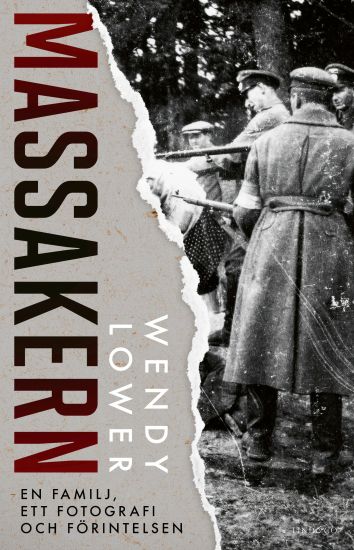
Massakern : en familj, ett fotografi och förintelsen
Under den nazistiska ockupationen av Ukraina mördades över en miljon judar i fullt dagsljus. Men förövarna var noggranna med att inte efterlämna några bevis. Wendy Lower snubblar över ett unikt fotografi som dokumenterar avrättningen av en mamma, hennes barn och männen som mördade dem. Fotot lämnar henne inte någon ro. Hon ägnar tio år åt att ta reda på vem som tagit bilden, vilka bödlarna var och vad som hände i Ukraina. Dådet placeras in i ett större sammanhang: det skräckinjagande folkmordet. Hennes efterforskningar i Ukraina, Slovakien, Tyskland och USA avslöjar den överraskande roll som fotografen spelade. Han måste, antog hon, ha varit medlem i en nazistorganisation. Sanningen var en annan. WENDY LOWER har tidigare utkommit med den hyllade boken Hitlers furier, som översatts till tjugotre språk. Hon är professor i historia vid Claremont McKenna College i Kalifornien i USA och rådgivare till U. S. Holocaust Memorial Museum. "Det är ett gediget arbete som ligger bakom den här boken. Lower lyckas på ett ofta gripande och effektivt sätt att växla perspektiv. Vi kastas mellan det nära, ångestfyllda mördandet i Myropil och det övergripande, ofattbara med hela Förintelsen." Göteborgs-Posten"En stark redogörelse av en historikers strävan att ge namn åt dessa judiska offer som mördades 1941 [...] Den här boken är en återupprättelse." The Times "Lower vänder verkligen på alla stenar när hon berättar om sitt sökande i denna fascinerande bok." Jewish News "En fängslande och utomordentlig framställning [...] detektivarbete av bästa och mest gripande märke." Philippe Sands "Hennes bok vittnar om kraften i att motverka okunskap med utbildning och vikten av att återupprätta värdigheten hos dem som förintats genom folkmord. En intelligent och starkt medkännande historisk kartläggning." Kirkus Reviews "[Lower] strävar efter att i detalj återskapa den här dagen i Myropil och avslöjar på så sätt det komplexa nätverk som möjliggjorde Förintelsen. Här lyckas hon verkligen väl." New York Times
The Ravine

The Ravine

Wendy Lower

Apollo
2021
nidottu
A strikingly original book about a terrible photograph – an exceptionally rare image documenting the horrific final moment of the murder of a family in Ukraine. A Times Book of the Year'A very rare kind of picture... To the murdered others, this book is an act of restitution' David Aaronovitch, The Times'Detective work of the highest and most gripping order' Philippe Sands'Lower's pursuit of the truth is both captivating and meticuous' TLS'Extraordinary and spell-binding' Daily Mail'One photograph. That's what it took to start Wendy Lower on an incredible journey of discovery' Deborah LipstadtThe terrible mass shootings in Poland and the Ukraine are often neglected in studies of the Holocaust, because the perpetrators were meticulously careful to avoid leaving any evidence of their actions. Wendy Lower stumbled across one such piece of evidence – a photograph documenting the shooting of a mother and her children and the men who killed them – and has crafted a forensically brilliant and moving study that brings the larger horror of the genocide into focus. Shortlisted for the Historical Writers' Association Non-Fiction Crown.
The Ravine: A Family, a Photograph, a Holocaust Massacre Revealed
A single photograph--an exceptionally rare "action shot" documenting the horrific final moment of the murder of a family--drives a riveting process of discovery for a gifted Holocaust scholarIn 2009, the acclaimed author of Hitler's Furies was shown a photograph just brought to the United States Holocaust Memorial Museum. The documentation of the Holocaust is vast, but there are virtually no images of a Jewish family at the actual moment of murder, in this case by German officials and Ukrainian collaborators. A Ukrainian shooter's rifle is inches from a woman's head, obscured in a cloud of smoke. She is bending forward, holding the hand of a barefooted little boy. And--only one of the shocking revelations of Wendy Lower's brilliant ten-year investigation of this image--the shins of another child, slipping from the woman's lap. Wendy Lower's forensic and archival detective work--in Ukraine, Germany, Slovakia, Israel, and the United States--recovers astonishing layers of detail concerning the open-air massacres in Ukraine. The identities of mother and children, of the killers--and, remarkably, of the Slovakian photographer who openly took the image, as a secret act of resistance--are dramatically uncovered. Finally, in the hands of this brilliant exceptional scholar, a single image unlocks a new understanding of the place of the family unit in the ideology of Nazi genocide.
The Ravine Lib/E: A Family, a Photograph, a Holocaust Massacre Revealed
A single photograph--an exceptionally rare "action shot" documenting the horrific final moment of the murder of a family--drives a riveting process of discovery for a gifted Holocaust scholarIn 2009, the acclaimed author of Hitler's Furies was shown a photograph just brought to the United States Holocaust Memorial Museum. The documentation of the Holocaust is vast, but there are virtually no images of a Jewish family at the actual moment of murder, in this case by German officials and Ukrainian collaborators. A Ukrainian shooter's rifle is inches from a woman's head, obscured in a cloud of smoke. She is bending forward, holding the hand of a barefooted little boy. And--only one of the shocking revelations of Wendy Lower's brilliant ten-year investigation of this image--the shins of another child, slipping from the woman's lap. Wendy Lower's forensic and archival detective work--in Ukraine, Germany, Slovakia, Israel, and the United States--recovers astonishing layers of detail concerning the open-air massacres in Ukraine. The identities of mother and children, of the killers--and, remarkably, of the Slovakian photographer who openly took the image, as a secret act of resistance--are dramatically uncovered. Finally, in the hands of this brilliant exceptional scholar, a single image unlocks a new understanding of the place of the family unit in the ideology of Nazi genocide.
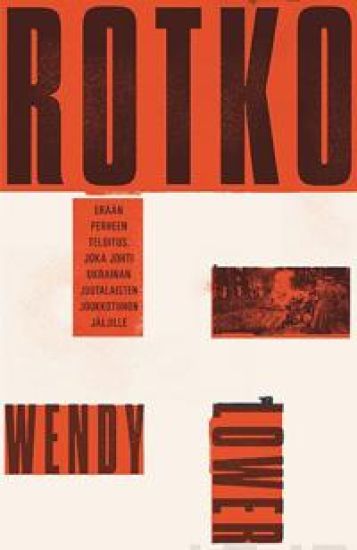
Rotko

Rotko

Wendy Lower

Otava
2021
sidottu
Palkittu holokaustitutkija selvittää Ukrainan juutalaisten kohtalon natsimiehityksen aikana ja laajentaa kuvaa kansanmurhan luonteesta. Valokuvassa on nainen lapsineen rotkon reunalla. Takana seisoo mies kivääri kädessään. Naisen pää peittyy savuun. Ase on juuri laukaistu. Vuonna 2009 holokaustitutkija Wendy Lower sai käsiinsä valokuvan juutalaisperheen murhasta Saksan valtaamassa Ukrainassa. Hirmuteko ei ollut poikkeuksellinen - natsimiehityksen aikana yli miljoona Ukrainan juutalaista murhattiin kirkkaassa päivänvalossa. Valokuva ei jättänyt Loweria rauhaan, ja kymmenen vuoden salapoliisityön aikana hän selvitti, keitä kuvassa ammutut olivat, kuka heidät ampui ja mitä Ukrainassa tapahtui. Juutalaisten kansanmurhasta tiedetään hyvin keskitysleirit, mutta varsinkin Itä-Euroopassa tavallisia juutalaisperheitä tuhottiin myös ampumalla paikan päällä, paikallisten avustuksella. Rotkon kuvaama juutalaisperheen kohtalo on avain joukkomurhaan - ja samalla se tarkentaa kuvaa holokaustin luonteesta. Wendy Lower (s. 1965) on historian professori ja työskentelee tutkijana sekä Yhdysvalloissa että Euroopassa. Hänen edellinen teoksensa Hitlerin raivottaret (2014) kertoi saksalaisnaisista, jotka lähtivät itään natsien miehittämille alueille ja toimivat miesten rinnalla Hitlerin tuhokoneistossa. Kahteenkymmeneenkolmeen maahan myyty teos nousi Suomessakin myyntilistojen kärkeen.
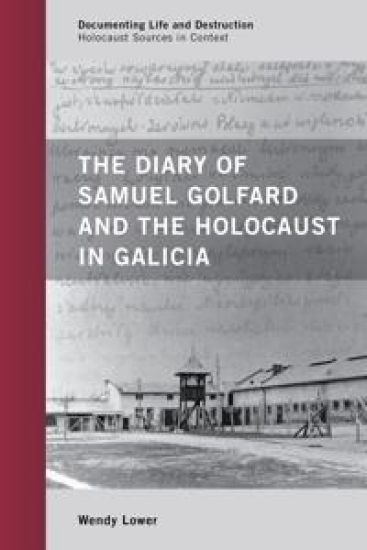
The Diary of Samuel Golfard and the Holocaust in Galicia
The Diary of Samuel Golfard and the Holocaust in Galicia examines the contents and context of a rare diary written by a Jewish man from Nazi-occupied Poland. Serving as both a record and an artifact of Samuel Golfard’s life, the diary details his attempt to make sense of and resist the event that ultimately destroyed him. Wendy Lower integrates photographs, newspaper articles, documents, and testimonies to create a more complete picture of Golfard’s experiences and writings. She also traces the diary’s own journey after Golfard’s death, from 1943 Poland to the present day.
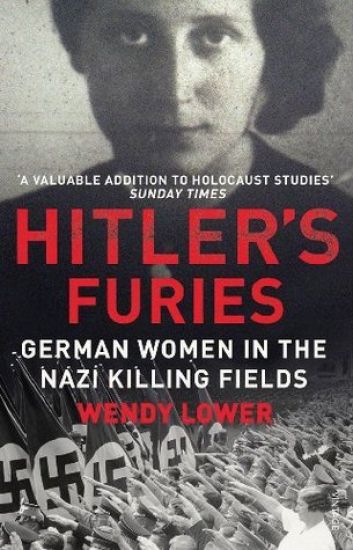
Hitler's Furies

Hitler's Furies

Wendy Lower

Vintage
2014
pokkari

Halvin toimitettuna 18,70 €

A shocking and timely reminder of the role Nazi women played in the Holocaust, not only as plunderers and direct witnesses, but on the Eastern Front. History has it that the role of women in Nazi Germany was to be the perfect Hausfrau and a loyal cheerleader for the Führer.
Hitler's Furies: German Women in the Nazi Killing Fields
NATIONAL BOOK AWARD FINALIST. A revelatory history of the role of German women in the Holocaust, not only as plunderers and direct witnesses, but as actual killers on the Eastern Front during World War II. Lower, drawing on twenty years of archival research and fieldwork, presents startling evidence that these women were more than "desk murderers" or comforters of murderous German men: they went on "shopping sprees" and romantic outings to the Jewish ghettos; they were present at killing-field picnics, not only providing refreshment but also shooting Jews. And Lower uncovers the stories of SS wives with children of their own whose brutality is as chilling as any in history. Hitler's Furies challenges our deepest beliefs: women can be as brutal as men, and the evidence can be hidden for seventy years." Disquieting . . . Earlier books about the Holocaust have offered up poster girls of brutality and atrocity . . . Lower's] insight is to track more mundane lives, and to argue for a vastly wider complicity." -- New York Times"An unsettling but significant contribution to our understanding of how nationalism, and specifically conceptions of loyalty, are normalized, reinforced, and regulated." -- Los Angeles Review of Books"Compelling . . . Lower brings to the forefront an unexplored aspect of the Holocaust." -- Washington Post
Hitler's Furies: German Women in the Nazi Killing Fields
This is the finalist for the US national Jewish book award. "Hitler’s Furies will be experienced and remembered as a turning point in both women’s studies and Holocaust studies". (Timothy Snyder, author of Bloodlands). History has it that the role of women in Nazi Germany was to be the perfect Hausfrau, produce the next Aryan generation and be a loyal cheerleader for the Fuhrer. Then they became the Trummerfrauen, or Rubble Women, as they cleared and tidied their ruined country to get it back on its feet. They were Germany’s heroines. The few women tried and convicted after the war were simply the evil aberrations - the camp guards, the female Nazi elite - that proved this rule. However, Wendy Lower’s research into the very ordinary women who went out to the Nazi Eastern Front reveals an altogether different story. For ambitious young women, the emerging Nazi empire represented a kind of Wild East of career and matrimonial opportunity. Over half a million of them set off for these new lands, where most of the worst crimes of the Reich would occur. Through the interwoven biographies of thirteen women, the reader follows the transformation of young nurses, teachers, secretaries and wives who start out in Weimar and Nazi Germany as ambitious idealists and end up as witnesses, accomplices and perpetrators of the genocide in Ukraine, Poland and Belarus. Hitler’s Furies presents overwhelming evidence that the women in these territories actively participated in the mass murder - and some became killers. In the case of women like Erna Petri, who brought her family to her husband’s impressive Polish SS estate, we find brutality as chilling as any in history. Hitler’s Furies is indelible proof that we have not known what we need to know about the role of women in the Nazi killing fields - or about how it could have been hidden for seventy years. It shows that genocide is women’s business as well as men’s and that, in ignoring women’s culpability, we have ignored the reality of the Holocaust.
The Diary of Samuel Golfard and the Holocaust in Galicia
The Diary of Samuel Golfard and the Holocaust in Galicia examines the contents and context of a rare diary written by a Jewish man from Nazi-occupied Poland. Serving as both a record and an artifact of Samuel Golfard’s life, the diary details his attempt to make sense of and resist the event that ultimately destroyed him. Wendy Lower integrates photographs, newspaper articles, documents, and testimonies to create a more complete picture of Golfard’s experiences and writings. She also traces the diary’s own journey after Golfard’s death, from 1943 Poland to the present day.