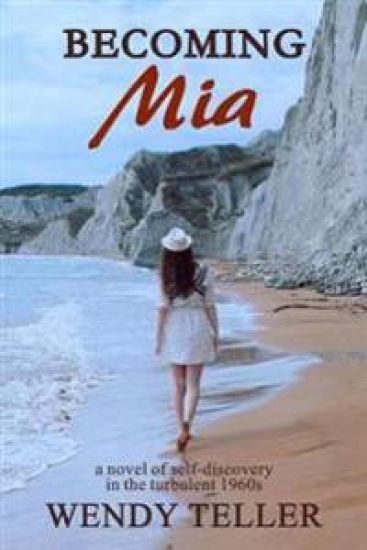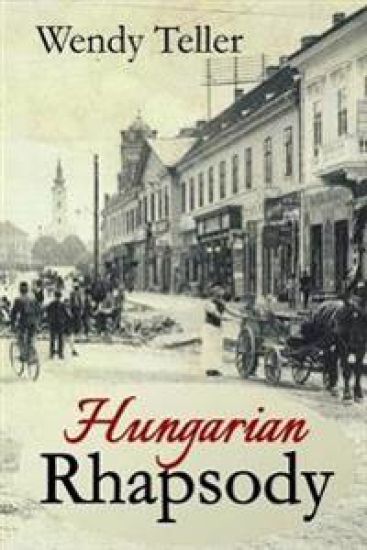
The Hungarian Women's Rights movement of the early 1900's is the backdrop for this story of two young radicals, as told by their grand-daughter. Ella is determined to break from the traditional woman's role of wife and subordinate and find a path to economic and sexual independence. Her childhood friend Ede is writing a women's rights manifesto that would still be considered radical in the United States of the 1960s. Together, they could change the world -- if they can just find a way to be together. AN INTERVIEW WITH WENDY TELLER Why did you write Hungarian Rhapsody? After writing Becoming Mia, and answering readers questions about it, I realized that my upbringing was a bit unusual for the 1950s and 60s. My parents assumed I would go to college and would be self-sufficient after college. They didn't demand that I study any field in particular and they would not state an opinion on what career I might choose. Even stranger than their attitudes toward a woman's career, was my mother's attitude toward sex. In her opinion, pre-marital affairs happened and if her college daughter decided that was what would happen, she would support her. That support included a to-whom-it-may-concern note giving her permission for me to obtain contraceptives. Was such a note required? I'm not sure it was even sufficient in those days. In some states it was illegal to give contraceptives to unmarried women, with or without parental permission. So it was an unusual attitude to have and I wondered why she seemed to have opinions so different from most women. She told me that her father was a progressive in Hungary in the early 1900s and he had written several books, two of which I had saved from her belongings after she died. They were in Hungarian of course. With a lot of help from software I translated one of them, Women of Tomorrow. It was published in 1905, but would have been considered radical in the 1960s. It advocated coeducation, equal financial rights for women, women's right to vote, women's rights to contraceptives, and most amazingly, acknowledged a woman's right to sexual gratification. These were radical ideas then? In 1905 Hungary, women's roles were strictly limited. Most women from wealthy families didn't go to high school to study math and science and history, they went to convent school to learn needlepoint and other crafts, singing and music, and other skills considered appropriate for women. They didn't go to college, and weren't permitted in the professions. They were married off by their families to established older men, to whose authority they were subject, financially, domestically, and sexually. So your mother probably got her ideas from her father. But where did he get his ideas? Indeed Those were radical ideas in 1905, particularly in Hungary, which was a male chauvinistic society. But what was even stranger was holding these attitudes given his social background. He came from a wealthy family, his father owning a construction company that built large public buildings. One would think such a fellow would continue in his father's business, marry a well-behaved Hungarian wife and prosper. Why would a man from a wealthy family leave his home town, go to Budapest, and delve into politics, specifically the politics of women's rights? Hungarian Rhapsody is my attempt to paint a possible explanation. Can you give us a hint? What is the explanation? Given that they were in the same class and grew up in the same neighborhood, I assume that my grandparents knew each other from early childhood, and that my grandfather was first intrigued and then fell in love with my grandmother's intelligence and independence. He saw the impediments to a woman's freedom and also saw how Hungarian society's sexual mores caused misery not just for women but also for men. Which made your grandmother fall in love with him, right? Well, it was not quite that easy. But we wouldn't wan