Kirjojen hintavertailu – 12 903 725 kirjaa ja 27 kauppaa

Kirjailija

Werner Herzog

Kirjat ja teokset yhdessä paikassa: 42 kirjaa, julkaisuja vuosilta 1962–2026, suosituimpiin kuuluu Die Zukunft der Wahrheit. Vertaile teosten hintoja ja tarkista saatavuus suomalaisista kirjakaupoista.

42 kirjaa

Kirjojen julkaisuvuodet: 1962–2026.

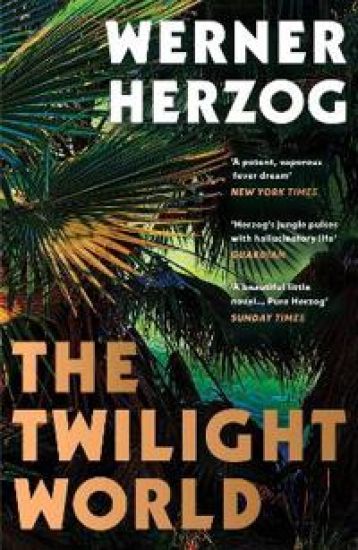
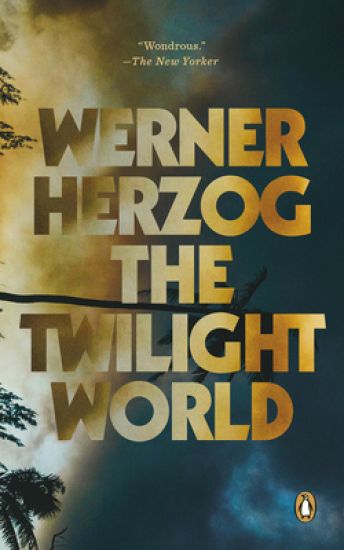
The Twilight World

The Twilight World

Werner Herzog

PENGUIN BOOKS
2023
nidottu
"A potent, vaporous fever dream; a meditation on truth, lie, illusion, and time that floats like an aromatic haze through Herzog's vivid reconstruction of Onoda's war." --The New York Times Book Review The national bestseller by the great filmmaker Werner Herzog. The great filmmaker Werner Herzog, in his first novel, tells the incredible story of Hiroo Onoda, a Japanese soldier who defended a small island in the Philippines for twenty-nine years after the end of World War II In 1997, Werner Herzog was in Tokyo to direct an opera. His hosts asked him, Whom would you like to meet? He replied instantly: Hiroo Onoda. Onoda was a former soldier famous for having quixotically defended an island in the Philippines for decades after World War II, unaware the fighting was over. Herzog and Onoda developed an instant rapport and met many times, talking and unraveling the story of Onoda's long war. At the end of 1944 on Lubang Island, with Japanese troops about to withdraw, Onoda stayed behind under orders from his superior officer. For years, Onoda continued to fight his fictitious war--at first with other soldiers, and then, finally, alone, a character in a novel of his own making. In The Twilight World, Herzog immortalizes and imagines Onoda's years of absurd yet epic struggle in an inimitable, hypnotic style--part documentary, part poem, and part dream--that will be instantly recognizable to fans of his films. The result is a novel completely unto itself: a glowing, dancing meditation on the purpose and meaning we give our lives.
The Twilight World

The Twilight World

Werner Herzog

Vintage Publishing
2023
pokkari

Halvin toimitettuna 16,20 €

In his first novel, Werner Herzog tells a hypnotic tale inspired by the true story of a Japanese soldier who defended a small island for twenty-nine years after the end of WWII1944: Lubang Island, the Philippines. With Japanese troops about to withdraw, Lieutenant Hiroo Onoda was given orders by his superior officer: Hold the island until the Imperial army's return. You are to defend its territory by guerrilla tactics, at all costs. So began Onoda's long campaign. Soon weeks turned into months, months into years, and years into decades - until eventually time itself seemed to melt away. All the while Onoda continued to fight his fictitious war, at once surreal and tragic, at first with other soldiers, and then, finally, alone, a character in a novel of his own making. . .'An enthralling novel that explores the nature of time and warfare with great mastery' Mail on Sunday'Herzog. . .brilliantly blends fact and fiction in this fever dream of a novel' Daily Mail'A literary jewel set to sparkle against the backdrop of his monumental career in cinema' i
In Love with Movies

In Love with Movies

Daniel Talbot; Werner Herzog

Columbia University Press
2022
sidottu
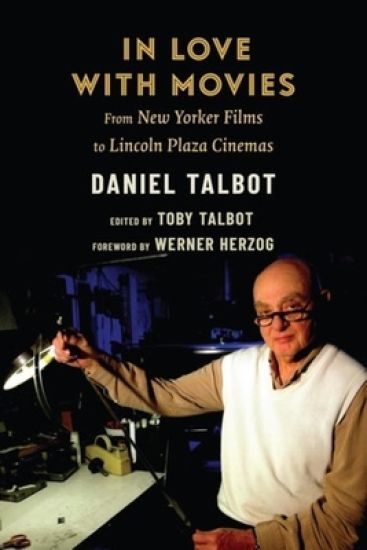
“All that I do is go out and look at films and choose the ones I want to play—films that stimulate, and give some insight into our lives. I hope that people will come, but if they don’t, that’s okay too.” Daniel Talbot changed the way the Upper West Side—and art-house audiences around the world—went to the movies. In Love with Movies is his memoir of a rich life as the impresario of the legendary Manhattan theaters he owned and operated and as a highly influential film distributor. Talbot and his wife, Toby, opened the New Yorker Theater in 1960, cultivating a loyal audience of film buffs and cinephiles. He went on to run several theaters including Lincoln Plaza Cinemas as well as the distribution company New Yorker Films, shaping the sensibilities of generations of moviegoers. The Talbots introduced American audiences to cutting-edge foreign and independent filmmaking, including the French New Wave and New German Cinema. In this lively, personal history of a bygone age of film exhibition, Talbot relates how he discovered and selected films including future classics such as Before the Revolution, Shoah, My Dinner with Andre, and The Marriage of Maria Braun. He reminisces about leading world directors such as Sembène, Godard, Fassbinder, Wenders, Varda, and Kiarostami as well as industry colleagues with whom he made deals on a slip of paper or a handshake. In Love with Movies is an intimate portrait of a tastemaker who was willing to take risks. It not only lays out the nuts and bolts of running a theater but also tells the story of a young cinephile who turned his passion into a vibrant cultural community.
In Love with Movies

In Love with Movies

Daniel Talbot; Werner Herzog

Columbia University Press
2022
pokkari
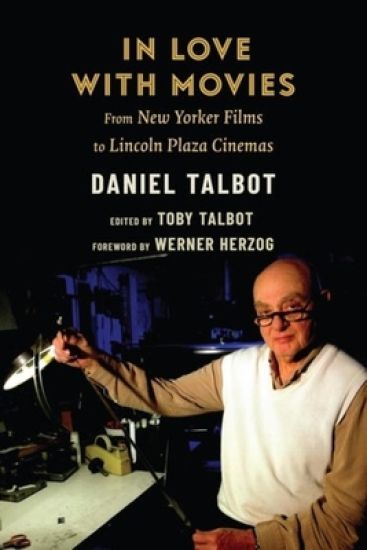
“All that I do is go out and look at films and choose the ones I want to play—films that stimulate, and give some insight into our lives. I hope that people will come, but if they don’t, that’s okay too.” Daniel Talbot changed the way the Upper West Side—and art-house audiences around the world—went to the movies. In Love with Movies is his memoir of a rich life as the impresario of the legendary Manhattan theaters he owned and operated and as a highly influential film distributor. Talbot and his wife, Toby, opened the New Yorker Theater in 1960, cultivating a loyal audience of film buffs and cinephiles. He went on to run several theaters including Lincoln Plaza Cinemas as well as the distribution company New Yorker Films, shaping the sensibilities of generations of moviegoers. The Talbots introduced American audiences to cutting-edge foreign and independent filmmaking, including the French New Wave and New German Cinema. In this lively, personal history of a bygone age of film exhibition, Talbot relates how he discovered and selected films including future classics such as Before the Revolution, Shoah, My Dinner with Andre, and The Marriage of Maria Braun. He reminisces about leading world directors such as Sembène, Godard, Fassbinder, Wenders, Varda, and Kiarostami as well as industry colleagues with whom he made deals on a slip of paper or a handshake. In Love with Movies is an intimate portrait of a tastemaker who was willing to take risks. It not only lays out the nuts and bolts of running a theater but also tells the story of a young cinephile who turned his passion into a vibrant cultural community.
Att gå i kylan : München - Paris 23.11 till 14.12.1974

Att gå i kylan : München - Paris 23.11 till 14.12.1974

Werner Herzog; Mikaela Blomqvist

Bokförlaget Faethon
2021
sidottu
Werner Herzog (f. 1942) får i november 1974 ett samtal som meddelar att Lotte Eisner är döende. Som för att besvärja döden beger han sig ut på en vandring från München till Paris. Hans beskrivning av färden är en sällsam skildring av landskapet och vandringens villkor. Madeleine Gustafsson har för denna nyutgåva i delar reviderat sin översättning. Kritikern Mikaela Blomqvist har skrivit efterordet.
Paul Frey: A Story Never Predicted

Paul Frey: A Story Never Predicted

Nancy Silcox; Werner Herzog

Wipf Stock Publishers
2020
sidottu
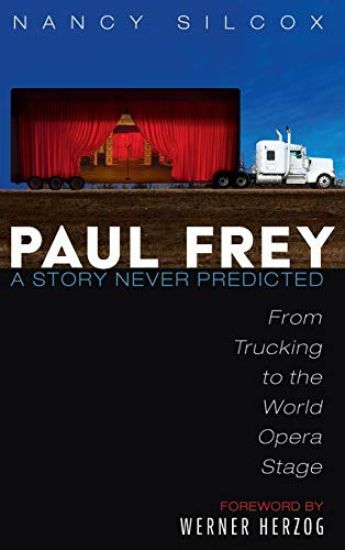
A more unlikely world opera star than Paul Frey could not be found. Born into a conservative order Mennonite farming family in rural Ontario, Canada in 1941, he was a high school dropout. His first career was as a truck driver, transporting livestock to market. But he was a young man with a powerful and true tenor voice, and a desire to sing opera. Entering opera school unable to read musical notes or count beats, Frey was offered primarily chorus roles during training and after graduation. Frustrated, he moved to Switzerland in 1977, signing a contract with the Theater Basel as house tenor. In 1987, Frey came to the attention of Wolfgang Wagner of the famed Bayreuth Opera House in Bayreuth, Germany. He was chosen to star in Bayreuth's Werner-Herzog-directed production of Richard Wagner's Lohengrin. At Bayreuth, Frey became a star and the world sat up and took notice. Offered lead roles from opera houses across the globe, Paul Frey was compared to the greatest of tenors, including Canadian Jon Vickers. Retiring in 2005, Paul Frey lives today in ""Mennonite Country,"" where he was born and raised.
Scenarios III

Scenarios III

Werner Herzog

University of Minnesota Press
2019
pokkari
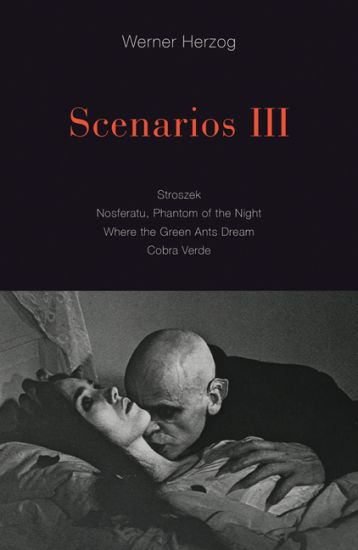
For the first time in English, and in his signature prose poetry, the film scripts of four of Werner Herzog’s early works “Herzog doesn’t write traditional scripts,” Film International remarked of the master filmmaker’s Scenarios I and II. “Instead, he writes scenarios which are like a hybrid of film, fiction, and prose poetry.” Continuing a series that Publishers Weekly pronounced “compulsively readable . . . equal parts challenging and satisfying, infuriating and enlightening,” Scenarios III presents, for the first time in English, the shape-shifting scripts for four of Werner Herzog’s early films: Stroszek; Nosferatu, Phantom of the Night; Where the Green Ants Dream; and Cobra Verde. We can observe Herzog’s working vision as each of these scenarios unfolds in a form often dramatically different from the film’s final version-as, in his own words, Herzog works himself up into “this kind of frenzy of high-caliber language and concepts and beauty.” With Scenarios I and II, this volume completes the picture of Herzog’s earliest work, affording a view of the filmmaker mastering his craft, well on his way to becoming one of the most original, and most celebrated, artists in his field.
Scenarios II

Scenarios II

Werner Herzog

University of Minnesota Press
2018
nidottu
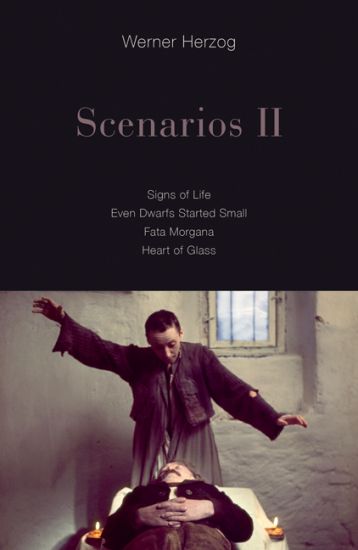
The second in a series: the master filmmaker’s prose scenarios for four of his notable filmsOn the first day of editing Fata Morgana, Werner Herzog recalls, his editor said: “With this kind of material we have to pretend to invent cinema.” And this, Herzog says, is what he tries to do every day. In this second volume of his scenarios, the peerless filmmaker’s genius for invention is on clear display. Written in Herzog’s signature fashion-more prose poem than screenplay, transcribing the vision unfolding before him as if in a dream-the four scenarios here (three never before translated into English) reveal an iconoclastic craftsman at the height of his powers. Along with his template for the film poem Fata Morgana (1971), this volume includes the scenarios for Herzog’s first two feature films, Signs of Life (1968) and Even Dwarfs Started Small (1970), along with the hypnotic Heart of Glass (1976). In a brief introduction, Herzog describes the circumstances surrounding each scenario, inviting readers into the mysterious process whereby one man’s vision becomes every viewer’s waking dream.
Scenarios

Scenarios

Werner Herzog

University of Minnesota Press
2017
nidottu
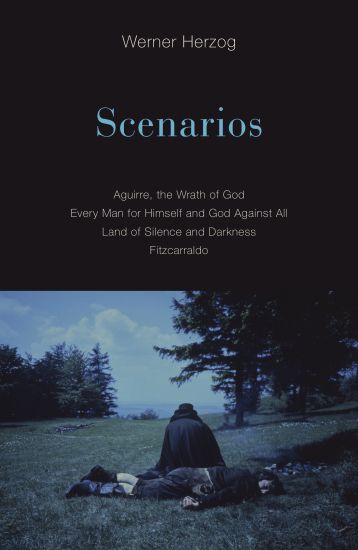
I do not follow ideas, I stumble into stories or into people; and I know that this is so big, I have to make a film. Very often, films come like uninvited guests, like burglars in the middle of the night. They are in your kitchen; something is stirring, you wake up at 3 a.m. and all of a sudden they come wildly swinging at you. When I write a screenplay, I write it as if I have the whole film in front of my eyes. Then it is very easy for me, and I can write very, very fast. It is almost like copying. But of course sometimes I push myself; I read myself into a frenzy of poetry, reading Chinese poets of the eighth and ninth century, reading old Icelandic poetry, reading some of the finest German poets like HÖlderlin. All of this has absolutely nothing to do with the idea of my film, but I work myself up into this kind of frenzy of high-caliber language and concepts and beauty. And then sometimes I push myself by playing music, for example, a piano concerto by Beethoven, and I play it and write furiously. But none of this is an answer to the question of how you focus on a single idea for a film. And then, during shooting, you have to depart from it sometimes, while keeping it alive in its essence. -Werner Herzog, on filmmakingWerner Herzog doesn’t write traditional screenplays. He writes fever dreams brimming with madness, greed, humor, and dark isolation that can shift dramatically during production-and have materialized into extraordinary masterpieces unlike anything in film today. Harnessing his vision and transcendent reality, these four pieces of long-form prose earmark a renowned filmmaker at the dawn of his career.
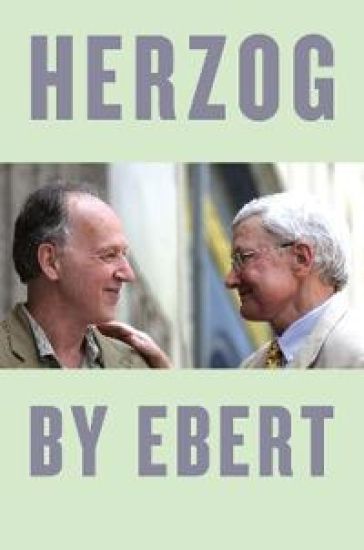
Herzog by Ebert

Herzog by Ebert

Roger Ebert; Werner Herzog

University of Chicago Press
2017
sidottu
Roger Ebert was the most influential film critic in the United States, the first to win a Pulitzer Prize. For almost fifty years, he wrote with plainspoken eloquence about the films he loved for the Chicago Sun-Times, his vast cinematic knowledge matched by a sheer love of life that bolstered his appreciation of films. Ebert had particular admiration for the work of director Werner Herzog, whom he first encountered at the New York Film Festival in 1968, the start of a long and productive relationship between the filmmaker and the film critic. Herzog by Ebert is a comprehensive collection of Ebert's writings about the legendary director, featuring all of his reviews of individual films, as well as longer essays he wrote for his Great Movies series. The book also brings together other essays, letters, and interviews, including a letter Ebert wrote Herzog upon learning of the dedication to him of "Encounters at the End of the World;" a multifaceted profile written at the 1982 Cannes Film Festival; and an interview with Herzog at Facet's Multimedia in 1979 that has previously been available only in a difficult-to-obtain pamphlet. Herzog himself contributes a foreword in which he discusses his relationship with Ebert. Brimming with insights from both filmmaker and film critic, Herzog by Ebert will be essential for fans of either of their prolific bodies of work.
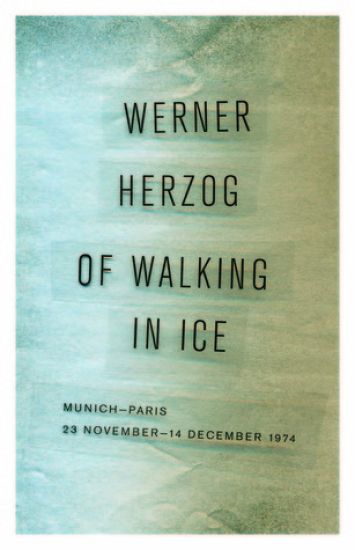
Of Walking in Ice

Of Walking in Ice

Werner Herzog

University of Minnesota Press
2015
pokkari

Halvin toimitettuna 21,50 €

In late November 1974, filmmaker Werner Herzog received a phone call from Paris delivering some terrible news. German film historian, mentor, and close friend Lotte Eisner was seriously ill and dying. Herzog was determined to prevent this and believed that an act of walking would keep Eisner from death. He took a jacket, a compass, and a duffel bag of the barest essentials, and wearing a pair of new boots, set off on a three-week pilgrimage from Munich to Paris through the deep chill and snowstorms of winter." Of Walking in Ice" is Herzog's beautifully written, much-admired, yet often-overlooked diary account of that journey. Herzog documents everything he saw and felt on his quest to his friend's bedside, from poetic descriptions of the frozen landscape and harsh weather conditions to the necessity of finding shelter in vacant or abandoned houses and the intense loneliness of his solo excursion.
Of Walking In Ice

Of Walking In Ice

Werner Herzog

Vintage Classics
2014
pokkari

Halvin toimitettuna 16,20 €

A poetic meditation on life and death, by one of the most renowned and respected film-makers and intellectuals of our time. In November 1974, when Werner Herzog was told that his mentor Lotte Eisner, the film-maker and critic, was dying in Paris, he set off to walk there from Munich, ‘in full faith, believing that she would stay alive if I came on foot’. Along the way he recorded what he saw, how he felt, and what he experienced, from the physical discomfort of the journey to moments of rapture. It is a remarkable narrative – part pilgrimage, part meditation, and a confrontation between a great German Romantic imagination and the contemporary world. This edition of the book is being published for the first time as a classic piece of proto-psychogeography, to coincide with the fortieth anniversary of the legendary director’s walk.
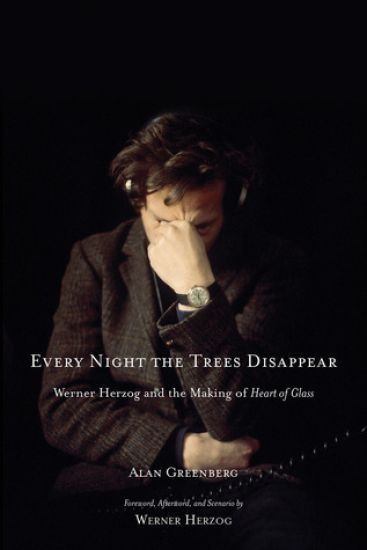
Every Night the Trees Disappear

Every Night the Trees Disappear

Alan Greenberg; Werner Herzog

Zephyr Press
2012
sidottu
When Alan Greenberg first showed up at Werner Herzog s Munich home at age twenty-four, he was, according to the director, the first outsider to seek him and recognize his greatness. At the end of their first evening together, Herzog urged Greenberg to work with him on his film "Heart of Glass" and everything thereafter. He clinched his plea by assuring the young American, On the outside we ll look like gangsters, but on the inside we ll wear the gowns of priests. "Every Night the Trees Disappear" is an intimate chronicle of how this visionary filmmaker directed a masterwork. Greenberg s observations, interwoven with Herzog s original screenplay, elucidate just how unusual Herzog s filmmaking methods could be. By hypnotizing his actors before shooting each scene, Herzog led his crew into a veritable cinematic netherworld, resulting in one of the most haunting movies ever made. Rather than a conventional, journalistic account of how a director makes a movie, "Every Night the Trees Disappear" instead presents a unique vision with the feel of a novel intimate, penetrating, and filled with mystery."
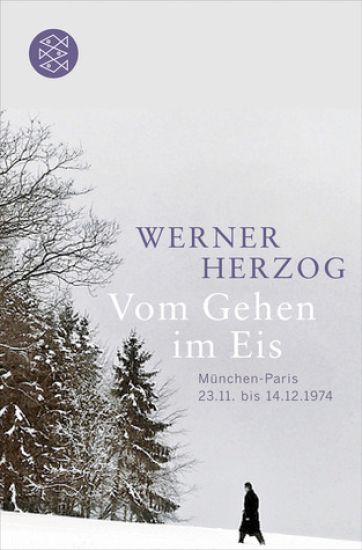
Vom Gehen im Eis

Vom Gehen im Eis

Werner Herzog

S. Fischer Verlag
2009
pokkari
Im November 1974 bricht Werner Herzog zu einer Wanderung von München nach Paris auf. Dort ist die legendäre Filmhistorikerin Lotte Eisner erkrankt - würde er Paris zu Fuß erreichen, wäre ihr Leben gerettet. Das Gehen ist ihm eine existenzielle Erfahrung, die äußere und innere Landschaften ineinander fließen lässt - "Vom Gehen im Eis" ist ein großer hypnotischer Text über die Welt der letzten Erfahrungen.
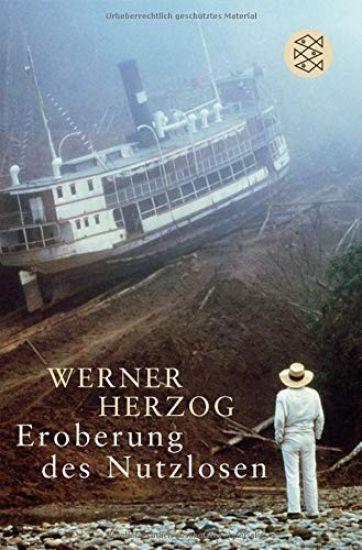
Eroberung des Nutzlosen

Eroberung des Nutzlosen

Werner Herzog

FISCHER Taschenbuch
2009
pokkari

Halvin toimitettuna 25,50 €

""Ein sensationeller Text, der einen wie die wilden Strudel des Urflusses in Abgründe zieht, aus denen man nie wieder aufzutauchen glaubt, bis sich vor unseren Augen die unendliche Schönheit eines Universums auftut." Volker Schlöndorff, Der Spiegel"