Kirjojen hintavertailu – 12 903 725 kirjaa ja 27 kauppaa

Kirjailija

Werner Sollors

Kirjat ja teokset yhdessä paikassa: 11 kirjaa, julkaisuja vuosilta 1988–2026, suosituimpiin kuuluu The Autobiography of W. E. B. Du Bois (The Oxford W. E. B. Du Bois). Vertaile teosten hintoja ja tarkista saatavuus suomalaisista kirjakaupoista.

11 kirjaa

Kirjojen julkaisuvuodet: 1988–2026.

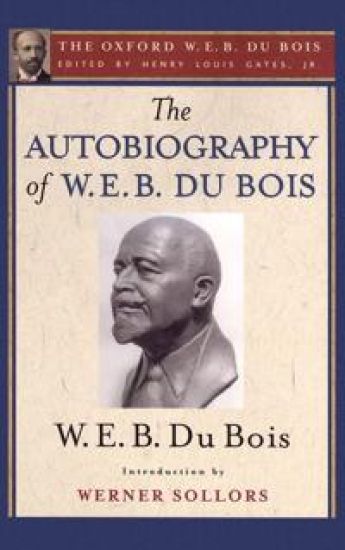
The Autobiography of W. E. B. Du Bois (The Oxford W. E. B. Du Bois)

The Autobiography of W. E. B. Du Bois (The Oxford W. E. B. Du Bois)

W. E. B. Du Bois; Werner Sollors

Oxford University Press Inc
2014
nidottu
W. E. B. Du Bois was a public intellectual, sociologist, and activist on behalf of the African American community. He profoundly shaped black political culture in the United States through his founding role in the NAACP, as well as internationally through the Pan-African movement. Du Bois's sociological and historical research on African-American communities and culture broke ground in many areas, including the history of the post-Civil War Reconstruction period. Du Bois was also a prolific author of novels, autobiographical accounts, innumerable editorials and journalistic pieces, and several works of history. Published posthumously in 1968, The Autobiography of W. E. B. Du Bois is his last and most complete autobiography. Covering his life over almost a century of living in America, it's the closest thing we have to a true autobiography of this important scholar and activist. The book, broken up into three parts, delves into the 90-year-old Du Bois's thoughts on everything from his relationship with sex to his storied association with the NAACP to his political persecution during the Cold War years to his many travels abroad. As Du Bois writes, he takes the reader on a journey to "view my life as frankly and fully as I can." With a series introduction by editor Henry Louis Gates, Jr., and an introduction by Werner Sollors, this edition is essential for anyone interested in African American history.

The Werner Sollors Reader

The Werner Sollors Reader

Werner Sollors

EDINBURGH UNIVERSITY PRESS
2026
nidottu
Born in Silesia, raised in the Frankfurt area and educated in Berlin, Werner Sollors has spent most of his career at Harvard University in the United States and is regarded, in Cornel West’s words, ‘as one of the finest scholars that we have on race and cultural hybridity in both this country and the world’. This Reader offers the first comprehensive overview of the work of a central figure in the field of ethnic studies. The pieces collected here range from Puritan New England to contemporary Germany, from ‘Exodus’ to Mary Antin’s Promised Land, from the ‘Curse of Ham’ to Teju Cole. They attest to Sollors’ deep historical sensibilities, his attention to textual detail and his awareness of the costs and opportunities of both cosmopolitan ideals and particularist commitments, whilst addressing a central question: why does modernisation take the form of ethnicisation in many places around the globe? The collected essays are complemented by a detailed introduction by Daniel G. Williams which foregrounds some of the key emphases and tensions in Sollors’ writings.
Challenges of Diversity

Challenges of Diversity

Werner Sollors

Rutgers University Press
2017
sidottu
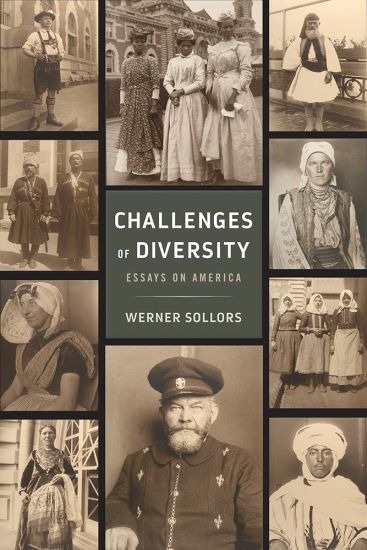
What unites and what divides Americans as a nation? Who are we, and can we strike a balance between an emphasis on our divergent ethnic origins and what we have in common? Opening with a survey of American literature through the vantage point of ethnicity, Werner Sollors examines our evolving understanding of ourselves as an Anglo-American nation to a multicultural one and the key role writing has played in that process. Challenges of Diversity contains stories of American myths of arrival (pilgrims at Plymouth Rock, slave ships at Jamestown, steerage passengers at Ellis Island), the powerful rhetoric of egalitarian promise in the Declaration of Independence and the heterogeneous ends to which it has been put, and the recurring tropes of multiculturalism over time (e pluribus unum, melting pot, cultural pluralism). Sollors suggests that although the transformation of this settler country into a polyethnic and self-consciously multicultural nation may appear as a story of great progress toward the fulfillment of egalitarian ideals, deepening economic inequality actually exacerbates the divisions among Americans today.
Challenges of Diversity

Challenges of Diversity

Werner Sollors

Rutgers University Press
2017
nidottu
What unites and what divides Americans as a nation? Who are we, and can we strike a balance between an emphasis on our divergent ethnic origins and what we have in common? Opening with a survey of American literature through the vantage point of ethnicity, Werner Sollors examines our evolving understanding of ourselves as an Anglo-American nation to a multicultural one and the key role writing has played in that process. Challenges of Diversity contains stories of American myths of arrival (pilgrims at Plymouth Rock, slave ships at Jamestown, steerage passengers at Ellis Island), the powerful rhetoric of egalitarian promise in the Declaration of Independence and the heterogeneous ends to which it has been put, and the recurring tropes of multiculturalism over time (e pluribus unum, melting pot, cultural pluralism). Sollors suggests that although the transformation of this settler country into a polyethnic and self-consciously multicultural nation may appear as a story of great progress toward the fulfillment of egalitarian ideals, deepening economic inequality actually exacerbates the divisions among Americans today.
African American Writing

African American Writing

Werner Sollors

Temple University Press,U.S.
2016
sidottu
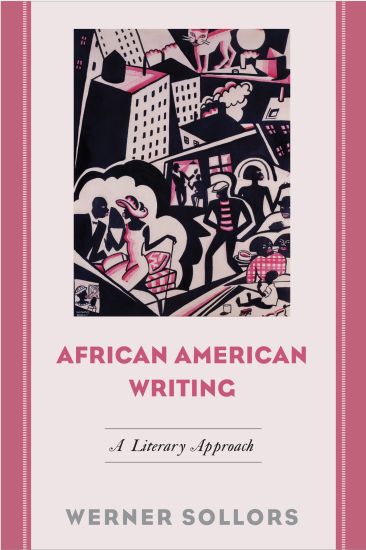
Werner Sollors’ African American Writing takes a fresh look at what used to be called “Negro literature.” The essays collected here, ranging in topic from Gustavus Vassa/Olaudah Equiano to LeRoi Jones/Amiri Baraka, and in time from the Enlightenment to the Obama presidency, take a literary approach to black writing and present writers as readers and as intellectuals who were or are open to the world. From W. E. B. Du Bois commenting on Richard Wagner and Elvis Presley, to Zora Neale Hurston attacking Brown v. Board of Ed. in a segregationist newspaper, to Charles Chesnutt’s effigy darkened for the black heritage postage stamp, Sollors alternates between close readings and broader cultural contextualizations to delineate the various aesthetic modes and intellectual exchanges that shaped a series of striking literary works. Readers will make often-surprising discoveries in the authors’ writing and in their encounters and dialogues with others. The essays, accompanied by Winold Reiss’s pastels, Carl Van Vechten’s photographs, and other portraits, attempt to honor this important literature’s achievement, heterogeneity, and creativity.
African American Writing

African American Writing

Werner Sollors

Temple University Press,U.S.
2016
pokkari
Werner Sollors’ African American Writing takes a fresh look at what used to be called “Negro literature.” The essays collected here, ranging in topic from Gustavus Vassa/Olaudah Equiano to LeRoi Jones/Amiri Baraka, and in time from the Enlightenment to the Obama presidency, take a literary approach to black writing and present writers as readers and as intellectuals who were or are open to the world. From W. E. B. Du Bois commenting on Richard Wagner and Elvis Presley, to Zora Neale Hurston attacking Brown v. Board of Ed. in a segregationist newspaper, to Charles Chesnutt’s effigy darkened for the black heritage postage stamp, Sollors alternates between close readings and broader cultural contextualizations to delineate the various aesthetic modes and intellectual exchanges that shaped a series of striking literary works. Readers will make often-surprising discoveries in the authors’ writing and in their encounters and dialogues with others. The essays, accompanied by Winold Reiss’s pastels, Carl Van Vechten’s photographs, and other portraits, attempt to honor this important literature’s achievement, heterogeneity, and creativity.
The Temptation of Despair

The Temptation of Despair

Werner Sollors

The Belknap Press
2014
sidottu
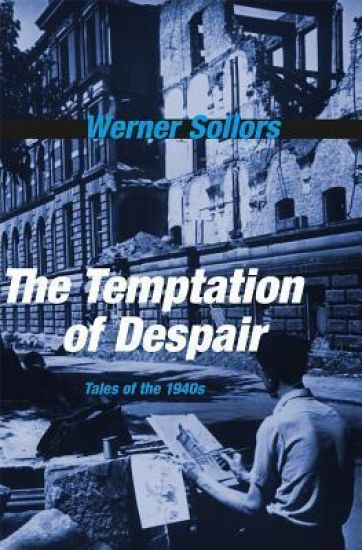
In Germany, the years immediately following World War II call forward images of obliterated cities, hungry refugees, and ghostly monuments to Nazi crimes. The temptation of despair was hard to resist, and to contemporary observers the road toward democracy in the Western zones of occupation seemed rather uncertain. Drawing on a vast array of American, German, and other sources—diaries, photographs, newspaper articles, government reports, essays, works of fiction, and film—Werner Sollors makes visceral the experiences of defeat and liberation, homelessness and repatriation, concentration camps and denazification. These tales reveal writers, visual artists, and filmmakers as well as common people struggling to express the sheer magnitude of the human catastrophe they witnessed. Some relied on traditional images of suffering and death, on Biblical scenes of the Flood and the Apocalypse. Others shaped the mangled, nightmarish landscape through abstract or surreal forms of art. Still others turned to irony and black humor to cope with the incongruities around them. Questions about guilt and complicity in a totalitarian country were raised by awareness of the Holocaust, making “After Dachau” a new epoch in Western history. The Temptation of Despair is a book about coming to terms with the mid-1940s, the contradictory emotions of a defeated people—sorrow and anger, guilt and pride, despondency and resilience—as well as the ambiguities and paradoxes of Allied victory and occupation.
Ethnic Modernism

Ethnic Modernism

Werner Sollors

Harvard University Press
2008
nidottu
In the first half of the twentieth century, the United States moved from the periphery to the center of global cultural production. At the same time, technologies of dissemination evolved rapidly, and versions of modernism emerged as dominant art forms. How did African American, European immigrant, and other minority writers take part in these developments that also transformed the United States, giving it an increasingly multicultural self-awareness? This book attempts to address this question in a series of innovative and engaging close readings of major texts by Gertrude Stein, Mary Antin, Jean Toomer, O. E. Rölvaag, Nathan Asch, Henry Roth, Richard Wright, Zora Neale Hurston, Pietro di Donato, Jerre Mangione, John Hersey, and Leo Szilard, as well as briefer examinations of many other authors and works, against the background of international political developments, the rise of modernism in the visual arts, and the ascendancy of Ernest Hemingway as a model for prose writers. In many of Werner Sollors’s sensitive readings, single sentences and paragraphs serve as the representative formal units of prose works, while throughout Ethnic Modernism the trolley (now a cute-seeming object of nostalgia) emerges with surprising frequency as a central thematic emblem of modernity.
Neither Black nor White yet Both

Neither Black nor White yet Both

Werner Sollors

Harvard University Press
1999
nidottu
Why can a “white” woman give birth to a “black” baby, while a “black” woman can never give birth to a “white” baby in the United States? What makes racial “passing” so different from social mobility? Why are interracial and incestuous relations often confused or conflated in literature, making “miscegenation” appear as if it were incest? Werner Sollors examines these questions and others in Neither Black nor White yet Both, a fully researched investigation of literary works that, in the past, have been read more for a black–white contrast of “either–or” than for an interracial realm of “neither, nor, both, and in-between.” From the origins of the term “race” to the cultural sources of the “Tragic Mulatto,” and from the calculus of color to the retellings of various plots, Sollors examines what we know about race, analyzing recurrent motifs in scientific and legal works as well as in fiction, drama, and poetry.
Neither Black Nor White Yet Both

Neither Black Nor White Yet Both

Werner Sollors

Oxford University Press Inc
1997
sidottu
Why can a "white" woman give birth to a "black" baby, while a "black" woman can never give birth to a "white" baby in the United States? What makes racial "passing" so different from social mobility? Why are interracial and incestuous relations often confused or conflated in literature, making "miscegenation" appear as if it were incest? When did the myth that one can tell a person's race by the moon on their fingernails originate? How did blackness get associated with "the curse of Ham" when the Biblical text makes no reference to skin colour at all? Werner Sollors examines these questions and others in Neither Black Nor White Yet Both, a new and exhaustively researched exploration of "interracial literature". In the past, interracial texts have been read more for a black-white contrast of "either-or" than for an interracial realm of "neither, nor, both, and in-between". Intermarriage prohibitions have been legislated throughout the modern period and were still in the law books in the 1980s. Stories of black-white sexual and family relations have thus run against powerful social taboos. Yet much interracial literature has been written, and this book suggests its pervasiveness and offers new comparative and historical contexts for understanding it. Looking at authors from Heliodorus, John Stedman, Buffon, Thomas Jefferson, Heinrich von Kleist, Victor Hugo, Aleksandr Sergeevic Puskin, and Hans Christian Andersen, to Lydia Marie Child, Harriet Beecher Stowe, William Wells Brown, Mark Twain, Charles Chesnutt, Kate Chopin, Cirilo Villaverde, Aluisio Azevedo, and Pauline Hopkins, and on to modern writers such as Langston Hughes, Jessie Fauset, Boris Vian, and William Faulkner, Sollors ranges across time, space, and cultures, analysing scientific and legal works as well as poetry, fiction, and the visual arts, to explore the many themes and motifs interwoven throughout interracial literature. From the etymological origins of the term "race" to the cultural sources of the "Tragic Mulatto," Sollors examines the recurrent images and ideas in this literature of love, family, and other relations between blacks, whites, and those of "mixed race." Sollors's interdisciplinary explorations of literary themes yield many insights into the history and politics of "race," and illuminate a new understanding of the relations between cultures through the focus on interracial exchanges. Neither Black Nor White Yet Both is vital reading for anyone who seeks to understand what has been written and said about "race," and where interracial relations can go from here.
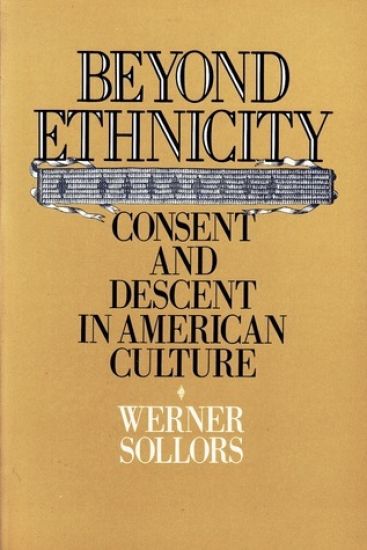
Beyond Ethnicity

Beyond Ethnicity

Werner Sollors

Oxford University Press Inc
1988
nidottu
This book looks at the role of 'ethnicity' in American literature and what that literature has said - and continues to say - about the diverse American culture. Discussing works from every period of American history, Sollors focuses particularly on the tension between 'descent' and 'consent' - between the concern for one's racial, ethnic, and familial heritage and the conflicting desire to choose one's own destiny, even if such choices go against one's heritage. The study ranges from Puritan autobiographies to those of 20th-century Afro-Americans and immigrants, from Royall Tyler and the first American plays to Mel Brooks's Young Frankenstein, from the writings of Cotton Mather to Liquid Sky (a 'post-punk' science-fiction film by a Russian emigré). The author shows how the diverse creators of American culture have generally been attracted to what is most new and modern.