Kirjojen hintavertailu – 12 903 725 kirjaa ja 27 kauppaa

Kirjailija

Wilbur Cross

Kirjat ja teokset yhdessä paikassa: 12 kirjaa, julkaisuja vuosilta 2001–2023, suosituimpiin kuuluu Gullah Culture in America. Vertaile teosten hintoja ja tarkista saatavuus suomalaisista kirjakaupoista.

12 kirjaa

Kirjojen julkaisuvuodet: 2001–2023.

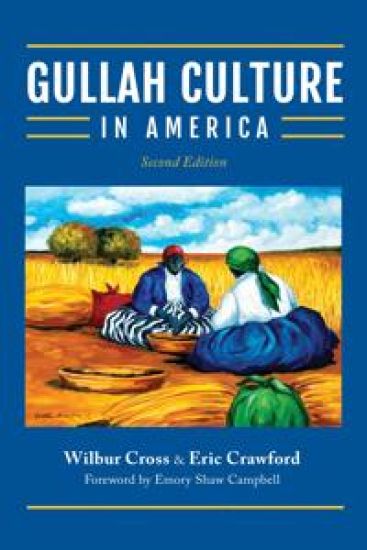
Gullah Culture in America

Gullah Culture in America

Eric Crawford; Wilbur Cross

JOHN F BLAIR PUBLISHER
2023
pokkari
A history of the rich culture of the Gullah people–a story of upheaval, endurance, and survival in the Lowcountry of the American South. Gullah Culture in America chronicles the history and culture of the Gullah people, African Americans who live in the Lowcountry region of the American South. This book, written for the general public, chronicles the arrival of enslaved West Africans to the sea islands of South Carolina and Georgia; the melding of their African cultures, which created distinct creole language, cuisine, traditions, and arts; and the establishment of the Penn School, dedicated to education and support of the Gullah freedmen following the Civil War. Original author Wilbur Cross, writing in 2008, describes the ongoing Gullah story: the preservation of the culture sheltered in a rural setting, the continued influence of the Penn School (now called the Penn Center) in preserving and documenting the Gullah Geechee cultures. Today, more than 300,000 Gullah people live in the remote areas of the sea islands of St. Helena, Edisto, Coosay, Ossabaw, Sapelo, Daufuskie, and Cumberland, their way of life endangered by overdevelopment in an increasingly popular tourist destination. For the second edition of this popular book, Eric Crawford, Gullah Geechee scholar, has updated the text with new information and a fresh perspective on the Gullah Geechee culture.

The Code: An Authorized History of the ASME Boiler and Pressure Vessel Code

The Code: An Authorized History of the ASME Boiler and Pressure Vessel Code

Wilbur Cross

AMERICAN SOCIETY OF MECHANICAL ENGINEERS
2020
sidottu
In 1980 the American Society of Mechanical Engineers celebrates the centenary of its founding. The occasion has provided an opportunity for the Society to look back and survey its accomplishments, its distinguished members, and its constant dialogue -- among its members and with the American people -- concerning the role of engineering in a technological society. The dynamic tensions within the ASME make a fascinating background to this centennial history. The central role of the Society's headquarters in New York is examined the light of various movements for regional and professional sections within (and occasionally outside) the Society. The technical question of standards is shown to be a constant and creative problem for members -- reflecting their attitudes towards their role in a political system often reluctant to enforce nation-wide standars in business and industry. From the Progressive Era, and its attempts to reform city government and check the power of private utilities, to the 1970s and its renewed concern with ecology and business ethnics, the Society has provided a microcosm of informed debate about technical engineering problems which -- as this book makes clear -- concerns us all.
Penn Center

Penn Center

Orville Vernon Burton; Wilbur Cross

University of Georgia Press
2017
pokkari
The Gullah people of St. Helena Island still relate that their people wanted to “catch the learning” after northern abolitionists founded Penn School in 1862, less than six months after the Union army captured the South Carolina sea islands. In this broad history Orville Vernon Burton and Wilbur Cross range across the past 150 years to reacquaint us with the far-reaching impact of a place where many daring and innovative social justice endeavors had their beginnings. Penn Center’s earliest incarnation was as a refuge where escaped and liberated enslaved people could obtain formal liberal arts schooling, even as the Civil War raged on sometimes just miles away. Penn Center then earned a place in the history of education by providing agricultural and industrial arts training for African Americans after Reconstruction and through the Jim Crow era, the Great Depression, and two world wars. Later, during the civil rights movement, Penn Center made history as a safe meeting place for organizations like Martin Luther King Jr.’s Southern Christian Leadership Conference and the Peace Corps. Today, Penn Center continues to build on its long tradition of leadership in progressive causes. As a social services hub for local residents and as a museum, conference, and education complex, Penn Center is a showcase for activism in such areas as cultural, material, and environmental preservation; economic sustainability; and access to health care and early learning. Here is all of Penn Center’s rich past and present, as told through the experiences of its longtime Gullah inhabitants and countless visitors. Including forty-two extraordinary photographs that show Penn as it was and is now, this book recounts Penn Center's many achievements and its many challenges, reflected in the momentous events it both experienced and helped to shape.
Gullah Culture in America

Gullah Culture in America

Wilbur Cross; Emory Shaw Campbell

John F Blair Publisher
2012
nidottu
Gullah Culture in America begins with the journeys of 15 Gullah speakers who went to Sierra Leone and other parts of West Africa in 1989, 1998, and 2005 to trace their origins and history. Their stories frame this fascinating look at the extraordinary history of the Gullah culture. The existence of the Gullahs went almost unnoticed until the 1860s, when missionaries from Philadelphia made their way to St. Helena Island, South Carolina, to establish the Penn School to help freed slaves learn to read and write. There, they discovered hidden pockets of a bygone African culture with its own language, traditions, medicine, weaving, and art. Today, more than 300,000 Gullah people live in the remote areas of the sea islands of St. Helena, Edisto, Coosay, Ossabaw, Sapelo, Daufuski, and Cumberland, their way of life endangered by overdevelopment in an increasingly popular tourist destination. Having evolved from the original Penn School, the Penn Center, based on St. Helena Island, works to preserve and document the Gullah and Geechee cultures. Author Wilbur Cross originally set out to make the excellent work of the Penn Center known and to introduce the Gullah culture to people in America. He became entranced with the Gullah way of life and ended up with 12 chapters that explore the various facets of Gullah culture. Gullah Culture in America not only explores the history of Gullah but also shows readers what it's like to grow up and live in this unique American community. After receiving his degree from Yale University, Wilbur Cross served in the United States Navy and started a career as a copywriter in New York. He spent 10 years as an editor at Life magazine and contributed many articles to Time and Life. He is the author or coauthor of more than 50 books on a wide range of subjects, including history, biography, culture, travel, and health. Cross is a member of the Authors Guild and the Time/Life Alumni Society. He lives on Hilton Head Island, South Carolina. Born and raised on Hilton Head Island, Emory Shaw Campbell is executive director emeritus of the Penn Center and a renowned community leader among the Gullah people. In 2002, he founded Gullah Heritage Trail Tours in an effort to educate tourists about the Gullah language and culture and promote indigenous crafts and artists. He is the author of Gullah Cultural Legacies and served as a consultant and editor for Gullah Culture in America.
Gullah Culture in America

Gullah Culture in America

Wilbur Cross

Praeger Publishers Inc
2007
sidottu
In 1989, 1998, and 2005, fifteen Gullah speakers went to Sierra Leone and other parts of West Africa to trace their origins and ancestry. Their journey frames this exploration of the extraordinary history of the Gullah culture-characterized by strong African cultural retention and a direct influence on American culture, particularly in the South-described in this fascinating book. Since long before the Revolution, America has had hidden pockets of a bygone African culture with a language of its own, and long endowed with traditions, language, design, medicine, agriculture, fishing, hunting, weaving, and the arts. This book explores the Gullah culture's direct link to Africa, via the sea islands of the American southeast. The first published evidence of Gullah went almost unrecorded until the 1860s, when missionaries from Philadelphia made their way, even as the Civil War was at its height, to St. Helena Island, South Carolina, to establish a small institution called Penn School to help freed slaves learn how to read and write and make a living in a world of upheaval and distress. There they noticed that most of the islanders spoke a language that was only part English, tempered with expressions and idioms, often spoken in a melodious, euphonic manner, accompanied by distinctive practices in religion, work, dancing, greetings, and the arts. The homogeneity, richness, and consistency of this culture was possible because the sea-islanders were isolated. Even today, there are more than 300,000 Gullah people, many of whom speak little or no English, living in the remoter areas of the sea islands of St. Helena, Edisto, Coosay, Ossabaw, Sapelo, Daufuskie, and Cumberland. Gullah Culture in America explores not only the history of Gullah, but takes the reader behind the scenes of Gullah culture today to show what it's like to grow up, live, and celebrate in this remarkable and uniquely American community.
Amway: The True Story of the Company That Transformed the Lives of Millions
Not just a business, but an opportunity for personal success and achievement, Amway has spread the old-fashioned American dream across the globe-from South America to the Pacific Rim. This definitive history of Amway delves deep into the heart and soul of the organization. It is an inspirational, motivational chronicle of the company as a whole-its ideology, goals, beliefs, ethics, and sense of values-filled with uplifting stories of people around the world whose lives have been totally transformed by the Amway philosophy.