
Kirjojen hintavertailu – 12 859 818 kirjaa ja 27 kauppaa

Kirjailija

Wilkinson

Kirjat ja teokset yhdessä paikassa: 22 kirjaa, julkaisuja vuosilta 1976–2026, suosituimpiin kuuluu Oxford Reading Tree Word Sparks: Level 10: Class Pack of 48. Vertaile teosten hintoja ja tarkista saatavuus suomalaisista kirjakaupoista.

22 kirjaa

Kirjojen julkaisuvuodet: 1976–2026.

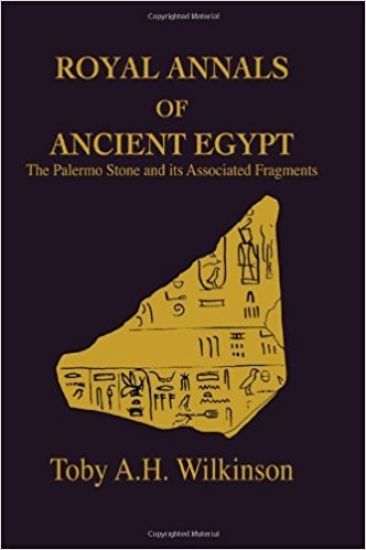
Royal Annals Of Ancient Egypt

Royal Annals Of Ancient Egypt

Wilkinson

Kegan Paul
2000
sidottu
First published in 2000. The kings of ancient Egypt’s first five dynasties were responsible for the creation of a unique and enduring civilisation, epitomised by its most impressive monuments, the pyramids. Yet what do we know about the reigns of these kings? Excavations have revealed much, but Egyptology has always been blessed with another rich source of information - the written texts and inscriptions composed by the ancient Egyptians themselves. For the history of the first five dynasties, one particular series of inscriptions has always been of prime importance. This is the collection of inscribed stone fragments known as the Royal An- nals. Now divided between museums in Palermo, Cairo and London, these documents from ancient Egypt have been the focus of countless studies in the century or so since they first came to light, for they seem to record the reigns of Egypt’s early kings on a reign-by-reign, year-by-year basis. The information they contain has been translated, interpreted and re-interpreted by generations of Egyptologists, in the hope of achieving a better understanding of the first great period of ancient Egyptian history. And yet amazingly for such crucial documents -- no complete edition of all seven surviving fragments has ever been published. Royal Annals of Ancient Egypt fills this gap. The text is accompanied by specially commissioned, detailed line-drawings of all the fragments.
Insecticide Biochemistry and Physiology

Insecticide Biochemistry and Physiology

Wilkinson

Kluwer Academic/Plenum Publishers
1976
sidottu
Only four short decades ago, the control of insect pests by means of chemicals was in its early infancy. The pioneers in the area consisted largely of a group of dedicated applied entomologists working to the best of their abilities with a very limited arsenal of chemicals that included inorganics (arsenicals, fluorides, etc.), some botanicals (nicotine), and a few synthetic organics (dinitro-o-cresol, organothiocyanates). Much of the early research was devoted to solving practical problems associated with the formulation and application of the few existing materials, and although the discovery of new types of insecticidal chemicals was undoubtedly a pipe dream in the minds of some, little or no basic research effort was expended in this direction. The discovery of the insecticidal properties of DDT by Paul Miiller in 1939 has to be viewed as the event which marked the birth of modern insecticide chemistry and which has served as the cornerstone for its subse­ quent developement. DDT clearly demonstrated for the first time the dramatic potential of synthetic organic chemicals for insect control and provided the initial stimulus which has caused insecticide chemistry to become a field not only of immense agricultural and public health importance but also one that has had remarkable and unforseeable repercussions in broad areas of the physical, biological, and social sciences. Indeed, there can be few other synthetic chemicals which will be judged in history to have had such a broad and telling impact on mankind as has DDT.