
Kirjailija
Willa Cather
Kirjat ja teokset yhdessä paikassa: 629 kirjaa, julkaisuja vuosilta 1927–2026, suosituimpiin kuuluu Christmas Classics. Vertaile teosten hintoja ja tarkista saatavuus suomalaisista kirjakaupoista.
629 kirjaa
Kirjojen julkaisuvuodet: 1927–2026.

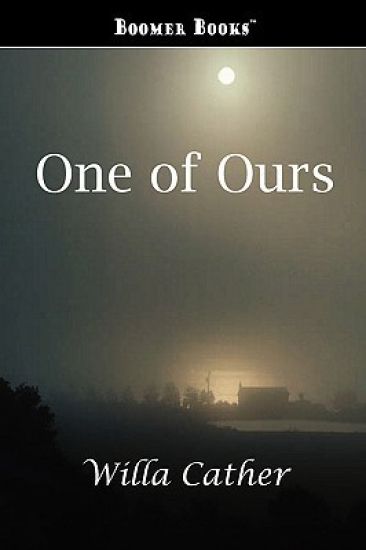
One of Ours is Willa Cather's Pulitzer Prize-winning novel about the making of an American soldier. Claude Wheeler, the sensitive but aspiring protagonist, has ready access to his family's fortune but refuses to settle for it. Alienated from his uncaring father and pious mother, and rejected by a wife whose only love is missionary work, Claude is an idealist without ideals to cling to. Only when his country enters the Great War does he find the meaning of his life. In One of Ours, Willa Cather explores the life of a young Nebraskan whose ambitions drive him to a frontier wilder and more violent than the one tamed by his pioneer ancestors. Newly designed and typeset in a modern 6-by-9-inch format by Waking Lion Press.
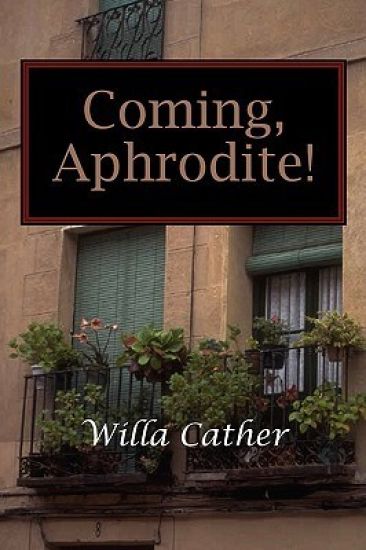
Fourteen short stories from one of America's finest writers. Willa Cather was fascinated by the ruthless of nature, the brutality of mankind, and the beauty of art, all of which are evident in this richly diverse collection. Newly designed and typeset in a modern 6-by-9-inch format by Waking Lion Press.

Claude Wheeler craves excitement, far more than he can ever find as a farmer's son. A Nebraska native around the turn of the 20th century, the son of a successful farmer and an intensely pious mother, he is guaranteed a comfortable livelihood. Nevertheless, Wheeler views himself as a victim of his father's success and his own inexplicable malaise. He encounters more excitement at university, where the modern world beyond farm life offers new thrills and challenges, only to lose them as the farm calls him back. World War I offers him even more . . . but he may crave excitement more than life itself can allow. Wanting it as much as he does can't protect him from the consequences of personal bravado in an age of killing machines.
Alexander's Bridge by Willa Cather, Fiction, Classics, Romance, Literary
Willa Cather
Aegypan
2008
pokkari
Alexander stood six feet and more in the archway, glowing with strength and cordiality and rugged good looks. There were other bridge-builders in the world, certainly -- but it was always Alexander's picture that the Sunday Supplement men wanted, because he looked as a tamer of rivers ought to look. Under his tumbled sandy hair his head seemed as hard and powerful as a catapult, and his shoulders looked strong enough in themselves to support a span of any one of his ten great bridges that cut the air above as many rivers. At the pinnacle of his career, Bartley Alexander stands proudly in the public eye. Yet for those who know him well, a certain mystery lingers about him -- some strange aspect of his past well hidden from view . . . something, perhaps, that might even shake the mightiest of engineering triumphs. Willa Cather, a journalist, editor and traveler born in 1876, established her place in the literary world with the publication in 1912 of Alexander's Bridge, her first novel. Her later masterpieces included My Antonia and Death Comes for the Archbishop.
Claude Wheeler craves excitement, far more than he can ever find as a farmer's son. The son of a successful farmer and an intensely pious mother, he is guaranteed a comfortable livelihood. Nevertheless, Wheeler views himself as a victim of his father's success and his own inexplicable malaise. He encounters more at university, where the modern world beyond farm life offers new thrills and challenges, only to lose them as the farm calls him back. World War I offers him even more . . . but he may crave excitement more than life itself can allow. Wanting it as much as he does can't protect him from the consequences of personal bravado in an age of killing machines.







Willa Cather's first published novel, set in Boston, London, and Paris, is the story of a man unable to resolve the contradictions in his own nature. The central figures are Bartley Alexander, a world-famous engineer; his wife; Winifred, a Boston society matron; and his former love, Hilda Burgoyne, a London actress. Long considered an uncharacteristic production, in the light of recent scholarship Alexander's Bridge is seen to be closely linked to the body of Cather's work, thematically as well as in its use of myth and symbol. Bernice Slote's introduction considers the circumstances of its composition and its relationship to the later novels, particularly One of Ours, The Professor's House, and Lucy Gayheart. The text has been entirely reset from the first (1912) edition.
Youth and the Bright Medusa by Willa Cather, Fiction, Short Stories, Literary, Classics
Willa Cather
Aegypan
2007
pokkari
Cather published Youth and the Bright Medusa, a collection of her short fiction, in 1920. According to Alfred Knopf, Cather had been displeased with the dull brown covers of O Pioneers and My Antonia and upon seeing the bright blue Chinese cloth Knopf had purchased to cover other hardcovers, immediately handed him the manuscript of Youth and the Bright Medusa. Also in Knopf's belief, Willa Cather cared nothing for how much she would be paid for her work, but rather for fame and positive attention. This collection contains the following stories: "Coming, Aphrodite " aka "Coming, Eden Bower " "The Diamond Mine" "A Gold Slipper" "Scandal" "Paul's Case" "A Wagner Matinee" "The Sculptor's Funeral" "A Death in the Desert"
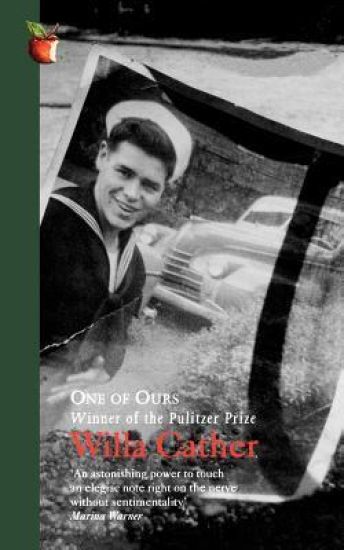
'She is undoubtedly one of the greatest American writers' OBSERVER 'One of Ours, Willa Cather's novel of youth, the prairie, influenza, and war, was one of the author's greatest successes' ALEX ROSS, NEW YORKER 'The thing about Willa Cather's landscape and figures is that not only were they born alive but remain so after six decades' GUARDIANSince childhood, Claude Wheeler has believed that 'something splendid' would restore the faith he had lost in modern life and the personal compromises and materialism that it brings. The calls of the First World War offers escape from his prosperous farm in Nebraska and marriage of convenience and brings the opportunity to fight for a worthy cause. In action in France, he discovers the faith and happiness he has yearned, but not without the heavy cost that war inevitably brings. Willa Cather looks back at the pioneering myth and forward to a new kind of modern heroism through One of Ours, a novel championing democracy.
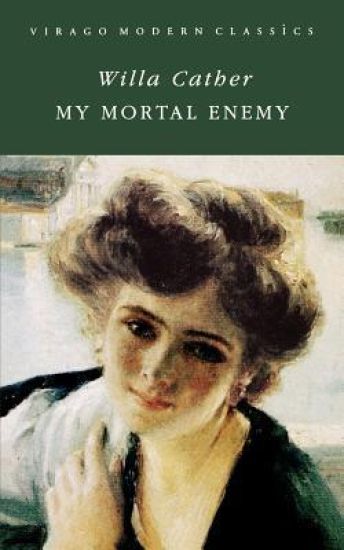
'She is undoubtedly one of the greatest American writers' OBSERVER 'My Mortal Enemy shows Miss Cather's power at its most concentrated . . . It is a fine piece of art' ETHEL WALLACE HAWKINS, ATLANTIC 'But Cather is not just a good writer - she is unique, and great' A. S. BYATT, GUARDIAN 'People can be lovers and enemies at the same time. We were . . . 'Through the eyes of a young girl, Nellie, we view the life of Myra, a legend in the Southern town where both were born. Myra has romantically abandoned the luxury she was born into to elope with the impoverished Oswald Henshawe. Twenty-five years later, Nellie is dazzled when she meets them living in the elegant poverty of an apartment frequented by singers, actors and poets in the heart of the artistic community of old New York. But this shabby gentility gives way to real poverty in a jerrybuilt West Coast hotel and the high purpose of Myra's life - love itself - is revealed to be the enemy within. A finely-wrought study of the great rewards and punishments love brings, My Mortal Enemy is an exquisite example of Willa Cather's art.
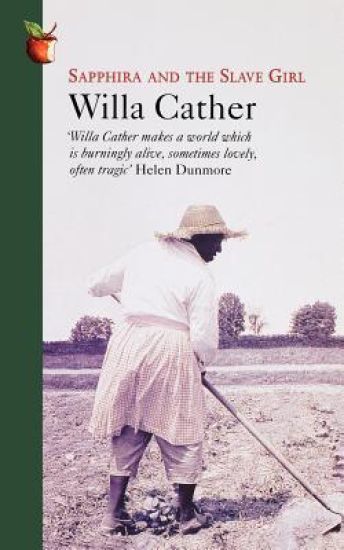
'Miss Cather claims our eager attention when ever she publishes a new book' NEW YORK TIMES 'She is undoubtedly one of the century's greatest American writers' OBSERVER'This, her last novel, is a stirring and beautifully executed depiction of a society that has vanished forever' BELFAST TELEGRAPHOriginally published in 1940, this is Willa Cather's last novel, a stirring and beautifully executed description of a society and conditions that have vanished forever, and a retrospective portrait of the Old South with its stain of slavery. By 1856, Sapphira Colbert is one of few Virginians who owns slaves, a policy her husband Henry finds increasingly difficult to countenance. Sapphira presides over her Black Creek Valley property with disciplined resolution and the help of her black maid, Nancy. Henry runs the Mill and sleeps there too - their marriage a formality. Sapphira's life is an arid one and, confined to a wheelchair, she has amble opportunity for speculation. When she hears a conversation linking her husbands name to that of Nancy, that speculation festers and the horrific potential of Sapphira's power is unleashed . . .