Kirjojen hintavertailu – 12 903 735 kirjaa ja 27 kauppaa

Kirjailija

Willem J Ouweneel

Kirjat ja teokset yhdessä paikassa: 29 kirjaa, julkaisuja vuosilta 2017–2026, suosituimpiin kuuluu Indalgando el pasado. Vertaile teosten hintoja ja tarkista saatavuus suomalaisista kirjakaupoista.

29 kirjaa

Kirjojen julkaisuvuodet: 2017–2026.

What then Is Theology?

What then Is Theology?

Willem J Ouweneel

Paideia Press
2020
pokkari
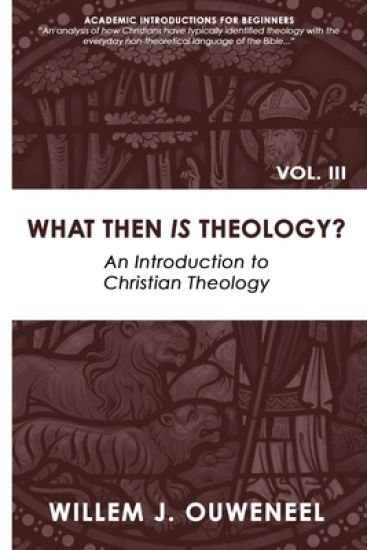
WHAT THEN IS THEOLOGY? Throughout the life-time of the Body of Christ, Christians have typically identified theology, a theoretical enterprise, with the everyday non-theoretical language of the Bible. Enthralled with the idea that as the Logos of the Greek philosophers provided an "intelligent... principle of the universe," so too, the first verse of the Gospel of John similarly provides Christians with a rational entr e to the mind of God and his creation. With such a view the Bible easily becomes a textbook regarding the real nature of everything. Hence it is assumed in many orthodox circles that it is the task of theology to provide the systematic organization of the "logical" propositions of the Bible. Ouweneel asks, Is theology really the same as "Bible study", or the "study of Christian doctrine"? Is theology "science"? And if so, what does this involve? How can you distinguish between scientific and non-scientific - or even unscientific - theology? If the Apostles Peter, John, and Paul were indeed "theologians", were they scientific, non-scientific, or unscientific theologians? Does it matter whether theology is "scientific" or not? All these questions and many more evoked by these questions are investigated in this challenging and ground-breaking work by the Dutch theologian Willem J. Ouweneel.
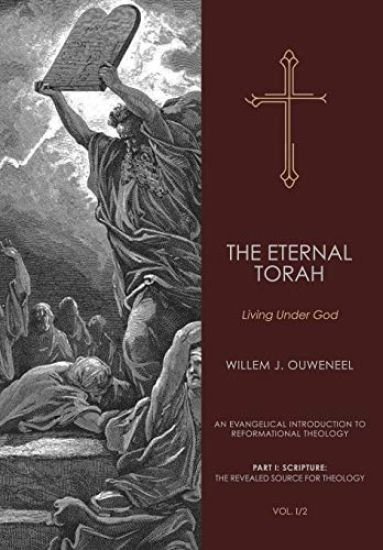
Eternal Torah

Eternal Torah

Willem J Ouweneel

Paideia Press
2020
sidottu
The set to which this volume belongs is informally entitled "The Eternal Series," because each volume of the set unfolds an aspect of the reality of God's relationship with humanity that reaches from eternity past to eternity future. The formal title of the series is "An Evangelical Introduction to Reformational Theology." Here are the volume titles: Part I: Scripture: The Revealed Source For TheologyI/1 The Eternal Word: God Speaking To UsI/2 The Eternal Torah: Living Under GodPart II: God: The Personal Source Behind TheologyII/1 The Eternal God: God Revealing Himself To UsII/2 The Eternal Christ: God With UsII/3 The Eternal Spirit: God Living In UsPart III: Redemption: The Christ-Centered Heart of TheologyIII/1 The Eternal Purpose: Living In ChristIII/2 Eternal Righteousness: Living Before GodIII/3 Eternal Salvation: Christ Dying For UsIII/4 Eternal Life: Christ Living In UsPart IV: Consummation: The Lived Shape of TheologyIV/1 The Eternal People: God in Relation To IsraelIV/2 The Eternal Covenant: Living With GodIV/3 The Eternal Kingdom: Living Under ChristPart V: Method: The Comprehensive Foundation of TheologyV/1 Eternal Truth: The Prolegomena of TheologyThese volumes have been written for the informed Christian who is somewhat familiar with both the Bible and Christian theology. As you will learn in these volumes, that order-first Bible and then theology-is crucially important. So too is the distinction (but not the separation ) between these two: the Bible is not theology, and theology is not the Bible. Both following that order and honoring that distinction are prerequisites for healthy, charitable, and enduring Christianity. Dr. Willem J. Ouweneel is a Dutch author whose three doctorates-one each in biology, philosophy, and theology-rank him among the premier Bible scholars of this generation, and equip him with breadth of vision and depth of insight. When these volumes are read alongside an open Bible, the patient reader will acknowledge the authority of the claims being defended. The reader's certitude will ultimately come to rest, not in any particular theological system or model, but in the inspired, infallible Word of God, and more importantly, in the God of that Word. As such, this entire series and these volumes are fresh and faithful reformulations of the essence of biblical faith and life as that was transmitted throughout the centuries, was rediscovered in the Reformation, and has come to be known as Reformational theology: sola Scriptura, sola gratia, sola fide, solus Christus, soli Deo gloria.
Searching the Soul

Searching the Soul

Willem J Ouweneel

Paideia Press
2020
pokkari
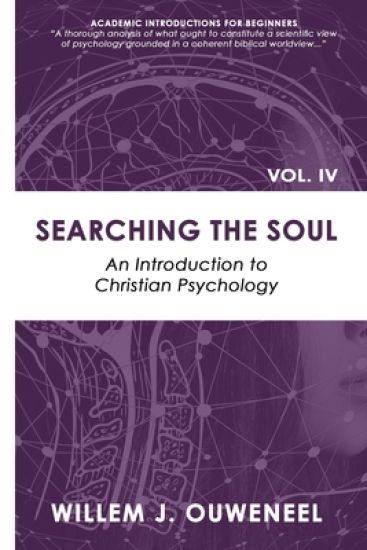
SEARCHING THE SOUL is the fourth volume by Willem J. Ouweneel that provides introductory insight into a significant area of Christian life. Clearly the healthy functioning of our emotional life is profoundly important for each of us, as well as for those with whom we come into daily contact. When we experience a physical problem, a broken leg, for example, we quickly rush off to a medical doctor to have the problem "fixed." Until recently the Christian community has been quite reluctant to seek the help of a psychological doctor when serious psychological breaks occur in our lives. Slowly, this condition is beginning to shift. But much like our political, economic, or social experiences, we need to pay close attention to what is informing our psychological views. To what extent ought we to trust the mainstream forms of psychology? Is it always a good idea to seek pastoral counseling in serious trauma cases, or should we be looking for well-trained Christian psychologists who can provide a holistic approach? In this classic work, Willem J. Ouweneel lays out a thorough analysis of what ought to constitute a scientific view of psychology grounded in a coherent biblical world-and-life view. Ouweneel provides a thorough assessment of the typical range of psychologies and their impact, along with their respective strengths and weaknesses. A highlight of the work is the close attention paid to the many confusions and distortions that have arisen in Christian circles as to precisely how psychology is to be understood from a biblical perspective. A clear alternative is provided in each case.
Power in Service

Power in Service

Willem J Ouweneel

Paideia Press
2020
pokkari
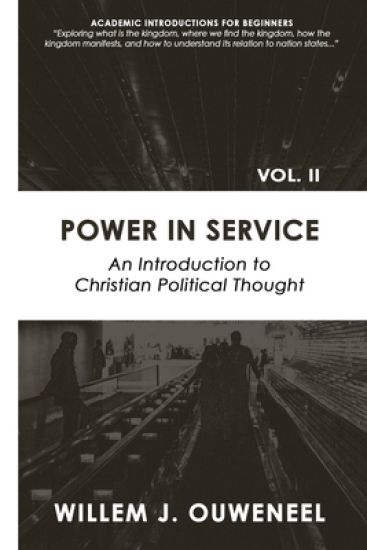
The Gospel is Power to Serve. On trial for his life, Jesus said to Pontius Pilate: "You would have no power over me if it were not given to you from above" (John 19:11). These words of Jesus tell the Christian a great deal about the nature of the nation state and its relationship to the Kingdom of God, as Willem J. Ouweneel skillfully explains. What is the Kingdom? "The kingdom is not a matter of talk (idle words) but of power" (1 Cor. 4:20). And where do we find this Kingdom? Already during his earthly ministry, Jesus told his opponents: "If I cast out demons by the Spirit of God, surely the kingdom of God has come upon you" (Matt. 12:28). That is, where the power of the Kingdom is manifested, there the Kingdom itself has arrived. In some countries, the presence of the power of the Kingdom is manifested in persecution and death." Whose children are they anyway?" Christian children in Quebec have been placed on spiritual "death row." The Quebec Court of Appeal has given the Quebec government the authority to indoctrinate Christian children attending Christian institutions of learning. The separation between church and state has been erased by the state. The state will now determine the nature of truth. Secular humanism has been elevated to state religion. The result? The state has now arrogated the authority and legal right of the parents to form and shape the heart and mind of the child. This power grab raises questions about fundamentals: Whose children are they anyway? The answers forthcoming from the state are deeply troubling. On the one hand the state says to a pregnant mother: "It's your body - do with the child as you see fit." But once the child has been born and weaned by Christian parents and taught Christian values, the state then dictates: "Yes, you changed the child's diapers, you fed and clothed and nurtured the child. But we, the state, will now indoctrinate the child with our religion." All of which begs the question: Whom do we now obey - God or the state?
The Eden Story

The Eden Story

Willem J Ouweneel

Paideia Press
2020
sidottu
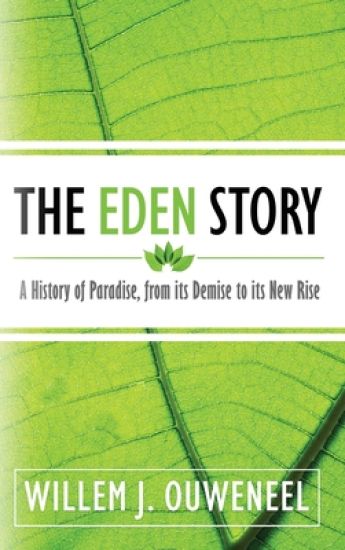
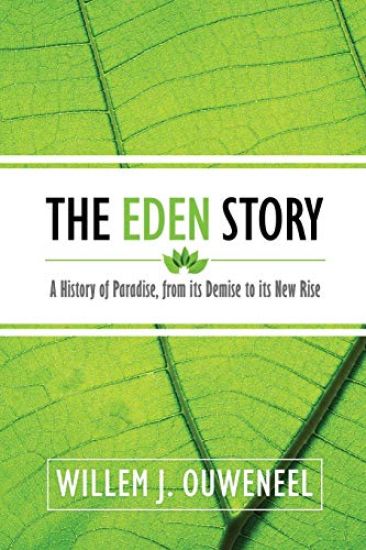
This book wishes to tell the story of Eden, from the beginning--even before Genesis 2 --until the very end of the new heavens and the new earth. It will be a sad story with a happy ending. It is a drama, but not a tragedy, because tragedies always end in a tragical way. It is not a comedy, either, because en route there will be little reason to laugh, except in this sense: Heaven-throned God breaks out laughing. At first he's amused at their i.e., the God-deniers' and Messiah-defiers'] presumption; then he gets good and angry. Furiously, he shuts them up: "Don't you know there's a King in Zion? A coronation banquet is spread for him on the holy summit" (Ps. 2:4-6 MSG). To be sure, this "banquet" is not literally in the original text--but what a beautiful way of describing the ultimate Eden "Eat " said the serpent in the first earthly Eden to Eve, and Eve said it to Adam (Gen. 3:1-6). "Take, eat " said Jesus the last night of his earthly life (Matt. 26:26). "Come, buy and eat " the Lord will say in the end, followed by this Edenic promise: For you shall go out in joy and be led forth in peace; the mountains and the hills before you shall break forth into singing, and all the trees of the field shall clap their hands. Instead of the thorn shall come up the cypress; instead of the brier shall come up the myrtle; and it shall make a name for the Lord, an everlasting sign that shall not be cut off (Isa. 55:1, 12-13 ESV).- From the author's Foreword
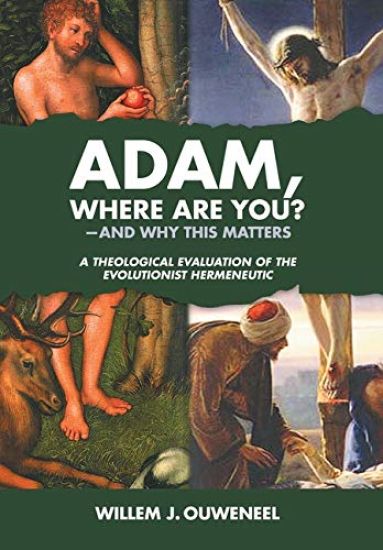
Adam, Where Are You?

Adam, Where Are You?

Willem J Ouweneel

Paideia Press
2018
sidottu
Since the nineteenth century, many Christian theologians have been converted to the theory of evolution--a theory whose scientific tenability they are not qualified to assess, but which they are unlikely to give up. The majority of recent books by Christian academics on this subject have all but surrendered the entire field of origins to an evolutionary "molecule-to-man" view of reality. Those who believe in human evolution, and yet wish to maintain some form of a historical Adam and a historical Fall, suffer from a serious form of self-deception. That is, in no way can they do justice to the careful exegesis of so many details in Genesis 2 and 3, not to mention key New Testament texts that presuppose the historicity of our first parents. The central thesis of this book is that those who accept the theory of general evolution cannot at the same time be orthodox Christians because the matter of origins does not belong at the periphery but at the heart of the Christian message. This insightful work of theology brings an interdisciplinary vision to bear upon its subject, undergirded as it is by a distinctly Christian philosophy that demolishes the evolutionary philosophical paradigm that has so influenced Western theologians for generations.