

Kirjojen hintavertailu – 12 859 827 kirjaa ja 27 kauppaa

Kirjailija

William A. Schwartz

Kirjat ja teokset yhdessä paikassa: 3 kirjaa, julkaisuja vuosilta 1990–2021, suosituimpiin kuuluu Power in the Highest Degree. Vertaile teosten hintoja ja tarkista saatavuus suomalaisista kirjakaupoista.

3 kirjaa

Kirjojen julkaisuvuodet: 1990–2021.

The Nuclear Seduction

The Nuclear Seduction

William A. Schwartz; Charles Derber

University of California Press
2021
sidottu
This title is part of UC Press's Voices Revived program, which commemorates University of California Press’s mission to seek out and cultivate the brightest minds and give them voice, reach, and impact. Drawing on a backlist dating to 1893, Voices Revived makes high-quality, peer-reviewed scholarship accessible once again using print-on-demand technology. This title was originally published in 1990.

The Nuclear Seduction

The Nuclear Seduction

William A. Schwartz; Charles Derber

University of California Press
2021
pokkari
This title is part of UC Press's Voices Revived program, which commemorates University of California Press’s mission to seek out and cultivate the brightest minds and give them voice, reach, and impact. Drawing on a backlist dating to 1893, Voices Revived makes high-quality, peer-reviewed scholarship accessible once again using print-on-demand technology. This title was originally published in 1990.
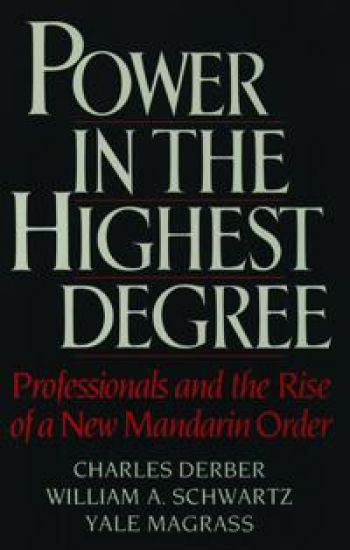
Power in the Highest Degree

Power in the Highest Degree

Charles Derber; William A. Schwartz; Yale Magrass

Oxford University Press Inc
1990
sidottu
One of the most sweeping works of social criticism to appear in years, this work offers a bold theory of modern classes and a comprehensive portrait of the modern professional. Drawing on one of the largest studies ever undertaken, including interviews with over 1,000 professionals, the authors show how experts, claiming a monopoly on many types of knowledge, are radically transforming the economic and social order. This book demonstrates how this has resulted in many citizens becoming deeply insecure about their competence to manage private and public affairs without professional guidance. The authors make a case for a society that radically democratizes knowledge while retaining many non-exclusive aspects of professionalism.