Kirjojen hintavertailu – 12 859 819 kirjaa ja 27 kauppaa

Kirjailija

William B. Parsons

Kirjat ja teokset yhdessä paikassa: 9 kirjaa, julkaisuja vuosilta 1999–2026, suosituimpiin kuuluu Spiritual But Not Religious. Vertaile teosten hintoja ja tarkista saatavuus suomalaisista kirjakaupoista.

9 kirjaa

Kirjojen julkaisuvuodet: 1999–2026.

Spiritual But Not Religious

Spiritual But Not Religious

Robert C. Fuller; William B. Parsons

TAYLOR FRANCIS LTD
2026
sidottu
Spiritual But Not Religious: The Basics is an accessible guide to the defining attributes of individuals who define themselves as SBNR, who comprise at least 25% of the American population. Topics covered include: What does it mean to consider oneself “religious” or “spiritual”? What historical or cultural forces have prompted people to distinguish between them and identify as “spiritual” but not “religious”? How did today’s expressions of SBNR emerge? What are SBNR beliefs/practices? What are the criticisms of SBNR posed both by those who are nonreligious and those who are more conventionally religious? What is the future of SBNR in economically developed nations? The book introduces the broad spectrum of beliefs and practices associated with individuals who identify as being spiritual but not religious. Featuring portraits of real people’s experiences of being SBNR, the book explains the terminology, historical background, contemporary expressions, and probable future of this enduring strain of American religiosity. This is the “go to” resource for anyone interested in understanding more about the beliefs of those who are spiritual but not religious.
Freud and Religion

Freud and Religion

William B. Parsons

Cambridge University Press
2021
pokkari
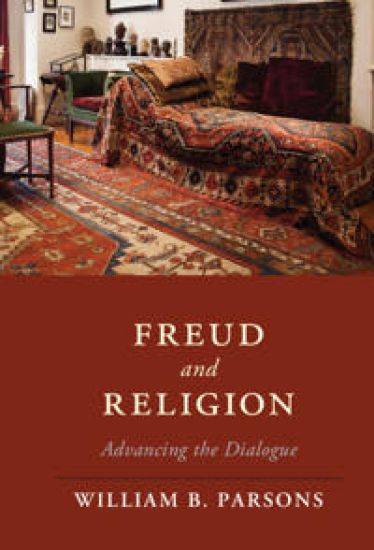
We live in an era that often described as 'therapeutic.' Our culture is suffused with unconscious fantasies and psychoanalytic ways of thinking about self, other, and society. Aspects of the Freudian cultural universe have also had an impact on how we think about religion. In this volume, William Parsons explores the relationship between religion and psychoanalysis through multiple, linked investigations. Why did Freud write about religion and what did he say? What were the multiple critiques levelled at his work? What were the post-Freudian psychoanalytic advances? How can we still apply psychoanalytic ideas going forward? In answering these and related questions, Parsons distinguishes between classic-reductive, adaptive, and transformational psychoanalytic models. He also argues that the psychoanalytic theory of religion needs to integrate reflexive, dialogical, and inclusive elements as part of its toolkit. Offering illustrations and applications of such revisions, Parsons creates new capacities for thinking psychologically and critically about religion.
Freud and Religion

Freud and Religion

William B. Parsons

Cambridge University Press
2021
sidottu
We live in an era that often described as 'therapeutic.' Our culture is suffused with unconscious fantasies and psychoanalytic ways of thinking about self, other, and society. Aspects of the Freudian cultural universe have also had an impact on how we think about religion. In this volume, William Parsons explores the relationship between religion and psychoanalysis through multiple, linked investigations. Why did Freud write about religion and what did he say? What were the multiple critiques levelled at his work? What were the post-Freudian psychoanalytic advances? How can we still apply psychoanalytic ideas going forward? In answering these and related questions, Parsons distinguishes between classic-reductive, adaptive, and transformational psychoanalytic models. He also argues that the psychoanalytic theory of religion needs to integrate reflexive, dialogical, and inclusive elements as part of its toolkit. Offering illustrations and applications of such revisions, Parsons creates new capacities for thinking psychologically and critically about religion.
Machiavelli's Gospel

Machiavelli's Gospel

William B. Parsons

University of Rochester Press
2016
sidottu
A new reading of The Prince, arguing that the classic text is neither a scientific treatise on politics nor a patriotic tract but rather an artful, elaborated critique of the dominant religion of his time The leading interpretations of The Prince focus on Machiavelli's historical context, but they give little attention to the source on which the moral and political thought of Machiavelli's sixteenth century was based, the Christian Bible. In this study of The Prince, William Parsons plumbs Machiavelli's allusions to the Bible, along with his statements on the Church, and shows that Machiavelli was a careful reader of the Bible and an astute observer of the Church. On this basis Parsons contends that Machiavelli's teaching in The Prince is instructively compared with that of the Church's teacher, Jesus Christ. Parsons thus undertakes what recent interpreters of The Prince have not done: contrast Machiavelli's advice with the teaching of Christ. The result is a new reading of The Prince, revealing in Machiavelli's political thought a systematic critique of the NewTestament and its model for human life, Christ. In this commentary on one of the greatest works on politics ever written, Parsons not only challenges the most recent interpretations of The Prince but also sheds new light onthe classic interpretation that Machiavelli was a teacher of immorality. William Parsons is associate professor of political science at Carroll College.
Freud and Augustine in Dialogue

Freud and Augustine in Dialogue

William B. Parsons

University of Virginia Press
2013
sidottu
It is arguably the case,"" writes William Parsons, ""that no two figures have had more influence on the course of Western introspective thought than Freud and Augustine."" Yet it is commonly assumed that Freud and Augustine would have nothing to say to each other with regard to spirituality or mysticism, given the former's alleged antipathy to religion and the latter's not usually being considered a mystic. Adopting an interdisciplinary, dialogical, and transformational framework for interpreting Augustine's spiritual journey in his Confessions, Parsons places a ""mystical theology"" at the heart of Augustine's narrative and argues that his mysticism has been misunderstood partly because of the limited nature of the psychological models applied to it. At the same time, he expands Freud's therapeutic legacy to incorporate the contemporary findings of physiology and neuroscience that have been influenced in part by modern spirituality. Parsons develops a new psychological hermeneutic to account for Augustine's mysticism that will capture the imagination of contemporary readers who are both psychologically informed and interested in spirituality. The author intends this interpretive model not only to engage modern introspective concerns about developmental conflict and the power of the unconscious but also to reach a more nuanced level of insight into the origins and the nature of the self.
Freud and Augustine in Dialogue

Freud and Augustine in Dialogue

William B. Parsons

University of Virginia Press
2013
nidottu
It is arguably the case,"" writes William Parsons, ""that no two figures have had more influence on the course of Western introspective thought than Freud and Augustine."" Yet it is commonly assumed that Freud and Augustine would have nothing to say to each other with regard to spirituality or mysticism, given the former's alleged antipathy to religion and the latter's not usually being considered a mystic. Adopting an interdisciplinary, dialogical, and transformational framework for interpreting Augustine's spiritual journey in his Confessions, Parsons places a ""mystical theology"" at the heart of Augustine's narrative and argues that his mysticism has been misunderstood partly because of the limited nature of the psychological models applied to it. At the same time, he expands Freud's therapeutic legacy to incorporate the contemporary findings of physiology and neuroscience that have been influenced in part by modern spirituality. Parsons develops a new psychological hermeneutic to account for Augustine's mysticism that will capture the imagination of contemporary readers who are both psychologically informed and interested in spirituality. The author intends this interpretive model not only to engage modern introspective concerns about developmental conflict and the power of the unconscious but also to reach a more nuanced level of insight into the origins and the nature of the self.
Religion and Psychology

Religion and Psychology

Diane Jonte-Pace; William B. Parsons

Routledge
2000
sidottu
Religion and Psychology is a thorough and incisive survey of the current relationship between religion and psychology from the leading scholars in the field. This is an essential resource for students and researchers in the area of psychology of religion. Issues addressed are:* The Psychology-Theology Dialogue* The Psychology-Comparativist Dialogue* Psychology, Religion and Gender Studies* Psychology "as" Religion* Social Scientific Approaches to the Psychology of Religion* The Empirical Approach* International Perspectives
Religion and Psychology

Religion and Psychology

Diane Jonte-Pace; William B. Parsons

Routledge
2000
nidottu
Religion and Psychology is a thorough and incisive survey of the current relationship between religion and psychology from the leading scholars in the field. This is an essential resource for students and researchers in the area of psychology of religion. Issues addressed are:* The Psychology-Theology Dialogue* The Psychology-Comparativist Dialogue* Psychology, Religion and Gender Studies* Psychology "as" Religion* Social Scientific Approaches to the Psychology of Religion* The Empirical Approach* International Perspectives
The Enigma of the Oceanic Feeling

The Enigma of the Oceanic Feeling

William B. Parsons

Oxford University Press Inc
1999
sidottu
This study examines the history of the psychoanalytic theory of mysticism, starting with the seminal correspondence between Freud and Romain Rolland concerning the concept of `oceanic feeling'. Parsons argues that the history of psychology has misunderstood Freud's own views, and as a consequence has over-reduced mysticism to psychological regression or pathology.