

Kirjailija
William Balée
Kirjat ja teokset yhdessä paikassa: 9 kirjaa, julkaisuja vuosilta 1999–2026, suosituimpiin kuuluu Inside Cultures. Vertaile teosten hintoja ja tarkista saatavuus suomalaisista kirjakaupoista.
9 kirjaa
Kirjojen julkaisuvuodet: 1999–2026.

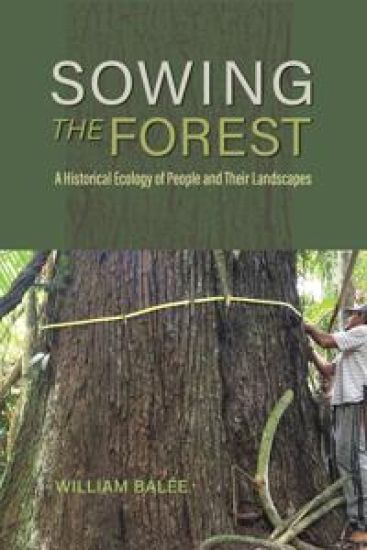
Explores how, over centuries, Amazonian people and their cultures have interacted with rainforests William BalÉe is a world-renowned expert on the cultural and historical ecology of the Amazon basin. His new collection, Sowing the Forest, is a companion volume to the award-winning Cultural Forests of the Amazon, published in 2013. Sowing the Forest engages in depth with how, over centuries, Amazonian people and their cultures have interacted with rainforests, making the landscapes of palm forests and other kinds of forests, and how these and related forests have fed back into the vocabulary and behavior of current indigenous occupants of the remotest parts of the vast hinterlands. The book is divided into two parts. Part 1, “Substrate of Intentionality,” comprises chapters on historical ecology, indigenous palm forests, plant names in Amazonia, the origins of the Amazonian plantain, and the unknown “Dark Earth people” of thousands of years ago and their landscaping. Together these chapters illustrate the phenomenon of feedback between culture and environment. In part 2, “Scope of Transformation,” BalÉe lays out his theory of landscape transformation, which he divides into two rubrics—primary landscape transformation and secondary landscape transformation—and for which he provides examples and various specific effects. One chapter compares environmental and social interrelationships in an Orang Asli group in Malaysia and the Ka’apor people of eastern Amazonian Brazil, and another chapter covers loss of language and culture in the Bolivian Amazon. A final chapter addresses the controversial topic of monumentality in the rainforest. BalÉe concludes by emphasizing the common thread in Amazonian historical ecology: the long-term phenomenon of encouraging diversity for its own sake, not just for economic reasons.
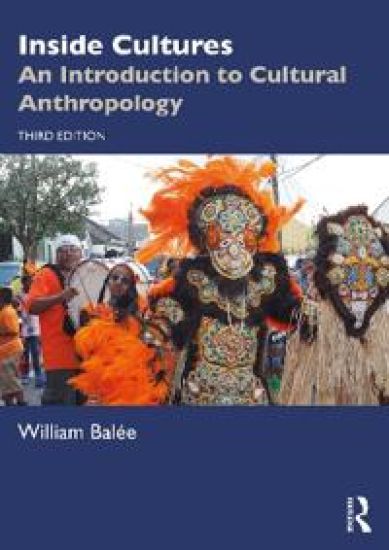
This concise, contemporary option for instructors of cultural anthropology breaks away from the traditional structure of introductory textbooks. Emphasizing the interaction between humans and their environment, the tension between human universals and cultural variation, and the impacts of colonialism on traditional cultures, Inside Cultures shows students how cultural anthropology can help us understand the complex, globalized world around us. This third edition: contains brand new material on many subjects, including anthropological approaches to anti-racism social movements in the Global North during 2020; includes findings in anthropological research regarding the Covid-19 pandemic, and its relation to other recent global events and conditions; updates the organization and presentation of cultural universals and cultural variations; presents updated and enhanced discussions of anthropological studies of humankind and the environment, with expanded analysis of industrial agriculture in the age of globalization; includes more illustrations and updates to existing illustrations, sidebars, and guideposts throughout the volume; is written in clear, supple prose that delights readers while informing on content of one of the important courses in a liberal arts education, one that effectively bridges humanities and the sciences.

This concise, contemporary option for instructors of cultural anthropology breaks away from the traditional structure of introductory textbooks. Emphasizing the interaction between humans and their environment, the tension between human universals and cultural variation, and the impacts of colonialism on traditional cultures, Inside Cultures shows students how cultural anthropology can help us understand the complex, globalized world around us. This third edition: contains brand new material on many subjects, including anthropological approaches to anti-racism social movements in the Global North during 2020; includes findings in anthropological research regarding the Covid-19 pandemic, and its relation to other recent global events and conditions; updates the organization and presentation of cultural universals and cultural variations; presents updated and enhanced discussions of anthropological studies of humankind and the environment, with expanded analysis of industrial agriculture in the age of globalization; includes more illustrations and updates to existing illustrations, sidebars, and guideposts throughout the volume; is written in clear, supple prose that delights readers while informing on content of one of the important courses in a liberal arts education, one that effectively bridges humanities and the sciences.
Winner of the Society for Economic Botany's Mary W. Klinger Book Award. Cultural Forests of the Amazon is a comprehensive and diverse account of how indigenous people transformed landscapes and managed resources in the most extensive region of tropical forests in the world. Until recently, most scholars and scientists, as well as the general public, thought indigenous people had a minimal impact on Amazon forests, once considered to be total wildernesses. William Balée’s research, conducted over a span of three decades, shows a more complicated truth. In Cultural Forests of the Amazon, he argues that indigenous people, past and present, have time and time again profoundly transformed nature into culture. Moreover, they have done so using their traditional knowledge and technology developed over thousands of years. Balée demonstrates the inestimable value of indigenous knowledge in providing guideposts for a potentially less destructive future for environments and biota in the Amazon. He shows that we can no longer think about species and landscape diversity in any tropical forest without taking into account the intricacies of human history and the impact of all forms of knowledge and technology. Balée describes the development of his historical ecology approach in Amazonia, along with important material on little-known forest dwellers and their habitats, current thinking in Amazonian historical ecology, and a narrative of his own dialogue with the Amazon and its people.

Women of the Forest
Yolanda Murphy; Robert Murphy; R. Brian Ferguson; William Balée; Janet Chernela; Judith Shapiro; Orna Johnson; Thomas Gregor
Columbia University Press
2004
sidottu
When it originally appeared, this groundbreaking ethnography was one of the first works to focus on gender in anthropology. The thirtieth anniversary edition of Women of the Forest reconfirms the book's importance for contemporary studies on gender and life in the Amazon. The book covers Yolanda and Robert Murphy's year of fieldwork among the Mundurucu people of Brazil in 1952. The Murphy's ethnographic analysis takes into account the historical, ecological, and cultural setting of the Mundurucu, including the mythology surrounding women, women's work and household life, marriage and child rearing, the effects of social change on the female role, sexual antagonism, and the means by which women compensate for their low social position. The new foreword-written collectively by renowned anthropologists who were all students of the Murphys-is both a tribute to the Murphys and a critical reflection on the continued relevance of their work today.
Women of the Forest
Yolanda Murphy; Robert Murphy; R. Brian Ferguson; William Balée; Janet Chernela; Judith Shapiro; Orna Johnson; Thomas Gregor
Columbia University Press
2004
pokkari
When it originally appeared, this groundbreaking ethnography was one of the first works to focus on gender in anthropology. The thirtieth anniversary edition of Women of the Forest reconfirms the book's importance for contemporary studies on gender and life in the Amazon. The book covers Yolanda and Robert Murphy's year of fieldwork among the Mundurucu people of Brazil in 1952. The Murphy's ethnographic analysis takes into account the historical, ecological, and cultural setting of the Mundurucu, including the mythology surrounding women, women's work and household life, marriage and child rearing, the effects of social change on the female role, sexual antagonism, and the means by which women compensate for their low social position. The new foreword-written collectively by renowned anthropologists who were all students of the Murphys-is both a tribute to the Murphys and a critical reflection on the continued relevance of their work today.
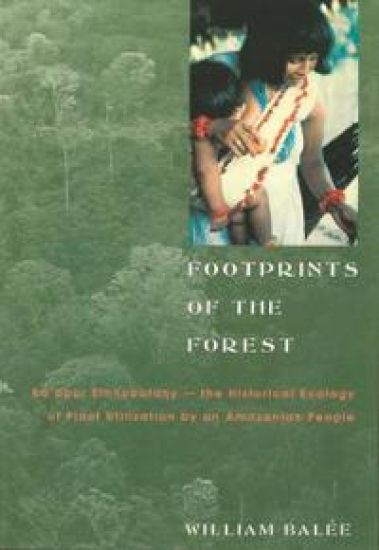
Footprints of the Forest is the clearest and most comprehensive account to date of the relationship between an Amazonian people and their botanical environment. Based on Balee's ten years of ethnological and botanical research among the Tupi-Guarani-speaking Indians, especially the Ka'apor, of eastern Amazonia, this book documents the ways in which the Ka'apor use, manage, name, and classify many hundreds of plant species found in their habitat. From a historical and ecological perspective, Balee shows that Ka'apor ethnobotany represents an interpenetration of Amazonian culture and nature and thus constitutes a domain of scientific inquiry in its own right. The substantive chapters explore the history of the Ka'apor and their present modes of land use, the Ka'apor's influence on the composition of fragile forests in their habitat, and Ka'apor forest management practices. Balee also discusses the nomenclature and classification of indigenous plants as well as the cognitive aspects of magical, medicinal, and poisonous plants. Footprints of the Forest concludes with an explanatory framework for understanding the similarities and differences among the ethnobotanical systems of diverse Amazonian peoples and ten cross-referenced appendices, which will aid those readers interested in specific Amazonian plants and their native names, habitats, and exact uses by the Ka'apor.