Kirjojen hintavertailu – 12 859 828 kirjaa ja 27 kauppaa

Kirjailija

William Brown

Kirjat ja teokset yhdessä paikassa: 209 kirjaa, julkaisuja vuosilta 1929–2027, suosituimpiin kuuluu Menahem Pressler. Vertaile teosten hintoja ja tarkista saatavuus suomalaisista kirjakaupoista.

209 kirjaa

Kirjojen julkaisuvuodet: 1929–2027.

Clotel: The President's Daughter

Clotel: The President's Daughter

William Brown

Createspace Independent Publishing Platform
2017
nidottu
Clotel; Or, The President's Daughter - William Wells Brown. Clotel; or, The President's Daughter is an 1853 novel by United States author and playwright William Wells Brown about Clotel and her sister, fictional slave daughters of Thomas Jefferson. Brown, who escaped from slavery in 1834 at the age of 20, published the book in London. He was staying after a lecture tour to evade possible recapture due to the 1850 Fugitive Slave Act. Set in the early nineteenth century, it is considered the first novel published by an African American and is set in the United States. Three additional versions were published through 1867.
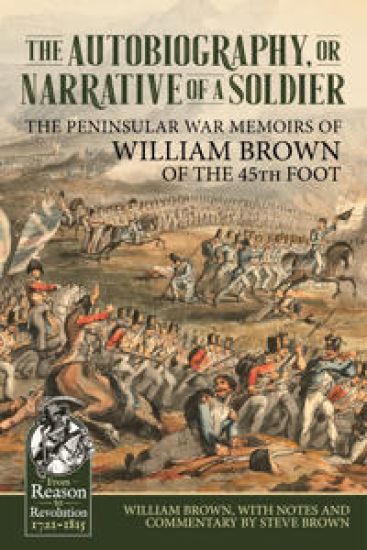
The Autobiography or Narrative of a Soldier
William Brown’s autobiography is a unique historical document, since he is the only memoirist to have come to light from the ranks of the 45th (1st Nottinghamshire) Regiment of Foot for the period of the Peninsula War – a regiment that was one of Wellington’s longest-serving and most valiant in that turbulent era, a proud member of Sir Thomas Picton’s ‘Fighting’ Third Division. William was born in Kilmarnock in 1788, the son of a poor cobbler, but seems to have been given a good education since the narrative is clear and lively, with many learned literary references. Like many young men, William Brown originally volunteered into the militia, Britain’s second-line army intended for home defence only. And like a goodly percentage of these young men, he found that the life more-or-less agreed with him, and willingly took the bounty on offer to volunteer into the regular army a few weeks after Wellington’s victory at Talavera. In the next five years he served at Busaco, Ciudad Rodrigo, Badajoz, Salamanca, Madrid, Vittoria, Orthez, and Toulouse, and his descriptions of these actions provide worthy additions to our knowledge of these great battles. William seems to have been generally a reliable soldier, often ‘on command’ doing ancillary regimental service involving a degree of trust, including service as an officer’s batman. His outrage at the antics of his fellow-soldiers in the sack of Ciudad Rodrigo and Badajoz is palpable. Nonetheless, he occasionally seems to have slipped into questionable behaviour and comes across in the text as a bit of a ‘likeable rogue’. His romantic pursuits also get plenty of coverage in the text. William’s pen-portraits of commanders such as Picton, Kempt, Pakenham, and Brisbane are revealing, and he was not slow in criticising his senior battalion officers or their actions; nor indeed is the Duke of Wellington above William’s barbed criticism. Maps are provided to allow the reader to understand the route travelled within Portugal and Spain by William and the 45th Regiment in those turbulent years, and the whole text is annotated by historian Steve Brown, an expert on the 45th and its deeds in the Napoleonic era.

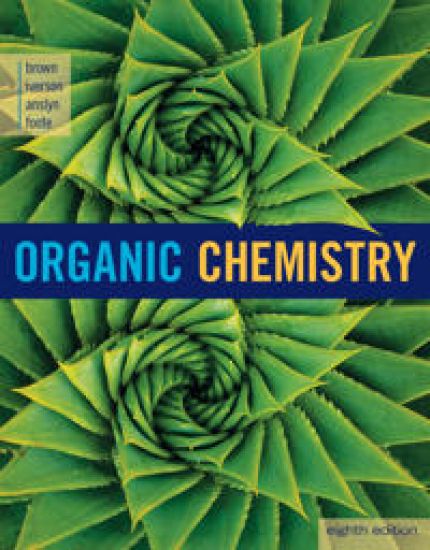
Organic Chemistry

Organic Chemistry

William Brown; Brent Iverson; Eric Anslyn; Christopher Foote

Brooks/Cole
2017
sidottu
Master course concepts and improve problem-solving skills with ORGANIC CHEMISTRY, 8th Edition. This student-friendly text focuses on “how to” skills, and includes examples, problems, and end-of-chapter comprehensive study guides to help you prepare for exams. To help you understand reaction mechanisms, the authors offset them in a stepwise fashion and emphasize similarities between related mechanisms using just four different characteristics: breaking a bond, making a new bond, adding a proton, and taking a proton away. Thoroughly updated, the book offers numerous biological examples for premed students, unique roadmap problems, a wide range of in-text learning tools, and new author-created videos to help you excel.
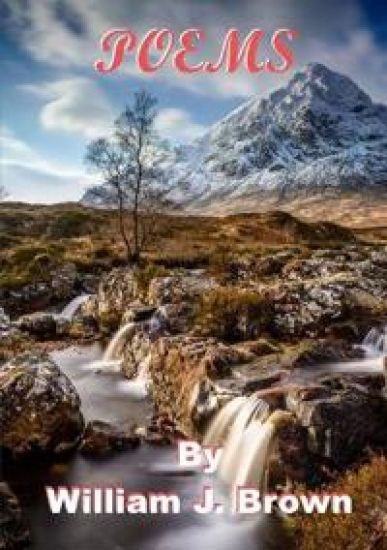
Poems

Poems

William Brown

Lulu.com
2015
pokkari
Willie is a 75 years young, canny Scott's man, funny without realising it. He hails from Greenock (Renfrewshire). He began work at fifteen years old, working in the shipyards as an apprentice joiner. He still has a yearning for the swinging sixties when flower power was the vogue. The feeling of the "peace and love" era of the 1950's had a tremendous impact on Willie, which influenced the rest of his life. He now resides in the sunnier climate of Tenerife. If he was asked to, he would say without hesitation, "I'm a nutter". He finds his mind is more active and creative during the wee hours. This is when his best ideas seem to hatch. Most of his poems are quite short but nevertheless very powerful. He writes the way he thinks, in an easy and engaging manner, which will cause the reader to look deeper into their souls, causing them to think about their own feelings and emotions - questioning and exploring the deepest riddles of life.
Supercinema

Supercinema

William Brown

Berghahn Books
2015
pokkari
Drawing on a variety of popular films, including Avatar, Enter the Void, Fight Club, The Matrix, Speed Racer, X-Men and War of the Worlds, Supercinema studies the ways in which digital special effects and editing techniques require a new theoretical framework in order to be properly understood. Here William Brown proposes that while analogue cinema often tried to hide the technological limitations of its creation through ingenious methods, digital cinema hides its technological omnipotence through the use of continued conventions more suited to analogue cinema, in a way that is analogous to that of Superman hiding his powers behind the persona of Clark Kent. Locating itself on the cusp of film theory, film-philosophy and cognitive approaches to cinema, Supercinema also looks at the relationship between the spectator and film that utilizes digital technology to maximum, ‘supercinematic’ effect.
Gilgit Rebellion: The Major Who Mutinied Over Partition of India
In 1942 William Brown was posted as a recently commissioned Indian Army Officer to the Gilgit Agency in the very north of the North West Frontier. He travelled widely, learnt the local dialects and built the Chilas Polo ground. After a brief period away from Gilgit, just prior to Partition in early 1947 he was appointed acting Commandant of the Gilgit Scoots. To his horror he learnt that the Viceroy Lord Mountbatten had ruled that Gilgit, despite being 99% Muslim, should be ceded to Hindu rule. Knowing that this was a disastrous and callous decision that would lead to insurrection, chaos and bloodshed, the 25 year-old acting Major Brown took it upon himself to oust the Indian Governor, fly to Karachi and offer Gilgit to the Pakistanis, who accepted with alacrity. Brown knew that he was in the eyes of the Indians and Mountbatten, a mutineer who would have been executed, had he fallen into Indian hands. Thus it is all the more extraordinary that six months later he was awarded the MBE, the citation of which was so vague that it gave no indication of the reason. As well as giving an hour-by-hour account of this unfolding political and military drama, Brown's memoir capture the atmosphere and magic of this remote country at the close of the Empire.