Kirjojen hintavertailu – 12 903 725 kirjaa ja 27 kauppaa
Kirjailija
William C. Chittick
Kirjat ja teokset yhdessä paikassa: 14 kirjaa, julkaisuja vuosilta 1984–2013, suosituimpiin kuuluu The Heart of Islamic Philosophy. Vertaile teosten hintoja ja tarkista saatavuus suomalaisista kirjakaupoista.
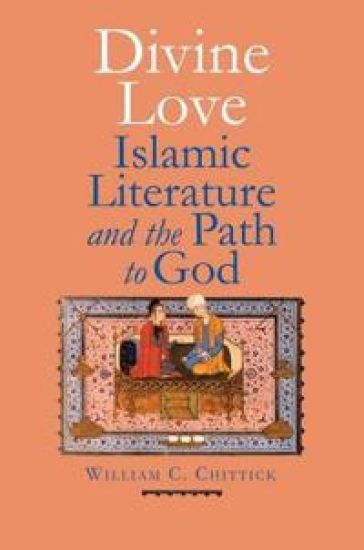
The very heart of the Islamic tradition is love; no other word adequately captures the quest for transformation that lies at this tradition’s center. So argues esteemed professor of medieval Islam William C. Chittick in this survey of the extensive Arabic and Persian literature on topics ranging from the Qur’an up through the twelfth century. Bringing to light extensive foundational Persian sources never before presented, Chittick draws on more than a thousand pages of newly translated material to depict the rich prose literature at the center of Islamic thought.
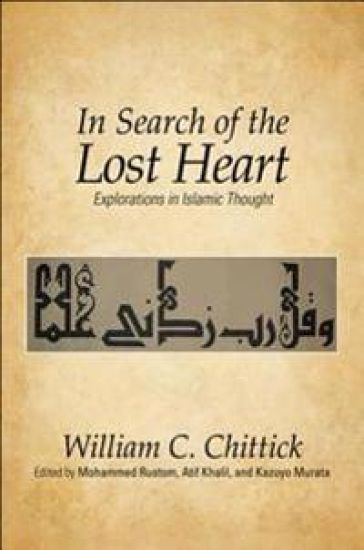
Renowned scholar William C. Chittick explores the worldview of Islam in a series of essays written over thirty-six years. In Search of the Lost Heart brings together twenty-six essays by William C. Chittick, renowned scholar of Sufism and Islamic philosophy. Written between 1975 and 2011, most of these essays are not readily available in Chittick's own books. Although this is a collection, its editors have crafted it to be a book "sufficient unto itself, which, when taken as a whole, can be said to explore the underlying worldview of Islam." Chittick draws upon the writings of towering figures such as Ibn al-'Arabi, Rumi, and Mulla ?adra, as well as other important, but lesser-known thinkers, as he engages with a wide variety of topics, such as the nature of being and knowledge, the relationship between love and scriptural hermeneutics, the practical and theoretical dimensions of Islamic mysticism, the phenomenon of religious diversity, and the ecological crisis.
William C. Chittick, the leading scholar in the field, offers a compelling insight into the origins, context, and key themes of this fascinating movement. After a general overview of the tradition, he draws upon the words of some of the greatest Sufi writers – among them Ibn Arabi, Baha Walad and Rumi himself – to give a fresh and revealing perspective on the teachings and beliefs of Sufism and its proponents. Fresh and authoritative, this sympathetic book will be appreciated by anyone interested in Sufism, from complete beginners to students, scholars and experts alike.
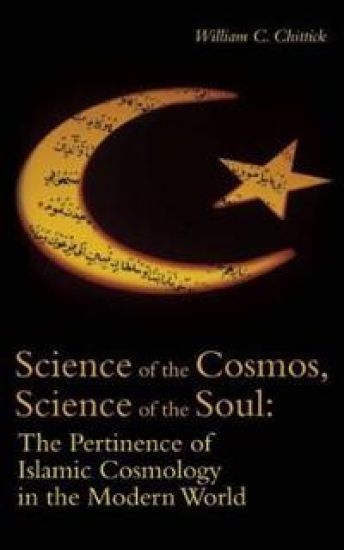
With academic courses either encouraging commercialism, or cultivating zealots, Chittick states that it is impossible to understand classical Islamic texts without the years of contemplative study that are anathema to the modern education system. Insisting upon a return to the ways of the ancient wisdom tradition, which saw the quest for knowledge of the soul, the world, and God as a unifying spiritual discipline, Chittick maintains that the study of Islamic texts cannot be treated separately from self-understanding. Fascinating, radical, and a true challenge to modern trends in academic study, this book opens a new debate in Islamic thought.
The Mosque is an extended meditation on a dimension of Islam unfamiliar to most Western readers. The mosque, Rusmir Mahmut´cehaji´c argues, is not an analogue of the Christian church, not least because in Islam there is no priesthood and no institutionalized hierarchy. Rather, every Muslim is his or her own priest, and most religious obligations are performed in the home. The function of the mosque is thus dispersed throughout society and, indeed, throughout the natural world as well. The Arabic word from which English mosque derives means literally "place of prostration"—the place one performs the daily ritual prayer of submission to God, so as to become a guest at the table God has sent down to manifest himself. That table is also the world's mosque, the world as mosque. Among the many tragic victims of the Bosnian genocide are its mosques; more than a thousand were destroyed. A part of the essential fabric of Bosnian life was changed. With this book, Rusmir Mahmut´cehaji´c seeks to rebuild the spirit and majesty of each mosque that was destroyed, the spiritual grace it lent the Bosnian landscape. "Beautifully composed, elegantly written and constructed, this is a primary text of Islamic spirituality, by one of the most significant Muslim European voices of our age . . . . A book to be returned to again and again."—Adam B. Seligman, Boston University "This work by one of the leading intellectual figures of Bosnia is one of the finest written in the English language on the spiritual significance of the mosque. It speaks the language of universal spirituality and is able to open a door for Western readers to the relationship between the mosque, as understood outwardly, and the inner mosque, which is the heart. The book also reflects in most elegant language the reality of a land where mosques, churches, and synagogues have stood side by side over the centuries, each bearing witness in its own way to the Presence of the One."—Seyyed Hossein Nasr, George Washington University
The importance of Muhyi al-Din Ibn al-Arabi (1165-1240) for Islamic mysticism lies in the fact that he was a speculative thinker of the highest order, albeit diffuse and difficult to understand. His central doctrine is the unity of all existence. In this text, William Chittick explores how, through the work of Ibn Al-Arabi, Sufism moves away from anguished and ascetic searchings of the heart and conscience and becomes a matter of speculative philsophy and theosophy.
This book introduces the work of an important medieval Islamic philosopher who is little known outside the Persian world. Afdal al-Din Kashani was a contemporary of a number of important Muslim thinkers, including Averroes and Ibn al-Arabi. Kashani did not write for advanced students of philosophy but rather for beginners. In the main body of his work, he offers expecially clear and insightful expositions of various philosophical positions, making him an invaluable resource for those who would like to learn the basic principles and arguments of this philosophical tradition but do not have a strong background in philosophy. Kashani held the position that philosophy awakens people from forgetfulness and incites them to reach for the perfection of existence. It was for this reason that he sought to make philosophy as accessible as possible to a wider than usual group of readers. In this book, Chittick uses Kashani and his work to introduce the basic issues and arguments of Islamic philosophy to modern readers.
Explicates the cosmology of Ibn al-'Arabi, the greatest mystical thinker of Islamic civilization. The Self-Disclosure of God offers the most detailed presentation to date in any Western language of the basic teachings of Islam's greatest mystical philosopher and theologian. It represents a major step forward in making available to the Western reading public the enormous riches of Islamic teachings in the fields of cosmology, mystical philosophy, theology, and spirituality. The Self-Disclosure of God continues the author's investigations of the world view of Ibn al-? Arabi, the greatest theoretician of Sufism and the "seal of the Muhammadan saints." The book is divided into three parts, dealing with the relation between God and the cosmos, the structure of the cosmos, and the nature of the human soul. A long introduction orients the reader and discusses a few of the difficulties faced by Ibn al-? Arabi's interpreters. Like Chittick's earlier work, The Sufi Path of Knowledge, this book is based primarily on Ibn al-? Arabi's monumental work, al-Futu?at al-Makkiyah "The Meccan Openings." More than one hundred complete chapters and subsections are translated, not to mention shorter passages that help put the longer discussions in context. There are detailed indices of sources, Koranic verses and hadiths. The book's index of technical terminology will be an indispensable reference for all those wishing to delve more deeply into the use of language in Islamic thought in general and Sufism in particular.
In this book Chittick explains Ibn al-? Arabi's concept of human perfection, his World of Imagination, and his teachings on why God's wisdom demands diversity of religious expression. He then suggests how these teachings can be employed to conceptualize the study of world religions in a contemporary context. Ibn al-? Arabi, known as the "Greatest Master,"is the most influential Muslim thinker of the past 600 years. This book is an introduction to his thought concerning the ultimate destiny of human beings, God and the cosmos, and the reasons for religious diversity. It summarizes many of Ibn al-? Arabi's teachings in a simple manner. The ideas discussed are explained in detail. The book is divided into three parts. In the first part Chittick explains Ibn al-? Arabi's concept of human perfection; in the second part he looks at various implications of the World of Imagination; and in the third part he exposes Ibn al-? Arabi's teachings on why God's wisdom demands diversity of religious expression, and he suggests how these teachings can be employed to conceptualize the study of world religions in a contemporary context.
Ibn al-'Arabi is still known as "the Great Sheik" among the surviving Sufi orders. Born in Muslim Spain, he has become famous in the West as the greatest mystical thinker of Islamic civilization. He was a great philosopher, theologian, and poet. William Chittick takes a major step toward exposing the breadth and depth of Ibn al-'Arabi's vision. The book offers his view of spiritual perfection and explains his theology, ontology, epistemology, hermeneutics, and soteriology. The clear language, unencumbered by methodological jargon, makes it accessible to those familiar with other spiritual traditions, while its scholarly precision will appeal to specialists. Beginning with a survey of Ibn al-'Arabi's major teachings, the book gradually introduces the most important facets of his thought, devoting attention to definitions of his basic terminology. His teachings are illustrated with many translated passages introducing readers to fascinating byways of spiritual life that would not ordinarily be encountered in an account of a thinker's ideas. Ibn al-'Arabi is allowed to describe in detail the visionary world from which his knowledge derives and to express his teachings in his own words. More than 600 passages from his major work, al-Futuhat al-Makkivva, are translated here, practically for the first time. These alone provide twice the text of the Fusus al-hikam. The exhaustive indexes make the work an invaluable reference tool for research in Sufism and Islamic thought in general.
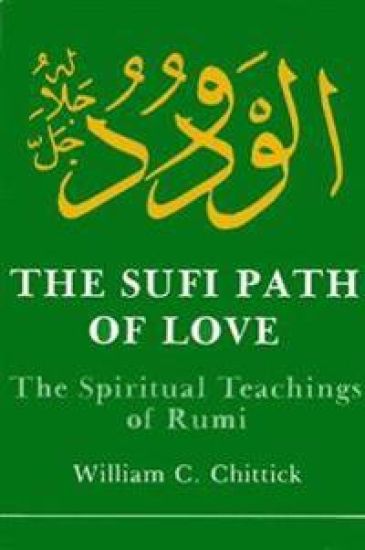
This is the most accessible work in English on the greatest mystical poet of Islam, providing a survey of the basic Sufi and Islamic doctrines concerning God and the world, the role of man in the cosmos, the need for religion, man's ultimate becoming, the states and stations of the mystical ascent to God, and the means whereby literature employs symbols to express "unseen" realities. William Chittick translates into English for the first time certain aspects of Rumi's work. He selects and rearranges Rumi's poetry and prose in order to leave aside unnecessary complications characteristic of other English translations and to present Rumi's ideas in an orderly fashion, yet in his own words. Thorough, nontechnical introductions to each chapter, and selections that gradually present a greater variety of terms and images, make this work easily accessible to those interested in the spirituality of any tradition.